




News
Solving for women isn’t niche. It’s how you build better tech

By Karishma Patel, Cofounder & Chief Brand Officer at Ema
Let’s get this out of the way:
Women’s health isn’t a niche. It’s the blueprint.
Not just for healthcare. For technology, period.
We’ve been sold the idea that designing for women is somehow “specialised,” when in reality it’s the most rigorous, emotionally complex, and systemically relevant design challenge we have.
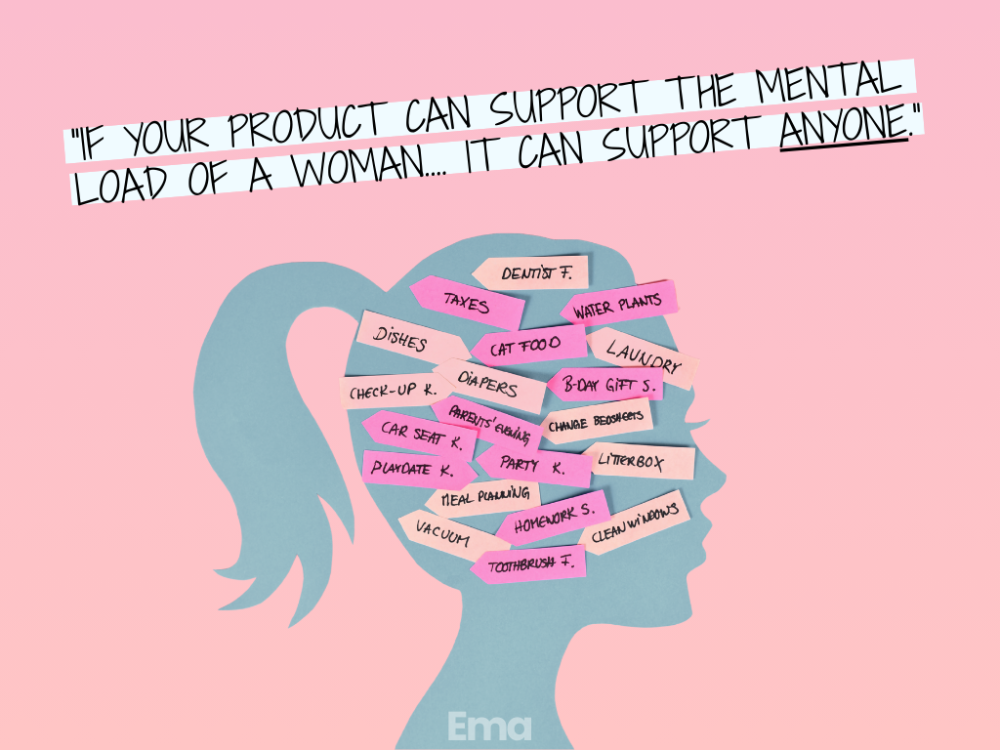
If your product can support the mental load of a woman in 2025, across her health, her schedule, her household, her job, and her identity, it can support anyone.
This isn’t a hypothetical. It’s my lived experience.
At any given moment, I’m juggling ten things minimum.
A work fire drill, school logistics, a forgotten birthday gift, my own hormonal shifts, plus whatever I’m pretending isn’t stressing me out. I’m not exceptional.
That’s normal for most women I know. And it’s exactly why I say:
If you solve for women, you don’t just solve for a demographic.
You solve for complexity. And complexity is the true test of good design.
When AI Meets the Mental Load
Watching how my husband uses AI versus how I do was a lightbulb moment.
He’s efficient, direct, and task-based. Give it a prompt, get an answer.
For him, it’s a tool. For me? It’s a lifeline.
I’m not asking AI to write a quick memo. I’m asking it to help me make 20 micro-decisions across five domains of my life, in the gaps between meetings, meltdowns, and a thousand open loops.
Tech built to be “neutral” ignores the layered realities of real life. At best, it’s incomplete. At worst, it’s lazy.
Because “neutral” still defaults to the dominant paradigm. And it usually doesn’t look like me.
The Brands That Get Her Are the Ones That Win
One of the best examples I’ve seen of someone truly building for women is Willow.
They took the standard breast pump, something that’s long been clinical, stationary, and honestly kind of dehumanising, and reimagined it as something mobile, wearable, and woman-centered.
They understood that postpartum women don’t have the luxury to sit still five times a day. They gave her the power to move. To parent. To be.
That’s what happens when you build from the inside out.
When you stop asking “how do we make this more efficient?” and start asking “what does this feel like for her?”
Now we get to take that even further.
With Ema powering AI inside Willow’s app, we’re going beyond supporting her pump experience.
We’re supporting her whole experience. Her questions about her baby, her emotions, and her own body. Because her life doesn’t show up in chapters, it shows up all at once.
If You’re Not Actively Solving for Women, You’re Actively Forgetting Them
Let’s be clear. Building for women isn’t just about branding or targeting.
It’s a product decision. An architecture decision. A data decision.
If you don’t start with women in mind, you solve for a simplified use case. You risk build something flat because you’ve ignored the edge cases that are actually the real cases.
And those who still see women’s health as niche?
I’m not here to convince them. The numbers speak for themselves.
Women drive 80 percent of healthcare decisions, hold trillions in spending power, and carry most of the emotional labor in families.
If that still doesn’t register as an opportunity, then we’re probably not building for the same future.
And that’s okay.
There’s a growing group of investors, founders, and operators who do get it.
They’re the ones shaping what comes next. They’re the ones we hand pick to sit at our table.
What We’re Really Building
At Ema, we’re not here to solve a “problem.” We’re here to support a person.
That’s why we built Ema on the biopsychosocial model. A tripod of physical, mental, and social health. Knock one leg out, and the whole system wobbles.
We want Ema to know when you’re headed for burnout before you do.
To see that your calendar is overloaded, and suggest shifting something. To understand that your weekly walk is more than just a habit. It’s how you decompress.
That kind of emotional intelligence isn’t extra. It’s essential.
Because so much of women’s health has been framed as a checklist of problems to fix.
Menstruation. Pregnancy. Menopause.
We treat each one like a fire to put out instead of what they are. Life stages to understand.
Ema’s job isn’t to fix you.
It’s to know you.
To grow with you.
To be there.
Beyond the moment of crisis, in the quiet middle, where so many women are left to figure it out alone.
Build Better or Get Left Behind
If you want to build better tech that is more resilient, more human, and more relevant, start here.
Start with the woman whose life doesn’t fit neatly into one use case.
Start with the mother, the founder, the daughter, the caregiver.
Start with her.
Find out more about Ema at emaapp.co












A non-profit has launched an endometriosis documentary featuring Amy Schumer and Marilyn Monroe as it pushes for changes in how the condition is treated and understood.
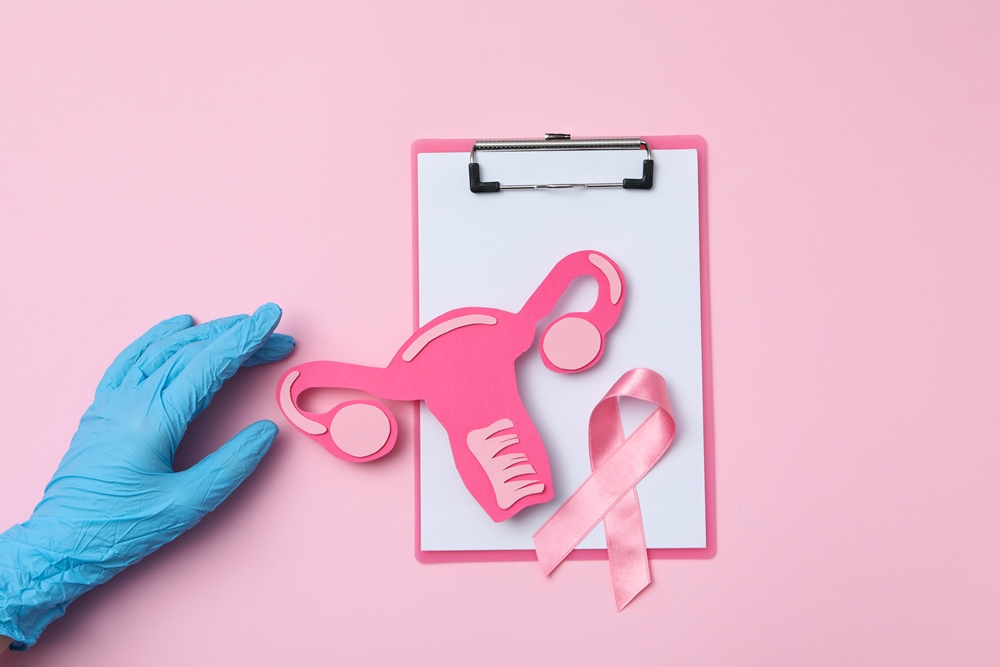
The Endometriosis Collective has launched to change how endometriosis is researched, treated and understood, starting with a documentary featuring stories from people including Amy Schumer and Marilyn Monroe.
The feature-length documentary, “End of the Cycle”, will premiere in New York on Tuesday, and The Endometriosis Collective is making the film free to stream online.

Schumer, a comedian, writer and actor, has previously spoken of how endometriosis left her “on the floor in pain, vomiting from the pain, the pain that nobody can see.”
Schumer is one of several celebrities featured in the documentary. Other contributors include dancer Julianne Hough, Olympic medallist Brittany Brown and actors Janel Parrish and Folake Olowofoyeku.
The Endometriosis Collective timed the documentary premiere to coincide with the 100th anniversary of Marilyn Monroe’s birth.
Monroe, who died in 1962, starred in films such as “Some Like It Hot” and “Gentlemen Prefer Blondes.”
According to a biography published in 1985, Monroe’s endometriosis was so severe that it destroyed her marriages, her wish for children, her career and ultimately her life.
The Endometriosis Collective said the documentary shares newly uncovered information about Monroe’s experience with endometriosis.
The non-profit said the information connects Monroe’s story to the experiences of women across generations, highlighting how far awareness, research and care still have to go.
A representative of the Marilyn Monroe Estate said: “By sharing this part of her story through ‘End of the Cycle,’ we hope to honour her legacy in a way that brings visibility to endometriosis, encourages more open dialogue and helps inspire the research needed to create change.”
As part of the premiere, The Endometriosis Collective is holding a panel discussion.
Schumer, Brown and Olowofoyeku, the documentary’s co-directors Sammy Jaye and Soraya Simi, and medical experts are due to be part of the premiere.
AbbVie’s Orilissa and Sumitomo Pharma’s Myfembree are among the approved drugs for endometriosis pain.
Hough, one of the participants in the documentary, starred in an Orilissa campaign in 2017.











 Menopause1 week ago
Perimenopause misinformation ‘putting women at risk’

 News4 weeks ago
NIH Grant terminations disproportionately impact minority scientists, research finds

 Wellness4 weeks ago
WUKA brings Period-Positive Pool Party to London Aquatics Centre to keep girls swimming through puberty
 Insight3 weeks ago
PCOS renamed after decade-long campaign to end ‘cyst’ misconception
 Events4 weeks ago
WHIS 2026 unveils agenda and first speakers for the leading women’s health summit

 Menopause4 weeks ago
CBT shows promise for menopause insomnia and hot flashes

 Hormonal health2 weeks ago
NHS urged to update website following renaming of PCOS

 News6 days ago
Three menopause innovators shortlisted for Femtech World Award