




Connect with us

Entrepreneur

Solving for women isn’t niche. It’s how you build better tech
Published

on

By Karishma Patel, Cofounder & Chief Brand Officer at Ema

Let’s get this out of the way:

Women’s health isn’t a niche. It’s the blueprint.

Not just for healthcare. For technology, period.

We’ve been sold the idea that designing for women is somehow “specialised,” when in reality it’s the most rigorous, emotionally complex, and systemically relevant design challenge we have.

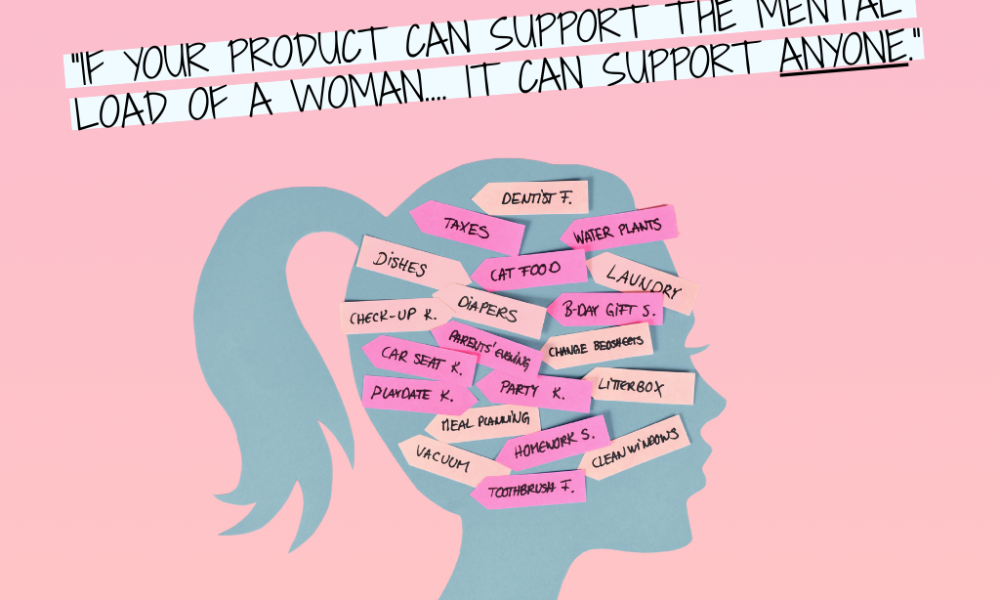
If your product can support the mental load of a woman in 2025, across her health, her schedule, her household, her job, and her identity, it can support anyone.

This isn’t a hypothetical. It’s my lived experience.

At any given moment, I’m juggling ten things minimum.

A work fire drill, school logistics, a forgotten birthday gift, my own hormonal shifts, plus whatever I’m pretending isn’t stressing me out. I’m not exceptional.

That’s normal for most women I know. And it’s exactly why I say:

If you solve for women, you don’t just solve for a demographic.

You solve for complexity. And complexity is the true test of good design.

When AI Meets the Mental Load

Watching how my husband uses AI versus how I do was a lightbulb moment.

He’s efficient, direct, and task-based. Give it a prompt, get an answer.

For him, it’s a tool. For me? It’s a lifeline.

I’m not asking AI to write a quick memo. I’m asking it to help me make 20 micro-decisions across five domains of my life, in the gaps between meetings, meltdowns, and a thousand open loops.

Tech built to be “neutral” ignores the layered realities of real life. At best, it’s incomplete. At worst, it’s lazy.

Because “neutral” still defaults to the dominant paradigm. And it usually doesn’t look like me.

The Brands That Get Her Are the Ones That Win

One of the best examples I’ve seen of someone truly building for women is Willow.

They took the standard breast pump, something that’s long been clinical, stationary, and honestly kind of dehumanising, and reimagined it as something mobile, wearable, and woman-centered.

They understood that postpartum women don’t have the luxury to sit still five times a day. They gave her the power to move. To parent. To be.

That’s what happens when you build from the inside out.

When you stop asking “how do we make this more efficient?” and start asking “what does this feel like for her?”

Now we get to take that even further.

With Ema powering AI inside Willow’s app, we’re going beyond supporting her pump experience.

We’re supporting her whole experience. Her questions about her baby, her emotions, and her own body. Because her life doesn’t show up in chapters, it shows up all at once.

If You’re Not Actively Solving for Women, You’re Actively Forgetting Them

Let’s be clear. Building for women isn’t just about branding or targeting.

It’s a product decision. An architecture decision. A data decision.

If you don’t start with women in mind, you solve for a simplified use case. You risk build something flat because you’ve ignored the edge cases that are actually the real cases.

And those who still see women’s health as niche?

I’m not here to convince them. The numbers speak for themselves.

Women drive 80 percent of healthcare decisions, hold trillions in spending power, and carry most of the emotional labor in families.

If that still doesn’t register as an opportunity, then we’re probably not building for the same future.

And that’s okay.

There’s a growing group of investors, founders, and operators who do get it.

They’re the ones shaping what comes next. They’re the ones we hand pick to sit at our table.

What We’re Really Building

At Ema, we’re not here to solve a “problem.” We’re here to support a person.

That’s why we built Ema on the biopsychosocial model. A tripod of physical, mental, and social health. Knock one leg out, and the whole system wobbles.

We want Ema to know when you’re headed for burnout before you do.

To see that your calendar is overloaded, and suggest shifting something. To understand that your weekly walk is more than just a habit. It’s how you decompress.

That kind of emotional intelligence isn’t extra. It’s essential.

Because so much of women’s health has been framed as a checklist of problems to fix.

Menstruation. Pregnancy. Menopause.

We treat each one like a fire to put out instead of what they are. Life stages to understand.

Ema’s job isn’t to fix you.

It’s to know you.

To grow with you.

To be there.

Beyond the moment of crisis, in the quiet middle, where so many women are left to figure it out alone.

Build Better or Get Left Behind

If you want to build better tech that is more resilient, more human, and more relevant, start here.

Start with the woman whose life doesn’t fit neatly into one use case.

Start with the mother, the founder, the daughter, the caregiver.

Start with her.

Find out more about Ema at emaapp.co


News

What “women’s healthmaxxing” means for patient trust and the femtech industry

Published

on

Women’s health has become one of the most searched and shared topics online, from cycle syncing and cortisol management to menopause hacks, supplements, hormone testing and clinician-creator content.

That surge in attention, sometimes dubbed “healthmaxxing,” is changing how women find, evaluate and act on health information, and it is starting to reshape the relationship between patients, clinicians and the companies building products for this market.

For providers, the shift means patients are arriving better informed but also more exposed to unverified claims, putting pressure on clinicians to engage with online narratives rather than dismiss them.

For femtech and pharma companies, it opens a route to reach and educate consumers at scale, but also raises the stakes on credibility: products and messaging that ride the trend without clinical grounding risk eroding the trust the industry has spent years building.

Investors are watching the same dynamic from a different angle.

Attention-driven demand can be a signal of where the next wave of femtech growth will come from, but distinguishing genuine clinical need from viral momentum is increasingly part of due diligence.

The net effect is a widening gap between companies that treat cultural attention as a distribution channel for credible, evidence-based care, and those that risk being swept up in trends with little clinical substance behind them.

How that gap plays out will shape patient trust, clinical relationships and commercial opportunity across the women’s health industry for years to come.

These themes will be explored in more depth in an upcoming webinar, “Women’s Healthmaxxing: The Opportunity & Risks of Cultural Attention for the Women’s Health Industry,” hosted by the Women’s Health Innovation Summit (WHIS), featuring Ellen Wilcox (Listen Ventures), Jessica Bell van der Wal (Frame Fertility), Dr. Tosin Sotubo-Ajayi (NHS, BBC and more) and Nora Lansen (Elektra Health).

Register free for the webinar on 23 July 2026 at https://events.virtualpro.com/womens-health-series-webinar-july-2026/registration

Continue Reading

Entrepreneur

Juno Bio secures US$3.8m for precision diagnostics

Published

on

Juno Bio has secured US$3.8m to expand its diagnostics platform for vaginal health and reproductive care.

The funding round was led by Ada Ventures, with participation from Artesian, Entrepreneur First and Illumina Accelerator.

The women’s health startup said the seed funding will support the launch of its first CLIA-certified sequencing laboratory in Oakland, California, and a new clinical vaginal microbiome and STI test for healthcare providers.

CLIA certification refers to US laboratory standards for testing human samples used in diagnosis, prevention or treatment decisions.

Dr Leighton Turner, co-founder and chief scientific officer of Juno Bio, said: “The vaginal microbiome is still one of the least understood systems in the body at a clinical scale.

“With our lab, we’re starting to build a measurement standard that clinicians can actually use.

“We believe the level of detail from this kind of testing can meaningfully improve how vaginal healthcare is provided.”

The company is developing precision diagnostics for vaginal health, where patients can experience recurring symptoms, inconsistent diagnoses and treatments based on trial and error.

Juno Bio said bringing testing in-house gives it greater control over the process, from sample handling to results, while allowing it to refine its technology and build what it says is one of the largest datasets focused on the vaginal microbiome.

The vaginal microbiome is the community of bacteria and fungi that naturally live in the vagina. Changes in this balance can be linked to infections, symptoms and wider reproductive health issues.

Juno Bio’s newly launched clinical test examines the wider vaginal microbiome and screens for four common sexually transmitted infections, or STIs.

Rather than looking for a single cause, the test is intended to give clinicians a broader picture of what may be contributing to symptoms.

Juno Bio says this matters because multiple infections can occur at the same time and microbiome changes may be linked to fertility, menopause or recurrent infections.

Dr Anna Powell of Johns Hopkins said: “Vaginal microbiome testing has the potential to significantly reshape how we understand and manage vaginal health, particularly for patients with recurrent or unexplained symptoms.

“While the field is still evolving, advances in sequencing and data interpretation are moving us closer to a future where more personalised, microbiome-informed care can complement existing diagnostic approaches.”

Check Warner, co-founding partner at Ada Ventures, added: “Juno Bio is setting a new standard for how vaginal health is understood and managed.

“What they’ve built at this stage, with this level of capital efficiency, is exceptional.

“We’re proud to support the team as they scale their clinical infrastructure and continue leading innovation in this critically underserved category.”

Continue Reading

Insight

Women’s health draws record $1.55bn in equity as capital spreads beyond the mega-rounds

Published

on

Women’s health companies raised a record $1.55 billion in disclosed equity in 2025, up 41 per cent year on year, according to W Group’s first Global Women’s Health Investment Report, The Road to the Era of Scale.

The report tracks over 500 funding stories and 164 equity rounds across 15 categories and 30+ countries.

Eighty-five companies raised equity in 2025, the highest single-year count on record. But according to the report, the headline figure isn’t the most significant one.

The bigger shift is in where that capital went and how concentrated it was at the top compared to the year before.

The report also points to a brand new investment category that didn’t exist twelve months ago.

SheMed closed a $50 million Series A this year to build a women-specific GLP-1 and metabolic health platform, the first dedicated raise of its kind.

Alongside the momentum, the report identifies one structural risk that could determine whether 2025’s growth holds: a bottleneck at Series A that’s leaving a number of promising seed-stage companies stuck.

Molly Taylor, head of content at W Group, said: “2025 was the biggest year women’s health has ever had, and the most important finding isn’t the headline number.

“It’s that the money has stopped pooling at the top.

“Capital is reaching more companies, more categories and more countries than ever before. The Era of Scale is real. It’s just not finished, and the Series A gap is where it could stall.

“Closing that gap is the highest-leverage move this ecosystem can make in 2026.”

Read the full report: https://wplatform.co/forms/womens-health-equity-funding-trends-report-2026?utm_source=advocacy&utm_medium=ext_email&utm_campaign=2026-q3-health-report-femtech-world

Continue Reading

Trending

Copyright © 2025 Aspect Health Media Ltd. All Rights Reserved.

