




Connect with us

Pregnancy

New technology ‘game changing’ for pregnant women with diabetes

Study shows automated insulin delivery could help pregnant women better manager their blood sugars compared to traditional therapy

Published

on

Automated insulin delivery should be rolled out to pregnant women with type 1 diabetes, researchers at the University of East Anglia have said.

A new study published today shows that the move could help pregnant women better manager their blood sugars compared to traditional insulin pumps or multiple daily injections.

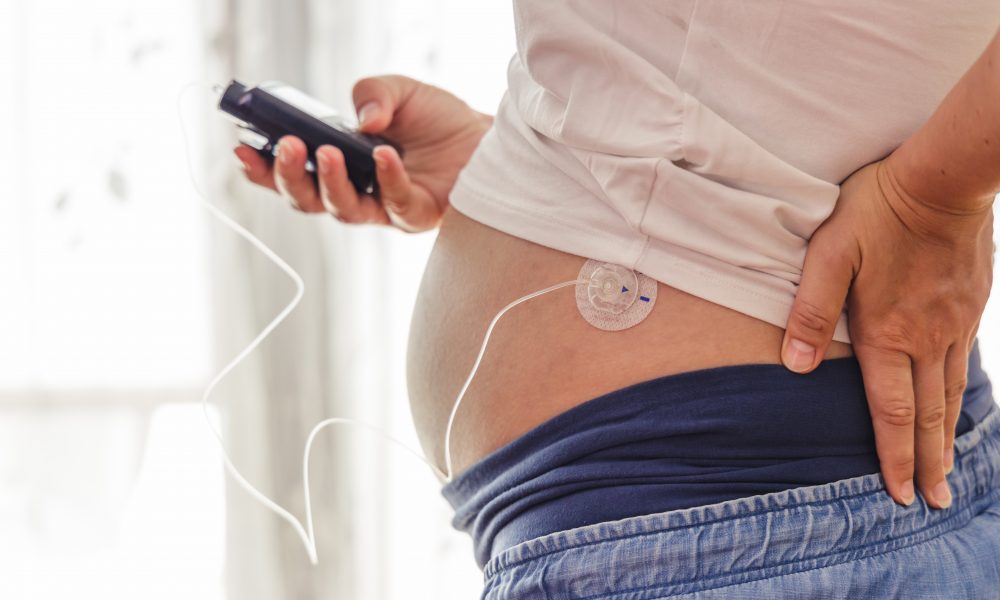
Automated insulin delivery, also known as hybrid closed-loop technology, gives insulin doses as informed by a smartphone algorithm. It works by taking readings from a continuous glucose monitor and uses an algorithm to tell an insulin pump how much insulin to deliver.

The system adjusts insulin doses every 10-12 minutes according to blood sugar levels, meaning that it continuously responds to the persistent changes in blood sugar levels throughout pregnancy, reducing the number of decisions a patient has to make every day.

Researchers at University of East Anglia trialled the hybrid closed-loop technology and compared it with the traditional continuous glucose monitoring and insulin systems, where women supported by specialist diabetes maternity teams, make multiple daily decisions about insulin doses.

The study involved 124 pregnant women with type 1 diabetes aged 18-45 years who managed their condition with daily insulin therapy. Half were randomly allocated to use the hybrid closed-loop technology, and half to use the traditional insulin therapy.

On average, pregnant women used the hybrid closed-loop technology for more 95 per cent of the time.

“Despite better systems for monitoring blood sugars and delivering insulin, altered eating behaviours and hormonal changes during pregnancy, mean that most women struggle to reach the recommended blood sugar targets,” said lead researcher, Professor Helen Murphy, from UEA’s Norwich Medical School.

“This means that complications related to having type 1 diabetes during pregnancy are widespread, affecting one in every two new-born babies.

“For the baby, these include premature birth, need for intensive care after birth, and being too large at birth, which increases the lifelong risk of overweight and obesity. Low blood sugars, excess weight gain, and high blood pressure during pregnancy are common amongst mothers.”

“We wanted to investigate how automated insulin delivery could help” she added.

“We found that the technology helped to substantially reduce maternal blood sugars throughout pregnancy. Compared to traditional insulin therapy methods, women who used the technology spent more time in the target range for pregnancy blood sugar levels – 68 per cent vs 56 per cent, which is equivalent to an additional two-and-a-half to three hours every day throughout pregnancy.

“It was safely initiated during the first trimester, which is a crucially important time for babies’ development. The blood sugar levels improved consistently in mothers across of all ages, and regardless of their previous blood sugar levels or previous insulin therapy.”

The team also found that women using the technology gained less weight and were less likely to have blood pressure complications during pregnancy.

Importantly, women using the technology also had fewer antenatal clinic appointments, and fewer out-of-hours calls with maternity clinic teams, suggesting that this technology could also be time-saving for pregnant women and maternity services.

“For a long time, there has been limited progress in improving blood sugars for women with type 1 diabetes, so we’re really excited that our study offers a new option to help pregnant women manage their diabetes,” said Murphy.

“We know that for women with type 1 diabetes, unborn babies are exquisitely sensitive to small rises in blood sugars, so keeping blood sugar levels within the normal range during pregnancy is crucial to reduce risks for the mother and child.

“Previous studies have confirmed that every extra hour spent in the blood sugar target range reduces the risks of premature birth, being too large at birth and need for admission to neonatal intensive care unit.”

Researchers noted some limitations, including that the current study was too small for a detailed examination of baby health outcomes, and that their results are specific to the CamAPS technology.

This, the team said, means the results can’t be extrapolated to closed-loop systems, with higher blood sugar targets, that may not be applicable for use during pregnancy.
Pregnancy

App tracks heart risk after high-risk pregnancies

Published

on

A recent study developed a new “digital companion” to support the prevention and follow-up of maternal cardiovascular risk in women with pregnancy complications.

Cardiovascular disease, or CVD, is the leading cause of premature death and illness in women, yet sex-specific causes remain understudied and women are underrepresented in research.

Pregnancy complications, including hypertensive disorders of pregnancy, or HDP, and gestational diabetes mellitus, or GDM, are strong predictors of future CVD, with pregnancy itself acting as a natural stress test.

Despite CVD accounting for 35 per cent of female deaths worldwide in 2019, systematic postpartum prevention remains limited in practice and incidence continues to rise.

Myocardial infarction, commonly known as heart attack, and stroke are the main fatal CVD events in women. Up to one-third of women develop hypertension within a decade after HDP, especially as maternal age rises.

Obstetric guidelines have historically lacked clarity on early CVD prevention after HDP and GDM, often relying on expert consensus rather than evidence.

Some cardiology guidelines now recommend personalised approaches, such as periodic hypertension and diabetes screening. Norwegian guidelines recommend cardiovascular risk evaluation at three months and one year postpartum, but adherence in practice is uncertain.

Effective risk reduction requires intervention before middle age. The immediate postpartum period following HDP or GDM is a critical window for early detection and intervention, offering an opportunity to engage women in cardiovascular health management, particularly as pregnancy can encourage long-term lifestyle awareness.

Electronic health, or eHealth, refers to the use of digital technologies and electronic communication tools to support healthcare services, medical information management and related health activities.

Systematic, eHealth-supported postpartum prevention can improve maternal health literacy and long-term cardiovascular outcomes.

However, there is a significant gap in targeted, eHealth-based postpartum interventions for cardiovascular risk management after HDP and GDM, despite strong patient demand and international calls for coordinated digital health strategies.

Home blood pressure monitoring shows promise, but broader digital support remains limited.

A cardiovascular postpartum follow-up programme was created as a mobile app based on Norwegian and international guidelines.

The MumCare app was developed through co-creation involving users, stakeholders and clinical experts. Five qualitative interviews and 10 user testing sessions informed improvements.

This study primarily analysed the iterative co-creation process used to develop the app, rather than evaluating clinical outcomes.

The MumCare project team in Oslo included an IT expert, obstetricians, a midwife, a GP, two sociologists and two cardiologists, all with relevant experience in eHealth and women’s health. A medical student with technological and medical expertise also helped turn ideas into app features for young women.

User representatives from two national patient associations contributed to information, recruitment, design and testing of the MumCare app.

Both associations provided user perspectives and took part in interviews and app testing. Additional users with HDP or GDM at Oslo University Hospital were also involved throughout the co-creation process.

The app’s digital infrastructure prioritises security and privacy, using encryption, de-identification and two-factor authentication.

User data is stored securely on the app and, for research purposes and with consent, on a dedicated University of Oslo server in line with GDPR and Norwegian regulations.

A linear Stage-Gate model structured the co-creation process, dividing it into phases with quality checkpoints reviewed in project meetings.

This approach balanced internal development with external user feedback, helping ensure the app is evidence-based, technically robust and user-centred.

The MumCare app guides postpartum women through tracking blood pressure, weight, physical activity and lab results, and provides personalised feedback to support self-management, mainly during the first postpartum year.

It also includes educational resources such as videos and guideline-based information to support understanding and engagement.

The app is also designed to support the transition from specialist pregnancy care to long-term follow-up with general practitioners.

It is described as a “digital companion” or health coach and does not replace clinical diagnosis or function as a medical device.

The co-creation process followed four phases focused on technical and procedural development.

In phase 1, input from expert organisations and user representatives established the app’s technical foundation.

It also reminds users of the one-year postpartum follow-up with their GP, a key time to assess risk factors and future care needs.

User organisation representatives gave feedback in phase 1, directly guiding content and feature development.

Phase 2 interviews confirmed that users want to monitor cardiovascular risk factors after HDP and GDM.

The analysis highlighted three themes: self-care strategies and uncertainties about hypertension, the need for accessible health information, and a more personalised approach to blood pressure monitoring in the app.

Concerns were also raised that frequent monitoring or app use could increase stress or create a sense of burden.

In phase 3, the app’s design and features were revised in response to feedback to improve usability and make sure they met users’ needs.

These changes led to a more intuitive and supportive interface for women during and after pregnancy.

Phase 4 involved building a prototype based on the updated designs, followed by further refinements after testing by the project team and users. Initial pilot testing with a small number of users suggested the app met its objectives and functioned as intended.

The MumCare app was co-created with input from experts, user organisations and patients over four phases.

Early expert and organisational contributions helped define the app’s goals, while ongoing feedback from patients helped ensure the design and content reflected users’ real needs.

This collaborative approach resulted in an app tailored to support women with pregnancy complications.

The MumCare app is currently being evaluated in a randomised controlled clinical trial that began in June 2024, with results needed to determine whether it improves long-term cardiovascular outcomes.

Continue Reading

Fertility

First patients dosed in miscarriage trial

Published

on

The first patients have been dosed in a UK miscarriage trial testing a new intravaginal drug delivery platform for threatened miscarriage.

The FREEDOM study is evaluating 400mg progesterone Callavid in patients diagnosed with luteal phase insufficiency, a condition in which progesterone levels may be too low to support early pregnancy, increasing the risk of infertility and recurrent miscarriage.

Callavid uses a patented leak-free, tampon-like design intended to address the limitations of current vaginal treatments, which rely on self-administered pessaries, or vaginal suppositories, that can leak and may move during use.

The device is being developed by London-based Calla Lily Clinical Care, a medical technology company focused on women’s health. The trial is funded by the National Institute for Health and Care Research and run in collaboration with the Trial Management Unit at University Hospitals Coventry and Warwickshire NHS Trust.

According to the company, Callavid is positioned to become the world’s first drug-device combination product to support treatment of threatened miscarriage, as well as luteal phase support as part of assisted reproductive technologies, including in vitro fertilisation, or IVF.

The Government’s Renewed Women’s Health Strategy for England cites estimates ranging from 120,000 to 250,000 cases of miscarriage a year in the UK. Administering 400mg micronised progesterone twice daily is recommended by the National Institute for Health and Care Excellence for women who have suffered a previous miscarriage and experience bleeding during early pregnancy, known clinically as threatened miscarriage.

Current pessary delivery methods can result in uncertain placement and movement during use. These limitations can reduce the efficiency and consistency of drug absorption, potentially compromising delivery of the intended dose, and patients are regularly advised to lie horizontal for extended periods after each administration.

The FREEDOM trial is led by professor Siobhan Quenby MBE, an authority on miscarriage and preterm birth, and an honorary consultant at University Hospitals Coventry and Warwickshire NHS Trust. The study aims to evaluate safety, user acceptability and progesterone absorption, with the goal of providing evidence of improved usability in self-administration.

Quenby commented: “Through my clinical practice, I see the difficulties patients face with existing vaginal progesterone products at an already very stressful time. Callavid offers a promising new solution to ensure delivery of the correct progesterone dosage and give women greater confidence in their treatment. There is genuine excitement among both clinicians and patients at the prospect of Callavid progressing into clinical trials.”

Dr Lara Zibners, co-founder and chair of Calla Lily Clinical Care, added: “As a physician and entrepreneur, I believe we have a responsibility to create more effective, patient-centred solutions in women’s health. Having been through seven rounds of IVF myself, I have experienced how difficult progesterone treatment can be, and I am proud to be advancing an innovation shaped by both medical insight and lived experience.”

Thang Vo-Ta, co-founder and chief executive of Calla Lily Clinical Care, said: “Dosing the first patients in the FREEDOM study marks a critical milestone for Calla Lily Clinical Care. Callavid represents a differentiated delivery modality for a broad range of therapeutics in the pharma pipeline, and will create new opportunities to extend the lifecycle of existing drugs. This trial is a key step in demonstrating Callavid’s massive potential.”

Continue Reading

Pregnancy

Women share stories rare pregnancy complication in awareness campaign

Published

on

A rare pregnancy complication has led to emergency surgery, including hysterectomies, after staff failed to detect it in affected women.

Scores of women have come forward to tell their stories of how they were affected by placenta accreta spectrum, or PAS, since the launch in February of a campaign to raise awareness among NHS staff and mothers-to-be of the dangers it poses.

One of them lost so much blood while giving birth that she has had to give up working as an NHS operating theatre nurse and suffers from PTSD.

Another lost six litres of blood and blames her daughter’s cerebral palsy on the stroke the child had while hospital staff were battling to save her life after an emergency caesarean section. Others have suffered permanent damage to their bladder or bowels.

Erin Cooper was never assessed for PAS even though she regularly bled heavily from 26 weeks into her pregnancy until she delivered her baby by emergency C-section at 33 weeks in 2024.

She said: “What I didn’t know, what no one had diagnosed, was that my placenta was abnormally and dangerously attached.

“The haemorrhage was catastrophic. I lost 4.5 litres of blood. I needed a massive blood transfusion, 13 units in total, and to save my life they had to perform a hysterectomy.

“It was like a murder scene. I now have PTSD around blood. I was a theatre nurse. I’ve had to change jobs and can no longer work in a patient-facing role.

“I get panicky when I hear sirens. I can’t drive past the hospital without feeling like I’m about to have a panic attack.

“I feel a deep loss of my womanhood. I’m now going into early menopause. Not a day goes by when I don’t think about being infertile at 33.”

PAS is associated with a history of C-section birth, while assisted fertility using in vitro fertilisation also increases the risk.

It occurs when the placenta, which gives the foetus nutrients and oxygen, grows too deeply into the wall of the woman’s uterus and blocks some or all of the cervix.

This makes the usual separation of the placenta from the uterus during birth difficult.

One hundred women who are concerned about how medical teams dealt with their PAS have contacted Amisha and Nik Adhia, who set up the Action for Accreta campaign.

The couple have collated the women’s experiences into a dossier of stories that vividly illustrate how often the condition goes undetected and the appalling physical consequences for those involved.

Seventy-five of the 100 cases are from around the UK and the others from abroad. In other cases, mothers suffered permanent damage to their bladder or bowels.

Six out of 10 of the 100 women say their PAS went undiagnosed, increasing the risk of them bleeding to death.

The 100 cases reveal “a dangerous gap in maternity care” and “systemic failures” that should prompt UK hospitals to do much more to train staff how to spot and treat PAS once it is diagnosed, say campaigners.

Politicians from all the main parties at Westminster are supporting their call for a major overhaul in how the NHS manages the condition.

Chloe Robinson from Burnley was taken to hospital in the middle of the night when she began bleeding heavily at home at 34 weeks pregnant in July 2024.

She said: “In theatre they discovered I had placenta accreta, something no one had suspected.

“They had to get several members of staff who were on call into the hospital because they weren’t prepared. I lost six litres of blood and had a hysterectomy to save my life.

“My daughter had a stroke, which I believe was due to the traumatic birth [and] she now has cerebral palsy.

“If they had found the condition before, none of this may have happened.”

A woman is at higher risk of PAS if she has had a previous birth by caesarean section because the placenta of her new pregnancy can attach itself to the scar of her C-section.

It is unclear exactly why IVF seems to also heighten the risk of the condition.

Doctors believe that the process of transferring and implanting an embryo into the woman during treatment may explain it, though they add that the extra risk posed by IVF is “small”.

Jeremy Hunt, the ex-health secretary who chairs Westminster’s all party parliamentary group on patient safety, urged NHS leaders to learn from the stories.

“Nik and Amisha have highlighted an important and under-recognised issue in maternity care,” she said.

“These stories and the Action for Accreta campaign highlight worrying gaps in how PAS is identified, recorded and managed across the NHS.

“Addressing these will require a more consistent, system-wide approach, including improved data, training and clinical preparedness.”

Continue Reading

Trending

Copyright © 2025 Aspect Health Media Ltd. All Rights Reserved.

