




Connect with us

News

Researchers bag US$50m NIH grant to study impact of environmental factors on pregnancy

Published

on

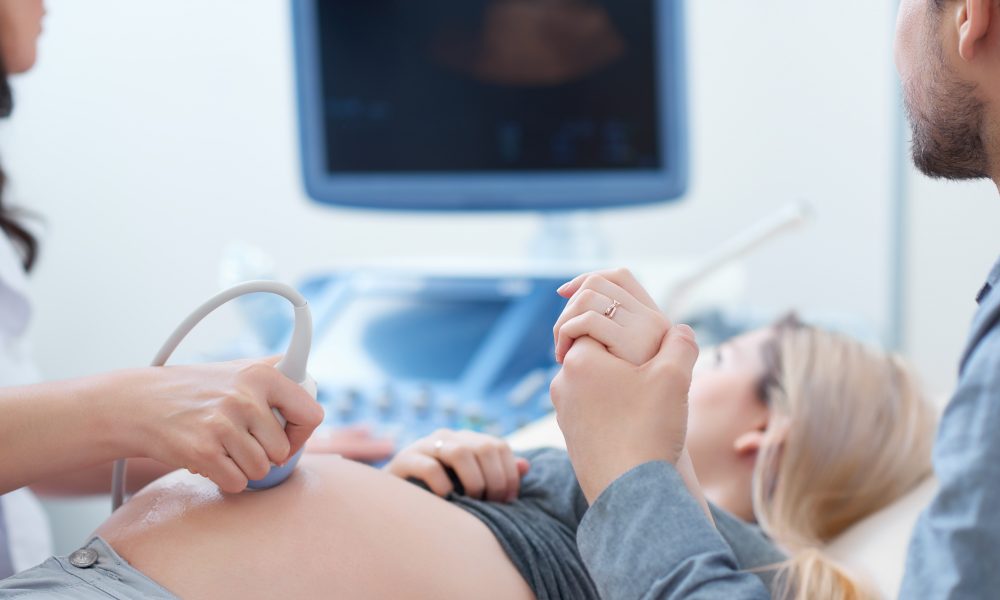
Researchers from the University of Pennsylvania, Children’s Hospital of Philadelphia and Penn Medicine have received a US$50m grant from the National Institutes of Health to study the impact of environmental factors on pregnancy and children’s health.

The research programme is part of the NIH’s Environmental influences on Child Health Outcomes (ECHO) Program, which funds research to uncover how environmental exposures during preconception, pregnancy and early life affect children’s long-term health.

Patients will be enrolled at Penn Medicine while pregnant, then the infants will be followed into childhood via teams at COP.

Sunni L. Mumford, co-lead investigator and co-director of the Women’s Health Clinical Research Center and deputy director of epidemiology in the Perelman School of Medicine at the University of Pennsylvania, said: “At Penn and CHOP, we serve a diverse population including a group of patients who are underrepresented in other pregnancy and paediatric cohorts in the United States: patients who are Black and insured by Medicaid.

“It is so important to understand how environmental toxicants and beneficial exposures shape the health of Philadelphia’s children.

“By contributing to the national ECHO Cohort, our research will benefit not only our institutional and neighborhood communities but also communities across the country.”

Heather Burris, an attending neonatologist at CHOP and co-lead investigator of the Penn-CHOP study site, said: “We are thrilled to have been chosen as an ECHO Cohort Study Site and for the opportunity to contribute to this important project, which will improve our understanding of the ways the local environment affects our children’s health.

“We know that communities are not equally exposed to environmental toxicants, and we also know that health inequities and disparities are an ongoing public health problem.

“This project will help us shed light on the extent to which the health inequities we see in our patient population are related to neighbourhood environmental exposures.”

Prior research has shown that Black infants are twice as likely to die compared to white infants, primarily due to adverse pregnancy outcomes like preterm birth.

Although extensive efforts have been taken to prevent preterm birth and improve child health, inequities across the population persist, and researchers still do not fully understand how and to what extent specific factors in the environment contribute to these ongoing problems.

To fill this gap, the CHOP and Penn researchers aim to recruit up to 2,500 pregnant people, partners, and offspring over a period of three years into the ECHO Cohort, a nationwide pool of research subjects managed by institutions across the country.

The aim across the ECHO cohort is to establish a group of pregnant people and children from different types of neighbourhoods and communities, which will allow investigators to explore questions about the impact of early environmental exposures on child health at a large and diverse scale.

Over the seven-year period of the grant, the researchers plan to evaluate the impact on maternal-child health of specific “macroenvironmental” factors – that is, factors related to the neighbourhood environment, from those that promote health, like greenspace and walkability, to those that detract from health, like pollution, neighbourhood violence and extreme temperatures.

The team want to identify modifiable factors that influence the risks of abnormal foetal growth, preterm birth, obesity, asthma, and neurodevelopmental delays, as well as whether modifying these factors may improve overall racial health disparities.

The researchers also plan to identify beneficial “microenvironmental” factors – the individual behaviours of a pregnant person, such as diet, physical activity, and sleep, which could potentially close the gap in child health outcomes.

Although prior research has looked at the health impacts of macro- and microenvironmental factors individually, no studies have explored the interplay between the two and the impact they could have on maternal-child health.

Sara B. DeMauro, an attending neonatologist at CHOP and co-lead investigator of the Penn-CHOP study site, said: “The culture of clinical research, excellent scientific environment, and diverse population makes Penn and CHOP the ideal place to innovate in the field of maternal-child health equity.

“The Penn-CHOP ECHO Study Site now joins the Philadelphia Regional Center for Children’s Environmental Health, the Penn Center of Excellence in Environmental Toxicology (CEET), and the CHOP Center for Health Equity in leading the way to improve children’s health, support environmental justice, and reduce health disparities.”

Hormonal health

Study links small bowel microbiome differences to women’s health

Published

on

Small bowel microbiome differences between women and men may help explain why some conditions are more common in women, a study suggests.

The small bowel microbiome is the community of microorganisms living in this part of the digestive tract, where they play vital roles in immune function, metabolism and hormonal regulation.

Researchers found differences between women and men in the composition and organisation of these microbial communities. One bacterial community containing Granulicatella was found only in women.

The study was conducted by investigators at Cedars-Sinai Health Sciences University.

Ruchi Mathur, director of clinical research and clinical operations for the Medically Associated Science and Technology (MAST) Program at Cedars-Sinai and corresponding author of the study, said: “One intriguing finding was a bacterial community containing Granulicatella, which we found only in women.

“Bacteria in this community appear at increased levels in women with polyendocrine metabolic ovarian syndrome, formerly known as polycystic ovary syndrome.”

The researchers also identified differences between women and men in how microbes in the small bowel produce fructans, complex carbohydrates known to trigger digestive symptoms in irritable bowel syndrome (IBS).

IBS is far more common in women than men.

Mathur, who is also a professor of medicine, said: “Our findings show that biological sex is a critical variable in the small bowel microbiome.

“We must consider it as we move toward more personalised approaches to understanding and treating disease.”

Continue Reading

Menopause

Cancer drug could tackle osteoporosis menopause weight gain

Published

on

An experimental cancer drug reduced bone loss and body fat in mice modelling post-menopausal changes, early research suggests.

The compound, CADD522, appeared to strengthen bones and help the animals stay leaner after surgery designed to mimic hormonal changes seen after menopause.

The treatment remains at an early experimental stage and has so far only been tested in animals.

The study, led by the University of East Anglia, investigated CADD522, which was originally developed to block a protein involved in the growth and spread of several cancers.

Mice treated with the compound for eight weeks showed significant improvements in bone health. Scans found increased bone volume and better preservation of the honeycomb-like structures inside bones that are crucial for strength and resilience.

Blood tests suggested the treatment stimulated new bone growth without interfering with the body’s normal process of breaking down and rebuilding bone.

Dr Darrell Green, lead researcher from UEA’s Norwich Medical School, said: “Osteoporosis affects around one in three women over the age of 50, leaving sufferers vulnerable to painful fractures that can seriously impact quality of life.

“Current treatments exist, but many are plagued by side effects, safety concerns or inconvenient dosing schedules that make long-term use difficult.”

The researchers also found that mice receiving CADD522 weighed less than untreated mice despite eating the same amount of food.

They had less body fat and fewer fat deposits in their bone marrow, a process commonly seen after menopause and linked to declining bone health.

The team also examined brain tissue and found that the drug appeared to reverse several menopause-related changes in fatty acids.

Levels of omega-3 fats including DHA remained largely intact, while several other lipid abnormalities shifted back towards healthier patterns.

Green said: “We didn’t directly test for memory or thinking ability, but our work raises questions about whether this drug could one day help address wider menopause-related health problems.”

Safety experiments in mice, rats and dogs found that CADD522 could be taken orally and was well tolerated.

The compound also appeared to be metabolised more slowly in human tissue than in rodents, potentially improving its performance in people.

“This is still in the early stages and has so far only been tested in animals but we hope that the benefits will translate to humans to ultimately reduce fracture rates,” added Green.

The research was led by UEA in collaboration with the University of Maryland, the Scintillon Research Institute in San Diego and the University of Stirling.

Safety testing was funded by The Sir William Coxen Trust as part of the development of CADD522 as a childhood cancer treatment.

Continue Reading

Fertility

Weight loss surgery improves menstrual health and PMOS symptoms, study finds

Published

on

Weight loss surgery was linked to more regular periods and fewer polyendocrine metabolic ovarian syndrome (PMOS) symptoms in women aged 18 to 45 living with obesity in a recent study.

The researchers recommend that women undergoing the procedure have access to preconception care and reproductive counselling to support their reproductive health.

Researchers at the University of Surrey analysed data over 24 months from 84 women who underwent bariatric surgery and 18 women living with obesity who did not have surgery.

Of those who underwent surgery, 49 had gastric bypass procedures and 35 had gastric sleeve surgery.

Women who underwent metabolic bariatric surgery lost more than 30kg on average at 12 and 24 months after the procedure.

Among women with polycystic ovaries, the condition persisted in only 10 per cent after 24 months.

Women also reported a resolution of clinical hirsutism, or excess body hair, by 12 months.

Women who had previously experienced irregular periods reported more regular menstrual cycles after surgery.

Professor Martin Whyte, co-author of the study and professor of metabolic medicine at the University of Surrey, said: “A large proportion of those undergoing bariatric surgery are women of reproductive age, who may be planning a pregnancy in the coming years.

“So much remains unknown about the impact of this type of surgery on women who are planning to have children.

“This raises the question of when the ideal time after surgery is to conceive.”

Women have a higher prevalence of obesity than men, with 57 per cent of women in the UK classified as overweight and 27 per cent living with obesity, which can affect fertility and the health of an unborn baby.

The researchers said 17 women had healthy pregnancies following surgery.

Although this was not specifically examined in the study, no difference in birth weight was observed between babies conceived within or after the first year.

Dr Kathryn Hart, co-author of the study and associate professor in nutrition and dietetics at the University of Surrey, said: “What we have found is that bariatric surgery positively affects the reproductive health of women living with obesity and can improve the likelihood of them having a healthy pregnancy after surgery.

“Dysregulated hormone levels, irregular periods and conditions such as polycystic ovaries are affected by obesity.

“By reducing this, what we have seen is that it can lead to improvements without the need for medication.

“We would suggest that clinicians consider medical intervention for obesity to treat irregularities in the menstrual cycle and issues with fertility.”

Continue Reading

Trending

Copyright © 2025 Aspect Health Media Ltd. All Rights Reserved.

