



Mental health
Women on the pill less likely to report depression, study shows
A new study has shown the prevalence of major depression amongst pill users was significantly lower


Women taking the oral contraceptive pill are less likely to report depression, researchers have found.
The research, which analysed data from 6,239 US women aged 18-55 years old, found that the prevalence of major depression amongst users of the oral contraceptive pill (OCP) was significantly lower, at 4.6 per cent, compared to former OCP users (11.4 per cent).
The study, published in the Journal of Affective Disorders, was led by researchers at Anglia Ruskin University (ARU), alongside experts from the Dana-Farber Cancer Institute in Boston and University of California, Davis.
The researchers have suggested two possible explanations for their findings, which are contrary to a commonly held belief that OCP can cause depression.
One is that taking the pill can remove concerns about unwanted pregnancy, therefore helping to improve the mental health of OCP users.
It is also possible the results could be influenced by “survivor bias”, where women who experience signs of depression while using OCP stop taking it, moving them into the category of former users.
“Contraception is a crucial component of preventive health care,” said lead author, Dr Julia Gawronska, postdoctoral research fellow at Anglia Ruskin University.
“Most women tolerate taking the oral contraceptive pill without experiencing depressive symptoms but there is a subset of women that may experience adverse mood side effects and even develop depression, and the reasons are not entirely clear.
“Unlike some previous studies, we found that women currently taking the oral contraceptive pill were much less likely to report clinically relevant depression compared to women who previously took the pill.”
She added: “Taking the pill could provide positive mental health benefits for some women, simply by removing their concerns about becoming pregnant. The ‘survivor effect’ could also play a part, with women who experience symptoms of depression more likely to discontinue taking it, placing them into the group of former users.
“However, stopping taking the pill without a suitable alternative increases the risk of unintended pregnancy.
“It is important that women are fully supported, provided with full information, and offered alternative forms of contraception if necessary.”
The cross-sectional study used data collected by the Center for Disease Control and Prevention in the US.
In both users and former users, researchers found that widowed, divorced or separated women, obese women or those with a history of cancer were more likely to report depression.
In former users, depression was more commonly reported in Black or Hispanic women, smokers and those with lower levels of education or experiencing poverty.


By Zahra Bhatti, founder, Véa
Women are achieving more than ever, yet many feel constantly mentally stretched and overwhelmed.
Emotional load has become the new glass ceiling.
What is Emotional Load?
Emotional load is not emotionality; it is the ongoing internal coordination of life – the feeling of carrying too much, tracking too much and anticipating too much.
It includes anticipating needs, noticing problems, remembering details, absorbing tension and managing the emotional atmosphere of others.
Sociologist Allison Daminger (2019) describes this as cognitive labour: the planning, organising and foresight that hold the fabric of daily functioning together.
Women disproportionately carry this work across cultures and industries.
They take on the psychological weight of remembering, checking in, smoothing conflict and holding the mental map of what everyone needs next.
This is layered on top of professional responsibilities and domestic expectations, forming a continuous background process that men, statistically, are less likely to absorb (ONS, 2016; Haupt et al., 2023).
The result is not busyness but fragmentation – the steady splitting of attention across competing emotional and logistical demands.
The Neuroscience Behind the Burden
The cognitive and emotional systems involved in emotional load are the same ones required for decision making, creativity and strategic thinking.
When they become overloaded, performance declines even in the most capable individuals. Working memory, the brain’s capacity to hold multiple pieces of information at once, is extremely limited. It breaks down under multitasking and rapid switching (Marois and Ivanoff, 2005).
Emotional monitoring, planning and interpersonal sensitivity draw from the same neural resources as focus and problem solving (Ochsner et al., 2012).
Emotional suppression – managing others’ emotions while sidelining one’s own – further increases cognitive fatigue (Goldin et al., 2008). Similarly, women are also biologically more reactive to relational stress.
Research indicates stronger amygdala responses to interpersonal tension (Bangasser et al., 2009) and a stress pattern known as tend-and-befriend, in which oxytocin amplifies emotional awareness rather than dampening it (Taylor et al., 2000).
In other words, women are both socially expected and biologically primed to carry a greater share of emotional responsibility. Over time, this does not simply create stress – it creates a form of cognitive erosion.
How Emotional Load Becomes a Glass Ceiling
When mental bandwidth is consistently used to manage the emotional and relational needs of others, less of it is available for the types of thinking that leadership requires: long-term planning, deep focus, innovation and strategic clarity.
High emotional load siphons the cognitive resources needed for complex problem solving (Sweller, 1988). It pushes women into organisational and interpersonal roles that maintain team functioning but carry little formal recognition.
This invisible work gradually expands until it displaces higher-leverage opportunities. Many women describe a version of burnout that is not exhaustion but depletion: being mentally full yet intellectually under-stimulated, over-functioning yet under-supported.
Studies also show women are more likely to internalise this overload, interpreting burnout as a personal failing rather than a structural imbalance (Maslach and Leiter, 2016).
Emotional exhaustion remains one of the strongest predictors of women leaving organisations altogether (Leiter and Maslach, 2009); McKinsey & Company and LeanIn.Org, 2023).
This is the quiet barrier that does not show up in diversity reports – a barrier built not from corporate policy but from constant cognitive interruption.
Where Femtech Still Falls Short
The femtech ecosystem has made extraordinary progress but it still treats emotional and cognitive experience as peripheral.
Today we can track ovulation to the hour, optimise sleep through biometric sensors and monitor HRV daily. Yet, there is no equivalent system for understanding emotional load, cognitive fragmentation or the cumulative mental strain that shapes a woman’s day more than her steps or calories ever will.
Most wellbeing tools focus on surface-level state change – a meditation, a breathwork exercise, a quick reset. These are useful but do not resolve the deeper issue: the mind is full.
There is too much unprocessed emotional material, too many unresolved micro-tensions, too many open cognitive loops. Without integration, clarity does not return.
This gap is precisely why tools like Véa need to exist.
How Technology Can Reduce Cognitive Fragmentation
Technology cannot remove emotional load entirely but it can radically transform how women process and carry it. One of the most robust research findings in psychology is the effect of expressive writing.
Putting thoughts and emotions into words reduces amygdala activation (Lieberman et al., 2007), improves cognitive processing, decreases rumination and strengthens prefrontal regulation (Pennebaker and Smyth, 2016).
Journaling does what the overloaded mind cannot: it externalises, organises and integrates.
When combined with AI, this becomes even more powerful. AI can detect emotional patterns humans miss, surface unacknowledged stressors and nudge micro-reflections that prevent overload from building.
It can help women close mental loops before they accumulate into cognitive clutter.
Done correctly, this is not therapy mimicry but cognitive hygiene. It reduces fragmentation and restores mental bandwidth.
That restoration – not motivation, discipline or resilience – is what many women are missing.
Reframing a Key Metric in Women’s Health
If femtech is serious about advancing women’s wellbeing, it must recognise emotional load as a fundamental determinant of health, performance and possibility.
The next decade of innovation will not come from tracking more biological inputs but from understanding and reducing the cognitive and emotional burdens women carry invisibly every day.
This shift matters because capacity is not an infinite resource.
Emotional load drains the clarity women need to lead, create and thrive. Addressing it removes a barrier that has held women back quietly but powerfully. Women do not need more advice on balance – they need more mental space.
Femtech has transformed how we care for the body.
The next transformation is caring for the mind. This is the problem Véa was built to solve: helping women process, integrate and offload the cognitive and emotional weight that has gone unrecognised for far too long.
Learn more about Véa at veajournal.app/
References
Bangasser, D.A., Eck, S.R. and Ordoñes Sanchez, E. (2019). ‘Sex differences in stress reactivity in arousal and attention systems’, Neuropsychopharmacology, 44(1), pp. 129–139. doi: 10.1038/s41386-018-0137-2.
Daminger, A. (2019). ‘The Cognitive Dimension of Household Labor’, American Sociological Review, 84(4), pp. 609–633.
Goldin, P.R., McRae, K., Ramel, W. and Gross, J.J. (2007). ‘The Neural Bases of Emotion Regulation: Reappraisal and Suppression of Negative Emotion’, Biological Psychiatry, 63(6), pp. 577–586.
Haupt, A. and Gelbgiser, D. (2023). ‘The gendered division of cognitive household labor, mental load, and family–work conflict in European countries’, European Societies, 26(3), pp. 828–854.
Leiter, M.P. and Maslach, C. (2009). ‘Nurse turnover: the mediating role of burnout’, Journal of Nursing Management, 17(3), pp. 351–359.
Leiter, M.P. and Maslach, C. (2016). ‘Understanding the Burnout Experience: Recent Research and Its Implications for Psychiatry’, World Psychiatry, 15(2), pp. 103–111.
Lieberman, M.D., Eisenberger, N.I., Crockett, M.J., Tom, S.M., Pfeifer, J.H. and Way, B.M. (2007). ‘Putting feelings into words: Affect labeling disrupts amygdala activity in response to affective stimuli’, Psychological Science, 18(5), pp. 421–428.
McKinsey & Company and LeanIn.Org. (2023). Women in the Workplace 2023. Available at: https://womenintheworkplace.com/ (Accessed: 1st December 2025).
Marois, R. and Ivanoff, J. (2005). ‘Capacity limits of information processing in the brain’, Trends in Cognitive Sciences, 9(6), pp. 296–305.
Ochsner, K.N. and Gross, J.J. (2008). ‘Cognitive Emotion Regulation: Insights from Social Cognitive and Affective Neuroscience’, Current Directions in Psychological Science, 17(2), pp. 153–158.
Office for National Statistics. (2016). Women shoulder the responsibility of unpaid work. London: ONS. Available at: https://www.ons.gov.uk/employmentandlabourmarket/peopleinwork/earningsandworkinghours/articles/womenshouldertheresponsibilityofunpaidwork/2016-11-10#:~:text=Women%20carry%20out%20an%20overall,to%20cooking%2C%20childcare%20and%20housework (Accessed: 1st December 2025).
Pennebaker, J.W. and Smyth, J.M. (2016). Opening Up by Writing It Down: How Expressive Writing Improves Health and Eases Emotional Pain. New York: Guilford Press.
Sweller, J. (1988). ‘Cognitive Load During Problem Solving: Effects on learning’, Cognitive Science, 12(2), pp. 257–285.
Taylor, S.E., Klein, L.C., Lewis, B.P., Gruenewald, T.L., Gurung, R.A. and Updegraff, J.A. (2000). ‘Biobehavioral Responses to Stress in Females: Tend-and-befriend, not fight-or-flight’, Psychological Review, 107(3), pp. 411–429.




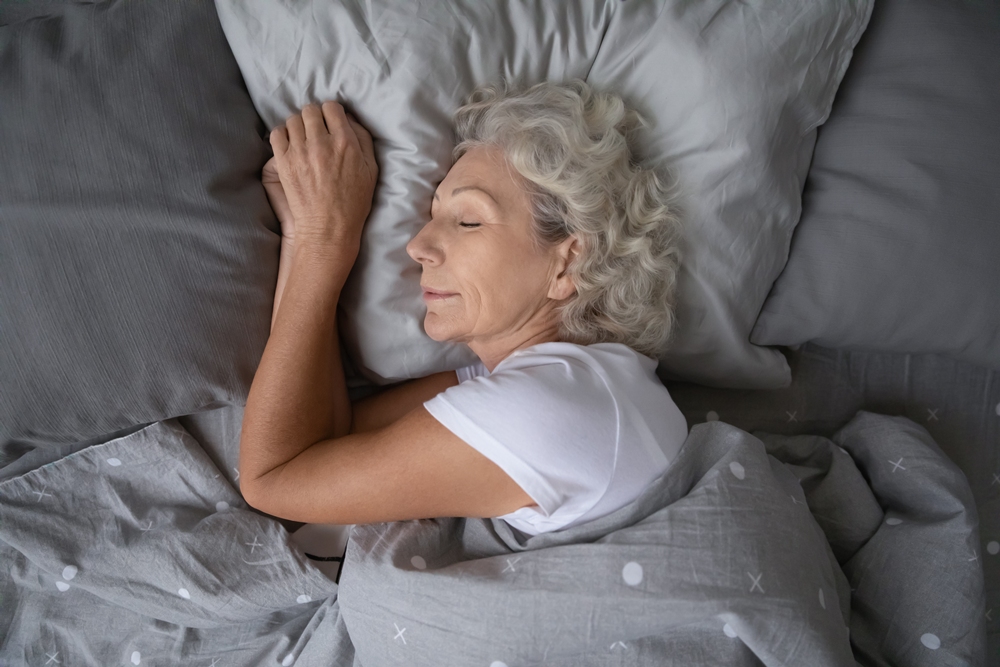
Older women with both insomnia and sleep apnoea show worse verbal memory than those with sleep apnoea alone, a new study has found.
The research revealed that older adults with comorbid insomnia and sleep apnoea, often referred to as COMISA, demonstrated worse memory performance than those with sleep apnoea alone. Sleep apnoea is a condition where breathing repeatedly stops and starts during sleep.
However, when analysed by sex, the association was only significant in women, not men.
The study, conducted by researchers at UC San Diego School of Medicine, involved 110 older adults aged 65 to 83 diagnosed with obstructive sleep apnoea.
Participants completed an overnight sleep study and cognitive testing. COMISA was present in 37 per cent of participants.
Lead author Breanna Holloway, a postdoctoral researcher at UC San Diego School of Medicine, said: “We expected that having both insomnia and sleep apnoea would worsen memory for everyone, but only older women showed this vulnerability.
“That was striking, especially because women typically outperform men on verbal memory tasks.
“The fact that COMISA seemed to offset that advantage hints at a hidden sleep-related pathway to cognitive decline in women.
“Prior studies have shown increased incidence of Alzheimer’s disease in women with untreated sleep apnoea.”
The researchers suggest sex differences in sleep architecture may explain the vulnerability observed in women.
Post hoc analyses revealed that women with COMISA had reduced rapid eye movement (REM) sleep, the stage associated with dreaming and memory consolidation, and more slow wave (deep) sleep compared with men.
Holloway said: “These results point to an overlooked risk in women with both insomnia and sleep apnoea.”
“Because women are more likely to have insomnia and often go undiagnosed for sleep apnoea, recognising and treating COMISA early could help protect memory and reduce dementia risk.”
The researchers noted that the findings support sex-specific screening and treatment strategies.










-

 Opinion4 weeks ago
Opinion: Not ‘just stress’ – How hormonal changes affect women’s brain function
-

 News4 weeks ago
Top 7 drug-free solutions for managing PMS and PMDD in in 2025
-

 Diagnosis3 weeks ago
Researchers develop nasal therapeutic HPV vaccine
-

 News3 weeks ago
Woman files lawsuit claiming fertility clinic ‘bootcamp’ caused her stroke
-

 Entrepreneur4 weeks ago
YON E Health raises €250k for its vaginal health device
-

 Menopause1 week ago
Doctors push back on ‘data-free’ ruling on menopause hormone therapy
-

 Menopause3 weeks ago
Sleep-related disorders linked to hypertension in postmenopausal women
-

 News1 week ago
Innovate UK relaunches £4.5m women founders programme