



Fertility
Partnership to pilot ‘cutting-edge’ embryo selection tool
The partnership is hoped to streamline laboratory operations with the potential future benefit of optimising the embryo selection process

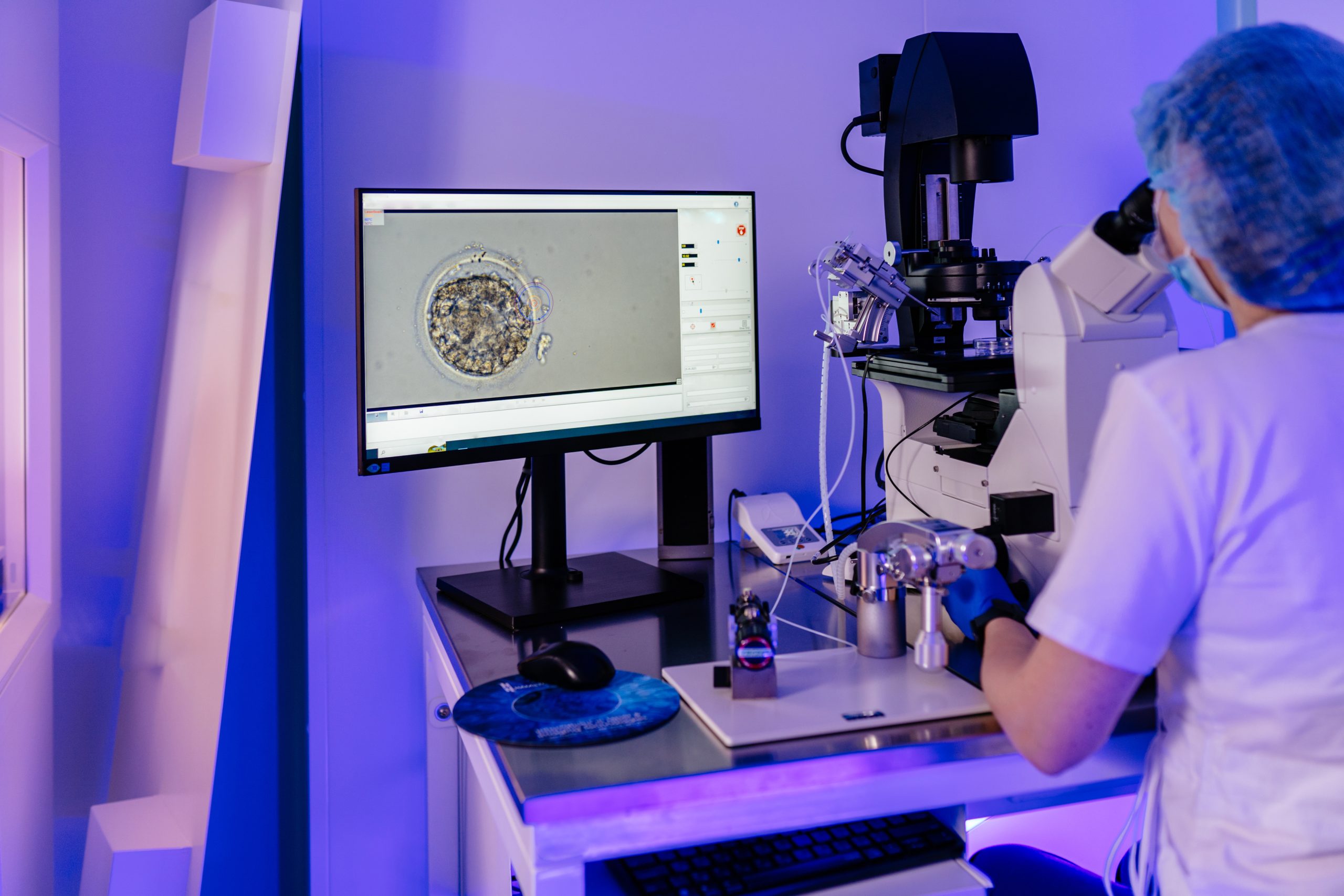
The US fertility technology company Alife Health has teamed up with a network of laboratories to pilot an AI technology for embryo image capture and cataloguing.
The company’s partnership with Ovation Fertility aims to focus on streamlining laboratory operations with the potential future benefit of optimising the embryo selection process.
The technology could enable future “AI-powered” embryo selection.
Alife’s Embryo Assist software promises to help embryologists to create digital records of every embryo, with the added benefit of using the start-up’s clinical decision support algorithm to determine the best embryo for transfer.
Paxton Maeder-York, founder and CEO of Alife, said: “We are thrilled to join forces with Ovation, a leading laboratory network in the country, to showcase the transformative impact of Alife’s technology.
Through this partnership, we aim to demonstrate how Alife’s advanced technology, powered by AI, can not only optimise clinic workflow, but also set a new standard in the precision and consistency of embryo selection.
“We look forward to contributing to Ovation’s commitment to excellence in fertility care.”
Matthew VerMilyea, vice president of scientific advancement at Ovation, added: “At Ovation, we strive to discover and leverage the most state-of-the-art technologies available to us in order to better improve patient outcomes.
“The Alife Embryo Assist software provides our laboratories with a structured digital approach to a rather manual and cumbersome process.
“I believe that by implementing Alife’s technology, we will see an improvement in lab efficiency and performance, which ultimately will help our network provide the best possible outcomes for every individual hoping to grow their family.”
The Embryo Assist software claims to allow embryologists to capture images of each embryo and streamline the embryo reporting process by eliminating the need to manually transcribe information between systems.
Alife expects the tool to “elevate” laboratory quality-control measures by providing an activity and audit trail for every embryo, viewable in real time.
To receive the Femtech World newsletter, sign up here.




Men who eat more ultra-processed food may be more likely to face fertility issues, a study suggests.
Ultra-processed foods, or UPFs, include bread, cakes, pastries, fried foods and salty snacks.
They contain artificial ingredients and high levels of fat, sugar and salt. Previous studies have linked UPFs to at least 32 serious health conditions, including heart disease, cancer and dementia.

Romy Gaillard, an epidemiologist at Erasmus University Rotterdam and lead researcher of the study, said: “Our findings suggest that a diet low in UPFs would be best for both partners, not only for their own health, but also for their chances of pregnancy and the health of their unborn child.
“We should move away from the idea that only the health and lifestyle of mothers-to-be is important for pregnancy and offspring outcomes, and recognise that the health and lifestyle of both the mother- and father-to-be play an important role.
“Our results highlight the need to pay more attention to male health in the preconception period, which has traditionally been overlooked.”
The Dutch study tracked health data from 831 women and 651 men who were trying for a baby.
On average, women said about a fifth of their diet consisted of UPFs, while men said roughly a quarter did. More than one in ten couples said more than a third of their diet was made up of UPFs.
Researchers at Erasmus University Rotterdam found that men with the highest UPF intake were at a 75 per cent greater risk of subfertility, where it takes longer for a partner to become pregnant, than those with an average diet.
Just under 40 per cent of the men surveyed experienced subfertility overall, but among those consuming the most UPFs this rose to nearly 70 per cent.
The study also found that the unborn children of women with UPF-heavy diets were slightly more likely to experience developmental issues.
These unborn children had slightly smaller yolk sacs, one of the earliest structures to form in pregnancy during the first six weeks.
They also took marginally longer to develop from a fertilised egg into an embryo, a process known as embryonic growth that generally happens in the first two months of pregnancy.
Previous studies have suggested slower embryonic growth can sometimes be linked to premature birth, miscarriage and an increased risk of heart and blood problems in childhood.
The authors said further research was needed, particularly because the study was observational, meaning it cannot prove that UPF consumption directly led to these fertility issues.
However, the researchers said the findings suggest couples, but particularly men, trying for a baby should avoid UPFs where possible.
Experts welcomed the findings but urged caution over the study’s limitations on such a sensitive subject.
Channa Jayasena, a professor of reproductive endocrinology at Imperial College London, said the results were ‘interesting, but there are several reasons to be cautious interpreting them’.
He said: “First, we have no way of knowing whether it is UPF itself, or some other behaviour that is linked with the things they observed.
“Secondly, the differences observed are tiny, and hardly significant compared with measures such as weight loss.
“This means that even if UPF are causing reproductive problems, their impact on individuals appears very small indeed.
“We know from previous research that in general all couples should prioritise a healthy diet, exercise, and smoking cessation when trying to get pregnant.
“Whether avoiding UPF will offer additional benefits remains unresolved.”
Gunter Kuhnle, a professor of nutrition and food science at the University of Reading, said ‘fertility is an important but very sensitive topic and should therefore be handled accordingly’.
He raised concerns about the questionnaire used in the study, which he said ‘does not appear to have been developed or validated for ultra-processed food’.
Kuhnle added: ‘Given that the assessment of ultra-processed food intake has severe limitations, the conclusions of the study, and the recommendations, need to be interpreted carefully.”

Peers are set to debate abortion law changes that would pardon women in England and Wales already criminalised and halt active police investigations.
Last summer, MPs voted to end the criminalisation of women who terminate pregnancies outside the legal framework through a new clause in the crime and policing bill.
The House of Lords will consider its own series of amendments to the legislation on Wednesday, including two that would end active police investigations into suspected illegal abortions and pardon women who have already been criminalised.
Liberal Democrat peer Elizabeth Barker, who has put forward one of the amendments, said: “When I heard how the system has treated these women and girls when they are at their most vulnerable, and how they may have to explain this every time their [disclosure and barring service] check gets renewed, it was clear this cruelty had to be stopped.”
“Although there are far fewer who have been convicted, that conviction is a life sentence, it prevents them getting jobs, and even when renewing their car insurance every year they’ll have to explain they have a lifelong criminal record.”
Becca was 19 and working as a healthcare assistant in a hospital in the north of England when she realised she was pregnant.
She had had no signs of pregnancy over the prior months and assumed she had only just conceived.
She went to a clinic and saw a doctor who gave her abortion pills, but when she did not experience the bleeding she had been warned to expect, she called NHS 111 and was advised to go to A&E.
A scan then showed she was six months pregnant, and Becca gave birth to her son Harry within an hour.
Because Harry was born at 28 weeks, meaning very prematurely, he was moved to a hospital better equipped to care for premature babies, and then to a third hospital.
“And that is the hospital that ended up calling the police on us,” Becca said.
A few weeks after Harry was born, police arrived at Becca’s home and arrested her for attempted child destruction. Her partner was arrested at the hospital where he had been visiting their son.
Their electronic devices were confiscated. Social services told the couple they were not allowed any unsupervised contact with their son for several months, and it was not until 15 months later that the police investigation was dropped.
Because abortion offences are classed as violent crimes, the fact of an arrest can still be disclosed on a disclosure and barring service check even without a conviction. A disclosure and barring service check is a background check often used by employers.
Becca, now 21, said: “You don’t want to have to tell such a traumatic event to a random stranger who’s going to be your boss.”
If the law was changed so that her arrest records could be erased, she said: “I think it would just be almost like a release from it.
“We could just be able to live a normal life, because it’s having an impact on job applications and plans for the future.”
Her mother, Anne, said: “She’s thinking of training to be a nurse or a midwife, and all of that, I mean it’s possible now, but it’s going to be awkward because she’s going to have to declare it. If that’s gone, she can just carry on just like any 21-year-old making plans.”
Nikki Packer, who was last year cleared of carrying out an illegal abortion, said: “The lasting effects on myself and other women placed under investigation aren’t something I can simply ‘get over’. The current law is ancient, it’s time it reflects modern society.”
Dr Alison Wright, president of the Royal College of Obstetricians and Gynaecologists, said the college was calling on peers to follow the House of Commons and support clause 208, “ensuring that women are no longer at risk of investigation or prosecution for decisions about their own healthcare”.
She added: “It is also vital that the harm already caused is addressed.
“That is why we are also urging peers to support amendment 426B, which would pardon women previously prosecuted under outdated and unjust abortion laws.
“Women who have faced investigation or conviction should not have to continue living with the consequences of this archaic legislation.”











 International Women's Day 20264 weeks ago
Women’s health innovation needs infrastructure, not just investment

 pain conditions4 weeks ago
Home urine tests could detect breast cancer, endometriosis and PCOS

 Mental health4 weeks ago
Tackling women’s mental health with music and tech

 Diagnosis3 weeks ago
Blood test shows promise in endometriosis

 Features4 weeks ago
Korean firm launches plant-based period pads in US

 Insight4 weeks ago
Women’s health leaders warn of censorship

 International Women's Day 20264 weeks ago
Why lung cancer belongs in the women’s health conversation

 Menopause3 weeks ago
Study reveals hidden menopause tech privacy concerns
11 Comments