




Fertility
Peers push to pardon women criminalised under abortion laws


Peers are set to debate abortion law changes that would pardon women in England and Wales already criminalised and halt active police investigations.
Last summer, MPs voted to end the criminalisation of women who terminate pregnancies outside the legal framework through a new clause in the crime and policing bill.
The House of Lords will consider its own series of amendments to the legislation on Wednesday, including two that would end active police investigations into suspected illegal abortions and pardon women who have already been criminalised.

Liberal Democrat peer Elizabeth Barker, who has put forward one of the amendments, said: “When I heard how the system has treated these women and girls when they are at their most vulnerable, and how they may have to explain this every time their [disclosure and barring service] check gets renewed, it was clear this cruelty had to be stopped.”
“Although there are far fewer who have been convicted, that conviction is a life sentence, it prevents them getting jobs, and even when renewing their car insurance every year they’ll have to explain they have a lifelong criminal record.”
Becca was 19 and working as a healthcare assistant in a hospital in the north of England when she realised she was pregnant.
She had had no signs of pregnancy over the prior months and assumed she had only just conceived.
She went to a clinic and saw a doctor who gave her abortion pills, but when she did not experience the bleeding she had been warned to expect, she called NHS 111 and was advised to go to A&E.
A scan then showed she was six months pregnant, and Becca gave birth to her son Harry within an hour.
Because Harry was born at 28 weeks, meaning very prematurely, he was moved to a hospital better equipped to care for premature babies, and then to a third hospital.
“And that is the hospital that ended up calling the police on us,” Becca said.
A few weeks after Harry was born, police arrived at Becca’s home and arrested her for attempted child destruction. Her partner was arrested at the hospital where he had been visiting their son.
Their electronic devices were confiscated. Social services told the couple they were not allowed any unsupervised contact with their son for several months, and it was not until 15 months later that the police investigation was dropped.
Because abortion offences are classed as violent crimes, the fact of an arrest can still be disclosed on a disclosure and barring service check even without a conviction. A disclosure and barring service check is a background check often used by employers.
Becca, now 21, said: “You don’t want to have to tell such a traumatic event to a random stranger who’s going to be your boss.”
If the law was changed so that her arrest records could be erased, she said: “I think it would just be almost like a release from it.
“We could just be able to live a normal life, because it’s having an impact on job applications and plans for the future.”
Her mother, Anne, said: “She’s thinking of training to be a nurse or a midwife, and all of that, I mean it’s possible now, but it’s going to be awkward because she’s going to have to declare it. If that’s gone, she can just carry on just like any 21-year-old making plans.”
Nikki Packer, who was last year cleared of carrying out an illegal abortion, said: “The lasting effects on myself and other women placed under investigation aren’t something I can simply ‘get over’. The current law is ancient, it’s time it reflects modern society.”
Dr Alison Wright, president of the Royal College of Obstetricians and Gynaecologists, said the college was calling on peers to follow the House of Commons and support clause 208, “ensuring that women are no longer at risk of investigation or prosecution for decisions about their own healthcare”.
She added: “It is also vital that the harm already caused is addressed.
“That is why we are also urging peers to support amendment 426B, which would pardon women previously prosecuted under outdated and unjust abortion laws.
“Women who have faced investigation or conviction should not have to continue living with the consequences of this archaic legislation.”














Femtech World is thrilled to reveal the shortlist for the Fertility Innovation Award.
The award, sponsored by FinDBest IVF, celebrates a pioneering product, service or initiative that is transforming fertility care and support.
FinDBest IVF is a global B2B digital platform created to simplify and accelerate how IVF and ART manufacturers connect with trusted, pre-vetted distributors around the world.
This year’s nominees represent a remarkable breadth of approaches to fertility care: from clinic-floor breakthroughs to at-home hormone intelligence to truly borderless access.
Three companies made the cut, with each tackling a real, persistent barrier in reproductive health.
Congratulations to the shortlist and many thanks to everyone who entered.
Fertility Innovation Award Shortlist

HRC Fertility’s Needle-Free IVF is a pioneering advancement designed to transform one of the most challenging aspects of fertility treatment: daily hormone injections.
Developed by board-certified reproductive endocrinologist Dr Rachel Mandelbaum, this innovative approach reimagines how stimulation medications are delivered during IVF and egg freezing, dramatically improving the patient experience while maintaining the same trusted clinical outcomes.
Inspired by feedback from patients who struggled with the injection process, Dr Mandelbaum adapted an innovative drug-delivery system commonly used in other areas of medicine and applied it to reproductive care

Mira is a hormonal health technology company that provides lab-grade hormone testing and AI-driven insights to help women and couples understand their fertility.
The platform has already supported more than 200,000 couples on their fertility journeys worldwide, helping over 60,000+ users achieve pregnancy.
For some users, pregnancy rates have reached up to 89 per cent within six months, demonstrating how accurate hormone data can significantly improve fertility outcomes.

Founded in 2021 by Marija Skujina, a Certified Fertility Nurse Specialist accredited by the European Society of Human Reproduction and Embryology, with nearly 15 years of clinical experience at one of the world’s top IVF clinics, and having navigated her own fertility journey as a patient, Marija built the clinic she had always wished existed.
Plan Your Baby began with a bold, but simple mission – make best quality fertility and pregnancy available anywhere.
Plan Your Baby has created a new generation fertility and pregnancy clinic with patients accessing expert consultations remotely, while blood tests and ultrasound scans are available at over 450 locations across the UK, eliminating the exhausting travel burden that often forces people to take days off work, relocate appointments, or abandon treatment altogether
What happens now
The shortlist will be judged by a representative from category sponsor FindBestIVF, with the winner announced at a virtual event on June 19.
Winners will receive a trophy and be interviewed by a Femtech World journalist.













 Fertility3 weeks ago
Future Fertility raises Series A financing to scale AI tools redefining fertility care worldwide

 News2 weeks ago
Women’s digital health market set to reach US$5.28 billion in 2026 – report

 Fertility4 weeks ago
Future Fertility partners with Japan’s leading IVF provider, Kato Ladies Clinic
 Diagnosis3 weeks ago
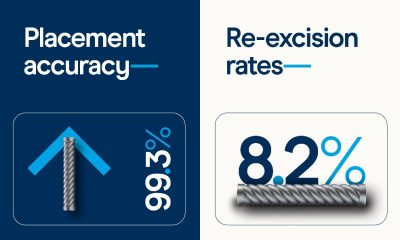
New meta-analysis further supports low re-excisions and high placement accuracy with the Magseed marker

 Menopause4 weeks ago
More research needed to understand link between brain fog and menopause, expert says

 Mental health3 weeks ago
Lifting weights shows mental health and cognitive benefits in older women, study finds

 Entrepreneur4 weeks ago
Flora Fertility closes US$5m seed round

 Menopause3 weeks ago
Resistance training has preventative effects in menopause, study finds
Pingback: where to buy ivermectin pills
Pingback: azitromicina
Pingback: ciprofloxacin hcl
Pingback: doxycycline hyclate 100mg
Pingback: metoprolol succinate xl
Pingback: fluconazole for yeast infection otc
Pingback: lasix diuretic tablet