To receive the Femtech World newsletter, sign up here.
News
Research finds inequities in treatment of postpartum depressive symptoms
A new study has uncovered significant underdiagnosis and undertreatment of postpartum depressive symptoms

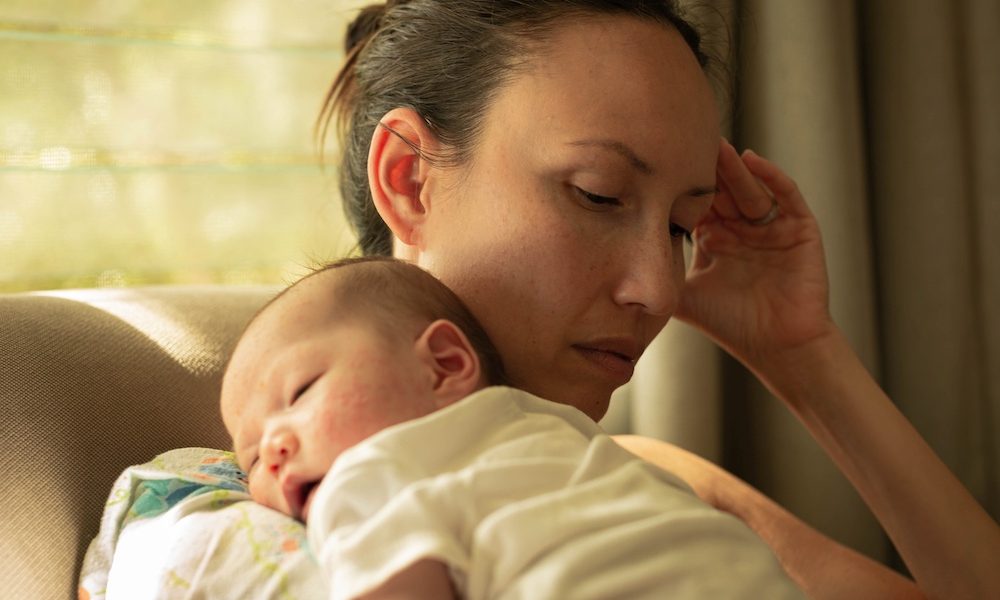
Black, Asian and Hispanic women are the least likely to receive any form of postpartum mental healthcare, new research has shown, highlighting stark inequities in the treatment of postpartum depressive symptoms.
The research, conducted by scientists at the UNC Gillings School of Global Public Health and the Columbia University Mailman School of Public Health and published in Health Affairs, has uncovered significant underdiagnosis and undertreatment of postpartum depressive symptoms.
The study, led by Sarah Haight, doctoral candidate in epidemiology at the Gillings School in collaboration with Jamie Daw, assistant professor of health policy and management at the Mailman School, found “stark” racial and ethnic inequities in treatment for those with postpartum depressive symptoms.
The research drew on data from a novel survey led by Daw at Columbia University that followed up with 4,542 postpartum people who had a live birth in 2020 in seven jurisdictions: Kansas, Michigan, New Jersey, Pennsylvania, Utah, Virginia and New York City.

The researchers found that 11.8 per cent of those sampled reported postpartum depressive symptoms at two to six months postpartum.
However, only one in four individuals with depressive symptoms received a perinatal mood and anxiety disorder (PMAD) diagnosis, and one in two reported receiving some form of mental health care in the first year postpartum.
The study found that while there were no statistical differences in PMAD diagnoses based on race or ethnicity, among those with depressive symptoms, 67 per cent of white respondents received postpartum mental health treatment compared to only 37 per cent of Hispanic and Black respondents and 19 per cent of respondents who identified as Asian, Native Hawaiian, Pacific Islander, Southwest Asian, Middle Eastern or North African.
“Our study in concert with existing work shows that Asian, Black and Latine birthing people, who may be at the greatest risk of postpartum depression, are the least likely to receive any form of postpartum mental healthcare, illustrating stark racial and ethnic inequities in how postpartum depression is identified and managed in the US,” said Haight.
Daw, assistant professor of health policy and management at the Mailman School, said: “Previous studies on PMAD symptoms, diagnosis and treatment have typically focused only on the early postpartum period.
“By following people through the postpartum year, our findings elucidate how many individuals with mental health symptoms fall through the cracks and don’t ever receive the care they need.”
The study findings suggest that policies that require and reimburse universal mental health screening at postpartum visits, ensure connections to care, reduce gaps in postpartum insurance coverage and require clinician training in culturally responsive resources could improve equity of postpartum depression diagnosis and care in the US.
“Half of pregnancy-related deaths in the US occur in the postpartum year and mental health conditions are the second leading cause of deaths in the late postpartum period,” Daw explained.
“Improving equitable access to PMAD diagnosis and treatment is thus critical to addressing the maternal health crisis in the US.”
While the findings document disparities in care, Haight said said more work is needed to investigate how “structural and interpersonal” racism may explain these observed inequities and what efforts are needed to address these mechanisms and their harmful effects.
Pregnancy
Early birth safer in high blood pressure pregnancies – study
News
Low insulin diet and avoiding four food groups may prevent menopause weight gain
News
Three brain and mental health innovators shortlisted for award

We are excited to reveal the three exceptional innovators shortlisted for the Brain & Mental Health Innovation Award at the Femtech World Awards 2026.
The award recognises groundbreaking work addressing the cognitive and emotional health challenges that uniquely and disproportionately affect women.
This award is sponsored by Women In Cloud, the global network of 120,000 women tech founders, executives, professionals and allies across 80 countries, united in their mission to make the tech ecosystem an inclusive force for change – and to unlock US$1 billion in new economic access by 2030.
The shortlisted entries will now be judged by a representative from Women In Cloud who will announce the winner at a virtual event on June 19.
Congratulations to the shortlist and thank you to everyone who entered or nominated.
Brain and Mental Health Innovation Shortlist

HealCycle is a clinical and social breakthrough targeting what founder Ananya Grover calls the “Silent Decade” – the years when women’s endocrine health and environmental stressors are routinely dismissed by traditional healthcare silos.
Under the clinical leadership of psychiatrist Dr. Aninda Sidhana, HealCycle monitors HPO-axis markers, addresses conditions like PMDD, and integrates an AI companion, Tara, built on the principle of Radical Empathy.
Backed by the WICCI National Women’s Mental Health Council and designed to meet WHO standards for gender-responsive care, HealCycle is replacing silence with science – from Delhi to the world.

Môr is reimagining cognitive wellbeing from the ground up with the first science-led, female-first nutritional system designed around how women’s brains actually work.
Grounded in compelling research – including findings from Weill Cornell Medicine showing accelerated metabolic brain decline during menopause transition – Môr’s patented AM/PM chrono-targeted architecture delivers the right ingredients at the right time: daytime mental clarity and stress resilience in the morning, nervous system recovery and sleep support in the evening.
With backing from Innovate UK and a clinical feasibility study in development, Môr is building for the invisible majority: cognitively depleted women who have been failed by a market that never built for them.

Véa is an AI-powered emotional operating system that builds a living cognitive profile of each user, helping women understand their thoughts, triggers and behavioural patterns through neuroscience-backed journalling.
Véa does not just record how women feel, it connects the dots across weeks, months and years to reveal the hidden architecture of their emotional world.
Having already analysed over 101,000 anonymised words journaled to identify 3,000+ specific cognitive distortions – such as ‘double-bind’ guilt and ‘catastrophising’ – Véa is closing the critical gender data gap in mental health.
Entrepreneur4 weeks agoFuture Fertility raises Series A financing to scale AI tools redefining fertility care worldwide
News3 weeks agoWomen’s digital health market set to reach US$5.28 billion in 2026 – report
Diagnosis4 weeks agoNew meta-analysis further supports low re-excisions and high placement accuracy with the Magseed marker
Diagnosis4 weeks agoNIPT or NT scan? Why the 2026 evidence supports doing Both
Insight3 weeks agoWhy the UK’s fertility rate keeps falling – and what it means if you’re trying now
Wellness3 weeks agoWomen’s HealthX unveils Northwell Health, Corewell Health, Biogen & more to headline Chronic Disease stage
Opinion2 weeks agoWhat Maternal Mental Health Month reveals about where postpartum support actually breaks down
Fertility3 weeks agoToxins and climate harms having ‘alarming’ effect on fertility, research warns