




Motherhood
Funding boost to accelerate AI innovation in women’s health


Agentic AI platform Ema has raised US$3m to accelerate AI innovation in women’s health.
Ema has been trained on a proprietary dataset of 10 million interactions between women and
physicians discussing health and wellness together.
Made by women for women’s health, the platform has been clinically-vetted to deliver personalised care and help women make informed decisions about their health.
La Keisha Landrum Pierre, managing partner at investor Emmeline Ventures, said: “We invested in Ema because they are redefining women’s health with a powerful combination of empathy and technology.
“Ema goes beyond generative AI, offering a trusted partner that understands women’s unique needs. By harnessing clinically sound AI, Ema empowers women (and their families) along with their clinical providers to achieve better outcomes, reshaping how care is delivered for a healthier, happier, and more empowered future.”
The funding is a precursor to Ema’s anticipated nextround which will fuel continued AI innovation and support of their enterprise clients like such as PatientsLikeMe and Willow.
“Ema has proven its ability to significantly advance women’s health,” said Amanda Ducach, CEO of
Ema.
“As an example, in perinatal mental health conversations, an impressive 75 per cent of women who took
the EPDS depression assessment through Ema sought professional mental health support by booking
appointments.
“Moreover, 34 per cent of women engaging with Ema during the campaign displayed signs of
depression, highlighting the critical need for accessible mental health resources. Our platform’s ability to
foster meaningful engagement and connect women to care underscores its transformative impact in
addressing mental health challenges on a broad scale.”



Pressure to have a natural birth can cause lasting psychological harm when labour does not go to plan, new research shows.
The study found that the messages women receive during pregnancy are directly linked to the shame and self-blame many feel when those expectations are not met.
For the first time, the research provides an explanation for why unmet birth expectations contribute to psychological harm.
Several women involved in the research said they felt they had not given birth “properly”, even when medical intervention had saved their lives.
Rebecca Matthews, lead author and PhD researcher at the University of Reading, said: “These women were not failed by their bodies, they were failed by the messages they were given.
“Birth trauma does not begin with birth. It begins in the ideology sold to women throughout pregnancy.
“For the first time we can explain precisely how, by showing how birth culture creates a moral standard for women that defines what a good mother does and then leaves them to blame themselves when birth does not match that.
“Until we reform the way we prepare women for birth, we will keep seeing the same devastating consequences for mothers and their babies.”
The researchers interviewed 21 first-time mothers in the UK whose births did not go as planned.
From NCT and hypnobirthing classes, to social media to midwives, the researchers heard how women are surrounded by messaging that frames natural, unmedicated vaginal birth as the “gold standard”, not just medically preferable, but as a mark of being a good mother and the first test of maternal worth.
Research shows around half of women report their birth differed significantly from their expectations, and for the women in this study, all of whom experienced exactly that, the psychological consequences were profound.
Women judged themselves against the internalised moral standard that this ideology had created.
The researchers are calling for antenatal education to stop treating one kind of birth as the goal and to present all birth outcomes as equally valid routes to motherhood.
They also call for better postnatal screening for women whose births did not go as expected, specifically targeting the shame, self-blame and identity disruption that this research identifies as mechanisms underlying birth trauma.
The findings align with and extend the conclusions of the Kirkup, Ockenden and Birth Trauma Inquiry reports, all of which documented how the institutional pursuit of “normal birth” contributed to preventable harm.
This research provides the first theoretical explanation of how that ideology generates individual psychological harm and points to antenatal messaging as the primary site of such preventable harm.
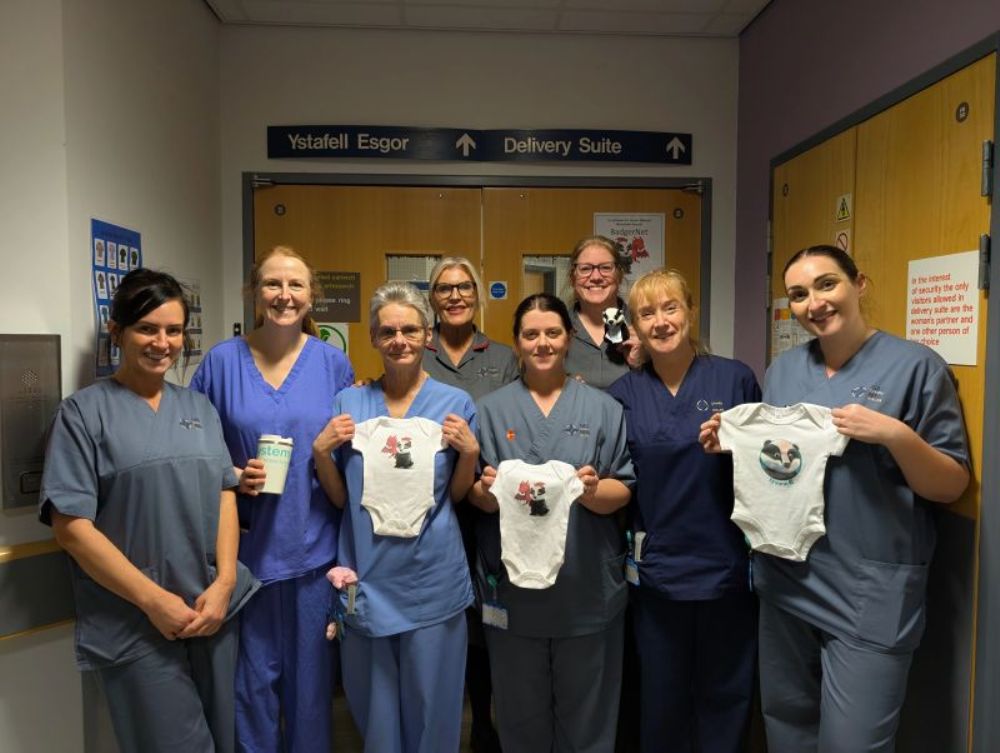
System C has completed the national rollout of BadgerNet Maternity across all seven NHS Health Boards in Wales. This is the first time any UK nation has unified its maternity care under a single digital record and patient-facing app.
With approximately 26,000 babies born annually in Wales, BadgerNet connects maternity information across organisational boundaries in the country.
Expectant parents can access their records, maternity appointments and key updates digitally through a single app, wherever they receive care while clinicians have secure access to the right information at the point of care.
The national three-year agreement across all Heath Boards replaces a patchwork of separate local systems and eliminates the need for paper hand-held notes.
Anthony Tracey is director of digital at Hywel Dda University Health Board, the final of the Welsh Health Boards to go live with BadgerNet.
He said: “The rollout of BadgerNet across Wales is a vitally important step forward in modernising our maternity services and providing a consistent service across the country.
“By giving expectant parents direct access to their information and enabling clinicians to share data more effectively, we are strengthening safety, transparency and consistency in maternity care nationwide.”
For expectant parents, the single digital maternity record transforms how they engage with their care.
Instead of carrying paper notes and repeating information at every appointment, parents can access key details, appointments and updates digitally, supporting more informed conversations and shared decision-making.
The result is greater transparency, fewer administrative frustrations and a more joined-up experience throughout pregnancy and into the postnatal period, regardless of which health board they fall under.
For clinicians and Health Boards, the joined-up approach reduces duplication and streamlines handovers across teams and sites. Information is digitally captured once and made available securely wherever it is needed, helping to minimise errors, reduce time spent tracking down notes and support more efficient multidisciplinary working.
At a national level, linking maternity data across Wales creates a foundation for safer, more consistent care.
Aggregated, standardised information enables earlier identification of trends and variation, supports evidence-based policy decisions and enhances long-term service planning.
With a comprehensive view of maternity activity and outcomes across the country, Wales is now better positioned to raise standards for parents, babies and families.
Guy Lucchi, managing director of healthcare at System C, added: “Delivering a truly national approach across all seven Health Boards is a significant achievement for Wales.
“One shared system means information flows with the patient, not the organisation.
“That reduces duplication, supports earlier identification of risk and frees up valuable clinical time.
“Crucially, linking maternity data at a national level provides powerful insight to drive improvement. Health Boards can benchmark, plan services with greater confidence and ensure resources are targeted where they are needed most, while expectant parents benefit from clearer communication and a more connected experience of care.”













 Menopause1 week ago
Perimenopause misinformation ‘putting women at risk’

 Insight4 weeks ago
NIH Grant terminations disproportionately impact minority scientists, research finds

 Adolescent health4 weeks ago
WUKA brings Period-Positive Pool Party to London Aquatics Centre to keep girls swimming through puberty
 Insight3 weeks ago
PCOS renamed after decade-long campaign to end ‘cyst’ misconception

 Events4 weeks ago
WHIS 2026 unveils agenda and first speakers for the leading women’s health summit

 Menopause4 weeks ago
CBT shows promise for menopause insomnia and hot flashes

 Hormonal health2 weeks ago
NHS urged to update website following renaming of PCOS
 News6 days ago
Three menopause innovators shortlisted for Femtech World Award