




Cancer
North Wales to pilot groundbreaking AI cancer detection tool


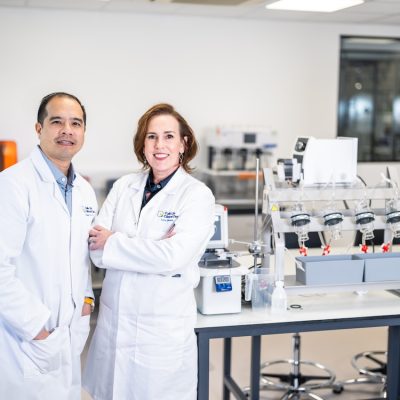
NHS Wales is teaming up with AI tech company, Paige, to launch a new pilot project that will evaluate Paige’s AI-assisted cancer diagnostic application – PanCancer Detect – in what will be the platform’s first ever clinical use.
Paige’s PanCancer Detect is a first of its kind application that detects cancer across multiple organs and different tissues, including GI, GU, lung, cervix, endometrium, breast, skin, brain and rare cancer variants. The platform has been developed using more than three million pathology slides in order to predict whether a whole slide image (WSI) is benign or suspicious for cancer.
The pilot project will take place across Betsi Cadwaladr University Health Board (BCUHB) hospitals in North Wales, UK, and will test the platform to see if it can streamline pathology workflows and enhance patient care by triaging routine clinical cases.

It will also involve the prospective assessment of cases across all tissue types consecutively received for routine evaluation. This will determine whether the use of AI can shorten turnaround times for malignant case assessments and facilitate earlier detection of cancer to get the results to patients faster.
“Through this pilot, we aim to establish the real-world utility of AI to prioritise potentially malignant cases and reduce diagnostic delays,” said Dr. Alistair Heath, histopathologist at BCUHB.
“By analysing the impact on turnaround times and diagnostic accuracy, we can begin to understand how to better support quality improvement, more efficient patient management, and ultimately, faster results for patients.”
Cases flagged as suspicious by the PanCancer Detect platform will be prioritised for pathologist review, while those marked as benign will follow the standard workflow.
“We are committed to exploring how innovative technologies can support our pathology services and ultimately benefit patients across North Wales,” said Dr. Muhammad Aslam, consultant pathologist and clinical director for North Wales Diagnostic and Specialist Clinical Services.
“This pilot represents an important step toward that vision, and we are pleased to be working on this initiative.”
“We are thrilled to support this pioneering pilot with NHS Wales,” said Dr. Juan Retamero, medical vice president at Paige.
“Paige PanCancer Detect was designed to assist pathologists across tissue types, and this project provides a valuable opportunity to see it in action in a clinical setting.”










Australia’s drug advisory committee has recommended wider funding of triptorelin for women with breast cancer or endometriosis.
The recommendation comes after AstraZeneca announced plans to remove Zoladex from the market, risking leaving more than 7,500 women with breast cancer without an alternative treatment.
Both medicines block the release of oestrogen and testosterone and can be used as part of treatment, or for fertility preservation, in some forms of cancer.

The Pharmaceutical Benefits Advisory Committee met urgently in July and recommended making triptorelin unrestricted under the Pharmaceutical Benefits Scheme (PBS), which would mean it was funded for all uses.
The drug has been listed on the PBS for prostate cancer since 2006.
Triptorelin and Zoladex can also be used to treat endometriosis and to block puberty for either precocious puberty or gender-affirming care.
Vicki Durston, director of policy and advocacy at Breast Cancer Network Australia, described the recommendation as “a significant step forward” and said access to the medicine could mean the difference between life and death for some patients.
She said some women had already chosen to have their ovaries removed because of uncertainty over Zoladex supplies.
Marilla Druitt, Victorian state chair of the Royal Australian and New Zealand College of Obstetricians and Gynaecologists, said it remained unclear whether triptorelin would work exactly the same way as Zoladex, but the recommendation was likely to be positive for patients with endometriosis and pelvic pain.
She said: “I’m glad we’ve got an alternative.”
“That’s fantastic, and it remains to be seen whether or not it will be as good, but pain is so complex, pain is a really hard thing to study because it’s got so many contributors.”
Druitt said further research would be needed after the medicine was introduced.
If accepted by the federal government, the recommendation would also allow PBS funding of triptorelin for puberty suppression in precocious puberty and gender-affirming care.
This would make gender-affirming care federally funded through the PBS for the first time and would remove a financial barrier for transgender children in Queensland and the Northern Territory.
Stuart Aitken, medical director of Gender Health Australia, said the recommendation had sparked “absolute joy” among his patients.
He said: “It takes away a huge barrier to accessing evidence-based care.”
“It means that the ban has a very limited effect.”


An AI tool has identified microscopic breast cancer patterns that could help medical professionals better forecast disease progression.
The tool, called CenSegNet, was developed to analyse hundreds of thousands of cells in tumour samples and detect abnormalities in structures known as centrosomes.
Centrosomes are small structures inside cells that ensure DNA is divided equally during cell replication. Researchers say abnormalities in these structures have been considered a hallmark of cancer for more than a century.
In cancerous tissue, centrosomes can replicate excessively, driving the progression of the disease.
Scientists at the University of Southampton used the system to study tissue from 127 breast cancer patients being treated at University Hospital Southampton.
More than 330,000 centrosomes were analysed, revealing two distinct abnormalities that had previously been considered part of the same process.
One involved cells developing too many centrosomes, while the other involved centrosomes becoming abnormally enlarged.
Researchers found the two defects behaved independently and could occur in different areas of the same tumour.
Dr Salah Elias, of the University of Southampton’s school of biological sciences and institute for life sciences, said: “For more than a century, centrosome abnormalities have been recognised as a hallmark of cancer, but studying them in patient tissues has been extremely challenging.
“CenSegNet allows us to analyse these defects at single-cell resolution across entire tumours and uncover patterns that were previously impossible to see.
“Rather than viewing centrosome abnormalities as a single phenomenon, our study shows that they have distinct biological states with different spatial distributions and clinical associations.”
The platform also helped uncover a link between different centrosome abnormalities and features of cancer.
Tumours with high levels of enlarged centrosomes were more aggressive, while patients whose cells had lower levels had a better chance of survival.
Dr Elias said: “Specific combinations of defects may influence how a tumour grows, invades surrounding tissues and responds to treatment.
This opens the door to developing new biomarkers and, ultimately, more personalised treatment strategies.”
Researchers hope AI could eventually be used to track disease by analysing the behaviour of cell structures.
The team also plans to combine CenSegNet with more data to explore whether it could help guide treatment decisions.

Glaucoma drugs could potentially be repurposed to treat aggressive breast cancer after researchers identified markers linked to response.
Scientists found that several cancers, including breast cancer, melanoma and a type of blood cancer, rely on the same molecule to become aggressive and spread.
Drugs that block the molecule are already used to treat glaucoma and may therefore have potential as cancer treatments.
Researchers also identified markers that could help indicate which patients may respond well to the drugs.
Experts said the findings could help establish which patients may benefit from existing treatments.
Repurposing medicines already shown to be safe could also allow treatments to reach patients faster.
Lead author Victoria Sanz Moreno, professor of cancer cell and metastasis biology at The Institute of Cancer Research in London, said: “Some cancers are particularly aggressive, and once they spread they become very hard to treat.
“Catching these aggressive cancers and preventing their ability to move around the body is really crucial to our mission to keep more people living well with cancer.
“Our research has identified a shared weakness of aggressive cancer cells that could be targeted across many cancer types, wherever they originate in the body.
“We confirmed our findings in aggressive cancers such as breast cancer, melanoma, and a type of blood cancer called acute myeloid leukaemia, but we believe this molecular fingerprint of cancer cells likely to die after treatment applies to many more cancer types.
“It’s reassuring to know that a treatment already exists – a drug currently being used safely in some patients could be adapted to treat these cancers.”
Researchers set out to find markers that could identify which cancers would respond well to drugs blocking ROCK, also known as Rho kinase.
Aggressive cancer cells rely on ROCK as they spread around the body and cause advanced disease that is harder to treat.
The molecule keeps the scaffolding inside cells tense, causing them to contract and become round and generating enough force for cancer cells to squeeze through tissue.
The team, working in the Breast Cancer Now Toby Robins Research Centre at The Institute of Cancer Research, examined data from a drug-sensitivity database to identify which cancer cells responded to ROCK inhibitors.
Breast cancer cells that responded to ROCK inhibitors had a particular gene called E-Cadherin that was not working properly.
In melanoma, responsive cells tended to have a more rounded shape and high activity in a signalling pathway called NFKB.
Acute myeloid leukaemia cells that responded well to ROCK inhibitors had a specific subset of genetic alterations.
Researchers then tested the findings in laboratory tumour samples and mouse studies.
They hope tumour biopsies showing these markers could eventually help identify patients who may respond well to ROCK inhibitors.
Dr Simon Vincent, chief scientific officer at Breast Cancer Now, said: “With around 11,500 women tragically dying from breast cancer every year in the UK, research like this is vital to finding more effective treatment options.
“This study helps to lay the foundation for understanding who among those with certain cancers, including breast cancer, might benefit most from existing drugs. Finding new uses for existing treatments, which we know people can safely take, is easier and faster than developing new cancer drugs from scratch.
“It’s encouraging that these drugs may be especially effective in targeting cancer cells that are more likely to spread and resist treatment.
“While this research is still at an early stage and clinical trials are needed, it’s an important step towards more personalised breast cancer treatments in the future.”
First author Jaume Barcelo, formerly a postdoctoral research fellow at The Institute of Cancer Research in London and now based at Barts Cancer Institute at Queen Mary University of London, said: “Our study has identified a specific pattern of features that is consistent across many cancer types, and that can be used to match the right patients to this treatment.
“The next stage for this research will be to test how these drugs that inhibit ROCK work in combination with other treatments, to maximise the benefit for patients.
“As ROCK inhibitors are already approved to treat glaucoma, I hope that our findings can be used to progress the drugs into clinical trials to treat cancer in the near future.”
The research was funded by The Institute of Cancer Research, Breast Cancer Now, Barts Cancer Charity, Cancer Research UK, Worldwide Cancer Research and UK Research and Innovation.
Susanna Daniels, chief executive officer of Melanoma Focus, said: “Despite major advances in melanoma treatment over the past decade, too many people still die from the disease each year, and not every patient responds to the treatments currently available.
“Every new discovery improves our understanding of how melanoma grows and survives, bringing us closer to treatments that are more effective, more targeted and have the potential to improve survival.
“While these findings are still at an early stage and will need to be tested in clinical trials, they offer an encouraging direction for future melanoma research and the development of more personalised treatments.”











 News2 weeks ago
UK femtech investment surges 194% in a decade, research finds

 News2 weeks ago
Cross-Border Impact Ventures raises US$58m for women and children’s health

 Entrepreneur1 week ago
Applications close August 18 for Women’s Health Innovation Summit 2026 Innovation Showcase

 Menopause1 week ago
Third of women unaware of perimenopause mental health impact

 Hormonal health2 weeks ago
Menstrual data is missing a critical layer: The mind

 Entrepreneur2 weeks ago
Women’s Health Week Europe 2026 releases fully populated agenda ahead of October summit

 Fertility3 days ago
Chelsea FC Women to launch first-of-its-kind player fertility fund

 Menopause1 week ago
Menopausal hormone therapy may lower dementia risk, study suggests