




Diagnosis
AI to check breast cancer scans in groundbreaking NHS trial
The technology could help doctors find malignancies in mammograms, freeing up clinical time


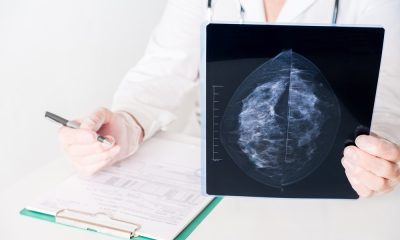
NHS patients in England will be part of a new groundbreaking trial using AI to support breast screening.
The programme, called MIA (mammography intelligent assessment), is developed by the London-based software company, Kheiron Medical, and uses AI to help radiologists identify signs of breast cancer.
The algorithm has already been used on half a million scans from hospitals in Hungary, but it is new to the UK.
According to the Times, MIA will work alongside two members of the breast screening reading team at Leeds Teaching Hospitals NHS Trust to check mammograms from almost 7,000 women.
During the trial, also known as Libra, if the two humans and AI reader all agree a mammogram is normal, the patient will receive the all-clear.
If any of the three disagree, another radiologist will review the scan before deciding whether or not to recall the patient for further checks.
“Breast screening isn’t perfect and it is hoped that the Libra study will lead to improvements in reviewing mammograms,” Dr Nisha Sharma, a consultant breast radiologist at the trust and director of the breast screening programme for Leeds and Wakefield, told the newspaper.
“Cancers that present between screening rounds are often quite aggressive and the reason these can be overlooked is because they are not clearly visible on a mammogram.
“AI works differently to humans and by combining human expertise with technology advances this could lead to earlier detection of cancers and impact positively on women’s lives. We will be the first breast screening unit in England to do a prospective study using AI.”
Simon Harris, senior project manager at Kheiron Medical Technologies, said: “The NHS does not have enough radiologists which is leading to delays in readings and diagnoses and workforce burnout.
“To solve this problem, we are looking at how AI software could replace the second human reader and release that person to do something more clinically urgent.
“We want to demystify what AI is. It is just a piece of software that’s very good at picking up certain patterns that it recognises in images and coming back with an output.”
The UK is currently short of 1,669 clinical radiologists, and over 200 vacancies have been unfilled for a year or more, according to the annual census released in June 2022 by the Royal College of Radiologists (RCR).
Unless urgent action is taken, the shortfall could hit 39 per cent by 2026, equal to 3,166 clinical radiologists, the report has found.
If successful, Mia could replace one of the two human readers in standard NHS care, reducing the burden on the health system.




A health trust will decide how far back to review breast cancer cases after more than 30 women were found to have undergone unnecessary surgery.
It has already been established that hundreds of patients came to harm during treatment at the breast unit at County Durham and Darlington Foundation Trust (CDDFT).
The trust has apologised and is using specialists from other hospitals to review cases to see if other women underwent unnecessary operations or received otherwise poor care.

An extraordinary trust board meeting in Durham will consider the scope of its Look Back Exercise.
Board papers recommend reviewing cases as far back as 2015, working backwards one year at a time.
Documents estimate that this could take five years and involve reviewing the care of approximately 4,500 patients.
Members of the Pink Justice Network, an online support group for women who have received breast cancer treatment from the trust, will attend the meeting.
Nadeen Lister, who runs the group of around 150 women with Amelia Green, said members were calling for a public inquiry into what went wrong.
Lister told the Press Association: “When we started the group, nobody was talking about compensation, they just wanted justice for what has been done.
“The Look Back Exercise has cost the trust more than £500,000 this year, with staff checking back over records, medical experts reviewing cases and psychological help offered to patients affected.”
Green said the trust could avoid the expense of the exercise “by backing our call for a public inquiry”.
Hayley Collinson, of Hudgell Solicitors, which represents many affected patients, said: “Given the scale of harm revealed so far, we can’t see how the Trust board can come to any other decision than to extend this lookback investigation given the findings of the first batch of cases to have been reviewed, and the high percentage of harm being identified.
“The reality is that any woman who had breast cancer treatment at this Trust from 2015 onwards is now going to be questioning whether their treatment was appropriate and if they were actually harmed.”


Breast cancer patients in Scotland face a postcode lottery that could limit access to two newly approved NHS treatments.
The Scottish Medicines Consortium has approved Elacestrant and Capivasertib, which could be life-extending for some people with metastatic breast cancer.
Eligibility depends on genetic testing to confirm gene mutations before treatment can be prescribed, but the necessary testing is not yet available through the NHS in Scotland.
The testing is available to patients in England and to those able to pay for it privately.
Claire O’Donnell, who was diagnosed with metastatic breast cancer at 37, has raised concerns about the difference in access.
Ten years after her diagnosis, O’Donnell is receiving a treatment that works for her but does not know when it may stop being effective.
She said: “I know how lucky I am. It’s certainly not been easy but I’m incredibly lucky and incredibly privileged to be in that position.
“I’ve watched a lot of my friends die, and a lot of the circumstances has been about not being able to access a drug or getting the drug too late or being too poorly by the time the drug becomes available to them. It makes me angry, and it makes me sad.”
O’Donnell, who has been supported by secondary breast cancer charity Make 2nds Count, is frustrated by the gap in care for patients in Scotland.
She said: “These drug are a lifeline to people. It makes all the difference, and it only takes one drug to be your drug that you know can give you six months a year, two years, five years. It’s almost like they’ve given you a bit of good news, but they’ve also put a little bit of a criteria on it that you know they dangle the carrot in front of you.”
David Cameron, professor of oncology at Edinburgh University and chair of trustees for Make 2nds Count, said the system needed improving to better support patients.
He said: “It’s a frustration for many of us in the clinic because for a long time we’ve been saying as we move into an era of medicines, not just cancer medicines, but medicines that are increasingly driven by special tests, we need a system which absolutely locks the two things together.
“There has been progress in that direction, but they’re not locked together. this comes down to the way the NHS is in a sense fragmented internally.”
Health secretary Angela Constance said: “I welcome the acceptance of Elacestrant, known as Korserdu, for treatment of post-menopausal women, and men, with a certain type of advanced breast cancer.
“We work closely with the independent SMC and the NHS in Scotland to improve access to new medicines, helping to expand the range of treatment options available.
“We are aware that a genomic test is needed in order to access this therapy, and we are working in collaboration with the NHS and industry partners to secure access to this as soon as possible.”


A urine and vaginal fluid test could help rule out womb cancer in women with postmenopausal bleeding, potentially reducing invasive checks.
In a study of 1,864 women with postmenopausal bleeding, the test identified 80 of 99 womb cancers and correctly gave a negative result for 93 per cent of women without the disease.
Researchers said the test was not accurate enough to rule out cancer on its own, but could help fast-track women at the highest risk for urgent investigation while reducing immediate invasive testing for those at lower risk.
Professor Emma Davidson, of the University of Manchester and Manchester University NHS Foundation Trust, said: “Bleeding after the menopause is understandably alarming for women because it can be a sign of cancer, but the vast majority of those investigated will not have the disease.
“At the moment, many women face invasive, uncomfortable tests that can be stressful as well as costly for health services before cancer can be ruled out.
“Our study shows that a simple test using urine and vaginal samples could help identify the women most likely to have cancer while safely reassuring many others much earlier in the diagnostic pathway.
“If further studies confirm these findings in routine practice, this approach has the potential to transform care for thousands of women every year.”
Developed at the University of Manchester and Manchester University NHS Foundation Trust, the test examines cells collected from urine and vaginal fluid samples.
Postmenopausal bleeding currently triggers an urgent cancer referral, although only about 5 to 10 per cent of women who report it have an underlying cancer.
Current investigations include an internal ultrasound scan, a biopsy of the womb lining and hysteroscopy, in which a camera is passed into the womb.
Women taking part in the study attended seven hospitals in north-west England and provided urine and vaginal fluid samples before undergoing their routine tests.
Five per cent of participants, 99 of 1,864 women, were diagnosed with womb cancer through biopsy or surgery.
Cytologists assessed the samples without knowing the women’s diagnoses.
Researchers said the test could be used to triage women suspected of having womb cancer, with lower-risk patients monitored through repeat sampling or given a full assessment if symptoms continued.
They cautioned that the samples were assessed by highly trained specialist cytologists, so it is not yet known whether the same accuracy could be achieved in other settings.
The test has also not been studied in women without symptoms.










 Diagnosis2 days ago
Trust to decide how far back to review unnecessary breast cancer surgeries

 Diagnosis3 days ago
New test could cut need for invasive womb cancer checks

 Healthy ageing5 days ago
Higher BMI in early adulthood linked to lower breast cancer risk after menopause

 Business & startups4 days ago
Personalising women’s health with AI

 Pregnancy2 days ago
UK commits £254m to boost women’s maternal healthcare choices

 Menstrual & gynaecological health4 days ago
Mira launches at-home cortisol tracking kit
 pain conditions4 days ago
Targeted nanotherapy shows endometriosis promise

 Pregnancy2 days ago
Parents given new right to two weeks’ leave after pregnancy loss
Pingback: NHS approves ‘life-saving’ AstraZeneca drug for breast cancer - FemTech World