




Hormonal health
Different menopausal hormone treatments pose different risks


The largest and most comprehensive study of currently prescribed hormone treatments has found that the risk of blood clots, stroke and heart attack differ depending on the active substance and how the medicine is taken.
Researchers analysed the effects of seven different hormone treatments for menopausal symptoms on the risk of blood clots, stroke and heart attack. The study involved around one million women aged between 50 and 58.
“There is concern among women that menopausal hormone therapy increases the risk of cardiovascular disease,” said lead author Therese Johansson of Uppsala University.
“This concern is based on older studies conducted more than 20 years ago that only looked at one type of treatment. Since then, many new preparations have been introduced and our study shows that the previous conclusions do not apply to all types of treatments.”
Most women go through menopause between the ages of 50 and 60. Levels of the hormone oestrogen fall sharply, increasing the risk of osteoporosis. The low levels can also contribute to health problems such as hot flushes, mood swings and difficulty sleeping.
To counteract these health effects, women may be prescribed hormone replacement therapy involving medicines containing hormones or hormone-like substances.
In Sweden alone, hundreds of thousands of women currently use hormone replacement therapy and this type of treatment has been available since the 1970s. At that time, there was only one type of hormone replacement therapy and when a major study in the 1990s showed that it increased the risk of cardiovascular disease, its use rapidly declined.
Since then, new preparations have entered the market, and following this, the use of hormone replacement therapy in connection with menopause has increased significantly in recent years.
In the new study, the researchers looked at seven different types of currently used hormone replacement treatments, administered via tablets, hormone patches or hormone-releasing IUDs. The study is based on all prescriptions for hormone replacement therapy in Sweden from 2007 to 2020 and covers nearly one million women aged 50 to 58.
The women were monitored for two years after starting hormone replacement therapy. The risk of blood clots and cardiovascular disease was compared between women who had and had not collected a prescription medicine for hormone replacement therapy.
The results show clearly that the risks of hormone replacement therapy vary depending on the type of treatment.
For example, the synthetic hormone tibolone, which mimics the effects of the body’s natural hormones, was linked to an increased risk of both heart attack and stroke, but not to an increased risk of blood clots. The risk of heart attack or stroke due to tibolone is estimated at one in a thousand women.
Combined preparations containing both oestrogen and progesterone instead increase the risk of blood clots, including deep vein thrombosis. Blood clots form in the veins and can break loose and travel with the circulation to the lungs, leading to pulmonary embolism. The researchers estimate that the risk of deep vein thrombosis resulting from this combined preparation is about seven per thousand women per year.
“It is important that both doctors and women are aware of the risks of menopausal hormone therapy and, in particular, that the existing drugs carry different risks of blood clots and cardiovascular disease,” said senior author Åsa Johansson.
Tibolone in particular was associated with an increased risk of stroke and heart attack. Tibolone is used in Europe but is not approved in countries such as the United States. We hope that our study will lead to the drug being withdrawn from use here as well.”
During the period of the study, 2007 to 2020, an increase in the use of hormone patches of about 50 per cent was observed, and these preparations were not linked to the same higher risk. The increased use of safer alternatives, such as patches, is an important step forward in reducing the risk of cardiovascular disease among menopausal women.
“The next step in our research will be to develop strategies to identify which women are at increased risk of certain diseases in connection with using hormonal drugs. In this way, we can guide patients to the most appropriate medicine for each individual and drastically reduce the number of side effects,” Johansson said.


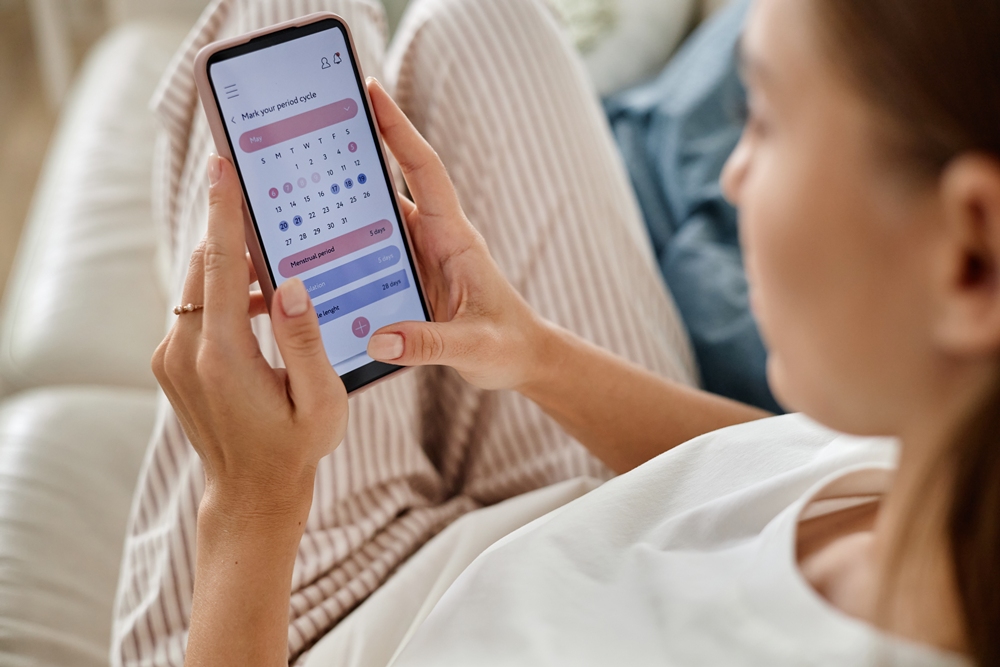
Stardust shared sensitive period tracking data with third-party analytics firms, according to new privacy research from Mozilla.
The findings expose a privacy divide in femtech, where users often trust apps with highly sensitive reproductive health information.

The research was carried out by Mozilla’s Privacy Not Included team, which tested several period tracking apps.
It found that Stardust, a period tracker used by millions, shared users’ reproductive health data with analytics companies, a practice the research said contrasted with its privacy-first marketing.
Analytics companies collect and examine information about how people use digital products, often to help businesses understand user behaviour or improve marketing.
The findings raise questions about whether privacy promises made by health apps match what happens to users’ data.
According to research reported by TechCrunch, one other period tracking app tested by Mozilla received what researchers called a “squeaky clean” rating, suggesting similar services can operate without sharing sensitive health data in the same way.
Period tracking apps have come under greater scrutiny in the US since the 2022 overturning of Roe v Wade, which removed federal constitutional protection for abortion.
Some users and privacy advocates have warned that menstrual and reproductive health data could potentially be sought in legal cases.
The research also points to a broader regulatory problem for consumer health apps.
In the US, many health apps are not covered by HIPAA, the health privacy law that applies to medical providers and some healthcare organisations.
That means some consumer apps may be able to collect, share or monetise sensitive health data under rules that differ from traditional healthcare privacy protections.
The femtech market, estimated in the report at US$50bn, has grown quickly, but privacy regulation has not always kept pace with app development.
Stardust had not publicly responded to Mozilla’s findings at the time of the original report, and its privacy policy remained live on its website.
The issue is particularly sensitive for period tracking because the data can reveal patterns around fertility, pregnancy, contraception and reproductive health.
Mozilla’s wider Privacy Not Included initiative has examined consumer technology products for privacy and security concerns since launching in 2017, including connected devices, children’s toys and health apps.
The findings come as US lawmakers continue to debate stronger federal privacy rules for sensitive health information collected by consumer apps.
The American Data Privacy and Protection Act, which has been stalled in Congress since 2023, includes provisions addressing sensitive health information collected by consumer apps.
Experts have also warned that anonymised health data can sometimes be re-identified when combined with other information, such as location data.
Re-identification means linking supposedly anonymous data back to a specific person.
A 2019 study found that menstrual cycle data combined with location information could identify individual users with high accuracy.
State-level privacy laws in places such as California, Virginia and Colorado have also given consumers new rights around personal data, although enforcement can vary.
Privacy advocates say the research underlines the need for clearer data practices, stronger safeguards and greater transparency in femtech.
For users, the findings are a reminder that health apps do not automatically protect health information in the same way as healthcare providers.
The report suggests period tracker companies that put privacy first may be better placed to build trust in a market where long-term use depends on confidence.
Mozilla’s investigation suggests privacy promises in femtech do not always match practice, and that period trackers can function without sharing sensitive user data in the same way.

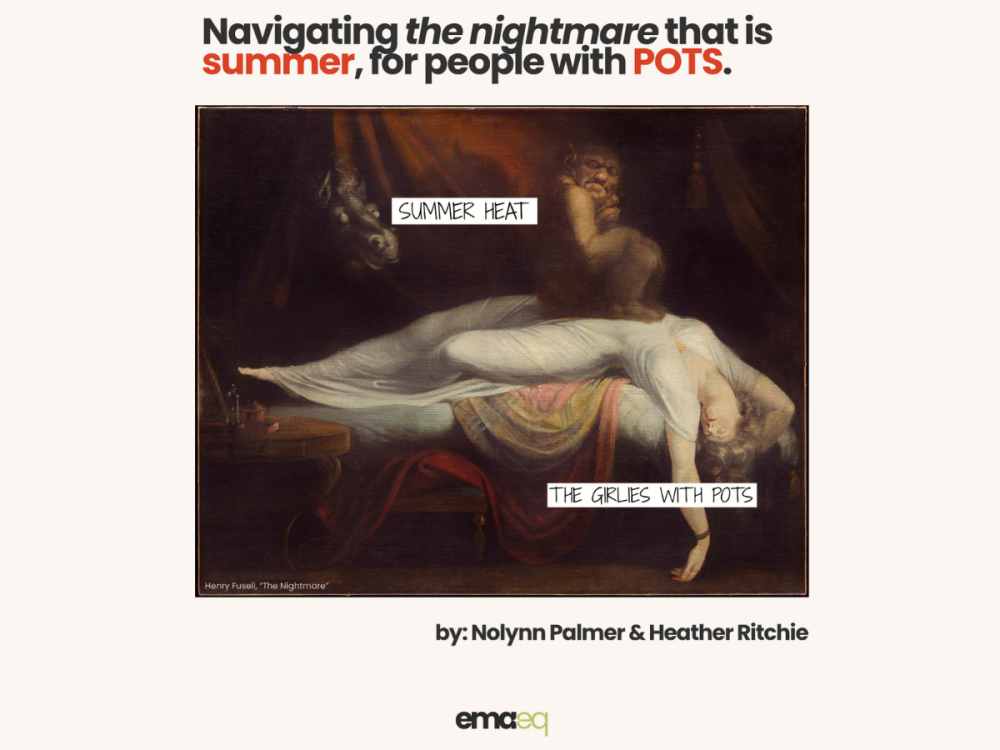
By Nolynn Palmer, science and partnership lead, EmaEQ and Heather Ritchie, COO, Embr Labs
Summer is reminiscent of many things: the smell of sunscreen, longer evenings, dedicated family time, vacations finally on the calendar, maybe even a wardrobe refresh.
There’s a particular kind of joy that settles in this time of year, a collective breath of excitement.
But for people living with Postural Orthostatic Tachycardia Syndrome (POTS), summer’s signature feature, heat, can turn that joy and excitement into something much harder to navigate.
POTS is a form of dysautonomia that disrupts the body’s ability to regulate blood flow when moving from lying down to standing.
Temperature dysregulation and heat intolerance are core symptoms in POTS.
Heat makes symptoms worse: blood vessels dilate, blood pressure drops, and symptoms like dizziness, fatigue, and heart palpitations intensify. What feels like a beautiful day to most can feel like an obstacle course to someone with POTS.
POTS affects an estimated 0.2 per cent to 1 per cent of the North American population, according to a 2020 NIH study; a figure that’s almost certainly undercounted, and one many researchers believe has grown significantly in the wake of COVID-19.
Roughly 75 per cent to 85 per cent of POTS diagnoses are female, and the average time from symptom onset to formal diagnosis is four to six years.
These individuals spend years researching their symptoms, becoming fluent in their own condition long before receiving a diagnosis.
Since launching its first-generation Embr Wave device, Embr has consistently heard from those with POTS looking for a solution for temperature intolerance and the symptoms that result.
Embr Wave’s temperature delivery system, providing immediate wearable cooling relief, maps directly to one of POTS’s most consistent symptoms, heat intolerance.
Embr’s implementation of Tempura, Embr’s app-based AI Assistant, has provided Embr with even more clarity on the impact Embr Wave can have in this statistically small population.
In the last 90 days, nearly 3 per cent of conversations with Tempura have touched on POTS. Relative to population prevalence, that’s a significant overrepresentation, confirming that individuals with POTS are actively seeking tools that are designed for their symptoms.
Embr Wave provides a model for how designing products for one use case, menopausal women managing hot flashes, can be found to have tremendous benefits for other populations.
The influx of advocacy by those with POTS led to a research study published this year that measured the improvement in Quality of Life factors when supported by thermoregulation wearables.
The product design by its nature, and how customers are using and talking about it, has had a snowball effect in the POTS community, amplifying awareness of a safe, always-available solution for this unmet need.
For someone with POTS, temperature isn’t a minor variable but a sizable trigger. Giving someone a way to manage temperature response hands them back a measure of control they didn’t have before.
Those in the Embr community living with POTS describe using their Wave devices both proactively and in-the-moment: some turn on their Wave’s cool-down signals before leaving the house or entering a crowded event, knowing what’s ahead.
Others use it reactively, when they feel their body beginning to respond poorly, and bring themselves back in balance.
Either way, Embr Wave provides its users with a sense of control around something they cannot control, their environment, allowing one to focus on and enjoy the moment.
No one should have to skip the places or events they love because their body can’t handle the heat. The goal is to help people stay in their lives fully, with less friction and more confidence in what their bodies can handle.
Nolynn Palmer holds a Masters of Global Public Health & Policy with a focus in Sexual & Reproductive Health & Rights. As the Science & Partnership Lead at EmaEQ, she leverages her knowledge of health policy and clinical science to advance AI safety and accuracy across the healthcare industry.
Heather Ritchie has a decades-long background in product management, launching enterprise and consumer solutions that improve health and wellness management. At Embr Labs, she serves as COO and leads the user design and market launch of Embr Wave (2nd Gen).


Statins have been linked to more severe menopause symptoms and a higher risk of muscle loss in postmenopausal women, a study suggests.
The medicines are among the most widely prescribed in the world, with strong evidence supporting their use to lower cholesterol and reduce cardiovascular risk.
However, some recognised side effects may resemble symptoms associated with menopause, raising questions about how the two could interact.

The US Food and Drug Administration has flagged potential adverse effects linked to statin treatment, some of which overlap with menopausal complaints.
Researchers examined data from 1,184 postmenopausal women across nine Latin American countries, assessing menopausal symptoms, sarcopenia risk and cognitive function.
They compared women taking statins with non-users after accounting for factors including age and body weight.
As the study was cross-sectional, meaning it examined information collected at one point in time, it could identify associations but could not prove that statins caused the outcomes.
Women taking statins were 56 per cent more likely to have severe menopausal symptoms than those who were not using the medicines.
The difference remained after researchers accounted for other variables.
Statin users were also 65 per cent more likely to be at risk of sarcopenia.
Sarcopenia is the gradual loss of muscle mass and physical function, which tends to accelerate after menopause.
Declining oestrogen levels already make muscle loss a concern at this stage of life. It is linked to a higher risk of falls, fractures and reduced quality of life.
Musculoskeletal symptoms were reported by 53.1 per cent of statin users, compared with 33.9 per cent of non-users.
Researchers said this was separate from the finding on sarcopenia risk and may point to a wider pattern of physical discomfort among women taking the medicines.
Women taking statins also recorded slightly lower scores in tests of delayed memory recall and visuospatial function.
Visuospatial function is the ability to understand the position of objects and their relationship to one another.
The study found no overall association between statin use and mild cognitive impairment, so the differences in individual tests are early signals rather than firm conclusions.
Researchers said effects associated with statins may overlap with menopausal symptoms and add to the overall symptom burden during midlife.
This means symptoms attributed to menopause and possible statin side effects may look similar and, in some cases, could compound one another.
Further research is needed to separate the possible effects of the medicines from symptoms linked to menopause.
The findings are not a reason for women to stop taking statins.
Their cardiovascular benefits are well established, and stopping treatment without medical guidance can carry serious risks.
The study provides more information about what statin treatment may mean specifically for postmenopausal women, who have historically been under-represented in cardiovascular research.
Women who notice more severe menopausal symptoms or changes in muscle strength or physical function while taking statins should discuss them with a doctor.
A healthcare professional may consider whether the symptoms could be related to the medication and whether screening for muscle loss is appropriate.
They may also review whether the current statin remains the most suitable option, as different statins can have different side-effect profiles.
Resistance training and consuming enough protein are well-supported ways to help preserve muscle mass during midlife.
Statins can be life-saving, but the findings suggest their possible side effects should receive greater attention in postmenopausal women.
The study adds to evidence supporting more individualised care for women during midlife.









 pain conditions2 weeks ago
Two “gamechanger” tests set to speed up endometriosis diagnosis on the NHS

 Insight2 weeks ago
Women with PMOS should have annual NHS checks, new guidance says

 News6 days ago
New menopause drug approved for use by NHS in Scotland

 Cancer2 weeks ago
Thousands of women could avoid painful cancer exam with new AI blood test

 Entrepreneur2 weeks ago
Applications open for the third W Accelerate with Merck KGaA and M Ventures

 Fertility2 weeks ago
Older women face lower chance of fertility treatment working, even with donor eggs, study finds

 News2 weeks ago
We built Ema like a nurse: Here’s why that matters

 News2 weeks ago
Experts call for regulation of toxic period product chemicals