Connect with us

News

Helping new mums express with ease with Memory Plus from Ardo

Published

on

Mums can now express their precious breast milk with ease, using a personalised expressing sequence with the Memory Plus feature on the Ardo Alyssa rechargeable breast pump. So, when the inevitable baby brain hits we have them covered.

A mum’s pumping pattern is very individual. It is a combination of suction strength and suction frequency with different durations, and this can be overwhelming when you have just had a baby.

With Memory Plus once the mum has found the ideal settings that make her breast milk flow best, she can then save the settings with Memory Plus. This fantastic function saves the entire pumping history and automatically recalls it the next time she needs to express.

Memory Plus saves all the settings used, and duration, at the click of a button. This simplifies the pumping process, allowing mums to focus on relaxing during their expressing session without having to guess what worked last time.

The next time the mum needs to express she just turns on the Alyssa Breastpump and it will automatically start in Memory Plus.  She can exit Memory Plus at any time by adjusting the vacuum or cycle settings or by selecting another function.

The unique Memory Plus feature is accessed via the MyArdo app where the mum can view a detailed history of the settings used.

For further information and a demonstration of Memory Plus watch the YouTube video here.

Diagnosis

AI may help accelerate breast cancer diagnosis for high-risk women – study

Published

on

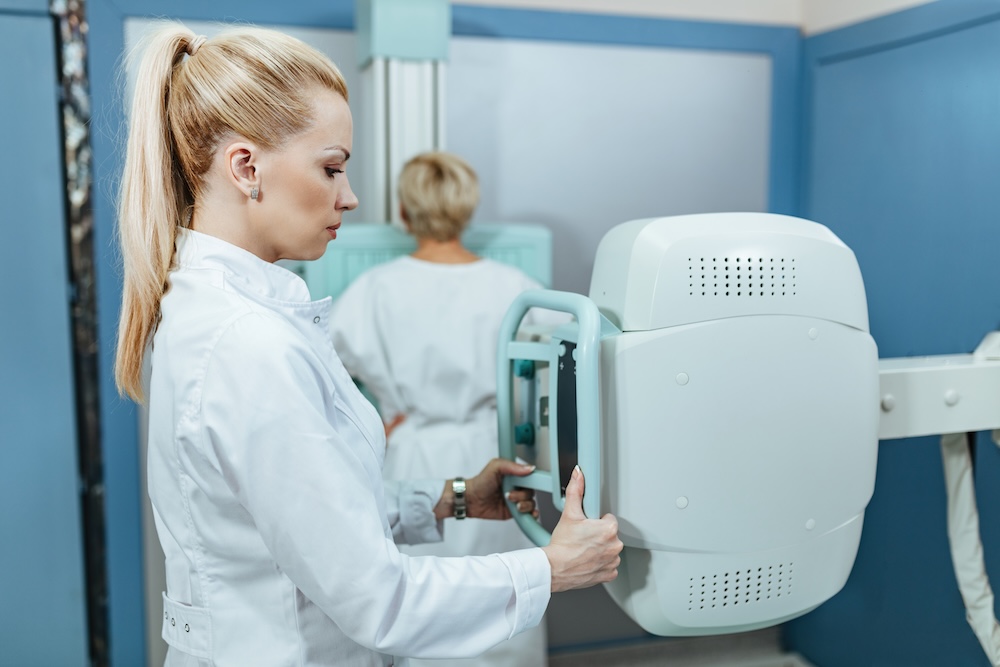
AI may help speed breast cancer diagnosis for high-risk women after abnormal mammograms, a study suggests.

Women with abnormal mammograms often wait weeks to learn whether they have breast cancer.

Researchers at UC San Francisco and UC Berkeley said an AI-guided workflow could help reduce that wait by quickly identifying those most likely to have the disease. Some women could move from imaging to evaluation, and sometimes biopsy, in a single day.

Dr Maggie Chung, first author of the study, said: “This is a really an exciting time.

“This moves us closer to personalised care, where we can tailor a plan so that each patient gets the right intervention at the right time.”

The study used an open-source AI model called Mirai.

The model was trained on hundreds of thousands of mammograms linked to patients’ cancer outcomes.

A mammogram is an X-ray scan of the breast used to look for signs of cancer. A biopsy involves taking a small tissue sample to test for disease.

The AI tool is designed to detect subtle patterns in screening mammograms and predict a woman’s cancer risk.

Researchers at UC San Francisco and UC Berkeley applied the model to more than 4,100 screening mammograms at Zuckerberg San Francisco General Hospital and Trauma Center.

Mirai identified 525 women, about 12.7 per cent of screened patients, as high risk.

Those patients could receive an interpretation of their mammograms immediately after the scan and have additional diagnostic imaging for suspicious areas on the same day.

Some women who needed biopsies were also able to have them on the same day.

The researchers said Mirai reduced the wait time for diagnostic evaluation from several weeks to about an hour.

For women who were ultimately diagnosed with breast cancer, it reduced the average wait for biopsy from more than two months to fewer than 10 days.

The researchers stressed that Mirai does not replace radiologists or make diagnoses on its own.

Instead, it acts as a triage tool to help physicians identify the patients who can benefit most from accelerated care.

The team analysed more than 114,000 archival mammograms before launching the programme, to ensure the model would capture enough high-risk patients without overloading the clinic with too many expedited evaluations.

The researchers said they hope AI will support a more personalised approach to breast cancer screening tailored to each patient’s breast cancer risk.

Chung said: “Right now, many women follow the same screening schedule but their individual risk can be very different.

“AI risk assessment gives us the chance to identify the women most likely to benefit from expedited care and get them what they need.”

Adam Yala, senior author of the study and a data scientist at UC Berkeley, said: “This is a powerful example of how AI can be a collaborative partner for physicians.

“It shows how we can improve care when we bring clinicians and data scientists together to design these systems.”

Continue Reading

Fertility

Infertility may be risk factor for early menopause, study suggests

Published

on

Women with primary infertility may face a higher risk of early menopause and reach it about a year earlier, a study suggests.

The findings suggest women with primary infertility may be more likely to enter menopause before the age of 45.

The increased risk appeared most notable among women with unexplained infertility or a history of endometriosis.

Dr Stephanie Faubion, medical director for The Menopause Society, said: “This study shows that women with primary infertility, specifically those with unexplained infertility or a history of endometriosis, were at risk for early menopause.

“Given that early menopause is linked to adverse long-term health consequences, these women may benefit from counselling that they are at risk of early menopause.

“This will allow them to monitor for early menopause and to seek treatment with hormone therapy, if indicated.”

Early menopause is usually defined as menopause before age 45, while premature menopause is menopause before age 40.

Women who experience menopause earlier may face symptoms for longer and have a higher risk of long-term health problems.

These can include cardiovascular disease, osteoporosis and neurocognitive disorders. Osteoporosis weakens bones, while neurocognitive disorders affect memory, thinking or brain function.

The study, highlighted by The Menopause Society, involved nearly 700 people, roughly half of whom had been diagnosed with primary infertility.

It found that women with a history of primary infertility underwent natural menopause about one year earlier than those without such a history.

Researchers found no association between infertility and premature menopause.

Infertility affects around one in six people globally and can have consequences beyond family planning.

Previous research has linked infertility with higher rates of cancer and cardiovascular disease, although causes vary and may involve genetic, hormonal, in-utero or lifestyle factors.

In-utero factors are influences that occur while a baby is developing in the womb.

Earlier studies looking at links between infertility and early or premature menopause have produced mixed results, with some not accounting for different types of infertility.

The new study suggested that women with unexplained infertility or a history of endometriosis may have an increased risk of early menopause.

Endometriosis is a condition where tissue similar to the lining of the womb grows elsewhere in the body. It can cause pain, heavy periods and fertility problems.

Known risk factors for early or premature menopause include tobacco use, low body mass index, not having given birth and starting periods at a younger age.

Women who have had more childbirths and those with a history of oral contraceptive use have previously been linked to later menopause.

The researchers said women with primary infertility may benefit from additional counselling because of the systemic and long-term health effects of early menopause.

They also said women should be encouraged to seek evaluation and treatment if they experience a new loss of menstrual cycles.

Continue Reading

News

Endometriosis documentary profiles stars including Marilyn Monroe and Amy Schumer

Published

on

A non-profit has launched an endometriosis documentary featuring Amy Schumer and Marilyn Monroe as it pushes for changes in how the condition is treated and understood.

The Endometriosis Collective has launched to change how endometriosis is researched, treated and understood, starting with a documentary featuring stories from people including Amy Schumer and Marilyn Monroe.

The feature-length documentary, “End of the Cycle”, will premiere in New York on Tuesday, and The Endometriosis Collective is making the film free to stream online.

Schumer, a comedian, writer and actor, has previously spoken of how endometriosis left her “on the floor in pain, vomiting from the pain, the pain that nobody can see.”

Schumer is one of several celebrities featured in the documentary. Other contributors include dancer Julianne Hough, Olympic medallist Brittany Brown and actors Janel Parrish and Folake Olowofoyeku.

The Endometriosis Collective timed the documentary premiere to coincide with the 100th anniversary of Marilyn Monroe’s birth.

Monroe, who died in 1962, starred in films such as “Some Like It Hot” and “Gentlemen Prefer Blondes.”

According to a biography published in 1985, Monroe’s endometriosis was so severe that it destroyed her marriages, her wish for children, her career and ultimately her life.

The Endometriosis Collective said the documentary shares newly uncovered information about Monroe’s experience with endometriosis.

The non-profit said the information connects Monroe’s story to the experiences of women across generations, highlighting how far awareness, research and care still have to go.

A representative of the Marilyn Monroe Estate said: “By sharing this part of her story through ‘End of the Cycle,’ we hope to honour her legacy in a way that brings visibility to endometriosis, encourages more open dialogue and helps inspire the research needed to create change.”

As part of the premiere, The Endometriosis Collective is holding a panel discussion.

Schumer, Brown and Olowofoyeku, the documentary’s co-directors Sammy Jaye and Soraya Simi, and medical experts are due to be part of the premiere.

AbbVie’s Orilissa and Sumitomo Pharma’s Myfembree are among the approved drugs for endometriosis pain.

Hough, one of the participants in the documentary, starred in an Orilissa campaign in 2017.

Continue Reading

Trending

Copyright © 2025 Aspect Health Media Ltd. All Rights Reserved.