




News
Thousands in England set to benefit from ‘repurposed’ drug to prevent breast cancer
Around 2,000 cases would be prevented if 25 per cent of eligible women in England take up the offer, according to NHS England


Tens of thousands of women in England could benefit from a “repurposed” NHS drug that could help prevent breast cancer.
Anastrozole, which has been used for many years as a breast cancer treatment, has been licensed as a preventive option, in a move that could help prevent around 2,000 cases of breast cancer in England.
The drug, which is off-patent, has been shown in trials to reduce the incidence of the disease in post-menopausal women at increased risk of the disease by almost 50 per cent.
It was first recommended as a preventive option by the National Institute for Health and Care Excellence in 2017, however, with the treatment being unlicensed in this use, uptake has remained low.
An estimated 289,000 women could be eligible for the drug.
While not all patients will choose to take it, it is estimated that if 25 per cent do, around 2,000 cases of breast cancer in England could potentially be prevented.
NHS chief executive, Amanda Pritchard, said: “It’s fantastic that this vital risk-reducing option could now help thousands of women and their families avoid the distress of a breast cancer diagnosis.
“Allowing more women to live healthier lives, free of breast cancer is truly remarkable, and we hope that licensing anastrozole for a new use today represents the first step to ensuring this risk-reducing option can be accessed by all who could benefit from it.
“This is the first drug to be repurposed through a world-leading new programme to help us realise the full potential of existing medicines in new uses to save and improve more lives on the NHS.
“Thanks to this initiative, we hope that greater access to anastrozole could enable more women to take risk-reducing steps if they’d like to, helping them live without fear of breast cancer.”
Lesley-Ann Woodhams, 61, was offered anastrozole off-label for the prevention of breast cancer due to being at increased risk of developing the disease, and having a family history of breast cancer. She completed the full five-year course of anastrozole in January.
She said: “Taking anastrozole was an easy decision for me, as I’d watched my mum battle breast cancer and my risk was very high.
“Anastrozole reduced my risk of developing breast cancer, meaning I could live a life without constantly worrying or giving a thought to what could be if I’d developed breast cancer.
“It really was a gift, it gave my family and myself peace of mind and more importantly, a continued future to look forward to. I’m grateful for every day I took this drug – it was life-changing.”
She added: “Anastrozole has allowed me to continue living my life as I’d planned.”
Breast cancer remains the most common cancer in England, with 47,000 people being diagnosed each year.
Anastrozole is the first medicine to be repurposed through a new multi-agency national programme that looks at using existing medicines in new ways to benefit patients and the NHS.
The treatment is an aromatase inhibitor and works by cutting down the amount of the hormone oestrogen that a patient’s body makes by blocking an enzyme called “aromatase”.
Health minister, Will Quince, said: “Breast cancer is the most common cancer in the UK so I’m delighted that another effective drug to help to prevent this cruel disease has now been approved.
“We’ve already seen the positive effect Anastrozole can have in treating the disease when it has been detected in post-menopausal women and now we can use it to stop it developing at all in some women.
“This is a great example of NHS England’s innovative Medicines Repurposing Programme supporting the development of new ways for NHS patients to benefit from existing treatments.”
Baroness Delyth Morgan, chief executive at the charity Breast Cancer Now, said: “The extension of anastrozole’s licence to cover it being used as a risk-reducing treatment is a major step forward that will enable more eligible women with a significant family history of breast cancer, to reduce their chance of developing the disease.
“For the past decade, Breast Cancer Now has been tirelessly campaigning with clinicians, researchers and patients for drugs that are found to be effective and safe in new uses to reach people who could benefit, and we were thrilled when NHS England set up the Medicines Repurposing Programme.
“Anastrozole was the first drug to be supported by the programme and this paves the way for improving access to risk-reducing drugs,” she continued.
“We look forward to continuing our work with NHS England to further improve access to these drugs for everyone eligible.”
To receive the Femtech World newsletter, sign up here.




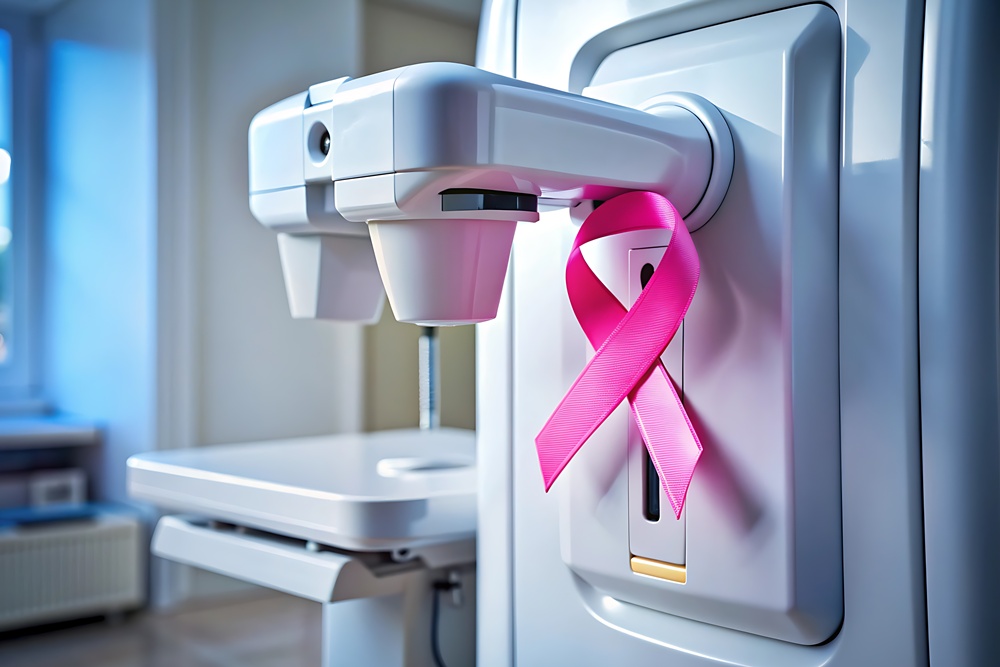
The Welsh Government has been urged to invest in breast cancer services after figures showed continuing delays in diagnosis and treatment.
Breast Cancer Now said the target for 75 per cent of patients to be seen within 62 days of initial referral has been met only three times since the Suspected Cancer Pathway was introduced in 2020.
The latest figures, published on July 23, showed that 172 patients, or 60 per cent, were seen within 62 days of being initially referred.

The charity said performance varied widely between health boards.
Melanie Sturtevant, associate director of policy, evidence and influencing at Breast Cancer Now, said: “We have a bold vision that by 2050, everyone diagnosed with breast cancer, lives and lives well, but to see this become reality in Wales we need real action and ambition from the new government for quicker and earlier diagnosis of breast cancer to save and improve lives.
“We’re ready to work with the new government to ensure people in Wales are diagnosed quicker and start treatment faster through reduced waiting times, and earlier with improved breast screening uptake through a breast screening awareness campaign, and provision of more convenient, flexible access to breast screening services.”
Breast Cancer Now called on the Welsh Government to invest in improving waiting times and warned of what it described as “complacency” in Wales.
It said health boards need greater support to identify and address the underlying causes of delays and measure performance at key stages of the cancer pathway.
The charity also urged the new government to prioritise earlier diagnosis by improving participation in NHS breast screening.
It called for Wales to meet the minimum screening uptake standard of 70 per cent and aim for the achievable standard of 80 per cent.
The charity said the NHS breast screening uptake target has been missed in Wales for the past seven years.
Breast cancer is the most common cancer among women in Wales, with 2,800 people diagnosed each year.
The number is projected to rise by 23 per cent to 3,449 cases by 2035.
Breast Cancer Now said urgent action was therefore needed from the new Welsh Government to make early diagnosis a priority.
In response, the Welsh Government said: “We recognise that performance against cancer waiting times is not where we want it to be which is why, as a new Government, we are taking decisive action on cancer by developing a 10-year National Cancer Strategy to transform the way the health service prevents, diagnoses, and treats the disease.
“The strategy will set out an ambitious vision for cancer care in Wales. This will include emphasis on earlier diagnosis of cancer, including breast cancer.
“Optimal pathways of care for all types of cancer will be developed in partnership with patients and clinical experts to ensure that modern, evidence-based care is available wherever a person lives in Wales.
“In the meantime, NHS Performance and Improvement is working with health boards in Wales to improve cancer waiting time performance.”

Ectopic pregnancy admissions have risen in England since 2021, according to a 20-year analysis of NHS data.
Women in the most deprived areas had more than twice the admission rate of those living in the least deprived communities.
The study was the first 20-year national analysis of NHS England data on the issue.
Dr Nicola Tempest, academic clinical lecturer in the University of Liverpool’s Department of Women’s and Children’s Health, said: “Pregnancy loss affects millions of women worldwide, yet we know surprisingly little about how its prevalence and impact has changed over time.
“Our research shows that admissions for ectopic pregnancy have continued to rise despite declining birth rates, highlighting an ongoing demand for NHS services.
“Women from the most deprived areas consistently experienced much higher admission rates for both miscarriage and ectopic pregnancy, underlining persistent health inequalities.
“Pregnancy loss should be recognised as a major women’s health research priority so we can better understand its causes and develop services that meet women’s needs and address the risk factors that are contributing to these rates.
“Importantly, research must address one of the most common and deeply personal questions women ask after pregnancy loss: ‘Why did this happen to me?’”
Ectopic pregnancy is one of the most common early pregnancy complications, with an estimated 11,000 hospital admissions each year, or around one in every 90 pregnancies.
It occurs when a fertilised egg implants outside the womb. Ectopic pregnancies result in pregnancy loss and can put the mother’s health at risk if the pregnancy continues.
Researchers at the University of Liverpool analysed hospital and maternity services data collected between 2004 and 2024.
Admissions rose significantly from 2004 to 2012, increasing by an average of around three per cent each year.
Rates remained broadly stable from 2012 to 2021 before rising significantly again.
Since 2021, admissions have increased by an average of more than four per cent a year.
The researchers said the recent rise may reflect demographic changes, including women having children later and higher rates of risk factors such as obesity.
Disruption to hospital and maternity services during the Covid-19 pandemic may also have contributed.
The study also found that miscarriage admissions fell significantly between 2018 and 2021. They rose modestly in subsequent years, although the increase was not statistically significant.
A result is statistically significant when researchers consider it unlikely to have occurred through chance alone.
For more than a decade, women in the most deprived communities had more than twice the hospital admission rate for miscarriage and ectopic pregnancy compared with those in the least deprived areas.
The researchers pointed to preventable inequalities in health, risk factors and access to care as likely contributors.
Tempest said: “These findings show that where a woman lives continues to have a profound influence on her reproductive health outcomes.
“Ultimately, reducing these inequalities will require an equity-focused approach that combines high-quality clinical care with prevention, education and services designed around the needs of the communities most at risk.
“Behind every admission for pregnancy loss, there is a woman, a family and an unanswered question, our aim and mission is not only to improve the care but also to understand and prevent it.”

Parenthood is associated with changes in women’s health that are not seen in men, including reduced exercise and differences in wellbeing, new research has revealed.
Men’s health indicators varied only slightly depending on whether they were fathers, while the number and age of children were linked to changes in women’s health.
Anna Barbuscia, of the OPIK research group at the EHU-University of the Basque Country, said sharing parental responsibilities more equally could help reduce these differences.
Having children can bring significant biological, psychological and social changes, but the study found that the effects varied considerably between women and men.
Barbuscia said: “Having children has greater consequences for the health of the mother, both in the short and long term.
“This is not only because of the biological changes as a result of the pregnancy and birth, but also the psychological consequences. Our findings show a significant gender gap.”
The study, carried out by the OPIK research group, examined the relationship between motherhood and fatherhood and several health indicators.
These included psychological wellbeing, perceived health, physical exercise, alcohol consumption and smoking.
The researchers also considered whether the number and age of participants’ children influenced these indicators.
“It was observed that, in men, neither the fact of being a father, nor family characteristics, affected the health indicators. All parameters remained practically the same,” said Barbuscia.
The findings showed a different pattern among women, with the number and age of their children associated with changes in health and wellbeing.
Mothers with only one child and those with adolescent children reported more depressive symptoms.
Women living with two or more young children reported a better perception of their overall health.
“Caring for younger children usually demands greater physical effort, which may result in increased tiredness and poorer quality sleep.
“Adolescence, on the other hand, has traditionally been considered the most stressful phase for both mothers and fathers,” Barbuscia said.
The study also found a significant gender difference in physical activity.
Women generally did less regular physical exercise than men, and the gap widened when they had children.
“Only 16 per cent of mothers with young children do regular exercise, compared to 30 per cent of women who do not have children.
“In men, however, again, there was scarcely any difference between those who are fathers and those who are not,” Barbuscia said.
“This all indicates that maternity reduces the time available for personal care, which has an impact on a habit as important for health as physical activity.”
Barbuscia said the findings should be considered when designing family policies and planning healthcare services.
“Facilitating work-family balance is not enough. It is also necessary to ensure that mothers have time to look after their own health and wellbeing. Investing in this time is investing in health.”
She added that sharing parental responsibilities more equally between mothers and fathers could help reduce the inequalities observed.
“If we want to build healthy families and encourage people to have children, we need to start by ensuring that raising children does not have such an unequal impact on men and women.”










 Hormonal health2 weeks ago
Stardust period tracker shares health data, study reveals

 News1 week ago
Zero Candida market set to reach over US$2 billion by 2030 – report

 News1 week ago
From Hologic to Ark Surgical: Why Joseph LaBruzzo is betting on the future of women’s surgical innovation

 Mental health1 week ago
Nearly 60% of young women get health advice from influencers, research finds

 News1 week ago
Applications open for Propel’s final 2026 healthtech cohort

 News2 weeks ago
Congress urged to invest over $20bn to close women’s health gap

 Menopause2 weeks ago
Many women still confused about perimenopause, research finds

 Insight1 week ago
Rising number of young midwives quitting NHS due to burnout
1 Comment