




News
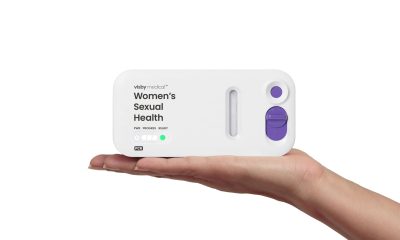
Women’s health start-up Daye expands diagnostic tampon to include STI screening
More than half of Brits admit they have never been for a sexual health check


The UK gynaecological health start-up Daye has expanded its tampon-based vaginal microbiome screening kit to include STI screening.
The tampon-based at-home STI screening kit is hoped to help speed up diagnosis and treatment, particularly among patient groups who are anxious or embarrassed about getting a test.
It uses PCR testing technology to allow women and assigned female at birth (AFAB) individuals to test for chlamydia, gonorrhoea, trichomonas, mycoplasma and ureaplasma from home.
The launch follows clinical trials with 600 patients. The samples will be analysed in a UKAS-accredited lab, following CQC-approved screening methodologies using a PCR-based, CE marked diagnostic assay.
As part of the service, Daye will also provide personalised aftercare, including prescription treatments such as antibiotics and antivirals, and consultations with sexual health nurses, gynaecologists and fertility specialists.
There has been a 24 per cent increase in sexually transmitted infections compared to the previous year, according to the UK Health Security Agency, with women being statistically more at risk than men due to the vaginal physiology.
Despite this, fewer people are getting tested for STIs, with over half of Brits admitting they have never been for a sexual health check.
STIs still carry a lot of stigma, yet are often treatable if caught in time. However, testing is still thought to be embarrassing and uncomfortable.
Low rates of testing mean that many women and AFAB individuals may be unaware they have an STI as 70 per cent of them are asymptomatic.
However, untreated STIs pose risks to long-term health and fertility. Chlamydia and gonorrhoea are two of the leading preventable causes of infertility and ectopic pregnancies.
Mother-to-child transmission of STIs can result in stillbirth, neonatal death, low birth weight and other health complications. Untreated STIs can also lead to chronic pelvic pain and pelvic inflammatory disease.
“Despite living in a world where over a million people get an STI every day, STI testing has chronically low rates post COVID-19, and as a result, many women and AFAB individuals could have an infection unknowingly because they have no symptoms,” said Valentina Milanova, founder of Daye.
“Our STI diagnostic tampon makes STI testing extremely easy, comfortable and discrete.
“We hope our approach will end the ‘STIgma’, revolutionise STI testing and lead to a dramatic uptick in the number of women getting checked, helping them protect their long-term health and fertility.”
According to Daye, the test uses PCR technologies which are able to detect even trace amounts of genetic material from pathogens.
The specificity of PCRs, the company argues, ensures that false-positive results are reduced, providing a more reliable diagnosis and simultaneously detecting multiple pathogens in a single sample.
Dr Michelle Tempest, lecturer in medical law and ethics at Cambridge Medical School and former NHS hospital doctor, said: “Daye’s STI diagnostic tampon is redefining STI testing by allowing women to take control of their sexual health in a non-invasive way in the comfort of their own homes.
“The company’s innovative use of a tampon for screening is supported by various studies that show that tampons are capable of collecting an equivalent or superior sample to a swab.”











Light exercise and less sitting may reduce pregnant women’s risk of serious blood pressure complications, according to a new study.
Researchers have proposed a daily activity and sleep guide that they say was linked to a nearly 30 per cent lower risk of hypertensive disorders of pregnancy.
The suggested pattern includes fewer than eight hours of sedentary time, at least seven hours of light physical activity, around 22 minutes of more intense activity and nearly nine hours of sleep.

The University of Iowa-led study examined the daily behaviours of 470 pregnant women across all stages of pregnancy.
Participants wore monitors that measured physical activity over 24-hour periods and recorded how long they spent asleep.
Hypertensive disorders of pregnancy include chronic high blood pressure, gestational hypertension and pre-eclampsia.
Gestational hypertension is high blood pressure that develops during pregnancy, while pre-eclampsia is a potentially serious condition involving high blood pressure and signs that organs may be affected.
Sedentary behaviour means being mostly inactive, such as sitting or lying down.
Light physical activity can include casual walking, moving around the home or standing.
Moderate to vigorous activity includes movement such as brisk walking, where breathing and heart rate increase.
Kara Whitaker, associate professor in the department of health, sport, and human physiology at Iowa and corresponding author of the study, said: “We are identifying the optimal composition of movement behaviours across the day associated with the lowest risk of developing HDP and the most improved health outcomes.
“This blueprint holds for each and every trimester of pregnancy.”
Study participants were enrolled at sites in Iowa City, Pittsburgh and Morgantown, West Virginia.
The women wore activity and sleep monitors for at least one week during each trimester of pregnancy.
Four in five participants were non-Hispanic white and nearly a quarter lived in rural areas.
The data showed a steep rise in risk among pregnant women who were sedentary for more than 10 hours a day.
Women who increased light physical activity to at least four hours a day reduced their risk of hypertensive disorders of pregnancy to 15 per cent from 30 per cent.
Whitaker said: “Just moving around more seems to have significant health benefits.
“And I think it also may be a more feasible target for women who are pregnant who are not exercising regularly.”
The researchers said they were surprised that longer durations of moderate to vigorous physical activity did not appear to provide additional benefit.
Sleep beyond a certain duration also did not appear to bring major further benefits.
Whitaker said: “Through this study, we are providing evidence that reducing sedentary behaviour and engaging in light physical activity are important, and maybe more important, when it comes to pregnancy and health.”
The findings may be relevant beyond pregnancy because clinical research has shown that women who develop hypertensive disorders of pregnancy are more than twice as likely to develop heart disease later in life.
Cardiovascular disease includes conditions affecting the heart and blood vessels, such as heart disease and stroke.
Whitaker said: “We know that cardiovascular disease is the number one killer of women, and if we can intervene in pregnancy and prevent women from developing a hypertensive disorder of pregnancy, we are putting them on a better trajectory, away from cardiovascular disease and toward more optimal cardiovascular health.”
The study was published online on June 10.
A second study, published online on May 27, looked more closely at the ratio and type of sedentary behaviour and light physical activity linked to a lower risk of hypertensive disorders of pregnancy.
Whitaker is a lead co-author on that study.
Co-authors in the June 10 study include Alex Crisp, Jaemyung Kim, Karina Smith, Donna Santillan, Mark Santillan and Bridget Zimmerman, from Iowa; Jacob Gallagher, from Iowa State University; Melissa Jones, from Oakland University in Michigan; Bethany Barone Gibbs, Katrina Wilhite, Alexis Thrower and Iqra Sheikh, from West Virginia University; and Sabera Rahman, Janet Catov, Christopher Kline and Maisa Feghali, from the University of Pittsburgh.
The National Institutes of Health, the University of Iowa Institute for Clinical and Translational Science, the University of Pittsburgh Clinical and Translational Science Institute and the West Virginia Clinical and Translational Science Institute funded the research.

We are excited to reveal the winners of the third annual Femtech World Awards.
The winners were announced at a virtual event this afternoon attended by shortlisted companies, along with sponsors and judges.
The event welcomed guests from the UK, Europe, Asia, Africa and North America.
Thank you to all 174 entries, as well as the sponsors for making the event possible.
See you in 2027!
Femtech World Awards 2026 Winners

Winner:
Shortlisted:
IVI RMA x Juno Genetics
Natural Cycles

Winner:

Highly commended:
U-Ploid
Shortlisted:
Hello Inside
Winner:

WISE HF, led by Prof. Mary Ryder
Highly commended:
Cardiac College for Women
Shortlisted:
Hyvelle Ferguson-Davis
CognitiveCare

Winner:

Highly commended:
Youterus
Shortlisted:
ŌURA
Winner:

Shortlisted:
LeanShield by ParrotPal Group
Perigen
Winner:

Shortlisted:
Body Moody
Looop

Winner:

Shortlisted:
Owning Your Menopause
Womeno

Winner:

Shortlisted:
The Blue Box
Celbrea
Winner:

Shortlisted:
HealCycle
Mor

Winner:
Shortlisted:
HRC Fertility
Mira
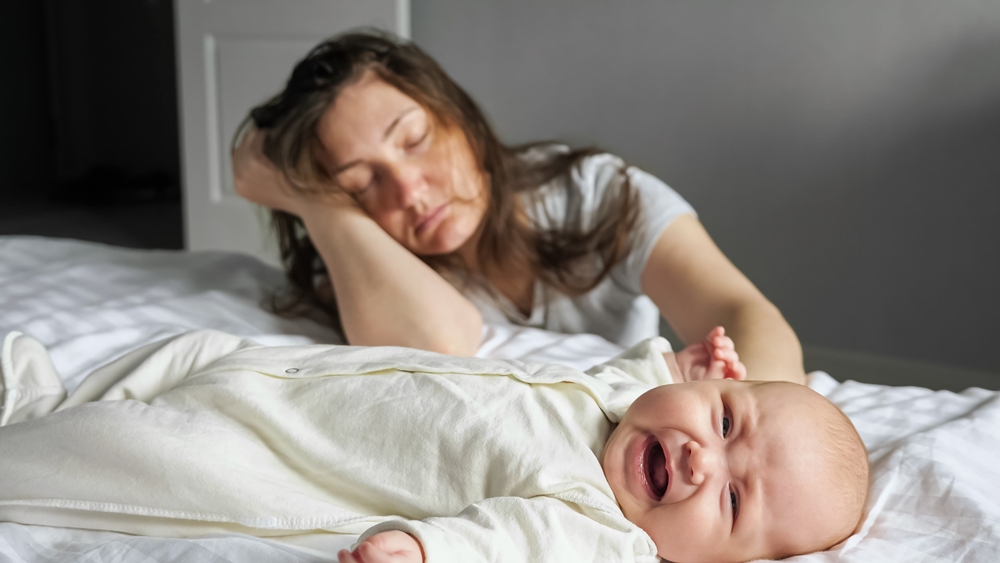
Pregnant women’s expectations about postpartum sleep may predict sleep quality after birth, outweighing prior sleep and psychiatric history, a study suggests.
The findings suggest attitudes and beliefs about sleep during pregnancy could be a modifiable risk factor for postpartum sleep concerns.
They also indicate that, among women expecting the poorest sleep, higher postpartum anxiety may further worsen sleep quality.
Sammy Dhaliwal, lead author is clinical health psychologist and research fellow in the department of obstetrics and gynaecology at the Perelman School of Medicine at the University of Pennsylvania.
Dhaliwal said: “Most pregnant women in our sample anticipated poor postpartum sleep before it occurred, and it was striking that those expectations predicted worse sleep outcomes even after accounting for factors such as prior sleep disorders, psychiatric history, and number of previous births.
“This suggests that attitudes and beliefs about sleep during pregnancy may represent a modifiable target for early intervention before postpartum sleep problems emerge.”
Sleep disturbance affects an estimated 60 to 80 per cent of postpartum women and is linked to a higher risk of depression and anxiety.
Researchers said it is often regarded as an expected part of life after childbirth rather than a health issue that may be addressed earlier.
The study enrolled 432 pregnant women at about 24 weeks of gestation, meaning around 24 weeks into pregnancy.
Participants completed measures of their expectations about postpartum sleep, current sleep quality using the Pittsburgh Sleep Quality Index, and mood using validated depression and anxiety scales.
Assessments were repeated at six, 12 and 24 weeks postpartum.
A subset of 49 women also wore wrist actigraphy devices at six to eight weeks postpartum.
Actigraphy uses a wearable device, similar to a watch, to estimate sleep and wake patterns based on movement.
The results showed that 70 per cent of pregnant women, or 301 of 432 participants, expected poor sleep in the postpartum period.
Researchers found that predicted sleep disruption during pregnancy was a significant predictor of postpartum sleep concerns.
Among first-time pregnant women without prior health concerns, those who expected greater sleep disturbance had significantly more disrupted sleep after birth, measured by both actigraphy and self-report.
Among women who expected the worst sleep quality, higher postpartum anxiety significantly worsened both measured sleep and self-reported sleep, independent of anxiety levels during pregnancy.
Dhaliwal said the findings point to two possible areas for intervention: addressing sleep-related beliefs during pregnancy and treating postpartum anxiety.
Dhaliwal said: “Postpartum sleep disruption is often treated only after problems develop, but our findings suggest there may be an opportunity to intervene earlier during pregnancy.
“Addressing sleep-related beliefs and postpartum anxiety during prenatal and postpartum care may help improve sleep and emotional well-being in new mothers.”











 Menopause3 weeks ago
Perimenopause misinformation ‘putting women at risk’

 Hormonal health4 weeks ago
NHS urged to update website following renaming of PCOS

 News2 weeks ago
Women still being failed when they reach menopause, experts say

 Entrepreneur3 weeks ago
Women’s Health Innovation Summit opens submissions for 2026 Innovation Showcase

 Insight1 week ago
British women among angriest in Europe, health survey reveals

 News2 weeks ago
Three menopause innovators shortlisted for Femtech World Award
 Menopause3 weeks ago
Sweden eyes domestic production of oestrogen patches amid menopause treatment shortage

 News4 weeks ago
Low insulin diet and avoiding four food groups may prevent menopause weight gain