




Connect with us

News

Mothers’, not fathers’, mental health directly linked to their children’s, study shows

Published

on

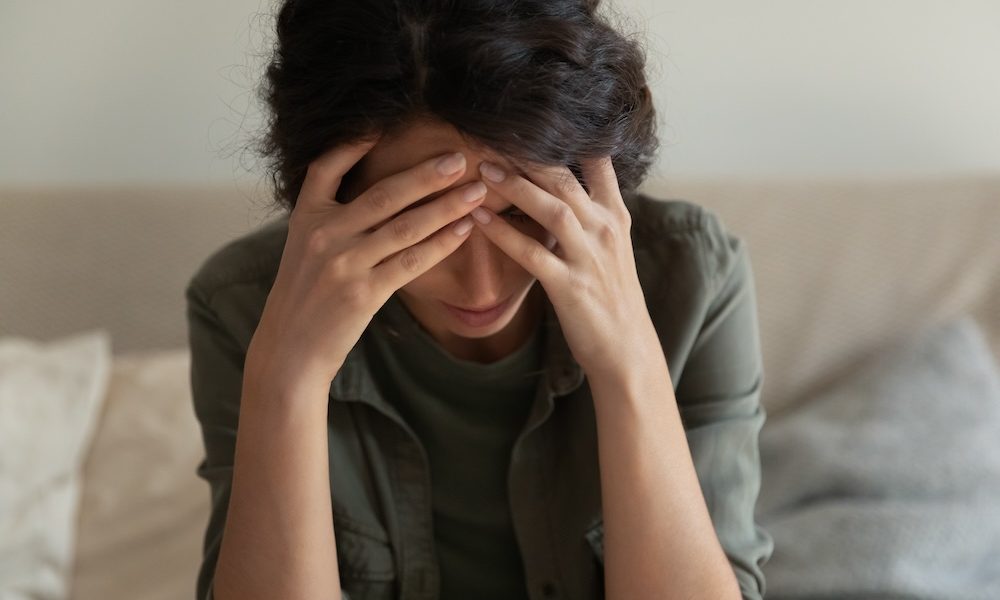
Mothers’ feelings of being overwhelmed and unhappiness, not fathers’, are directly associated with their children’s feelings of nervousness, worry and unhappiness, new research has revealed.

The study definitively confirms the mother’s role as central to the emotional wellbeing of the family unit.

Though other researchers have focused on isolated relationships between mother and child, this is the first study of the role that both partners may play in family mental health, both concurrently and over time.
Lead author Dr Yushi Bai from The University of Manchester said: “We do know that children’s mental health is formed by, and within, their family through shared genes, nurturing behaviours of caregivers, and sibling dynamics.

“Our study identified mothers, not fathers, as central to the emotional wellbeing of the family unit.

“We suspect that this can be explained by traditional division of parenting roles, where societal expectations often position mothers as the primary caregivers and organisers within families.

“Mothers are typically more involved in child-rearing and spend considerably more time with their children than do fathers, which means they are more likely to influence children’s lives and development.

“Greater exposure to maternal care might also lead children to copy their mother’s coping mechanisms and behaviours.”

The researchers produced a series of maps – called networks – depicting the way symptoms of anxiety and depression in parents and their children up the age of 16 connect with each other over time.

They based the analysis on data from 3,757 families from the UK Household Longitudinal Study between 2009 to 2022.

Additional cross-sectional network maps of 8,795 families captured independent associations between family members’ mental health.

While fathers’ emotional state was linked to mothers’ mental health in the cross-sectional analysis, they observed an absence of associations with their children.

However, they reported that fathers’ emotional symptoms may influence children’s well-being indirectly, by affecting maternal mental health.

The longitudinal maps also identified how a mother’s feelings of being overwhelmed affected the child’s emotional state—especially worry, and that children’s feeling of worry cycled back, further affecting her own emotional health.

The influence of maternal emotional health on their children waned as they got older, reflecting how adolescents transfer their primary attachment from their parents to others.

Co-author Dr Matthias Pierce from The University of Manchester said: “Emotional disorders in young people are not only increasingly prevalent, but also present at early ages, highlighting the need for early intervention and prevention.

“Given the family’s central role in shaping and sustaining mental health, interventions and policies should consider how the family mental health ecosystem operates.

“This study shows the potential value of interventions that aim to support mothers and reduce maternal anxiety, which may have the greatest impact on improving family dynamics and reduce the risk of poor mental health in children.

“We also suggest that the link between fathers’ and mothers’ mental health presents a further potential avenue for alleviating maternal stress.”
Menopause

Uni initiative tackles women’s health crisis

Published

on

A University of Sheffield initiative is tackling overlooked women’s health problems by helping students develop solutions to delays and inequalities in care.

In a first-of-its-kind collaboration bringing together students, clinicians and industry leaders, new ideas have been developed to address health challenges that leave millions of women facing years-long delays in diagnosis and care.

The Women’s Health Innovation Challenge saw 50 students from across disciplines and year groups work in teams on issues including fragmented care across the female health lifecycle and the widespread normalisation of serious symptoms.

Among the key challenges explored was endometriosis, a condition affecting one in 10 women globally, where patients in the UK face an average diagnosis time of more than nine years.

Other innovations addressed gaps in menopause care, cardiovascular health in women and the fragmentation of digital health solutions across different life stages.

The initiative reflects the university’s growing work in women’s health innovation, a field widely recognised as underfunded and underserved despite affecting half the global population, and its commitment to turning research and ideas into meaningful impact.

Rachel Kovacs, a final year biomedical engineering student at the University of Sheffield and organiser of the event, said: “I was lucky enough to be one of the students to take the first Women’s Health in Biomedical Engineering module in the UK, right here in Sheffield, and it really opened my eyes to how under-innovated the field is.

“I only discovered this in my final year and I wanted other students to find it sooner.

“The event itself has already made a huge difference. Students now see women’s health as a space worth innovating in.

“If even a handful take their ideas further, we could genuinely change women’s lives.

“Having personally experienced some of these gaps, I know the impact this could have on women across the globe.”

The event was supported by experts from across research, industry and healthcare, including panel members from Health Innovation Yorkshire & Humber, an NHS England organisation which acts as a bridge between healthcare providers, commissioners, academia and industry.

Participants explored a range of possible solutions to some of the sector’s most complex challenges.

The event culminated in students pitching their ideas to a panel including clinicians, academic researchers and founders of women’s health startups, creating a direct link between emerging innovation and real-world application.

The challenge forms part of the university’s wider activity in this space, including its Women’s HealthTech Innovation Network, which brings together regional and national expertise to translate research into solutions that address longstanding inequalities in care.

Dr Vanessa Hearnden, senior lecturer in biomaterials and tissue engineering at the University of Sheffield and co-chair of the Women’s HealthTech Innovation Network, said: “The Women’s Health Innovation Challenge gave students a rare opportunity to work directly with clinicians, researchers and industry partners to tackle real-world problems.

“The quality of ideas and level of engagement demonstrated the impact this kind of interdisciplinary, challenge-led learning can have.”

Continue Reading

Menopause

Resistance training has preventative effects in menopause, study finds

Published

on

Resistance training improves hip strength, balance and flexibility during menopause and may also improve lean body mass, research suggests.

A study of 72 active women aged 46 to 57 found those who completed a 12-week supervised programme saw greater gains than those who kept to their usual exercise routines.

None of the participants were taking hormone replacement therapy.

The supervised, low-impact resistance exercise programme focused on strength at the hip and shoulder, dynamic balance and flexibility.

Participants used Pvolve equipment, including resistance bands and weights around the hips, wrists and ankles, and also lifted dumbbells of varying loads.

Women in the resistance training group showed a 19 per cent increase in hip function and lower-body strength, a 21 per cent increase in full-body flexibility and a 10 per cent increase in dynamic balance, meaning the ability to stay stable while moving.

Those in the usual activity group did not show any significant improvements.

Previous studies have assessed the decline in lower limb strength and flexibility during menopause, but this is said to be the first study to compare the effect of resistance training on muscle strength and mass before, during and after menopause.

This was done by including participants in different phases of menopause rather than following the same participants over a long timeframe.

Francis Stephens, a researcher at the University of Exeter Medical School in the UK, said: “These results are important because women appear to be more susceptible to loss of leg strength as they age, particularly after menopause, which can lead to increased risk of falls and hip fractures.

“This is the first study to demonstrate that a low-impact bodyweight and resistance band exercise training programme with a focus on the lower limbs, can increase hip strength, balance, and flexibility.

“Importantly, these improvements were the same in peri- and post-menopausal females when compared to pre-menopausal females, suggesting that changes associated with menopause do not mitigate the benefits of exercise.”

Although one of the researchers sits on Pvolve’s clinical advisory board, the researchers said the company did not sponsor the study or influence its results.

Stephens added that any progressive resistance exercise training focused on lower-body strength is likely to yield the same results.

He said: “The important point is for an individual to find a type of exercise, modality, location, time of day etc., that is enjoyable, sustainable, and improves everyday life.

“The participants in the present study reported an improvement in ‘enjoyment of exercise,’ and some are still using the programme since the study finished.”

Kylie Larson, a women’s health and fitness coach and founder of Elemental Coaching, who was not involved in the study, said the results were compelling.

She said: “This is particularly exciting for those that tend to think of menopause as ‘the end’. The study proves that if you incorporate strength training you can still make improvements to your muscle mass and strength, which will also have a positive ripple effect to your ability to manage your body composition.

“In addition, staying flexible and being able to balance are both keys to a healthy and functional second half of life.”

Participants in the study did four classes a week for 30 minutes each session, but Larson said even half that amount of strength training can go a long way, particularly if you emphasise progressive overload, which means gradually increasing muscle challenge through more weight.

Larson said: “Gradually increasing the challenge is what drives real change.

“Lifting heavier over time is what builds strength, protects your bones, and keeps your body resilient through menopause and beyond.”

Continue Reading

Adolescent health

France to reimburse young women for cost of reusable period products

Published

on

France will reimburse reusable period products for women under 26 and those on low incomes, in a move aimed at tackling period poverty.

The measure is expected to help 6.7m people, almost a tenth of France’s population of 69m, from the start of the next academic year in the autumn.

Women under 26 with a state health insurance card, as well as women of all ages who receive special healthcare support because of limited income, will be able to claim reimbursement after buying the products from a pharmacy. The cost will be covered through the country’s social security system.

Parliament approved the measure as part of the country’s social security budget for 2024. However, no decree was issued to bring it into force, prompting anger among feminist groups and companies making the sustainable sanitary items.

A survey of 4,000 women in France in November found that one in ten had used alternatives to mainstream period products, such as ripped-up clothes, because of tight budgets, according to French charity Dons Solidaires.

France cut sales tax on period products from 20 per cent to 5.5 per cent in 2016. In 2020, Scotland became the first country in the world to sign into law free universal access to period products in public buildings.

Continue Reading

Trending

Copyright © 2025 Aspect Health Media Ltd. All Rights Reserved.

