




Entrepreneur
Round up: FemHealth Ventures closes oversubscribed US$65m Fund II, and more


Femtech World explores the latest business developments in the world of women’s health.
FemHealth Ventures closes oversubscribed US$65m Fund II
FemHealth Ventures, a women’s health-focused venture capital firm, has closed on FemHealth Ventures Fund II at US$65m.
The oversubscribed raise brings the firm’s assets under management to US$100m across two funds and further solidifies FemHealth Ventures’ position as a category-defining investor in women’s health innovation.

The fund received significant support from existing limited partners alongside new investors aligned with the firm’s mission to transform women’s health.
“We are thrilled to announce the successful close of Fund II, more than doubling the size of our inaugural fund,” said Maneesha Ghiya, managing partner of FemHealth Ventures.
“This raise reflects growing recognition that women’s health innovation offers both substantial societal impact and compelling investment potential.
“We are grateful for the trust our limited partners continue to place in us.”
“The next generation of transformative women’s health companies will be led by visionary founders, and we are honored to support them,” added Sara Crown Star, Venture Partner at FemHealth Ventures.
Fund II will continue investing across drugs, devices, diagnostics, and digital / AI-enabled technologies that address unmet needs in women’s health.
FDA clearance for wearable supporting urinary incontinence
BlueWind Medical has announced that the U.S. Food and Drug Administration (FDA) has granted 510(k) clearance for its enhanced Revi wearable designed to deliver therapy more effectively and seamlessly support long-term symptom relief for patients with urgency urinary incontinence (UUI).
The updated Revi wearable features a streamlined, easy-to-use design with a smarter, user-friendly interface, while retaining the same simple, three-button control.
Together, these enhancements are intended to make it easier for patients, giving them greater confidence, control, and convenience in managing their UUI.
The Revi System offers personalised therapy that adapts to each person’s unique and changing UUI symptoms with adjustable, wearable control; symptom relief, with 79 per cent of patients achieving a 50 per cent reduction in UUI; and a strong safety profile, with no device- or procedure-related serious adverse events, no device migrations, and no device revision procedures.
“We are proud to lead the next generation of technology for the treatment of urgency urinary incontinence,” said Kerry Nelson, CEO of BlueWind Medical.
“BlueWind has been at the forefront of the field, pioneering implantable tibial neuromodulation for UUI. Our strong clinical evidence and our focus on patient comfort and satisfaction show that when patients can personalize their therapy, outcomes improve.
“The enhanced wearable continues that philosophy by making therapy easy to use, adaptable to each patient’s lifestyle, and supportive of long-term use.
“All of this helps patients achieve durable symptom relief and overall satisfaction.”
CE Mark for treatment for women with PCOS-related Infertility
Medical device company May Health has announced that its novel technology to treat PCOS-related infertility, the Anavi System, has received CE Mark certification.
The CE Mark, granted under the European Union’s Medical Device Regulation (EU MDR) 2017/745, is a significant regulatory milestone that enables commercialization in the European Union.
The Anavi System is treatment offered as a one-time, office-based procedure intended to restore natural ovulation in women with PCOS-related infertility who do not respond to, are contraindicated for, or decline first-line medications.
Building on the established success of laparoscopic ovarian surgery to restore ovulation, this approach translates a laparoscopic procedure into a more accessible, ultrasound-guided in-office option.
The Anavi System delivers targeted radiofrequency (RF) energy to ablate a small fraction of ovarian tissue with the aim of re-initiating ovulatory cycles, offering an alternative for women who are not ready, willing, or able to advance to IVF.
“Approximately 80 per cent of women with PCOS have oligo-anovulatory infertility, a condition characterised by lack of ovulation,” said Dr Saad Amer, lead investigator of the ULTRA EU study, expert in PCOS, endometriosis, and infertility, and professor at the University of Nottingham.
“Moreover, 20–30 per cent of those women do not respond to first-line ovulation induction therapies.
“The Anavi System provides a compelling treatment option that restores ovulation in women with PCOS without the use of any hormonal therapy, and as a single, in-office procedure that can be efficiently incorporated into the care pathway for appropriate PCOS women.”
CE Mark certification for the Anavi System was supported by safety and feasibility data from the ULTRA clinical studies conducted in Europe and the United States.
Participants were women with PCOS who were anovulatory or oligo-ovulatory and had failed to respond to first-line pharmacologic treatments, or who were contraindicated for or declined such treatment.
A preliminary analysis from the ULTRA studies presented at the European Society of Human Reproduction and Embryology (ESHRE) Annual Meeting in 2025 demonstrated that, in 26 of 32 women evaluable at 12 months, 77 per cent reported ovulation, with 13 women experiencing spontaneous ovulation and seven women ovulating after first-line medications were resumed.
At 12 months, a 46 per cent cumulative pregnancy rate was observed, including 10 spontaneous pregnancies (seven with and three without the restart of first-line medication) and two pregnancies with assisted reproductive technology (one intrauterine insemination (IUI), one IVF), resulting in six live births at the time of reporting.
The most common procedure-related adverse events were reported as mild and included vaginal bleeding, pain, and headache.
The CE Mark permits commercialization of the Anavi System in the European Union, with rollout planned on a country-by-country basis.
Partnership to to expand access to rapid STI testing
Testmate Health and Intermountain Health have announced a strategic partnership and investment to accelerate access to rapid, low-cost molecular tests for sexually transmitted infections (STIs) in the US.
The collaboration enables Intermountain Health and Testmate Health to bring lab-quality STI diagnostics to at-risk communities.
STIs remain a largely silent epidemic, with 80 per cent of chlamydia and gonorrhea infections going undiagnosed each year.
Populations most affected include college students, LGBTQ+ communities, and rural or low-resource clinics face significant barriers to timely testing and treatment.
This partnership and investment directly address that gap by bringing high-accuracy, low-cost diagnostics to the people and places that need them most.
“Our partnership and investment in Testmate reflects our commitment to solutions that make care faster, more accessible, and equitable,” said Karen Brownwell, vice president of Lab Services at Intermountain Health.
“When these STI tests become FDA-approved in the US, Testmate’s innovative approach to molecular diagnostics will allow us to deliver lab-quality results outside traditional lab settings, directly impacting communities that have historically lacked access to timely testing.”
Testmate’s single-use, reader-free molecular test for Chlamydia trachomatis and Neisseria gonorrhoeae, are able to deliver lab-quality results in under 30 minutes without central lab infrastructure.
The molecular tests are easy to use and compatible with both urine and swab samples, enabling rapid, private and stigma-free testing.
“This partnership and investment empowers people to take control of their sexual and reproductive health without barriers, stigma, or waiting,” said Dr Siew-Veena Sahi, CEO and founder of Testmate Health.
“By partnering with Intermountain Health, we could scale access to diagnostics in a way that changes outcomes for patients and communities alike.”
Through combining Testmate’s physician-built diagnostics with Intermountain’s infrastructure and clinical expertise, the programme aims to dramatically increase early detection, improve treatment, reduce loss to follow-up and lower healthcare costs.
















Entrepreneur
Future Fertility raises Series A financing to scale AI tools redefining fertility care worldwide

Future Fertility Inc. has announced the closing of a US$4.1 million Series A financing round.
The round was led by M Ventures (the corporate venture capital arm of Merck KGaA, Darmstadt, Germany) and Whitecap Venture Partners, with participation from new investors Sandpiper Ventures, Gaingels, and Jolt VC.
The financing will accelerate Future Fertility’s commercial expansion into Asia-Pacific and support its entry into the United States, including planned FDA 510(k) clearance for additional products as part of a broader U.S. market entry strategy.
Proceeds will also advance the development of a broader AI platform, from egg assessment through to embryo transfer, designed to support clinicians, embryologists, and patients across the full IVF journey.
M Ventures and Whitecap have supported Future Fertility’s mission to translate AI innovation into meaningful clinical outcomes since the company’s earliest stages.
Oliver Hardick, investment director, M Ventures, said: “Future Fertility is addressing a critical unmet need in reproductive medicine with a differentiated AI platform grounded in clinical data and real-world workflow integration.
“We are excited to continue supporting the company and team because we believe its technology has the potential to improve decision-making for clinicians, bring greater clarity to patients, and help advance a more personalised standard of care in fertility treatment.”
Future Fertility’s AI platform addresses a long-standing gap in fertility care: historically, there has been no objective, clinically validated method for assessing egg quality (Gardner et al., 2025), despite it being one of the most important drivers of reproductive success.
The company’s suite of deep learning tools includes VIOLET™, MAGENTA™, and ROSE™, purpose-built for egg freezing, IVF, and egg donation respectively.
The tools are based on AI models trained and validated on more than 650,000 oocyte images and are deployed in over 300 clinics across 35 countries.
Rhiannon Davies, founding and managing partner, Sandpiper Ventures, said: “The best outcomes in fertility care globally come from better data and smarter tools. Future Fertility understands that, and they’ve built a platform that delivers on it.
“Sandpiper is proud to back a team turning rigorous science into real results for patients and clinicians alike.”
Partnerships with the world’s leading fertility networks – including IVI RMA and Eugin Group across Latin America and Europe, FertGroup Medicina Reproductiva in Brazil, and most recently announced Kato Ladies Clinic in Japan – reflect growing demand for objective, AI-powered oocyte assessment in fertility care. In the United States, ROSE™ is newly available under an FDA 513(g) determination.
Research shows that approximately 50 per cent of IVF patients do not understand their likelihood of success, and many discontinue treatment prematurely, even though cumulative success rates improve significantly with multiple cycles (McMahon et al., 2024).
By delivering earlier clarity on egg quality, Future Fertility’s tools support more informed conversations between clinicians and patients, helping set realistic expectations and guide decisions about next steps.
Future Fertility’s growing evidence base spans seven peer-reviewed publications in Human Reproduction, Reproductive BioMedicine Online, Fertility & Sterility, and Nature’s Scientific Reports, and more than 70 scientific abstracts accepted and presented with partner clinics at conferences worldwide.
Christine Prada, CEO, Future Fertility, said: “Fertility treatment is one of the most emotionally and physically demanding experiences a person can go through.
“Every patient deserves objective data, not just a best guess, to support better decisions at critical moments in their care.
“This funding means we can bring that clarity to more patients, in more countries, at a moment when it matters most.”
Find out more about Future Fertility at futurefertility.com











 Entrepreneur1 week ago
Future Fertility raises Series A financing to scale AI tools redefining fertility care worldwide

 Entrepreneur4 weeks ago
Three sessions that show exactly where women’s health is heading in 2026

 News4 weeks ago
Two weeks left to make your mark in women’s cardiovascular health
 Fertility2 weeks ago
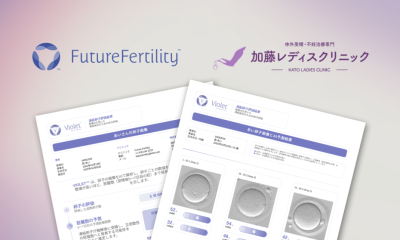
Future Fertility partners with Japan’s leading IVF provider, Kato Ladies Clinic

 Menopause2 weeks ago
More research needed to understand link between brain fog and menopause, expert says

 Mental health1 week ago
Lifting weights shows mental health and cognitive benefits in older women, study finds

 Insight3 weeks ago
Self-employment linked to better cardiovascular health outcomes in Hispanic women

 Entrepreneur3 weeks ago
Flora Fertility closes US$5m seed round