




Connect with us

Insight

AI-driven digital tool delivers sustained blood pressure reductions, study finds
Published

on

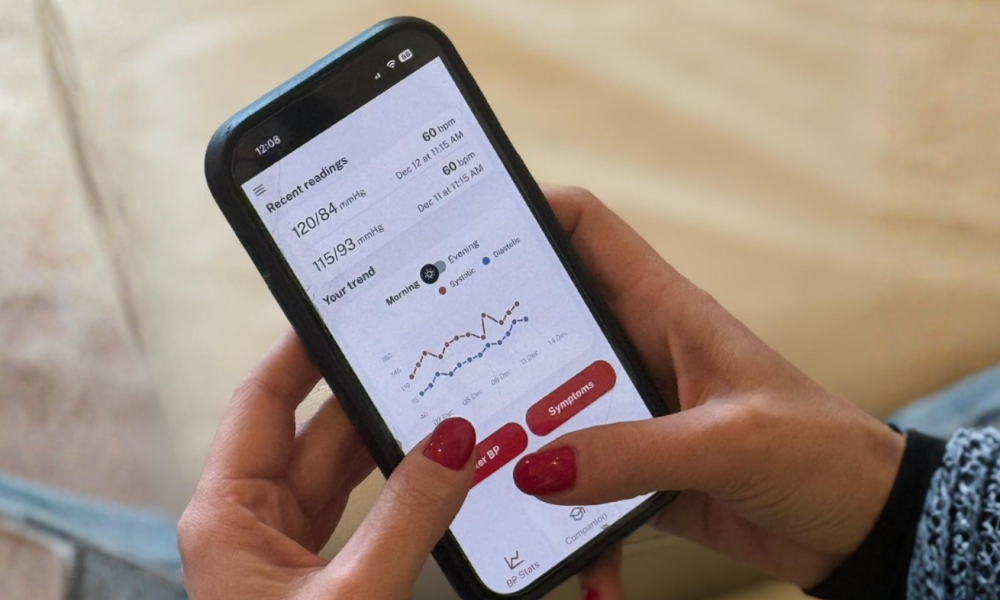
A large real-world study has found that an AI-powered digital tool developed by Megi Health can significantly reduce blood pressure over time while maintaining high long-term patient engagement –  a combination that has remained a major challenge in hypertension care.

The peer-reviewed research, published in JMIR mHealth and uHealth, analysed real-world data from more than 5,000 adults using Megi’s digital blood pressure management platform as part of their everyday lives.

The results showed meaningful reductions in systolic blood pressure, with the greatest improvements seen in people who started with higher readings.

Crucially, the study found that outcomes improved the longer people stayed engaged with the platform.

Dr Petroula Laiou, chief scientific officer at Megi and senior author of the study, said: “High blood pressure can’t be managed through occasional GP visits alone.

“This study shows that ongoing, easy-to-use digital support can help people control their blood pressure in the real world –  particularly those at highest risk.

“It also demonstrates how combining digital tools with routine clinical care creates a more effective ‘phygital’ model for managing long-term conditions.”

Around half of users were still active after one year, while patient feedback showed high satisfaction, greater confidence in self-managing blood pressure, and reduced anxiety around monitoring.

Rather than relying on a tightly controlled clinical trial, the study examined how people actually use digital health tools in real life.

Users interacted with Megi through WhatsApp, receiving reminders to measure their blood pressure and take medication, and entering readings directly into the chat.

This approach enabled continuous tracking of blood pressure, engagement and outcomes over time.

The research was led by a multidisciplinary team from King’s College London, King’s College Hospital NHS Foundation Trust, Megi Health, the Magdalena Clinic for Cardiovascular Diseases in Zagreb, and the University of Zagreb.

The cohort included both women and men aged 17 to 95, with more than 90 per cent of participants regularly submitting blood pressure readings.

The findings add to growing evidence that home-based digital monitoring can overcome many of the limitations of clinic-based blood pressure checks, which are often affected by white-coat or masked hypertension.

By combining regular home readings with behavioural support, digital tools such as Megi could play an increasingly important role in long-term cardiovascular care.

Dr Nina Šesto, CEO of Megi Health, said: “What’s striking is not just the blood pressure reductions, but how long people stayed engaged.

“That level of sustained use is exactly what hypertension care has been missing.

“As health systems move towards prevention, home monitoring and long-term condition management, this approach aligns closely with the direction set out in the NHS 10-Year Health Plan.”

Continue Reading
2 Comments

2 Comments

Leave a Reply

Your email address will not be published. Required fields are marked *

News

Bridging the metabolic wealth gap: The telehealth platform bypassing insurance to democratise care

Published

on

As weight-loss treatments remain locked behind prohibitive paywalls, a new direct-pay initiative is cutting costs in half for low-income patients, and it could provide a new blueprint for health equity.

It is one of the most persistent, frustrating paradoxes in modern healthcare: the medical innovations most capable of addressing widespread chronic conditions are overwhelmingly priced out of reach for the populations most vulnerable to them.

Nowhere is this more evident than in the current landscape of metabolic health and weight management.

As state governments and insurance providers increasingly restrict coverage for advanced weight-loss medications due to skyrocketing costs, a stark dividing line has emerged. Clinical need is no longer the primary factor in who receives treatment. Affordability is.

This financial barrier disproportionately impacts women, who not only face high rates of metabolic conditions but also frequently serve as the primary caregivers in their households.

For a single mother managing childcare, grueling work hours, and the relentlessly rising cost of living, personal well-being is often the first casualty of a tight budget.

These patients are forced into a holding pattern, watching their conditions progress year after year while highly effective, life-changing treatments remain separated from them by a paywall.

Now, a telehealth platform called Amble Health is attempting to dismantle that wall by bypassing the traditional insurance apparatus entirely.

A Structural Shift for Access

Today, Amble Health announced the launch of the Amble Cares Program, a national initiative designed to cut the cost of medical weight-loss treatments in half for low-income Americans.

The programme arrives at a critical inflection point.

Today, roughly one in eight U.S. adults have utilized advanced metabolic medications, according to a recent KFF Health Tracking Poll.

This surge in adoption has driven a fundamental shift in preventative care, but the distribution of that care has been deeply uneven.

Through the Amble Cares Program, eligible patients can access comprehensive medical weight-loss programmes, which may include prescription medications if clinically appropriate, at up to 50 per cent below standard rates.

To ensure the discounts reach the intended demographic, eligibility is determined by an independent, third-party verification partner, based on verified financial need.

The programme explicitly prioritises individuals and families with limited disposable income, including parents and guardians whose financial flexibility is tied up in providing for dependents.

Once verified, patients are connected directly to licensed clinicians to begin treatment immediately, stripping away the friction of waiting periods.

“Healthcare should not be a luxury item,” said Joey Stiver, CEO of Amble Health. At Amble, we believe that a patient’s zip code or income shouldn’t dictate their metabolic health outcomes.

“The Amble Cares Program is our direct response to the cost of living crisis, moving beyond talk of ‘affordability’ to actually delivering it to the people the traditional system has left behind.”

The Direct-Pay Trade-Off

However, this rapid, lower-cost access comes with a significant structural trade-off.

To achieve these price reductions and eliminate the administrative delays, denials, and red tape associated with traditional healthcare, Amble Health operates strictly as a direct-pay platform.

This means participants cannot use outside coverage. The programme does not accept Medicaid, Medicare, commercial insurance, or even HSA/FSA funds.

For some patients, being entirely locked out of utilizing their existing health benefits may present a new kind of hurdle.

But for those who have already found themselves abandoned by traditional coverage networks, facing outright denials, unnavigable prior authorisations, or insurmountable deductibles, the direct-pay model offers a predictable, transparent alternative to a broken system.

Ultimately, the Amble Cares Program is making a bold bet: that the most efficient way to deliver equitable healthcare to disenfranchised populations isn’t to fix the traditional insurance system, but to innovate entirely around it.

Continue Reading

News

UK report warns against ‘financial half measures’ for women’s health

Published

on

The Women and Equalities Committee (WEC) has warned against “financial half measures” on women’s health as the government published its response to the report.

Ministers launched the renewed Women’s Health Strategy in April after the committee’s March report concluded it was not convinced that the menstrual and gynaecological needs of young women and girls had been sufficiently prioritised in wider healthcare reforms.

It followed the committee’s 2024 “medical misogyny” report, which found women with painful reproductive health conditions such as endometriosis, adenomyosis and heavy menstrual bleeding were frequently finding their symptoms “normalised” and their “pain dismissed” when seeking help.

In both reports, MPs called on the government to recognise the benefits of increased investment in early diagnosis and treatment of women’s reproductive health conditions and provide additional funding needed to transform the support available to millions of women.

In its response, published on 26 May as a command paper, the Department of Health and Social Care outlined action on reducing gynae waiting times, ensuring procedures are conducted with women’s full consent and adequate pain relief, and improving access to contraception for menstrual healthcare in line with the committee’s recommendations.

It said: “The government agrees with the committee’s overarching findings and recommendations for improving women’s health outcomes and experiences.

“We acknowledge the impact that menstrual health conditions can have on women’s lives, relationships, and participation in education and the workforce.

“We recognise that more needs to be done to support women with menstrual health conditions, particularly around listening to women, improving information and education, and enhancing patient experience.”

However, there was no commitment to increase school nurse provision, no measurable actions and targets on countering online misinformation, no new commitments to end inappropriate censorship of women’s online health content, and no further initiatives on tackling racial discrimination or understanding the menstrual wellbeing needs of young disabled and Deaf women.

The response comes after analysis by The Times suggested the government is allocating 60 per cent more funding to its men’s health strategy than to its renewed strategy for women’s health.

Sarah Owen, chair of the Women and Equalities Committee and Labour MP, said: “WEC’s 2024 ‘medical misogyny’ report warned 18 months ago of women in unnecessary pain and undiagnosed for years and called on the Government to recognise the benefits of increased investment in early diagnosis and treatment.

“Our follow up report this March cautioned girls’ and women’s health are not being sufficiently prioritised in system-wide NHS reforms, while initiatives which have proven to be successful in reducing waiting lists and improving women’s healthcare access, such as women’s health hubs, risked being scaled back or discontinued.

“While it’s welcome to see a focus on tackling ‘medical misogyny’ in April’s renewed Women’s Health Strategy and an emphasis on women’s voices being heard, this must be backed by adequate funding, not financial half measures, particularly when compared to men’s health.

“Significant questions remain following today’s response publication over the adequacy of investment being provided, including for workforce training, menstrual health education in schools, research and additional ring-fenced funding for women’s health hubs to deliver services within the emerging neighbourhood health framework.

“There are both opportunities and risks when it comes to increasing use of technology in women’s healthcare.

“As the Committee’s report set out, social media companies should be held to account for inappropriate and disgraceful ‘shadow banning’ censorship of important women’s health content and there should be a rigorous approach to tackling the risks from ineffective, unsafe and exploitative for-profit FemTech apps.

“The Government should take the problem of ‘shadow banning’ more seriously.

“A strategy which does not fully address the concerns set out in WEC’s report, alongside measurable actions and timescales, will only scratch the surface of the issues facing women’s health.

“WEC will keep a close eye on progress and continue to push for long overdue tangible change for women and girls.”

Continue Reading

Insight

Early PET scan could chemo response in aggressive breast cancer – study

Published

on

An early PET scan after one cycle of chemotherapy may help predict how aggressive breast cancer responds to treatment, a study suggests.

Research led by The Institute of Cancer Research, London and King’s College London suggests that an early scan taken after one cycle of chemotherapy could help predict how well a patient’s cancer will respond to treatment.

The study focused on patients with triple-negative breast cancer (TNBC), an aggressive form of the disease in which cancer cells lack receptors for the hormones oestrogen and progesterone, as well as the HER2 protein.

Patients with TNBC are usually treated with chemotherapy prior to surgery. While many respond well, residual disease at surgery, typically around six months later, is associated with a significantly poorer prognosis. Identifying people sooner who are unlikely to respond remains a major clinical challenge.

The research explored whether using PET imaging shortly after treatment begins, rather than relying only on MRI scans later in the treatment process, could provide earlier insight into how a patient’s cancer is responding. Twenty-two patients were recruited, with fourteen undergoing FDG-PET scans before treatment and after the first cycle of chemotherapy.

The findings, published in Clinical Cancer Research, showed that changes seen on PET scans after just one cycle of chemotherapy were strongly associated with subsequent response, including whether there was no detectable cancer, known as a complete response, by the end of treatment. Importantly, early PET response showed stronger associations with treatment outcomes than standard mid-treatment MRI scans in this study.

Being able to identify patients who are not responding well at an early stage could allow clinicians to adjust treatment sooner or consider alternative approaches. These findings may also support future strategies to better tailor treatment intensity to individual patients.

The study also compared two types of PET tracers, FDG and FLT, to determine which was most suitable. While both met the study’s technical criteria, FDG-PET was selected for further evaluation due to its better image quality, greater consistency and wider use in clinical practice.

The research also explored how imaging changes after just one cycle of chemotherapy relate to the body’s immune response to treatment. Biopsies taken before and after the first cycle of chemotherapy showed that an increase in immune cells within the tumour was strongly associated with both early PET changes and improved treatment outcomes.

The researchers emphasise that these findings now need to be validated in larger studies. Future work will aim to confirm these results in broader patient groups and explore more accessible imaging approaches, such as ultrasound, alongside PET and MRI.

Sheeba Irshad, professor of cancer immunology at King’s College London and lead of the Breast Cancer Now KCL Research Unit, said:

“In patients who had PET scans both before treatment and after the first cycle, we found that this early scan could predict whether they were likely to achieve a complete response by the end of treatment. These findings highlight the potential of early imaging to guide treatment decisions, and now need to be validated in larger, modern clinical trials.”

Andrew Tutt, professor of breast oncology at The Institute of Cancer Research, London, said:

“Research that helps us determine early who is already benefitting from standard neoadjuvant chemotherapy and who might benefit from clinical trials to find better treatments is vital. This study shows that FDG-PET may have great value in this regard. We hope to be able to design studies that further investigate and validate these findings.”

The study was supported by funding from King’s College London and Guy’s and St Thomas’ NHS Foundation Trust, Breast Cancer Now, Cancer Research UK, and Guy’s and St Thomas’ Charity.

Continue Reading

Trending

Copyright © 2025 Aspect Health Media Ltd. All Rights Reserved.

