Fertility
Fairtility unveils CHLOE OQ™ expanding its offering into fertility preservation
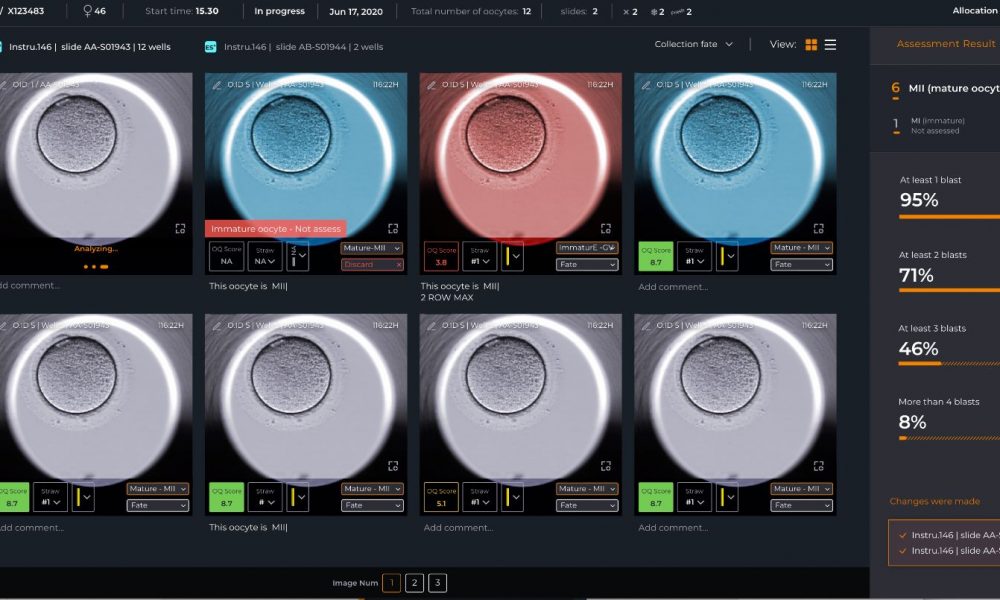
CHLOE OQ™ secures CE, empowering embryologists and patients with oocyte quality insights for egg freezing, egg donation and IVF applications

Fairtility, the transparent AI innovator powering reproductive care for improved outcomes, has announced the launch of CHLOE OQ™, bringing Oocyte Quality Insights to CHLOE’s core technology suite of capabilities and expanding the applicability of its AI-driven decision support tool to fertility preservation.
The solution will be unveiled at the 39th Annual Meeting of the European Society of Human Reproduction and Embryology (ESHRE) being held in Copenhagen, Denmark from June 25 to 28, 2023.
With CE declared for CHLOE OQ™, the new Oocyte Quality Insights capability offers IVF professionals comprehensive information to support decision making as patients undergo fertility preservation or assisted reproductive journeys.
The tool delivers predictions of an oocyte’s potential to reach the blastocyst stage post-fertilisation.

“Assessing fertility potential involves understanding three factors: sperm, oocytes and embryos. We can evaluate the viability of embryos and understand sperm quality. However, assessing oocyte quality has remained a statistical gamble,” said Dr Cristina Hickman, chief clinical officer of Fairtility.
“When looking at a seemingly ‘good’ oocyte, we can’t really identify which one will become a blast after fertilisation. CHLOE OQ helps us fill the critical gap, providing evidence-based viability predictions for the evaluation of oocytes.
“This will help clinicians to provide transparency to patients while discussing a failed IVF cycle in fertility preservation, or when assessing and allocating donor eggs.”
Oocyte quality assessment commonly relies on statistical methods based on a woman’s age. Embryologists analyse oocyte quality based on oocyte maturity and characteristics including size, texture, shape, discoloration and fragmentation.
However, these factors have proven to be subjective and lack correlation with the actual quality of the egg.
CHLOE OQ brings the power of AI to oocyte assessment, replacing generalised decision-making with personalised, data-driven AI analysis that reveals the potential of each oocyte backed by biological data.
CHLOE OQ offers personalised data to support decision making for three key applications:
- Egg freezing: In the process of fertility preservation, IVF professionals may recommend an additional oocyte retrieval based on the raw number of oocytes retrieved. While CHLOE OQ cannot change the biology of the egg, it can assist in providing a personalised assessment and managing expectations for family planning early on. CHLOE OQ helps IVF professionals and patients make informed decisions on whether to undergo an additional oocyte retrieval cycle. The tool is designed to optimise the chances of successful IVF in the future and gives women greater control of their reproductive opportunities later in life.
- Egg donation: CHLOE OQ helps fertility clinics and egg banks to further assess the quality of donor eggs, ensuring equitable distribution to recipients. By leveraging data-driven insights, donor-egg providers may match recipients with the most suitable donor eggs, increasing the chances of successful IVF outcomes, maximising limited donor egg resources and enhancing the donor-recipient experience.
- IVF treatment: During IVF, older patients are often guided to utilise donor eggs based on age rather than the true quality of their eggs. At 40-years of age, approximately 10 per cent of patients utilise their own eggs, and by 44-years old, this number drops to one per cent. CHLOE OQ is expected to help IVF professionals consider if a patient’s own eggs have sufficient quality for a successful IVF treatment, or if an egg donor may be a more suitable option. This reduces costs for patients undergoing IVF and maximises egg donor resources. A better understanding of oocyte quality also provides IVF professionals insight on an oocyte’s role in a failed IVF cycle, enabling better treatment decisions for future IVF cycles.
“Adding oocyte analysis broadens CHLOE’s core technology capabilities, extending beyond embryo assessment for IVF. CHLOE OQ now provides decision support for fertility preservation, egg donation, and female-factor infertility in IVF treatment. This expansion allows us to assist a larger population seeking to secure their reproductive futures,” stated Eran Eshed, CEO and co-Founder of Fairtility.
“While we can’t halt the passage of time and the consequent decline in oocyte quality, we can effectively freeze it. With CHLOE OQ, patients, through their fertility care team, can gain transparency into their oocytes’ viability, enabling proactive management of their reproductive health and facilitating well-informed decisions based on biological data.”
CHLOE’s core technology is the first and only decision support tool that combines AI-driven analysis of embryos and oocytes with explainable biological insights in terms that IVF professionals understand and can trust.
This supports data-driven and consistent decision-making in the IVF lab, with a goal of optimising outcomes, making fertility care more efficient and creating new family-building possibilities.


Insight
Why the UK’s fertility rate keeps falling – and what it means if you’re trying now

Article produced in association with Spital Clinic
The UK’s fertility rate has fallen for a third consecutive year to the lowest level ever recorded. That headline gets written every year, and it is easy to read it as a purely demographic story.
For anyone currently trying for a baby, the figure is something more practical: the conditions that produced the statistic are the same conditions shaping your own chances.
The decline has a clear pattern, and it is mostly not about couples being unable to conceive.
The change sits in when people start trying, and in what happens to fertility during the years by which most are now ready to have children.
What the numbers actually show
Figures from the ONS put the total fertility rate in England and Wales at 1.41 children per woman in 2024, down from 1.42 in 2023. The rate has been in overall decline since 2010 and has now recorded its lowest value three years running.
The figure sounds abstract until you compare it with the replacement level of 2.1 – the rate required for a population to sustain itself without net migration.
The UK has been below that line since the early 1970s, but the gap is now wider than at any point on record.
The data also shows where the decline is happening. Age-specific fertility rates for women in their twenties are the lowest of any generation since 1920. Rates for women in their thirties are holding up, and in some parts of the country rising.
Mothers are having babies later, not necessarily in smaller numbers. The average age of a first-time mother in England and Wales is now 31.0, up from 30.9 the year before. Regional variation matters too: London sits at 1.35, the West Midlands at 1.59.
Why the rate is falling
None of this is new. Every decade since the 1970s has seen the same trend, and it has accelerated in recent years. What has changed is the pace.
The shift is primarily social: delayed partnership formation, high housing costs, expensive childcare, and careers structured around full-time work through the exact years fertility is easiest.
The same pattern shows up across the EU, where the total fertility rate sat at 1.5 in 2022.
These forces compound. People meet later, partner later, feel financially ready later, and start trying later.
For many couples, first attempts happen in the early thirties, by which point fertility has begun its slow and uneven decline. A low national TFR is the population-level consequence of millions of individual timing decisions made under real-world constraints.
What this means for individuals trying now
Around one in seven couples in the UK will struggle to conceive naturally.
That figure has been stable for decades; the population of people seeking help, however, has grown – not because fertility itself has worsened, but because more people are trying during the window where it becomes harder.
UK fertility treatment data from the HFEA shows around 52,400 patients had over 77,500 IVF cycles in 2023, making 1 in every 32 UK births IVF-conceived.
The average age of a first-time IVF patient in the UK is now just over 35 – nearly six years older than the average first-time mother in the population overall.
NHS-funded IVF cycles have fallen from 40 per cent of the total in 2012 to 27 per cent in 2022, and to 24 per cent in England in 2023. The private sector has absorbed the rest.
When to get checked – and what it involves
Current NHS advice is to see a GP after a year of regular unprotected sex without a pregnancy, or sooner if you are 36 or older.
That threshold reflects the fact that every additional six months of trying is more clinically informative in the years when fertility is starting to shift.
The first set of investigations is usually straightforward.
For women, this typically covers hormone testing (AMH, FSH, LH, TSH and prolactin), rubella immunity, chlamydia screening, a mid-luteal progesterone and a transvaginal ultrasound.
For men, a semen analysis is the first step.
A private trying-to-conceive screening covers the same ground without the NHS waiting list, with the advantage that results can be reviewed in a single consultation.
The purpose of early screening is not to diagnose infertility – most couples conceive naturally within a year or two – but to identify specific, treatable issues before more time passes.
The fertility window is narrower than most people think
The uncomfortable truth behind the falling TFR is that the biological fertility window has not changed. The subtle decline begins around age 32, and accelerates from the late thirties.
The chance of natural conception in any given month is substantially lower at 40 than at 30, and falls sharply through the early forties.
IVF success rates track the same curve.
For patients aged 18 to 34, the average birth rate per embryo transferred was around 35 per cent in 2022; for those aged 40 to 42, around 10 per cent using their own eggs.
This is why the growth areas in UK fertility care are now pre-conception screening and elective egg freezing – HFEA data shows egg storage cycles rose from 4,700 in 2022 to 6,900 in 2023, one of the fastest-growing treatments in the sector.
A focused fertility consultation earlier in the timeline – in the late twenties or very early thirties, before there is a known problem – tends to produce better decisions than a consultation triggered by a year of trying without success.
The wider picture
The UK’s falling fertility rate is the product of a society that has reorganised when people have children, not one in which couples have become less capable of conceiving.
There is no need for alarm in that finding. The practical takeaway is that the old default of ‘wait and see’ assumes a timeline no longer matching the one most people now live.
For anyone currently trying, or planning to try soon, the single most useful move is to understand your own numbers earlier than previous generations did.
The national trend is not going to reverse quickly.
A clear picture of your own fertility window – and the information to use it well – is within reach in a way the headline statistics are not.
If you are trying to conceive or thinking about starting, a structured pre-conception review is a reasonable first step.
Disclaimer: This article is produced for informational purposes only and does not constitute medical advice, diagnosis or treatment. Clinical guidance referenced reflects published NHS, ONS and HFEA data as at April 2026. Individual circumstances vary; readers are advised to consult a qualified healthcare professional before acting on any information in this article. This piece was produced in association with Spital Clinic, which provided background clinical information for editorial purposes. Hyperlinks to external sources are included for reference only and do not represent an endorsement of any product, service or organisation.
Fertility
Toxins and climate harms having ‘alarming’ effect on fertility, research warns

Simultaneous exposure to toxic chemicals and climate-related heat may be worsening fertility harms across humans and wildlife, research suggests.
The review of scientific literature looks at how endocrine-disrupting chemicals, often found in plastic, together with climate-related effects such as heat stress, are each linked to lower fertility and fecundity, meaning the ability to reproduce, across species including humans, wildlife and invertebrates.
Though the reproductive harms of each issue in isolation are well studied, there is little research on what happens when living organisms are exposed to both.
“Together, the two issues are likely to pose a greater threat to fertility, and the additive effect is “alarming”, said Susanne Brander, a study lead author and courtesy faculty at Oregon State University.
“You’re not just getting exposed to one, but two, stressors at the same time that both may affect your fertility, and in turn the overall impact is going to be a bit worse,” Brander said.
The paper looked at 177 studies.
Shanna Swan, a co-author on the new paper, co-produced a 2017 study that found sperm levels among men in western countries had fallen by more than 50 per cent over four decades. Other research has suggested human fertility has been declining at a similar rate.
The University of Washington’s Institute for Health Metrics and Evaluation has previously said the world was approaching a “low-fertility future”, with more than three quarters of countries below replacement rate by 2050.
The new paper’s authors focused on the effects of endocrine-disrupting chemicals and substances, including microplastics, bisphenol, phthalates and PFAS.
These are thought to cause a range of serious reproductive problems, disrupt hormones and be a potential driver of falling fertility.
Brander said the harms linked to these chemicals are often similar across organisms, from invertebrates to humans.
Phthalates, for example, have been linked to altered sperm shape in invertebrates, spermatogenesis in rodents, meaning sperm production, and reduced sperm counts in humans.
PFAS are also thought to affect sperm quality, and both have been linked to hormone disruption.
The chemicals are widespread in consumer goods, so people are often regularly exposed.
Meanwhile, previous research has shown how rising temperatures, lower oxygen levels and heat stress, among other effects linked to climate change, may also worsen infertility.
Heat stress has been found to affect human hormones, and is linked to spermatogenesis in rodents and bulls.
Research shows temperature also plays a role in sex determination in fish, reptiles and amphibians.
The species has evolved to choose which sex it produces in part based on temperature, and the heating planet can “push it too far in one direction or the other, which overrides that evolutionary benefit”, Brander said.
Similarly, many endocrine disruptors may alter environmental sex determination.
The study set out some of the overlapping effects of chemical exposure and climate change across taxonomic groups, from invertebrates to humans.
In birds, for example, exposure to increased temperature, PFAS, organochlorines and pyrethroids may each individually cause abnormal sperm, increased fledgling mortality, abnormal testes and population decline.
“What happens if they’re exposed to more than one of those stressors at the same time? There has been little exploration of that question.
“Even if there have not been a lot of studies looking at these simultaneously, if you have two different factors that both cause the same adverse effect, then there’s a likelihood that they are going to be additive,” Brander said.
Katie Pelch, a senior scientist with the Natural Resources Defense Council nonprofit, who was not part of the study, said the authors had reviewed high-quality science.
She said she wanted to see more examples of the overlap in impacts, but agreed with the overall premise.
“It is likely [multiple stressors] would have an additive effect, at very least, even if they have different mechanisms of harm,” Pelch added.
The solution to the systemic problems would involve tackling climate change and reducing the use of toxic chemicals.
The study cites the global reduction in the use of DDT and PCBs achieved under the Stockholm Convention as an example of an effective measure, but Brander said much more is needed.
“There is enough evidence in both areas to act to reduce our impact on the planet,” she said.
Fertility
Researcher explores weight loss jab impact on PCOS
Entrepreneur6 days agoFuture Fertility raises Series A financing to scale AI tools redefining fertility care worldwide
Entrepreneur4 weeks agoThree sessions that show exactly where women’s health is heading in 2026
Pregnancy4 weeks agoHow NIPT has evolved and what AI NIPT means in 2026
News4 weeks agoTwo weeks left to make your mark in women’s cardiovascular health
Fertility2 weeks agoFuture Fertility partners with Japan’s leading IVF provider, Kato Ladies Clinic
Mental health1 week agoLifting weights shows mental health and cognitive benefits in older women, study finds
Menopause2 weeks agoMore research needed to understand link between brain fog and menopause, expert says
News4 weeks agoCopper coil vs Mirena: Which is right for you?


Pingback: Fairtility unveils CHLOE OQ™ expanding its offering into fertility preservation - Fairtility