




Insight
Turning life’s lessons into movements
By Chaitra Vedullapalli, Founder and President, Women in Cloud


There once was a woman who stood before a packed auditorium, her voice steady but her heart racing.
She had spent years mastering her craft, yet she knew that expertise alone wouldn’t make an impact. As she stepped onto the stage, she made a bold choice—not to inform, but to transform.
She spoke not about what she knew, but about how people needed to think differently. That moment wasn’t just a speech; it was the birth of a movement.
What she delivered was a thought leadership signature talk—one that redefined perspectives and inspired action. And that can be you.
So what does that mean?
Thought leadership is no longer just about expertise. It is about owning a paradigm, challenging conventional wisdom, and inspiring change.
Yet, most professionals struggle to move beyond a traditional presentation format to create something truly impactful. The answer lies in redefining how we craft and deliver signature talks.
Thought leadership begins when you stop speaking about what you know and start shaping how people think.
Your audience is not looking for more information; they crave transformation.
The FORMula Framework: The Art of Transformational Speaking
Every great thought leader has a signature talk that doesn’t just inform—it transforms.
The most impactful speakers don’t simply share knowledge; they challenge perspectives, introduce new paradigms, and spark movements.
The FORMula Framework—Focus, Originality, Relevance, and Memorability—was designed to help speakers elevate their thought leadership, create lasting impact, and turn their ideas into powerful forces of change.
Focus, Originality, Relevance, and Memorability—is designed to help speakers step into their full potential and articulate ideas that shift perspectives.
Focus on One Paradigm
The most powerful talks don’t cover broad topics; they anchor on one paradigm shift. A great speaker doesn’t try to be everything to everyone.
Instead, they select a single idea—one that challenges assumptions, redefines how we see the world, or introduces a completely new perspective.
By focusing on one defining paradigm, you create clarity and a compelling throughline that audiences can follow.
A signature talk is not about reciting credentials or listing achievements. It is about leading a movement of thought. The key is to ask yourself: What outdated mindset needs to be changed?
What industry norm is ripe for disruption? When you focus on a single, transformative idea, your message carries weight and impact.
Consider these three powerful TED Talks delivered by women that have reshaped perspectives:
- Brené Brown – The Power of Vulnerability: Brown’s talk redefined leadership and personal growth by emphasising vulnerability as a strength rather than a weakness. Her research-based storytelling captivated audiences and made emotional intelligence a mainstream discussion in business and personal development.
- Chimamanda Ngozi Adichie – The Danger of a Single Story: Adichie’s talk challenged cultural narratives and biases by demonstrating how incomplete or singular narratives shape our perceptions of the world and its people. Her ability to intertwine personal experiences with broader social commentary made her message both powerful and unforgettable.
- Susan Cain – The Power of Introverts: Cain’s talk reshaped how society views introverts in leadership and creativity. By challenging the bias towards extroversion, she provided a compelling argument for embracing different working and thinking styles, revolutionising the way businesses and institutions foster talent.
Originality: Your Voice, Your Story
A signature talk is not a regurgitation of industry trends; it is a distinct perspective infused with personal insight.
The secret to standing out is not just delivering new information but sharing your unique lens on the world.
Originality is the difference between a forgettable presentation and a paradigm-shifting message that sticks. It’s the difference between speaking as an expert and speaking as a visionary.
The most memorable talks are built on authentic stories, experiences, and challenges that shape who you are. The more personal your insight, the more universal your impact.
Your lived experience is your greatest asset—use it to frame your talk in a way no one else can.
One of my most defining moments came when I co-founded Women in Cloud. I saw firsthand how women entrepreneurs in tech struggled to gain economic access, and I knew something had to change.
Instead of waiting for an opportunity, I incorporated collective actions to democratize economic access to unlock over $500M in opportunities.
The impact has been profound—not just in numbers, but in the way we’ve reshaped the conversation around inclusion in technology.
Another pivotal moment in my journey was pioneering the #empowHERaccess campaign. I realised that visibility was just as critical as opportunity.
This same vision led me to produce the ICONS movie, an initiative that not only amplified the stories of women in technology but also provided a platform for emerging talent to lead the project.
Making ICONS an Oscar-qualified film was a testament to the power of inclusive storytelling.
As part of this journey, we launched the ICONS50 Cities Tour, bringing these narratives to communities worldwide, inspiring future generations, and opening doors for more women to step into leadership and creative roles in the entertainment industry.
Thought leadership isn’t about standing on a stage; it’s about taking action and turning personal insights into lasting global impact.
Relevance: Speak to the Moment
A thought leader meets the audience where they are, but more importantly, takes them where they need to go. Relevance is the bridge between your paradigm and your listener’s reality.
If your talk doesn’t feel urgent or necessary, it won’t create change.
Understanding your audience—what they struggle with, what they aspire to, and what barriers hold them back—allows you to craft a message that resonates.
The best speakers understand the pulse of the market and position their message as the answer to today’s challenges.
A signature talk should feel like an invitation into the future, giving people a reason to engage, listen, and take action now.
Memorability: The Power of Lasting Impact
An idea that is not remembered is an idea that doesn’t exist. Memorability is what transforms a talk from an insightful moment into a movement.
The world’s greatest thought leaders don’t just present ideas—they architect experiences. They engage emotions, use powerful storytelling, and repeat key messages in ways that reinforce learning.
Signature talks are structured intentionally, guiding the audience through a journey of discovery. A strong opening captivates, a clear middle builds trust, and a compelling close invites action.
When a message is deeply felt, it is never forgotten. The most effective talks are those that stay with the audience long after the event is over, influencing the way they think, work, and lead.
Two unforgettable talks that exemplify memorability are:
- Malala Yousafzai – Address to the United Nations: Malala’s speech on education and women’s rights resonated globally, not just because of her powerful words but because of her personal journey. Her bravery and resilience made her message unforgettable, compelling world leaders to take action.
- Oprah Winfrey – 2018 Golden Globes Speech: Oprah’s speech on justice, empowerment, and the #MeToo movement captured the world’s attention. Her ability to command a room with personal storytelling, emotion, and a call to action solidified this as one of the most memorable speeches in modern history.
Building a Thought Leadership Legacy
Thought leadership is not about having a stage; it is about owning an idea. It is about shaping the future rather than reporting on the present.
Women who want to establish their voice in the industry must think beyond expertise and lean into their ability to redefine narratives.
The FORMula is not just about creating a compelling speech—it is about changing the way people see the world.
By focusing on a single paradigm, delivering an original perspective, making your message relevant, and ensuring it is unforgettable, you elevate yourself from a speaker to a transformational leader.
The future of leadership belongs to those who are bold enough to challenge what exists and brave enough to introduce something new.
Your signature talk is your platform. Use it to shape minds, inspire action, and create lasting change.
Join the WICxInsiderCircle Thought Leadership Series!
We want to invite you to join the WICxInsiderCircle Thought Leadership Series!
This exclusive series will provide you with developing your signature talks, proven frameworks, and practical tools to amplify your voice, build executive presence, and position yourself as a recognised thought leader in the AI economy.
Plus download the 15-Point Ultimate Personal Branding Asset Checklist that covers 15 critical items to unlock our personal speaker brand online so you can control the narrative about yourself, stand out in the crowd and introduce yourself in the best light possible.
Take the first step in shaping your leadership legacy. d, and build your leadership legacy. Don’t miss out—start your journey today!
About the author: Chaitra Vedullapalli
Chaitra Vedullapalli is a renowned entrepreneur, TED Speaker and a Go-To-Market (GTM) expert, revered for her proficiency in coaching tech founders. Her skills have guided hundreds of tech companies to leverage cloud market places that have built million-dollar practices.
She is the mastermind behind the 4P Cosell GTM Method, a groundbreaking framework designed to develop strategic GTM plans with Microsoft and Google. This method capitalizes on her 20+ years of corporate experience and her success in launching GTM with billions of dollars in economic impact.
Chaitra has been invited to speak on various stages including Microsoft Inspire, Google Summit at SXSW, TIFF, SDIFF, and the United Nations. She’s also been featured in media publications such as Forbes, TechCrunch, and Success magazine.
Her achievements have been recognised with numerous awards, including the 2023 WPO Entrepreneur of the Year, Forbes 1000 Next, CIO100 Awards, and Microsoft Prestige Supplier Awards.
Chaitra is a dynamic leader who sits on multiple boards, runs a film fund in influence story narratives, and leads a 120K-strong Women in Cloud ecosystem across 27 countries. Linkedin















Women in Europe’s health and care sector face a 19 per cent hourly gender pay gap, according to a new World Health Organization (WHO) report.
Women account for 77 per cent of the sector’s workforce, compared with 45 per cent across all other sectors combined, but make up only 55 per cent of its top earners.
The hourly gender pay gap widens at higher wage levels, from 2 per cent among the lowest earners to more than 22 per cent at the top.

The WHO report found that health and care accounts for almost 17 per cent of all women’s employment in its European Region, compared with 5 per cent of men’s employment.
The sector is the fourth-largest employer overall and the single largest employer of women in the region.
Natasha Azzopardi Muscat, director of the Division for Health Systems at WHO Europe, said: “Women make up the majority of the people who keep Europe’s health systems running, yet they’re paid less than their male counterparts, a gap that compounds over a lifelong career.”
The findings follow a pattern seen across the wider labour market, with structural inequality increasing at higher wage and seniority levels.
Globally, women working in health earn an average of 24 per cent less than men, according to the report, a wider gap than in many other industries.
Some of the difference in pay could be explained by work-related factors, including age, education, public or private sector employment and whether people worked full-time or part-time.
After adjusting for those four factors, the hourly pay gap fell from 19 per cent to 6 per cent, while the monthly gap declined from 28 per cent to 10 per cent.
The remaining difference could not be explained by factors measured in the data.
“Most of this gap isn’t down to women working fewer hours, being younger or working in different parts of the sector,” Azzopardi Muscat said.
“It comes down to how the sector values women’s work. Age, education, working hours and public versus private sector employment only helps explain some of it.”
WHO said the findings point to factors including the undervaluation of care work, occupational segregation and potential discrimination in pay-setting practices.
Occupational categories with a higher proportion of women paid less across managerial, professional and technical roles.
Management jobs in health and care employ more women than management roles in other sectors and pay an average of €22 per hour, compared with €24.70 in comparable roles elsewhere.
WHO described the gender pay gap as one of the most persistent forms of labour market inequality. Given the number of women working in health and care, it said the gap could have important economic and social consequences.
The report said the inequality may lead to lower lifetime earnings and pension entitlements, increase women’s risk of poverty, reduce returns to education and undermine sustainable economic growth.
“It means lower pensions, less financial security in older age, and a higher risk of poverty for women who’ve spent their working lives caring for others,” said Azzopardi Muscat.
“This isn’t a coincidence, and it isn’t about qualifications. Women are being paid less for the same work and passed over for the roles that pay more.”
WHO said closing gender pay gaps was both an equity imperative and an investment in a stronger and more sustainable health workforce.
It suggested measures including greater salary transparency, increased female representation in decision-making roles and action to address gender norms and stereotypes.

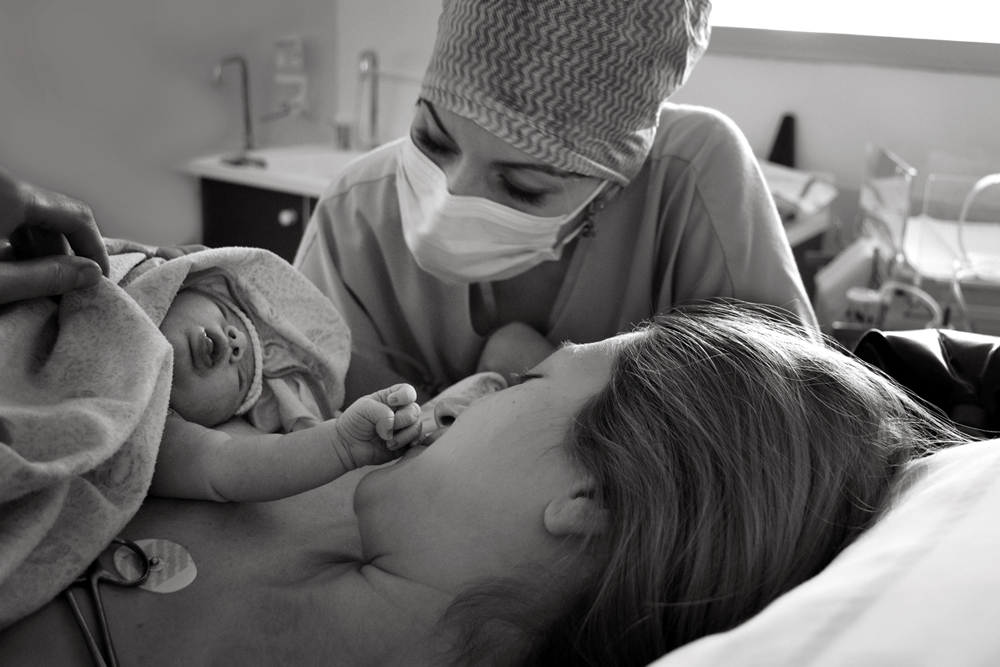
Women with childbirth-related PTSD had healthcare costs 2.5 times higher than women without PTSD from six to 12 months after birth, a report found.
The analysis estimated that early prevention of traumatic births and childbirth-related post-traumatic stress disorder (PTSD) could save the NHS around £26m each year.
Women with PTSD were also less likely to have returned to work by 12 months after giving birth, suggesting potential longer-term employment and economic effects.
The report from City St George’s, University of London was launched at an All-Party Parliamentary Group (APPG) on Birth Trauma event on 10 September 2026.
Researchers calculated the potential NHS savings using the number of births reported in NHS hospitals in 2024-25 and the UK prevalence of childbirth-related PTSD.
Around one in 20 women in the UK develop PTSD following childbirth, while recent research has shown that the condition remains underdiagnosed.
The findings draw on research that tracked more than 2,000 women in England and Scotland from pregnancy to two years after birth. Researchers assessed mental health, use of health services and employment outcomes.
The research included assessments of childbirth-related PTSD and PTSD arising from other traumatic experiences. It also included a separate Birth Trauma Association survey examining women’s experiences of birth trauma.
Between six and 12 months after birth, healthcare and support service costs for women with childbirth-related PTSD were 2.5 times those of women without PTSD.
Women with low or moderate symptoms, including those reporting one or two PTSD symptoms, also had higher healthcare service costs than women without PTSD.
Just over half, 53 per cent, of women with PTSD had returned to work by 12 months after giving birth, compared with 68 per cent of women without symptoms.
Women with PTSD were more likely to be referred for mental health support, but more than half received no referral.
Those whose PTSD followed a traumatic birth also had slightly higher healthcare costs than women whose PTSD resulted from other traumatic experiences.
The researchers called for routine PTSD assessment and treatment during pregnancy and after childbirth, alongside greater access to specialist perinatal mental health services.
They also recommended training healthcare staff in perinatal trauma, trauma-informed care and identifying women at risk of PTSD.
The report said further research was needed to establish whether screening, treatments and trauma-informed care pathways are effective and evidence based.
The work follows the APPG’s 2024 Birth Trauma Inquiry, which highlighted the effects of birth trauma on women and families and called for evidence on its wider public health and societal costs.
The report focused primarily on healthcare use and did not attempt to calculate all costs associated with birth trauma and postnatal PTSD, including wider employment, family and societal effects.

The UK government is reviewing a surrogacy firm after complaints that medical insurance claims involving surrogates in Mexico were rejected.
The Department of Health and Social Care (DHSC) is considering whether UK-based provider My Surrogacy Journey should remain listed on gov.uk as one of four domestic surrogacy agencies available to intended parents.
The review follows allegations concerning its Mexican sister company, where surrogates are based.
Health minister Diana Johnson said: “The department is looking into the allegations about My Surrogacy Journey.
“As part of that assessment, the department will consider whether it is appropriate for that company to remain on the gov.uk list of agencies.”
Emails sent by My Surrogacy Journey chief executive Michael Johnson-Ellis and seen by the Guardian suggest multiple surrogate women in Mexico had their insurance claims rejected.
The emails also suggest 300 couples using the company were moved to a new insurance provider because of the increased risk of claims being rejected.
Commercial surrogacy is banned in the UK, where only altruistic arrangements are permitted.
My Surrogacy Journey operates a not-for-profit UK branch alongside for-profit sister companies in Mexico and the US. All three companies have the same owners and chief executives.
The reported insurance issues relate to surrogacy arrangements in Mexico.
One couple told the Guardian they paid tens of thousands of pounds to cover medical costs after their surrogate had a hysterectomy during childbirth and an insurance claim was refused.
The Guardian said it understood that at least five sets of parents said they had to cover medical costs after insurance claims were rejected.
In an email to the couple whose surrogate underwent a hysterectomy, Johnson-Ellis wrote: “We have already told you that the insurance companies have been declining some of the claims and we are actively working with the broker to get this issue resolved but you should also consider that they may not be paid out and there is nothing we are able to do to change this …
“We appreciate this is not an insignificant sum but this genuinely is out of our control.”
Johnson-Ellis also said the company had switched insurance providers, writing: “We’re also managing this for 300 other journeys, which is a complex position to be in.”
Lawyers acting for My Surrogacy Journey said the company did not comment on individual cases, but that existing insurance policies were in place and claims continued to be accepted and processed.
They said the company understood that a small number of claims had been rejected and was supporting people seeking to resolve those claims with an insurer.
Under the surrogacy arrangements, intended parents are understood to be contractually required to cover medical costs not paid by an insurer.
The couple said they had been recommended the company’s Mexico option. Its website advertises that intended parents using the route can have a baby in “under 18 months”.
They said they were told the UK route could take up to five years and that the US option was much more expensive.
Lawyers for My Surrogacy Journey said prospective parents are given information about typical timelines, costs, legal frameworks and practical considerations, and that the 18-month timeframe is indicative only.
The couple said their surrogate developed placenta accreta, a serious condition in which the placenta attaches to the wall of the uterus.
Emails from Johnson-Ellis acknowledged that the insurance provider investigated the birth after the surrogate experienced health complications.
The parents are considering legal action, while the Guardian said it understood at least four other couples were reviewing their options.
Phil Brickell, MP for Bolton West, raised concerns in parliament about a separate couple who had used My Surrogacy Journey.
He said: “Two of my constituents recently travelled to Mexico, where their children were born by surrogacy.
“Those births were facilitated by a company called My Surrogacy Journey, which is listed on gov.uk.
“While in Mexico, they had repeated traumatic experiences with the company relating to issues including insurance for their children, accusations of bullying towards staff and repeated efforts to silence any constructive criticism.
“I understand that other members of this house have received similar complaints.”
Brickell called for My Surrogacy Journey to be removed from gov.uk pending a review by the Human Fertilisation and Embryology Authority.
Lawyers acting for My Surrogacy Journey said the company was communicating with DHSC and was confident any issues could be resolved.











 Menopause1 week ago
Menopause may not explain rising heart condition in women – study

 Entrepreneur2 weeks ago
Last chance to save on Women’s Health Week and Women’s Sport Summit: Early Bird pricing ends 11 September

 Fertility2 weeks ago
Paracetamol use may impact future fertility, studies suggest

 Insight1 week ago
Women with birth trauma face 2.5x higher healthcare costs – study

 Menopause2 weeks ago
Cancer drug could tackle osteoporosis menopause weight gain

 News6 days ago
Medical cannabis may improve endometriosis symptoms – study

 Cancer1 week ago
Study could explain why obesity is a breast cancer risk factor

 Cancer2 weeks ago
FDA approves AstraZeneca breast cancer drug