




News
Sheba Medical Center announces maternal telemedicine training for female Palestinian health professionals
The centre collaborates with Project Rozana to increase health equity in rural areas in the West Bank


Israel’s largest hospital launches maternal telemedicine training to female Palestinian healthcare professionals.
Sheba Medical Center has announced the launch of a training and health delivery program for female Palestinian healthcare professionals in collaboration with Project Rozana, a not-for-profit organization aiming to build better understanding between Israelis and Palestinians through healthcare.
The announcement has come ahead of President Joe Biden’s visit to Israel and the Palestinian Authority (PA), where he intends to unveil a series of confidence building measures that will include healthcare initiatives,
OB-GYN Beyond, Sheba’s virtual OBGYN department, has been providing remote fetal assessments along with remote care for pregnant women in Israel.
The collaboration between OB-GYN Beyond, part of the Sheba Beyond virtual hospital platform, and Project Rozana aims to establish a remote OB-GYN unit in the rural Hebron area that will be fully operated by Palestinian healthcare teams.
“Our goal at OB-GYN Beyond is to provide women with the medical care they need, wherever they are located,” says Dr Avi Tsur, director of the Women’s Health Innovation Center at Sheba Medical Center and director of OB-GYN Beyond.
“Telemedicine allows us to bridge geographical, political and cultural gaps in the shared vision of optimal health outcomes. We are excited to work with Project Rozana in achieving this goal.”
Project Rozana in Israel provides improved healthcare access to Palestinians and engages in professional development and capacity building to contribute to an independent and resilient Palestinian healthcare system.
During a recent visit to Sheba Medical Center, U.S. Ambassador to Israel, Thomas Nides, was introduced to Sheba’s work with the Palestinian community where patients from the Gaza Strip and West Bank are brought to the hospital for urgent care on a daily basis, as well as engaging in collaborative efforts with the PA to educate and train doctors.
“Enabling Palestinians to provide healthcare in their remote communities lays the groundwork for an empowered people,” Ronit Zimmer, executive director of Project Rozana, explains.
“The training at Sheba will enable local healthcare workers to operate virtual clinics in remote areas, eliminating many logistical, bureaucratic, and security obstacles for rural residents seeking quality healthcare.”
The Palestinian team engaged in training with some of the telehealth technologies used by OB-GYN Beyond, such as HeraBEAT by HeraMED for remote fetal monitoring, Datos Health for ongoing monitoring and patient communication, GE Healthcare’s Vscan Air™ for remote fetal ultrasound and Healthy.io for digital urinalysis.
Upon conclusion of the training, the participants — gynaecologists, midwives, nurses, a pediatrician, a nutritionist, a physical therapist and a psychologist — will receive ongoing clinical support from Sheba on a bi-monthly basis.
For more information, visit eng.sheba.co.il.



A urine and vaginal fluid test could help rule out womb cancer in women with postmenopausal bleeding, potentially reducing invasive checks.
In a study of 1,864 women with postmenopausal bleeding, the test identified 80 of 99 womb cancers and correctly gave a negative result for 93 per cent of women without the disease.
Researchers said the test was not accurate enough to rule out cancer on its own, but could help fast-track women at the highest risk for urgent investigation while reducing immediate invasive testing for those at lower risk.

Professor Emma Davidson, of the University of Manchester and Manchester University NHS Foundation Trust, said: “Bleeding after the menopause is understandably alarming for women because it can be a sign of cancer, but the vast majority of those investigated will not have the disease.
“At the moment, many women face invasive, uncomfortable tests that can be stressful as well as costly for health services before cancer can be ruled out.
“Our study shows that a simple test using urine and vaginal samples could help identify the women most likely to have cancer while safely reassuring many others much earlier in the diagnostic pathway.
“If further studies confirm these findings in routine practice, this approach has the potential to transform care for thousands of women every year.”
Developed at the University of Manchester and Manchester University NHS Foundation Trust, the test examines cells collected from urine and vaginal fluid samples.
Postmenopausal bleeding currently triggers an urgent cancer referral, although only about 5 to 10 per cent of women who report it have an underlying cancer.
Current investigations include an internal ultrasound scan, a biopsy of the womb lining and hysteroscopy, in which a camera is passed into the womb.
Women taking part in the study attended seven hospitals in north-west England and provided urine and vaginal fluid samples before undergoing their routine tests.
Five per cent of participants, 99 of 1,864 women, were diagnosed with womb cancer through biopsy or surgery.
Cytologists assessed the samples without knowing the women’s diagnoses.
Researchers said the test could be used to triage women suspected of having womb cancer, with lower-risk patients monitored through repeat sampling or given a full assessment if symptoms continued.
They cautioned that the samples were assessed by highly trained specialist cytologists, so it is not yet known whether the same accuracy could be achieved in other settings.
The test has also not been studied in women without symptoms.


Nottingham University Hospitals NHS Trust has apologised after a human error caused 11 years of maternity data to be overwritten.
The incident happened during routine technical work on 18 August, when computer instructions intended to create a copy of a radiotherapy database were mistakenly applied to the maternity database.
Most of the affected information has since been recovered, including notes, observations, test results and other information recorded as part of patient care.
However, the trust has been unable to fully restore the historical record showing who viewed maternity records between September 2011 and November 2022.
Current data was not affected and the incident has had no impact on current maternity services or care provided to women and babies, according to the trust.
It also said no information was accessed or used inappropriately as a result of the incident.
Andy Callow, chief digital and information officer at Nottingham University Hospitals, said: “I am sorry for the concern and distress this incident may cause to women and families affected.
“On 18 August 2026, a human error during a routine technical process resulted in a maternity records database being unintentionally overwritten.
“We took immediate action to investigate the incident and recover the affected information.
“The information needed to support patient care has been restored and there has been no impact on current maternity services or the care provided to women and babies today.
“However, to date, we have been unable to fully restore the historical record showing who viewed maternity records between September 2011 and November 2022.
“We have informed the Information Commissioner’s Office, completed a full investigation and strengthened our processes and controls to help prevent a similar incident from happening again.”
The error occurred when pre-written computer instructions previously used for another hospital system were used during the technical work.
A setting that should have been changed was not altered, resulting in work being carried out on the maternity database instead of the radiotherapy database.
The issue was escalated within minutes of being identified and experts were brought in to recover as much information as possible.
The trust has referred the incident to the Information Commissioner’s Office and notified Nottinghamshire Police, which is conducting a separate criminal investigation into maternity care at the trust.
The force is assessing whether the loss of information about who accessed maternity records could affect that investigation.
The incident follows a maternity review led by midwife Donna Ockenden, which concluded in June after examining the cases of 2,500 families over a 20-year period.
The review found more than 500 mothers and babies suffered potentially avoidable harm, with 162 dying following substandard care. Some babies who survived were left seriously disabled.
Nottinghamshire Police announced its separate criminal investigation, Operation Perth, in September 2023.

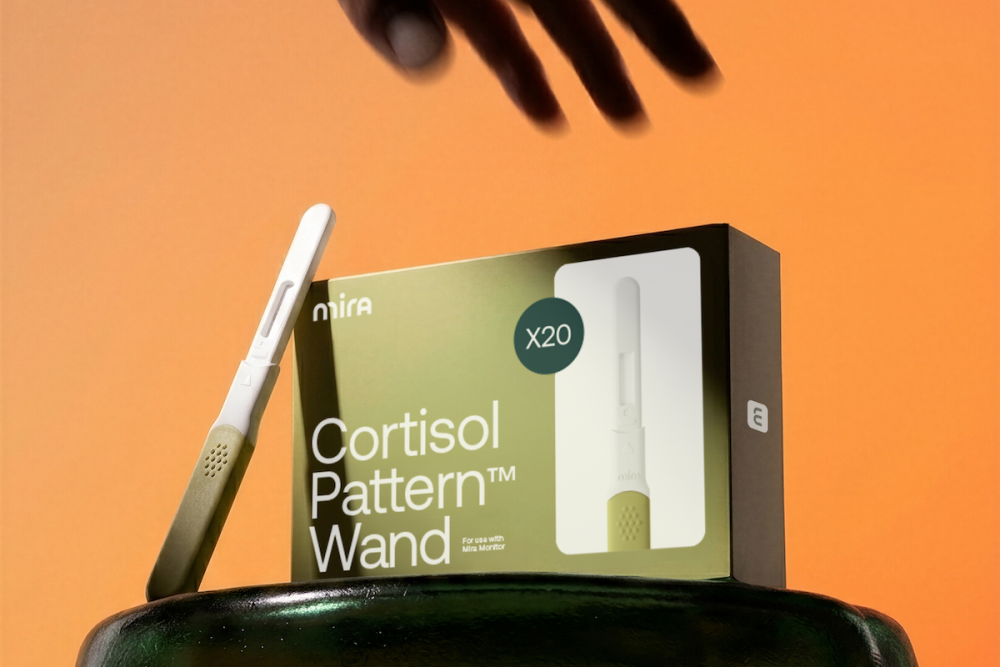
Mira has launched an at-home cortisol tracking kit that allows women to monitor stress-related patterns over time using urine samples.
The Cortisol Pattern Kit measures urinary free cortisol directly from a urine sample and displays results through the company’s existing monitor and app.
The system is intended for repeated testing rather than a single measurement, allowing users to compare results with a personal baseline built from their own data.
Mira said consistent daily testing can establish a baseline in about a week. It recommends testing in the morning and evening to see how cortisol patterns change throughout the day.
Cortisol is involved in the body’s stress response but is not a direct or complete measure of stress. The company said the kit is intended for general wellness use and is not designed to diagnose stress, an endocrine condition or any other medical condition.
The Cortisol Pattern Wands use the same lateral-flow testing format as Mira’s existing hormone tests. Users dip a wand into a urine sample, insert it into the Mira Monitor and view the result in the app within minutes.
The company said cortisol data can be viewed alongside cycle, hormone and daily routine information.
Sylvia Kang, founder and chief executive of Mira, said: “The Cortisol Pattern™ Kit gives women a new way to understand their stress patterns over time, in the context of their own biology.”
She added: “We built Mira to give women answers they had spent far too long searching for, beginning with the TTC journey and expanding into hormone and cycle tracking across life stages, including perimenopause. Now, we’re taking Mira beyond reproductive health and into everyday wellness, bringing personalised stress-pattern tracking directly into women’s homes.”
Mira said more than 350,000 women already use its platform to track their cycle and hormones.
Waitlist sign-ups for the Cortisol Pattern Kit and Cortisol Pattern Wands opened on 22 September, with wand refills available to pre-order in 20- and 30-count options.





 Menopause1 week ago
Menopause may not explain rising heart condition in women – study

 Fertility2 weeks ago
Paracetamol use may impact future fertility, studies suggest

 Insight1 week ago
Women with birth trauma face 2.5x higher healthcare costs – study

 News1 week ago
Medical cannabis may improve endometriosis symptoms – study

 Cancer1 week ago
Study could explain why obesity is a breast cancer risk factor

 Menopause2 weeks ago
Menopause hormone therapy may improve cardiovascular health outcomes, study suggests
 AI1 week ago
Evvy secures US$40m for AI-powered vaginal microbiome testing
 Q&A1 week ago
Innovating breast cancer screening with tears
2 Comments