




News
Self-sampling HPV kits could screen an extra million women for cervical cancer
Self-sampling has already been introduced in several countries with the aim of increasing cervical screening participation rates

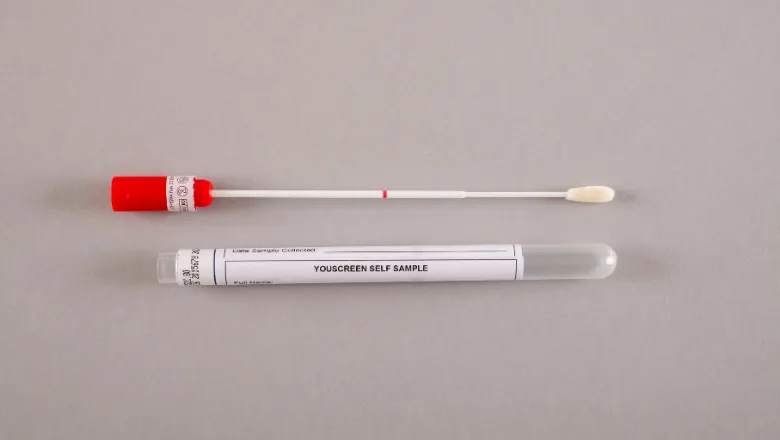
Self-sampling HPV kits could enable more than a million more women in England to participate in cervical screening over the next three years, new research has shown.
A new study has found that do-it-yourself human papillomavirus (HPV) tests could dramatically increase the rates of cervical screening uptake.
The YouScreen trial, led by King’s College London in partnership with NHS Cancer Alliances in North Central and North East London, NHS England and the NHS Cervical Screening Programme, provided self-sampling HPV kits to women who were at least six months overdue for their cervical screening.
Researchers found offering self-sampling kits to under-screened women when they attend their GP practice and by posting kits to women’s homes could boost the numbers screened in England by about 400,000 each year.
The findings, published in eClinicalMedicine, showed that this convenient test could be an effective way to tackle the problem of low cervical cancer screening attendance.
“Self-sampling has been hailed as a game-changer for cervical screening and we now have evidence in a UK population to show that it really is,” said lead investigator, Dr Anita Lim.
“Women who don’t come for regular screening are at the highest risk of developing cervical cancer. Cervical screening participation has been falling in England for over two decades. Currently, almost a third of eligible women aren’t getting screened regularly and in some parts of London this is as high as 50 per cent.
“It is crucial that we make cervical screening easier by introducing innovations like self-sampling, alongside the current cervical screening programme, to help protect more people from this highly preventable cancer. Self-sampling can do this by offering people choice and convenience.”
Self-sampling has already been introduced in several countries with the aim of increasing cervical screening participation rates, including the Netherlands, Australia, Denmark and Sweden.
Emerging evidence from other studies suggests that self-sampling tests are similarly good at detecting HPV, which can lead to pre-cancerous cells.
Women in the YouScreen trial used a vaginal swab to take their sample either at-home or at the GP practice. Samples taken at home could be posted for free directly to the laboratory for testing. If HPV was detected, a follow-up test was required.
The study, the largest trial of self-sampling for cervical cancer in the UK to date, offered HPV self-sampling kits to over 27,000 un- and under-screened women, aged 25-64 from 133 GP practices in north and east London between January 2021 and November 2021.
Around 8,800 women sent back self-samples; 64 per cent were from ethnic minority groups and 60 per cent from deprived populations. Approximately 13 per cent returned self-sample kits when mailed directly to them from the screening programme and 56 per cent returned a kit when it was offered at their GP practice.
Dr Lim said: “The YouScreen trial has given us the evidence we need to demonstrate that self-sampling helps get more women screened in England.
“It’s really encouraging that we received self-samples from groups that have been historically underserved including people from deprived and ethnic minority backgrounds, LGBTQI+, people with learning disabilities and victims of sexual violence.
Professor Peter Sasieni, head of the research group at King’s and now at Queen Mary University of London, said: “We are well on our way to turning cervical cancer into a rare disease in the UK. This is thanks to the NHS cervical screening programme, the HPV vaccine and the ability to now test for HPV.
“Unfortunately, women born before 1990 are unlikely to benefit from the HPV vaccine so regular screening is vitally important to protect those who have not been vaccinated from this cancer.
“YouScreen showed that this simple test is popular with both women and GP practices and could boost screening participation in England by over a million over three years. That in turn would help to accelerate the decline in cervical cancer rates.”
Mairead Lyons, a senior consultant to YouScreen from King’s College London, said self-sampling is a win-win for everyone.
“YouScreen demonstrated that for GPs, nurses and other healthcare professionals at general practice, being able to offer self-sampling to under-screened women when they attend for other appointments is a pragmatic way to deliver cervical screening to those at risk,” she explained.
NHS director of screening and vaccination, Deborah Tomalin, added: “It’s extremely promising that this study suggests simple DIY swab tests could have a really positive impact in supporting more women to take part in cervical screening from their own homes, and the NHS will now be working with the UK National Screening Committee to consider the feasibility of rolling this out more widely across England.
“In the meantime, if you are invited for cervical screening by the NHS, it’s vital that you come forward – it could save your life and remains vital towards our ambition of eradicating cervical cancer in England within the next two decades.”
To receive the Femtech World newsletter, sign up here.












A non-profit has launched an endometriosis documentary featuring Amy Schumer and Marilyn Monroe as it pushes for changes in how the condition is treated and understood.
The Endometriosis Collective has launched to change how endometriosis is researched, treated and understood, starting with a documentary featuring stories from people including Amy Schumer and Marilyn Monroe.
The feature-length documentary, “End of the Cycle”, will premiere in New York on Tuesday, and The Endometriosis Collective is making the film free to stream online.

Schumer, a comedian, writer and actor, has previously spoken of how endometriosis left her “on the floor in pain, vomiting from the pain, the pain that nobody can see.”
Schumer is one of several celebrities featured in the documentary. Other contributors include dancer Julianne Hough, Olympic medallist Brittany Brown and actors Janel Parrish and Folake Olowofoyeku.
The Endometriosis Collective timed the documentary premiere to coincide with the 100th anniversary of Marilyn Monroe’s birth.
Monroe, who died in 1962, starred in films such as “Some Like It Hot” and “Gentlemen Prefer Blondes.”
According to a biography published in 1985, Monroe’s endometriosis was so severe that it destroyed her marriages, her wish for children, her career and ultimately her life.
The Endometriosis Collective said the documentary shares newly uncovered information about Monroe’s experience with endometriosis.
The non-profit said the information connects Monroe’s story to the experiences of women across generations, highlighting how far awareness, research and care still have to go.
A representative of the Marilyn Monroe Estate said: “By sharing this part of her story through ‘End of the Cycle,’ we hope to honour her legacy in a way that brings visibility to endometriosis, encourages more open dialogue and helps inspire the research needed to create change.”
As part of the premiere, The Endometriosis Collective is holding a panel discussion.
Schumer, Brown and Olowofoyeku, the documentary’s co-directors Sammy Jaye and Soraya Simi, and medical experts are due to be part of the premiere.
AbbVie’s Orilissa and Sumitomo Pharma’s Myfembree are among the approved drugs for endometriosis pain.
Hough, one of the participants in the documentary, starred in an Orilissa campaign in 2017.
News
Bridging the metabolic wealth gap: The telehealth platform bypassing insurance to democratise care
As weight-loss treatments remain locked behind prohibitive paywalls, a new direct-pay initiative is cutting costs in half for low-income patients, and it could provide a new blueprint for health equity.
It is one of the most persistent, frustrating paradoxes in modern healthcare: the medical innovations most capable of addressing widespread chronic conditions are overwhelmingly priced out of reach for the populations most vulnerable to them.
Nowhere is this more evident than in the current landscape of metabolic health and weight management.
As state governments and insurance providers increasingly restrict coverage for advanced weight-loss medications due to skyrocketing costs, a stark dividing line has emerged. Clinical need is no longer the primary factor in who receives treatment. Affordability is.
This financial barrier disproportionately impacts women, who not only face high rates of metabolic conditions but also frequently serve as the primary caregivers in their households.
For a single mother managing childcare, grueling work hours, and the relentlessly rising cost of living, personal well-being is often the first casualty of a tight budget.
These patients are forced into a holding pattern, watching their conditions progress year after year while highly effective, life-changing treatments remain separated from them by a paywall.
Now, a telehealth platform called Amble Health is attempting to dismantle that wall by bypassing the traditional insurance apparatus entirely.
A Structural Shift for Access
Today, Amble Health announced the launch of the Amble Cares Program, a national initiative designed to cut the cost of medical weight-loss treatments in half for low-income Americans.
The programme arrives at a critical inflection point.
Today, roughly one in eight U.S. adults have utilized advanced metabolic medications, according to a recent KFF Health Tracking Poll.
This surge in adoption has driven a fundamental shift in preventative care, but the distribution of that care has been deeply uneven.
Through the Amble Cares Program, eligible patients can access comprehensive medical weight-loss programmes, which may include prescription medications if clinically appropriate, at up to 50 per cent below standard rates.
To ensure the discounts reach the intended demographic, eligibility is determined by an independent, third-party verification partner, based on verified financial need.
The programme explicitly prioritises individuals and families with limited disposable income, including parents and guardians whose financial flexibility is tied up in providing for dependents.
Once verified, patients are connected directly to licensed clinicians to begin treatment immediately, stripping away the friction of waiting periods.
“Healthcare should not be a luxury item,” said Joey Stiver, CEO of Amble Health. At Amble, we believe that a patient’s zip code or income shouldn’t dictate their metabolic health outcomes.
“The Amble Cares Program is our direct response to the cost of living crisis, moving beyond talk of ‘affordability’ to actually delivering it to the people the traditional system has left behind.”
The Direct-Pay Trade-Off
However, this rapid, lower-cost access comes with a significant structural trade-off.
To achieve these price reductions and eliminate the administrative delays, denials, and red tape associated with traditional healthcare, Amble Health operates strictly as a direct-pay platform.
This means participants cannot use outside coverage. The programme does not accept Medicaid, Medicare, commercial insurance, or even HSA/FSA funds.
For some patients, being entirely locked out of utilizing their existing health benefits may present a new kind of hurdle.
But for those who have already found themselves abandoned by traditional coverage networks, facing outright denials, unnavigable prior authorisations, or insurmountable deductibles, the direct-pay model offers a predictable, transparent alternative to a broken system.
Ultimately, the Amble Cares Program is making a bold bet: that the most efficient way to deliver equitable healthcare to disenfranchised populations isn’t to fix the traditional insurance system, but to innovate entirely around it.












 Menopause1 week ago
Perimenopause misinformation ‘putting women at risk’

 Opinion4 weeks ago
What Maternal Mental Health Month reveals about where postpartum support actually breaks down

 News4 weeks ago
NIH Grant terminations disproportionately impact minority scientists, research finds

 Adolescent health4 weeks ago
WUKA brings Period-Positive Pool Party to London Aquatics Centre to keep girls swimming through puberty
 Insight3 weeks ago
PCOS renamed after decade-long campaign to end ‘cyst’ misconception

 Events4 weeks ago
WHIS 2026 unveils agenda and first speakers for the leading women’s health summit

 Mental health4 weeks ago
CBT shows promise for menopause insomnia and hot flashes

 Diagnosis2 weeks ago
NHS urged to update website following renaming of PCOS