




Insight
Women missing cardiac rehab despite key benefits, study finds


Women are underutilising cardiac rehabilitation programmes despite clear evidence they reduce hospital readmissions and the risk of future heart attacks, new research shows.
Even when women do join these exercise, lifestyle and education programmes after heart surgery or major cardiovascular events, they are less likely than men to complete them.
An American Heart Association scientific statement highlights the benefits of cardiac rehabilitation, barriers to access, and potential ways to increase participation among women.
It was co-authored by Jessica Golbus, a cardiologist at the University of Michigan Health Frankel Cardiovascular Center.

Cardiac rehabilitation combines supervised exercise sessions, education about heart-healthy living, and counselling to reduce stress and improve mental health following a cardiac event.
Patients typically attend several sessions a week for multiple weeks or months.
Golbus said: “Even when women do participate, the research tells us that they are still less likely to complete cardiac rehabilitation as compared to men.
“There are several barriers that women face to accessing cardiac rehabilitation, and existing programmes may fail to adequately address their specific needs.”
Women are referred for cardiac rehabilitation less often than men, with clinicians less likely to discuss it with female patients.
This gap is even wider among women from underrepresented racial groups.
Other barriers include insurance coverage, transportation problems, social isolation and caring responsibilities.
Women are more often the primary caregivers in families, which can make attending regular sessions difficult.
Research shows women who do take part benefit just as much as men — with lower blood pressure, better cholesterol levels and an improved quality of life.
Golbus said: “There is so much research that shows how cardiac rehabilitation is an essential tool for patients to optimise their recovery.
“I would encourage anyone who thinks they might be eligible for cardiac rehabilitation to talk to their clinical team and consider participating.”
Women recovering from cardiac events often have specific needs that existing programmes do not always meet.
They are more likely than men to experience depression and emotional distress after a heart event, and tend to be older at diagnosis, with additional health conditions that may restrict their exercise capacity.
They are also more likely to be referred following less common cardiovascular conditions such as coronary artery dissection — a tear in the wall of a heart artery — rather than the more typical heart attacks that usually lead to referral.
Golbus said: “Despite women having some unique needs, the research supports that all patients that qualify for cardiac rehabilitation have the potential for benefit.”
The statement outlines several ways to close the participation gap.
Automatic referral systems could significantly boost enrolment, while direct recommendations from physicians or case manager support have been shown to improve awareness and attendance.
Golbus said: “All of this points to a clear need for targeted interventions to improve cardiac rehabilitation participation and outcomes among women.
“I think the approach needs to be multi-faceted.”
Tailored programmes for women could help — such as offering a wider range of exercise options, more focused education and stronger psychosocial support.
Peer support groups after cardiac diagnoses are also linked to better quality of life and lower depression and anxiety scores.
Golbus said: “Women may also benefit from a peer support group after a cardiovascular diagnosis or event.
“Participating in those groups is linked to increased quality of life and lower depression and anxiety scores, which all affect cardiac rehab attendance.
“Finally, there is reason to explore virtual cardiac rehab that incorporates digital health technologies.
“This could eliminate the need for transportation to sessions and potentially improve access for patients who are unable to attend centre-based cardiac rehabilitation.”









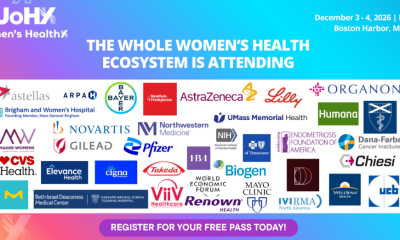




Senior executives from the World Economic Forum, Takeda and Gilead are among the latest speakers confirmed for Women’s HealthX, which takes place on 3–4 December 2026 in Boston, Massachusetts, as the event publishes its full agenda.
The newly announced speakers are Melissa Patel, lead for women’s health responsible investing at the World Economic Forum; Nicola Greenway, chief human resources officer at Takeda; and Jyoti Mehra, executive vice president of human resources at Gilead.
They join more than 75 confirmed speakers and a delegate list the organisers say will exceed 750 leaders from pharma and biotech, hospitals and health systems, payers and policymakers, all focused on closing the sex-difference data gap in healthcare.
Organisations registered to attend span much of the sector.
In pharma and biotech they include Novartis, Merck, Sanofi, AstraZeneca, Eli Lilly, Bayer, Biogen, Johnson & Johnson, Gilead Sciences, Takeda, UCB, Astellas, EMD Serono, Amgen, Bristol Myers Squibb, Boehringer Ingelheim and Chiesi.
Among hospitals, health systems and academic medical centres are Mayo Clinic, Mass General Brigham, Northwell Health, UPMC, Beth Israel Deaconess Medical Center, Dana-Farber Cancer Institute, Weill Cornell Medicine, Massachusetts General Hospital, Northwestern Medicine, Mount Sinai Health System, UMass Memorial Medical Center, Tufts Medical Center, Yale School of Medicine, Harvard Medical School, Columbia University Irving Medical Center, University of Pennsylvania Health System and NYU Langone Health.
Payers and health plans represented include CVS Health, Humana, Cigna Healthcare, Kaiser Permanente, Elevance Health, Blue Cross Blue Shield of Tennessee, Blue Cross Blue Shield of Massachusetts, Evernorth, Fidelis Care, Health Plans Inc and UPMC Health Plan.
On the government, policy and regulatory side, attendees include the U.S. Department of Veterans Affairs, ARPA-H, the FDA, HHS, the NYC Department of Health and Mental Hygiene, Metro Public Health Department, the Association of State and Territorial Health Officials, the NHS, the Northern Mariana Islands Board of Nursing and Planned Parenthood of Florida.
A sample attendee list is available here.
Newly confirmed panels
Patel will join Sheri Schully, deputy chief medical and scientific officer at the All of Us Research Program, and Lindsey Miltenberger, chief advocacy officer at the Society for Women’s Health Research, for a panel titled “Driving Inclusive Health Research on a Global Scale: Using Data to Understand National Priorities and Address Critical Gaps in Women’s Health.”
The session will look at the health priorities countries are focusing on today and how data can be used to identify gaps in women’s health that remain overlooked.
Greenway and Mehra will take part in a panel titled “Empowering Workforces Through Women’s Health,” in which corporate health leaders discuss women’s health priorities from both employee and employer perspectives, and which benefits organisations should be prioritising.
The full agenda is now available, and registration is open.


Peers have called for law reform after two House of Lords debates on fertility treatment, surrogacy, embryo research and declining birthrates.
The first debate was put forward by crossbench peer Baroness Ruth Deech, who previously chaired the UK’s fertility regulator, the Human Fertilisation and Embryology Authority.
She discussed proposals from the HFEA to reform the Human Fertilisation and Embryology Act, along with proposals from the Scottish Law Commission and the Law Commission of England and Wales to reform the Surrogacy Arrangements Act.

She called for parliamentary scrutiny of possible changes to regulatory powers, consent rules, donor information and future scientific developments.
Baroness Deech said: “Parliament should plan by setting up a Select Committee to examine the HFEA’s proposals to expand regulatory powers, simplify consent rules, modernise donor information provisions and create a flexible framework for future scientific developments.”
Former fertility professionals were among those contributing to the debate.
Professor Lord Robert Winston, a Labour peer who founded the IVF service at Hammersmith Hospital in London, said: “Infertility is not a disease; it is actually a symptom of something wrong.”
Professor Baroness Geeta Nargund, a Labour peer, current HFEA member and former medical director of CREATE Fertility, disagreed.
She said: “Infertility is a disease, as stated by the World Health Organisation.”
Liberal Democrat peer Baroness Caroline Pidgeon highlighted regional differences in access to NHS-funded fertility treatment.
She cited figures from the Progress Educational Trust’s NHS Fertility Funding Tracker showing that only two of England’s 42 integrated care boards comply with the recently updated fertility guideline published by the National Institute for Health and Care Excellence.
Integrated care boards are local NHS organisations responsible for planning and funding healthcare services in their areas.
Baroness Pidgeon said many boards were offering only a partial IVF cycle rather than a full cycle as defined by NICE.
A full IVF cycle generally includes ovarian stimulation, egg collection and the transfer of all suitable fresh and frozen embryos created during treatment.
Crossbench peer Professor Baroness Clare Gerada, a former president of the Royal College of General Practitioners, said: “The proportion of NHS-funded IVF cycles has fallen to just under 30 per cent, the lowest level since 2008.”
She added that, in relation to IVF, “the NHS system has collapsed”.
Liberal Democrat peer Lord Monroe Palmer said it was “very ironic that it is difficult for many patients to access publicly funded fertility treatment in the very country where IVF was originally pioneered”.
Conservative peer Edward Howard, Earl of Effingham, also raised concerns about the NICE fertility guideline.
He said: “Access remains highly variable across England, because ICBs are not required to implement that guidance.”
He described the situation as “a clear gap between guidance and enforceable entitlement”.
Baroness Deech called for “automatic record sharing between clinics and the NHS central records system”.
Baroness Nargund supported this and linked the ambition to the Single Patient Record in the government’s Ten-Year Health Plan for England and the Health Bill currently before Parliament.
Baroness Pidgeon said such ambitions were at odds with the exceptional degree of medical secrecy that currently applies to IVF.
She also pointed to “a clear desire for the HFEA to be able to permit patients to give generic consent for the use of their embryos in research”.
Patients cannot currently give broad consent for unspecified future research involving their embryos.
Responding for the government, Labour peer Baroness Judith Blake said “immediate legislative reform” was not possible because “the legislative programme for this Parliamentary session is very full”.
Baroness Deech replied: “It might well take some years, but the Government really needs to set up that Select Committee and do the legislative scrutiny right now.”
A second debate on related issues followed immediately afterwards.
Baroness Nargund asked the government “what assessment they have made of the UK’s declining birthrates in an ageing population”.
She also said: “We still have a postcode lottery for IVF provision, with nearly 70 per cent of ICBs funding only one cycle of treatment.”
Responding for the government, Labour peer Lord Philip Wilson said: “The Government are committed to improving fair and equitable access to fertility services, recognising the significant emotional and health impacts of infertility.”


By the Health Innovation Exchange
For more than a decade, femtech’s scale gap has been treated as a funding problem. What if that diagnosis is incomplete?
Despite growing attention, women founders still receive just 2 per cent of global venture funding, and years of advocacy have failed to shift the needle.

This persistence is no longer just a concern; it signals a deeper structural failure.
This is not just a funding gap. It is a system failure.
As Pradeep Kakkitill, founder and CEO of the Health Innovation Exchange (HIEx), argues, the sector continues to operate on a flawed assumption.
The belief that better support to founders alone will unlock scale overlooks the deeper structural constraints that determine whether the innovation is adopted at all.
Barriers That Go Beyond Capital
These insights are not theoretical. Global research reinforces that these challenges are not isolated, highlighting structural, financial and systemic barriers that shape how women-led and under-represented ventures access funding, markets and pathways to scale.
Importantly, these findings are not draw from research alone, but from the lived experiences of women and under-represented founders themselves.
Across HIEx-led interviews and focus group discussions conducted as part of the Reckitt Catalyst Programme, founders repeatedly described the same challenges: fragmented financing, unclear adoption pathways, repeated cycles of proof, and systems that lacked clear routes from validation to procurement and scale.
These experiences suggest that the barriers facing women-led innovation are not simply financial. They are structural.
Many high-potential ventures are not failing because funding is absent.
They are failing because the systems that determine scale, including public procurement, regulation and financing, are not built to move proven solutions beyond pilots into widespread adoption.
This is not a founder problem. It is a system design failure.
Beneath these structural constraints sits a more persistent challenge. Entrenched attitudes shaped by unconscious bias continue to influence decision making.
Across investment and public-sector systems, innovation led by women and underrepresented founders is still frequently perceived as higher risk.
These perceptions shape how opportunities are evaluated, increase the burden of proof placed on founders, and slow decision making. In practice, this results in systematically higher barriers to both funding and adoption.
Systems Unable to Absorb Innovation
Dr. Abas Hassen, lead executive officer for health innovation and quality at Ethiopia’s Ministry of Health, underscores this point.
The primary constraints are not about innovation quality, but about the systems that determine adoption and scale, including procurement, regulation, financing and delivery.
He identifies three persistent challenges: institutional resistance to change, “pilot purgatory” where solutions are repeatedly tested but not integrated into public systems, and a disconnect between what external funders support and what governments can sustain.
Ethiopia’s response reflects a broader shift. Innovation is no longer treated as isolated pilots, but as a structured component of system design.
The country’s system-led innovation model combines regulatory pathways, prioritisation frameworks and structured testing environments to embed innovation directly within the health system.
The implication is clear.
Scaling innovation is not only about accelerating individual ventures alone. It is about strengthening the systems that determine whether innovation is adopted at scale.
The Missing Middle: From Pilot to Procurement
In many low- and middle-income countries, public systems remain the largest market for health and WASH solutions, accounting for the majority of service delivery and procurement.
Yet capital is deployed through models that do not reflect this reality, as scaling depends on public-sector adoption, long procurement cycles and regulatory integration rather than rapid returns.
This creates a misalignment within the financial ecosystem, where capital is structured for faster high returns, while impact depends on long-term system integration.
At its core, the challenge is the absence of clear adoption pathways.
Without structured routes from validation to procurement and system-wide use, even effective solutions struggle to move beyond pilots.
This is the “missing middle”, the gap between early validation and large-scale adoption.
The consequences of this “missing middle” are perhaps best illustrated by the founders trying to navigate it.
Temie Giwa-Tubosun, founder and CEO of LifeBank, describes her decade-old company as an “orphan” within existing financial structures, too commercial for impact investors and too impact driven for venture capital.
Businesses operating within health systems often fall between funding models that were not designed for them.
Thato Schermer, co-founder of Zoie Health, describes a similar challenge.
Even companies with strong revenue and clear demand struggle to secure funding at the right stage, as they are assessed through frameworks that do not reflect the healthcare markets.
Across interviews and focus group discussions, these patterns were consistent.
Founders described fragmented financing, unclear adoption pathways, and repeated cycles of proof, where they are asked to keep proving their solutions without a clear route to scale.
These are not isolated challenges. They reflect how innovation is funded, evaluated and integrated across the system.
The barrier to scale is not a lack of viable solutions. It is about the systems and models that are not designed to support them.
Reducing Risk Through System Design
From an HIEx perspective, a different approach is emerging, one that focuses not on fixing founders, but on designing how systems manage risk and adopt innovation.
Rather than avoiding risk, Ethiopia is working to manage it through structured processes.
The system is “risk-aware, not risk-averse.” It uses innovation sandboxes, structured testing environments within public systems that allow new solutions to be evaluated under controlled conditions.
These mechanisms, generate decision-grade evidence while limiting system-wide exposure, creating clearer pathways from validation to adoption.
When innovations are tested within public systems, they gain institutional legitimacy. This reduces perceived risk for both governments and investors and enables more confident decision making.
From Fragmentation to Coordination
Within this context, initiatives such as Reckitt Catalyst, a multi-partner platform supporting women-led health and WASH innovation to scale, play a critical bridging role.
By connecting entrepreneurs with governments, investors and technical partners, and aligning solutions with national priorities, the programme helps to create clearer pathways from pilot to procurement and scale.
But alignment alone is not enough.
As Pradeep Kakkattil notes, the climate movement offers a useful parallel. Climate progress was not driven by evidence alone. It accelerated when investors, governments, and institutions began treating inaction as the greater risk.
Sustained pressure exposed the cost of doing nothing, redefined how risk was assessed and ultimately reshaped capital allocation and policy decisions.
Women’s health and WASH innovation is now at a similar inflection point.
Despite years of evidence and advocacy, outcomes such as women receiving a fraction of global funding persist.
This is not due to a lack of solutions. It is because the systems governing investment, adoption and scale have not been sufficiently challenged.
What is required is not incremental progress.
It is a shift in what the system tolerates – how risk is defined, how capital is allocated, and how accountability is enforced.
A System at an Inflection Point
The implications are clear.
Investors must move beyond rigid funding models and deploy capital aligned to how health systems scale. Governments must build clearer pathways for testing, procurement and adoption.
Ecosystem actors must shift from supporting individual ventures, to enabling system-level integration.
The persistent funding gap is not a result of slow progress; it reflects a system operating exactly as designed. Incremental change will not shift outcomes.
What is required is a fundamental reset of how femtech is financed and scaled: from passive investment to active market-shaping, where capital, policy, and procurement work together to create real pathways to adoption.
Until that shift happens, the sector will continue to produce innovation that the market is not structured to absorb.











 Menopause4 weeks ago
Perimenopause misinformation ‘putting women at risk’

 Entrepreneur3 weeks ago
Women’s Health Innovation Summit opens submissions for 2026 Innovation Showcase

 Insight2 weeks ago
British women among angriest in Europe, health survey reveals

 Menopause3 weeks ago
Women still being failed when they reach menopause, experts say

 Menopause3 weeks ago
Sweden eyes domestic production of oestrogen patches amid menopause treatment shortage
 News3 weeks ago
Three menopause innovators shortlisted for Femtech World Award

 News1 week ago
Femtech World Awards 2026: Winners revealed

 Menopause2 weeks ago
Apple Health adds menopause and perimenopause tracking
2 Comments