




News
Opinion: Women don’t need a refreshed health strategy – we need action


By Justyna Strzeszynska, founder of menstrual health platform Joii
The Government’s announcement that it will renew the Women’s Health Strategy is, on the surface, good news.
The original strategy in 2022 was historic – the first time women’s health had been acknowledged as something that required its own plan.

It raised awareness, started conversations and encouraged women to come forward and talk about their health.
But awareness alone hasn’t changed much on the ground.
Women are still waiting years for diagnoses, gynaecology waiting lists are still some of the longest in the NHS and many women are still being told their symptoms are ‘just part of being a woman’, especially when it comes to periods, pain or fatigue.
If the Government is going to refresh this strategy, we need to be honest about what didn’t work last time and what has to change now.
One issue with the previous strategy was the way it focused on specific conditions.
Endometriosis and PCOS were rightly brought forward and the advocacy behind that has been extraordinary. But women’s health can’t work like a spotlight, where each year a new condition is added based on who campaigns most effectively.
Some of the most common and life-disrupting conditions still sit in the background.
Heavy menstrual bleeding affects one in three women. Fibroids affect up to one in three by age 50. Adenomyosis is thought to affect one in ten.
These aren’t rare conditions, they are everyday realities. Yet they receive less attention, less funding and far fewer structured care pathways.
They also disproportionately affect Black women, who are more likely to have severe symptoms and less likely to be believed.
If a renewed Women’s Health Strategy is going to address inequality, then these conditions can’t remain an afterthought.
The other major issue is how diagnosis actually happens.
Right now, if you go to your GP with heavy bleeding or pelvic pain, the first questions are usually ‘how much blood do you think you’re losing?’ and ‘how bad is the pain, on a scale of 1 to 10?’
Most women have never been taught what ‘normal’ bleeding looks like and their pain has become background noise. Many also feel unsure or embarrassed about describing symptoms accurately.
So women hesitate, clinicians hesitate and referrals get delayed. That’s how we end up with eight-year diagnostic journeys.
If we want to reduce waiting lists and speed up diagnosis, we need to fix the front door.
First, we need to give GPs standardised tools to measure menstrual bleeding and symptom impact.
One of the biggest barriers to diagnosing menstrual health conditions is that we still rely on women to estimate their bleeding and pain with no reference points.
Most women, and especially young girls, don’t know what counts as heavy bleeding and many have normalised symptoms that could actually be clinical red flags.
Without standard measurement, clinicians can’t triage effectively and women fall into long cycles of ‘wait and see’.
The renewed strategy should introduce validated digital and clinical tools, so patients and clinicians are working from the same evidence, not guesswork.
Second, expand and standardise Women’s Health Hubs so access isn’t determined by postcode.
Women’s Health Hubs already exist in most of England, which is a strong start, but not all hubs offer the same services, capacity or quality of care.
Some are genuinely transformative while others function more as signposting centres.
To actually reduce the backlog and speed up diagnosis, hubs need to be properly resourced and consistent, with clear referral pathways from primary care.
The refreshed strategy should set national standards for what every hub must deliver so accessing timely assessment isn’t dependent on where a woman happens to live.
Finally, there needs to be a shift towards treating menstrual and pelvic conditions as chronic, not occasional episodes.
Conditions like endometriosis, adenomyosis, fibroids, PCOS and chronic pelvic pain don’t follow single-appointment cycles yet our system is structured as if they do.
Women are often seen once, reassured and discharged, only to start the entire referral process again when symptoms worsen. This wastes NHS time and leaves women feeling unheard.
The renewed strategy needs to support ongoing monitoring and follow-up, recognising these conditions as long-term health issues requiring continuous management, not episodic care.
Most importantly, the refreshed strategy must come with clear timelines, ringfenced funding and actual accountability.
Otherwise, we end up with another web page and a press release, instead of change.
Women are already doing their part by speaking up.
Now the system needs to meet them.














News
Bridging the metabolic wealth gap: The telehealth platform bypassing insurance to democratise care


As weight-loss treatments remain locked behind prohibitive paywalls, a new direct-pay initiative is cutting costs in half for low-income patients, and it could provide a new blueprint for health equity.
It is one of the most persistent, frustrating paradoxes in modern healthcare: the medical innovations most capable of addressing widespread chronic conditions are overwhelmingly priced out of reach for the populations most vulnerable to them.
Nowhere is this more evident than in the current landscape of metabolic health and weight management.
As state governments and insurance providers increasingly restrict coverage for advanced weight-loss medications due to skyrocketing costs, a stark dividing line has emerged. Clinical need is no longer the primary factor in who receives treatment. Affordability is.
This financial barrier disproportionately impacts women, who not only face high rates of metabolic conditions but also frequently serve as the primary caregivers in their households.
For a single mother managing childcare, grueling work hours, and the relentlessly rising cost of living, personal well-being is often the first casualty of a tight budget.
These patients are forced into a holding pattern, watching their conditions progress year after year while highly effective, life-changing treatments remain separated from them by a paywall.
Now, a telehealth platform called Amble Health is attempting to dismantle that wall by bypassing the traditional insurance apparatus entirely.
A Structural Shift for Access
Today, Amble Health announced the launch of the Amble Cares Program, a national initiative designed to cut the cost of medical weight-loss treatments in half for low-income Americans.
The programme arrives at a critical inflection point.
Today, roughly one in eight U.S. adults have utilized advanced metabolic medications, according to a recent KFF Health Tracking Poll.
This surge in adoption has driven a fundamental shift in preventative care, but the distribution of that care has been deeply uneven.
Through the Amble Cares Program, eligible patients can access comprehensive medical weight-loss programmes, which may include prescription medications if clinically appropriate, at up to 50 per cent below standard rates.
To ensure the discounts reach the intended demographic, eligibility is determined by an independent, third-party verification partner, based on verified financial need.
The programme explicitly prioritises individuals and families with limited disposable income, including parents and guardians whose financial flexibility is tied up in providing for dependents.
Once verified, patients are connected directly to licensed clinicians to begin treatment immediately, stripping away the friction of waiting periods.
“Healthcare should not be a luxury item,” said Joey Stiver, CEO of Amble Health. At Amble, we believe that a patient’s zip code or income shouldn’t dictate their metabolic health outcomes.
“The Amble Cares Program is our direct response to the cost of living crisis, moving beyond talk of ‘affordability’ to actually delivering it to the people the traditional system has left behind.”
The Direct-Pay Trade-Off
However, this rapid, lower-cost access comes with a significant structural trade-off.
To achieve these price reductions and eliminate the administrative delays, denials, and red tape associated with traditional healthcare, Amble Health operates strictly as a direct-pay platform.
This means participants cannot use outside coverage. The programme does not accept Medicaid, Medicare, commercial insurance, or even HSA/FSA funds.
For some patients, being entirely locked out of utilizing their existing health benefits may present a new kind of hurdle.
But for those who have already found themselves abandoned by traditional coverage networks, facing outright denials, unnavigable prior authorisations, or insurmountable deductibles, the direct-pay model offers a predictable, transparent alternative to a broken system.
Ultimately, the Amble Cares Program is making a bold bet: that the most efficient way to deliver equitable healthcare to disenfranchised populations isn’t to fix the traditional insurance system, but to innovate entirely around it.


Pressure to have a natural birth can cause lasting psychological harm when labour does not go to plan, new research shows.
The study found that the messages women receive during pregnancy are directly linked to the shame and self-blame many feel when those expectations are not met.
For the first time, the research provides an explanation for why unmet birth expectations contribute to psychological harm.
Several women involved in the research said they felt they had not given birth “properly”, even when medical intervention had saved their lives.
Rebecca Matthews, lead author and PhD researcher at the University of Reading, said: “These women were not failed by their bodies, they were failed by the messages they were given.
“Birth trauma does not begin with birth. It begins in the ideology sold to women throughout pregnancy.
“For the first time we can explain precisely how, by showing how birth culture creates a moral standard for women that defines what a good mother does and then leaves them to blame themselves when birth does not match that.
“Until we reform the way we prepare women for birth, we will keep seeing the same devastating consequences for mothers and their babies.”
The researchers interviewed 21 first-time mothers in the UK whose births did not go as planned.
From NCT and hypnobirthing classes, to social media to midwives, the researchers heard how women are surrounded by messaging that frames natural, unmedicated vaginal birth as the “gold standard”, not just medically preferable, but as a mark of being a good mother and the first test of maternal worth.
Research shows around half of women report their birth differed significantly from their expectations, and for the women in this study, all of whom experienced exactly that, the psychological consequences were profound.
Women judged themselves against the internalised moral standard that this ideology had created.
The researchers are calling for antenatal education to stop treating one kind of birth as the goal and to present all birth outcomes as equally valid routes to motherhood.
They also call for better postnatal screening for women whose births did not go as expected, specifically targeting the shame, self-blame and identity disruption that this research identifies as mechanisms underlying birth trauma.
The findings align with and extend the conclusions of the Kirkup, Ockenden and Birth Trauma Inquiry reports, all of which documented how the institutional pursuit of “normal birth” contributed to preventable harm.
This research provides the first theoretical explanation of how that ideology generates individual psychological harm and points to antenatal messaging as the primary site of such preventable harm.
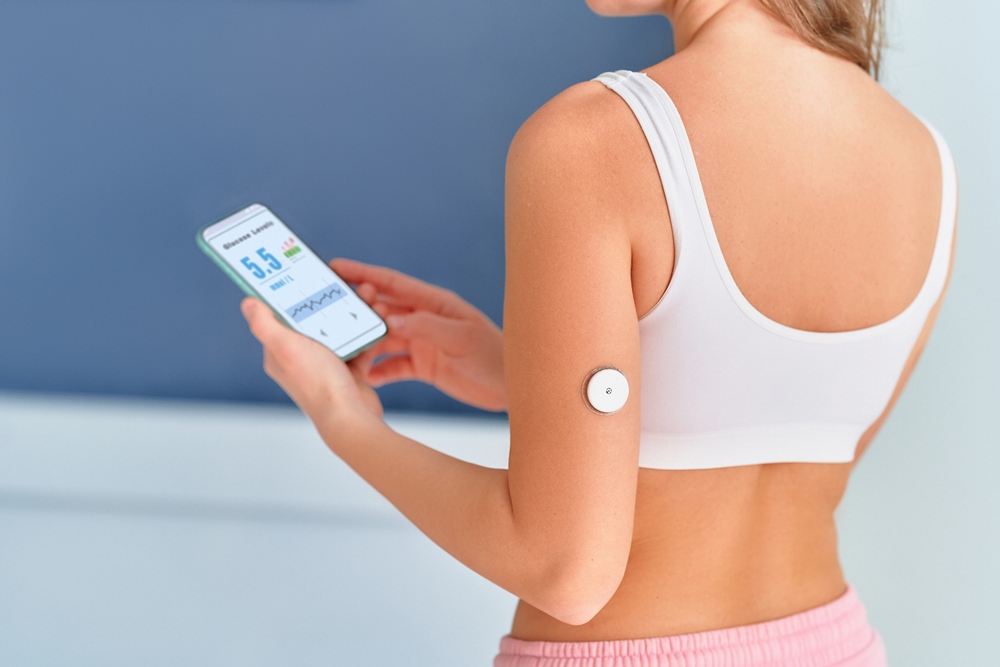
Even when standard clinical tests show normal hormone levels, men and women may have hidden problems in how their reproductive hormones are timed and coordinated, potentially affecting fertility, new research suggests.
The findings suggest reproductive health may depend not only on hormone levels in the bloodstream but also on the rhythm, timing and synchronisation of hormone changes across hours, days and the menstrual cycle.
Researchers said a wearable skin sensor patch, combined with artificial intelligence, could help detect endocrine dysfunction earlier and support more personalised fertility care.

Unexplained infertility affects about 15 to 30 per cent of couples and is diagnosed when standard investigations reveal no clear cause.
In men, current tests for infertility or hypogonadism, defined clinically as low testosterone, often include a single morning serum testosterone measurement.
In women, fertility assessment typically examines menstrual cycle characteristics and reproductive hormones such as luteinising hormone, follicle-stimulating hormone, oestradiol and progesterone.
However, reproductive hormones are not static markers. They are dynamic biological signals that rise and fall in regulated patterns throughout the day and across the menstrual cycle.
Testosterone, for example, follows a diurnal rhythm, meaning it changes across the day, while female reproductive hormones act through coordinated feedback loops involving the hypothalamic, pituitary and ovarian systems.
A single blood test may therefore miss clinically important disruption in hormonal timing.
In one study, Dr Tinatin Kutchukhidze, from the University of Oxford, examined 102 men in Georgia and the UK.
The participants were aged 22 to 38 and had normal morning total testosterone levels, measured at 12 to 35 nanomoles per litre, with or without infertility or symptoms of hypogonadism.
Hypogonadism is a condition in which the body produces too little testosterone or other sex hormones.
Kutchukhidze and colleagues used wearable AI-enabled skin sensor patches to measure testosterone levels every 15 minutes across four days.
The team found that men with symptoms had significantly disrupted testosterone rhythms, despite standard laboratory tests showing normal testosterone levels.
These previously undetected rhythm abnormalities were also associated with reduced sperm concentration and symptoms of androgen deficiency.
Androgens are hormones, including testosterone, that play an important role in reproductive health.
Kutchukhidze said: “For the first time, we have been able to track androgen patterns in real time across several days with a novel, non-invasive, continuous, AI-driven testosterone monitoring patch, compatible with Android and iPhone mobile devices.
“Previous research suggests that a normal morning testosterone level is sufficient to exclude clinically significant androgen deficiency. However, our findings challenge that assumption by demonstrating that men with normal serum testosterone may still exhibit marked disturbances in hormonal rhythmicity associated with reproductive dysfunction.”
According to the abstract, the study compared 54 men with infertility or hypogonadal symptoms with 48 age-matched healthy controls.
Mean morning serum testosterone did not differ significantly between symptomatic men and controls, at 22.4 ± 3.1 compared with 23.1 ± 3.5 nanomoles per litre.
Continuous AI-assisted monitoring, however, revealed significant differences in androgen dynamics.
Men with symptoms had lower diurnal amplitude than controls, at 5.2 ± 1.1 compared with 8.7 ± 1.4 nanomoles per litre.
The AI-derived rhythm indices predicted subclinical dysfunction with an area under the curve of 0.87, compared with 0.61 for static serum testosterone testing.
In diagnostic research, the area under the curve is used to assess how well a test distinguishes between groups, with higher values indicating stronger discrimination.
A second study by Kutchukhidze’s team examined female reproductive hormone rhythms.
The researchers developed an AI-driven metric called Endocrine Rhythm Integrity to assess whether reproductive hormones were changing in the correct pattern, at the correct time and in the correct relationship to one another across the menstrual cycle.
Endocrine refers to the hormone system, while endocrine dysfunction means hormones are not being produced or regulated in a typical way.
The team analysed data from 312 women aged 18 to 22 who had self-reported regular menstrual cycles.
Participants included fertile controls and women with unexplained infertility.
The researchers assessed key reproductive hormones during the luteal phase, including luteinising hormone, follicle-stimulating hormone, oestradiol and progesterone.
The luteal phase is the part of the menstrual cycle after ovulation. Ovulation is the release of an egg from the ovary.
They also incorporated physiological data such as basal body temperature, heart rate and sleep patterns.
Basal body temperature is the body’s resting temperature and can shift slightly around ovulation.
The study found that women with unexplained infertility had lower Endocrine Rhythm Integrity scores even when conventional hormone levels appeared normal.
Lower scores predicted infertility and were also associated with a higher incidence of implantation failure, when an embryo does not successfully attach to the womb lining.
Kutchukhidze said: “Our study reveals that a woman may have a seemingly healthy menstrual cycle and normal hormone levels but still experience hidden endocrine dysfunction that affects her ability to conceive.
“Rather than analysing hormone levels as isolated values, Endocrine Rhythm Integrity evaluates whether reproductive hormones are changing in the correct pattern, at the correct time and in the correct relationship to one another across the menstrual cycle.”
In the female study, mean cycle length did not differ significantly between fertile and infertile groups, at 28.9 ± 2.3 compared with 28.9 ± 2.5 days.
Endocrine Rhythm Integrity scores, however, were lower in the infertility group, at 0.61 ± 0.12 compared with 0.78 ± 0.10.
Disrupted endocrine rhythm integrity was observed in 64 per cent of infertile participants despite hormonally normal mid-luteal progesterone levels.
The metric independently predicted infertility status after adjustment for age, body mass index and anti-Müllerian hormone.
Anti-Müllerian hormone is made by reproductive tissues and is best known as a marker of ovarian reserve, meaning an estimate of the number of eggs remaining in the ovaries.
Receiver operating characteristic analysis indicated that Endocrine Rhythm Integrity identified infertility more effectively than cycle length or single-time-point progesterone assessment.
Lower Endocrine Rhythm Integrity scores were also associated with a higher incidence of implantation failure.
Kutchukhidze said: “Our AI-driven rhythm analyses were significantly better at identifying subclinical reproductive dysfunction than conventional testing, suggesting that both female and male endocrine disorders may not simply be disorders of hormone quantity, but rather disorders of hormonal timing, synchronisation and biological rhythm.”
The team will next assess whether the tool can reliably predict fertility outcomes across different reproductive conditions in larger and more diverse populations.











 Menopause1 week ago
Perimenopause misinformation ‘putting women at risk’

 Opinion4 weeks ago
What Maternal Mental Health Month reveals about where postpartum support actually breaks down

 News4 weeks ago
NIH Grant terminations disproportionately impact minority scientists, research finds

 Adolescent health4 weeks ago
WUKA brings Period-Positive Pool Party to London Aquatics Centre to keep girls swimming through puberty

 Insight3 weeks ago
PCOS renamed after decade-long campaign to end ‘cyst’ misconception

 Events4 weeks ago
WHIS 2026 unveils agenda and first speakers for the leading women’s health summit

 Menopause4 weeks ago
CBT shows promise for menopause insomnia and hot flashes

 Insight4 weeks ago
Online abuse and deepfakes ‘pushing women out of public life’
6 Comments