Menopause
Thermal wellness technology company raises US$35m to fund market expansion
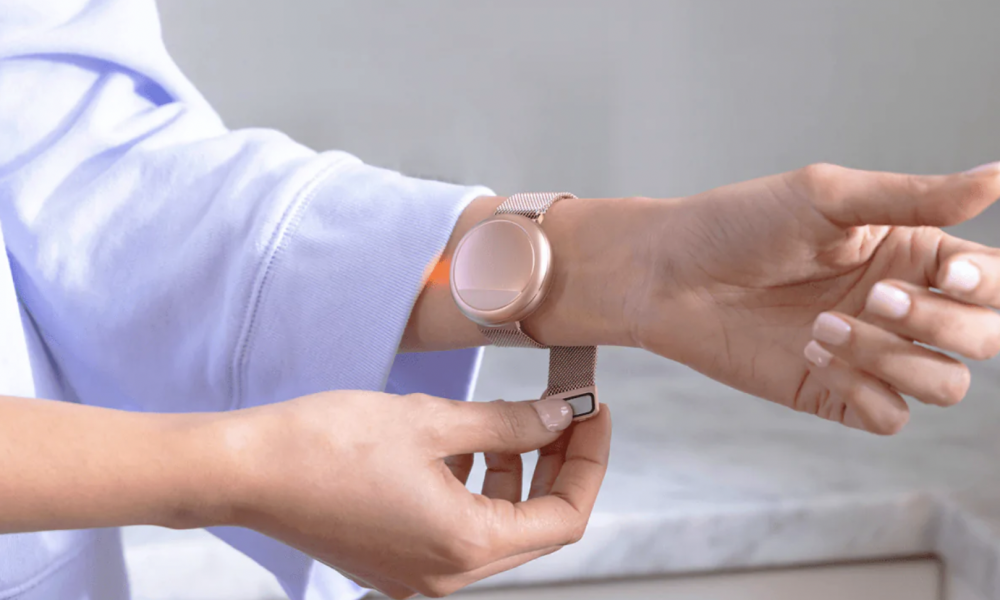
Embr Labs’ device uses technology and thermal science to provide hot flash relief for women experiencing menopause symptoms

Embr Labs, the company behind a wearable device for hot flash relief, has raised US$35m to fund market expansion.
The Embr Wave, a wristband for hot flash relief, aims to help women have more control over their skin temperature during menopause.
According to Embr Labs, the device uses technology and thermal science to provide rapid, safe and effective hot flash relief.
“Women today are seeking natural, non-hormonal alternatives to control their symptoms of menopause, and the Embr Wave is the solution they’ve been looking for,” said Elizabeth Gazda, CEO of Embr Labs.

“Through our partnership with Ghost Tree, Embr Labs is able to accelerate the fulfillment of our mission to provide this ground-breaking technology to women everywhere.”
The influx of new capital will support the company’s growth and expansion into new retail channels and markets, Gazda added.
Embr Labs has secured partnerships with some of the biggest distribution and retail organisations, with the device now available at most major retailers across the US and UK.
David Byrne, managing director at Ghost Tree Partners, which led the financing, said: “We recognised Embr’s market leadership and the company’s rapid growth potential.
“We are pleased to support the company as the investment community has yet to recognise the massive unmet need the menopause segment presents.
“We’re excited to provide the capital to support the company’s retail growth and geographical expansion.”
Lewis Lee, CEO at IP Solutions at Aon, the firm that facilitated the transaction through valuation and broking services, said: “Innovation drives growth, and intellectual property can be the valuable asset created from that innovation.
“We are excited to support innovative companies with intellectual property portfolios like Embr Labs to help them unlock the potential value of those IP assets and pursue growth independent of equity market volatility.”

News
Low insulin diet and avoiding four food groups may prevent menopause weight gain
Menopause
What women need to know about testosterone during menopause

By Sarah Bolt, Forth
Following recent approval from the Medicines and Healthcare products Regulatory Agency, testosterone is set to become much more widely available to women in the UK.
Offering greater access to testosterone treatment through their GP, the move marks a significant shift in how menopause symptoms are recognised and treated.
However, despite the increased access, many women are still in the dark about the role testosterone plays.
As conversations around women’s health continue to evolve, testosterone is becoming an increasingly important part of the menopause discussion.
Already licensed in Australia, New Zealand and South Africa, the UK becomes among only a handful of countries making testosterone more accessible for women.
The development marks a significant step forward in recognising the full impact hormonal changes can have during midlife and menopause and the benefits that taking testosterone can have.
Testosterone is often misunderstood, and more closely associated with men, but it also plays a vital role in women’s health.
From energy levels and cognitive function to mood and libido, its influence on the body is far-reaching.
Here are the eight things women need to know about testosterone:
1. Testosterone is a vital female hormone
Testosterone is essential for women.
Produced naturally in the ovaries and adrenal glands it supports a wide range of functions in women including maintaining libido, energy levels, mood, concentration and overall wellbeing.
It also contributes to muscle strength and bone health, both of which become increasingly important during later life.
For many women, low testosterone can leave them feeling a bit out of sorts, impacting confidence, memory, motivation and other areas of life.
Because symptoms are often gradual these are often dismissed as part of ageing or the pressures of life and juggling everything that comes with it.
2. Testosterone levels decline with age
Like oestrogen and progesterone, testosterone levels naturally decline as women get older, particularly during perimenopause and menopause.
Our research found that testosterone levels in women decline by more than 51 per cent with age.
These changes can have a significant impact on daily life, affecting everything from relationships and self-esteem to work performance and sleep quality.
Despite this, many women are unaware that low testosterone may be contributing to how they feel.
3. Signs of low testosterone can vary
Low testosterone symptoms show up differently for everyone. This is why diagnosis and treatment can sometimes be overlooked.
Common symptoms include fatigue, low energy, hot flushes, night sweats, thinning hair, dry skin, muscle weakness, weight gain, mood swings and difficulty concentrating.
Some women may also experience reduced confidence, lower motivation or a loss of interest in sex.
Because many of these symptoms overlap with menopause itself, it is important that women have access to informed conversations and personalised medical advice to determine whether testosterone could help.
4. Testosterone supports more than libido
One of the biggest misconceptions surrounding testosterone is that it is only linked to sex drive.
While testosterone can help improve libido, its benefits extend much further, helping to regulate energy, motivation, emotional wellbeing, muscle strength, bone density and much more.
For some women, restoring testosterone levels can contribute to feeling more energised, confident and mentally sharp again.
5. Testosterone can support cognitive function
One of the main struggles with menopause is brain fog and difficulties with memory and concentration.
Taking testosterone can help protect brain health by supporting communication between brain cells and increasing blood flow.
As awareness around the cognitive impact of menopause continues to grow, testosterone is increasingly being recognised as a tool that helps women better manage these symptoms.
6. Testosterone does not make women masculine
Many concerns around testosterone come from the misconception that it will cause women to develop masculine features.
However, when prescribed appropriately at the right dosage by a qualified healthcare professional, this is unlikely.
The aim of testosterone for women is to help restore hormones to a healthy female range, supporting wellbeing and symptom management.
7. Testosterone is not linked to an increased risk of breast cancer
Another common myth is that testosterone increases a woman’s risk of breast cancer. Current evidence does not support this.
Testosterone does not stimulate breast tissue growth and studies have not shown an increased risk of breast cancer linked to testosterone therapy in women.
In fact, some research has suggested a lower occurrence of breast cancer among women taking testosterone, although more long-term research is still needed in this area.
8. The benefits of testosterone can take time
Testosterone therapy tends to work gradually.
Many women will start to notice improvements in mood, motivation and energy levels within the first few months with the full benefits building over time.
Because testosterone has a cumulative effect, consistent use and regular medical monitoring is important.
Patience is key and ongoing support from healthcare professionals can help ensure treatment remains safe and effective.
Despite growing awareness around hormone replacement therapy, testosterone remains one of the lesser understood hormones.
Our own research shows that testosterone levels in women decline by more than 51 per cent with age with a debilitating impact for many.
Knowledge is power and it’s really important that women are aware of the role testosterone plays in their health, particularly in midlife, so they can see their GP armed with the information they need.
Hormones will fluctuate but hormone mapping is a great place to start and will give women a greater insight into what is happening in their bodies.
It’s imperative that women are able to advocate for themselves and having this information is crucial for this.
Making testosterone more accessible in midlife gives women another treatment option to consider beyond HRT, helping them to manage menopausal symptoms and improve their overall quality of life.
Hormonal health
Weight loss jabs ease depression and migraines in menopause – study
News4 weeks agoWomen’s digital health market set to reach US$5.28 billion in 2026 – report
Insight4 weeks agoWhy the UK’s fertility rate keeps falling – and what it means if you’re trying now
Wellness3 weeks agoWomen’s HealthX unveils Northwell Health, Corewell Health, Biogen & more to headline Chronic Disease stage
Opinion3 weeks agoWhat Maternal Mental Health Month reveals about where postpartum support actually breaks down
Fertility4 weeks agoToxins and climate harms having ‘alarming’ effect on fertility, research warns
News2 weeks agoNIH Grant terminations disproportionately impact minority scientists, research finds
Adolescent health2 weeks agoWUKA brings Period-Positive Pool Party to London Aquatics Centre to keep girls swimming through puberty
Hormonal health4 weeks agoResearcher explores weight loss jab impact on PCOS