




News
Study uncovers protective function of morning sickness


Morning sickness symptoms such as nausea and food aversions are linked to healthy inflammatory responses that help protect both mother and fetus during pregnancy, new research shows.
Up to 80 per cent of early-stage pregnant women experience nausea, vomiting and aversions to certain foods or smells.
Researchers say these symptoms point to a delicate immune balance rather than health problems.

The responses appear to be part of the body’s mechanism for tolerating the half-foreign fetus while avoiding potentially harmful substances.
UCLA researchers studied blood samples from 58 Latina women in Southern California, measuring cytokines — proteins that regulate immune responses — while tracking morning sickness symptoms through questionnaires.
Sixty-four per cent reported odour or food aversions, mainly to tobacco smoke and meat. Sixty-seven per cent experienced nausea and 66 per cent vomiting.
Women with aversions to tobacco smoke showed a stronger shift toward inflammatory responses. Nausea, vomiting and food aversions were also tied to more pro-inflammatory immune activity.
Molly Fox, UCLA anthropology professor and corresponding author, explained the challenge for the immune system in pregnancy.
She said: “During pregnancy, a mother’s immune system faces a tricky challenge: it has to protect both her and the fetus from infection, but without accidentally attacking the fetus, whose genetic identity is half-foreign because it is half derived from the father.
“Normally, the immune system attacks anything that seems foreign, so in pregnancy, it has to carefully adjust to keep the fetus safe while still defending against infection.”
The researchers believe this immune balance protects mother and fetus while behavioural responses — such as avoiding certain foods — add another safeguard, especially in the first and second trimesters.
Daniel Fessler, UCLA anthropology professor and co-author, stressed the protective role of these symptoms.
He said: “Nausea, vomiting or aversions to foods or smells are not indications that something is going wrong for the mother or the fetus.
“It’s likely an indication that everything is moving along normally, and a reflection of the body’s healthy and helpful immune response.”
Fox noted that human pregnancies face unique challenges.
In many mammals, the fetal compartment has barriers separating it from the mother’s blood supply, where her immune cells are.
But in humans, we have a unique setup — fetal cells are bathed in maternal blood. Humans have the most invasive of all placentas, burrowing deep into maternal tissue.
So humans need unique strategies to prevent the mother’s immune system from attacking the fetus.”
Fessler added that these responses may be evolutionary adaptations.
The researcher said: “Nowadays, you will see labels on packages of ground beef or soft cheese that warn pregnant women to be cautious about these products because of the risks of foodborne illness during pregnancy.
“Aversions to certain odours and foods, and nausea and even vomiting, appear to be evolution’s way of achieving that same objective.”
The team said their findings could help reinforce the idea that nausea and vomiting are normal pregnancy symptoms with biological roots, potentially supporting calls for workplace adjustments and reducing stigma.













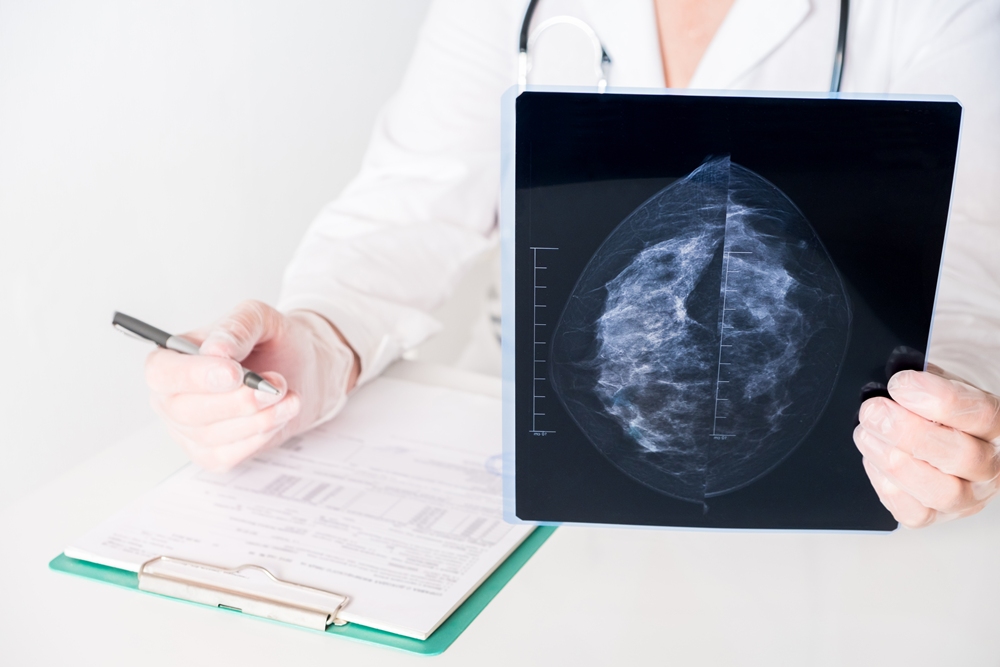
Contrast-enhanced mammography (CEM) has shown promise for women at higher risk of breast cancer, with follow-up screening showing greater specificity and accuracy.
Cancer detection rates remained consistent during repeat screening, while specificity improved compared with baseline examinations.
Specificity shows how accurately a test identifies people who do not have the disease, helping to reduce unnecessary follow-up procedures.

Researchers at Memorial Sloan Kettering Cancer Center analysed 6,911 contrast-enhanced mammography screens carried out among 2,756 women between 2015 and 2021.
Contrast-enhanced mammography, or CEM, combines standard mammography with an injected contrast agent that highlights areas of increased blood flow. Cancerous tumours often develop a greater blood supply.
The team compared 1,575 baseline screens with 3,336 incidence screens.
The researchers classified a screen as baseline if the woman had no previous CEM or had not undergone breast MRI in the previous three years.
Incidence screens were follow-up examinations carried out after previous screening.
After adjusting for the number of screens each woman received, the researchers found no statistically significant difference in cancer detection rates between the groups.
However, specificity reached 91.5 per cent during incidence screening, compared with 83.4 per cent for baseline screening.
Overall accuracy was also higher for incidence screening, at 91.4 per cent compared with 83.5 per cent.
“The ability of contrast-enhanced mammography to help detect cancer during prevalence screening in women at increased risk for breast cancer is maintained in subsequent incidence screens, with better specificity and accuracy,” the research team wrote.
Baseline screening detected 19 cancers per 1,000 examinations, compared with 11.6 per 1,000 incidence screens.
Sensitivity, which measures how well a test identifies people who have a disease, was 87.1 per cent for baseline screening and 86.1 per cent for incidence screening.
Contrast enhancement alone helped detect 18 of the 30 cancers found during baseline screening and 36 of the 62 found during incidence screening.
The researchers also identified 14 interval cancers across the examinations, with no evidence of a difference between the two groups.
An interval cancer is diagnosed after a screening result appears normal but before the next scheduled examination.
The retrospective study used previously collected clinical records rather than following participants in a newly designed trial.
The researchers described CEM as a reasonable screening tool for women with dense breasts.
Dense breasts contain more fibrous and glandular tissue, which can make cancer more difficult to detect with standard mammography.
CEM has previously shown greater sensitivity than ultrasound, digital mammography and digital breast tomosynthesis, according to the article.
Digital breast tomosynthesis takes several low-dose X-ray images from different angles to create a three-dimensional view of breast tissue.
The technique also takes less time and generally costs less than breast MRI, with previous research suggesting its performance is not inferior to MRI.
CEM is currently used for some screening purposes outside its approved indications.
The researchers said it could also help address health inequalities affecting women who face barriers to accessing MRI.
“In addition, women have reported a preference for CEM over MRI,” they wrote.
The researchers said a future article would provide full details about the interval cancers identified in the study.
An accompanying editorial said the technique could become a practical part of breast cancer screening for selected groups, although challenges remain around wider adoption.
“Whether this potential ultimately translates into widespread implementation will depend on future studies evaluating not only diagnostic performance, but also patient outcomes, health care utilisation, and real-world feasibility across diverse practice settings,” wrote Dr Vivianne Aguilera Freitas of the University of Toronto.


Premature menopause is linked to a higher risk of developing high blood pressure, according to a study of more than 107,000 women.
The risk was highest among women who reached menopause between the ages of 25 and 35.
Researchers said the findings support earlier cardiovascular screening for women who reach menopause before the age of 40.
Dr Stephanie Faubion, medical director for The Menopause Society, said: “The results of this study highlight the potential adverse long-term health outcomes associated with premature menopause, and in particular, the need to regularly screen for cardiovascular risk factors such as hypertension.
“Use of hormone therapy is also routinely recommended in women with premature menopause at least until the natural age of menopause unless contraindications exist.”
Hormonal changes during menopause are known to affect women’s wider health, while earlier menopause has previously been linked to coronary heart disease and stroke.
Coronary heart disease develops when the blood vessels supplying the heart become narrowed or blocked.
However, previous evidence directly linking the timing of menopause to high blood pressure has been mixed.
High blood pressure, also known as hypertension, puts extra strain on the heart and blood vessels and can increase the risk of heart disease and stroke.
Researchers said it can be difficult to separate the direct effects of hormonal changes from factors that often accompany menopause, including weight gain, metabolic changes and other cardiovascular risks.
Metabolic changes affect how the body processes and uses energy, including sugar and fat.
The study analysed data from 107,836 postmenopausal women who joined the UK Biobank between 2006 and 2010. They were followed for a median of almost 15 years.
Researchers divided the women into three groups based on their age at menopause: after 45, between 40 and 45, or before 40.
They also examined whether menopause occurred naturally or followed surgery.
During the follow-up period, 18,508 women, or 17.2 per cent, were diagnosed with high blood pressure.
The proportion increased as the age at menopause fell. Hypertension developed in 16.6 per cent of women who experienced menopause after 45, compared with 18.8 per cent of those who reached menopause between 40 and 45.
Among women who experienced menopause before 40, 22.6 per cent developed the condition.
After taking account of more than 50 factors, including weight, lifestyle habits, family history and laboratory results, premature menopause remained linked to a 12.3 per cent higher risk of hypertension than menopause after age 45.
Further analysis suggested the risk peaked among women who reached menopause between the ages of 25 and 35.
The researchers said this may mean that the cardiovascular risk associated with premature menopause is concentrated among a younger group than the conventional under-40 definition suggests.
Surgical menopause was initially linked to higher rates of hypertension, but the association was no longer significant after other risk factors were taken into account.
The authors said clinicians should consider age at menopause as a distinct cardiovascular risk factor, particularly for women who experience it before 40.
They also called for earlier detection and management of hypertension, alongside individual discussions about hormone therapy.
Hormone therapy replaces hormones that decline during menopause and may be recommended for some women, depending on their individual health and medical history.

Natural Cycles has received its sixth FDA clearance for an updated fertility algorithm designed to personalise digital contraception.
The regulator cleared the company’s next-generation NC° Fertility Algorithm, which combines statistical modelling with machine learning to predict fertile and non-fertile days.
Natural Cycles said the algorithm was trained on tens of millions of real-world fertility data points and adapts to individual cycle patterns.
“People don’t just want effective birth control; they want a method that fits naturally into their lives,” said Dr Elina Berglund Scherwitzl, chief executive and co-founder of Natural Cycles.
“One of the unique advantages of a software-based contraceptive is that it can continue to evolve.
“As our scientific understanding of fertility grows and we continue to learn from more than a decade of real-world data, we can responsibly refine the technology through rigorous research, clinical validation, and FDA review.
“This latest clearance is the result of that work, helping us give many users more flexibility while maintaining the effectiveness they rely on.”
Evidence supporting the FDA clearance showed that the updated system maintained the app’s established safety and effectiveness while giving many users more Green Days.
Green Days are those on which the app confirms that pregnancy protection is not needed.
The birth control app remains 98 per cent effective when used as intended and 93 per cent effective with typical use, according to the company.
Natural Cycles said these rates place it in the same effectiveness category as the combined oral contraceptive pill.
Typical use includes mistakes or inconsistent use, while intended use means following the method correctly.
Digital contraception uses technology and physiological data, such as body temperature, to provide personalised fertility predictions.
Natural Cycles said its updated algorithm can identify fertile and non-fertile days more precisely than traditional fertility awareness methods, which may classify larger parts of the cycle as potentially fertile.
The changes provide more Green Days while maintaining effectiveness, improve performance for people with irregular cycles and better handle lower-quality temperature or biomarker data, the company said.
A biomarker is a measurable biological signal, such as body temperature, that provides information about processes taking place in the body.
Natural Cycles also said the system can personalise its predictions more quickly as a user’s menstrual cycle changes over time.
“Years ago, the question was whether digital contraception could work. Today, Natural Cycles has demonstrated robust clinical and real-world evidence that it can,” said Dr Kerry Krauss, senior medical adviser at Natural Cycles.
“The next chapter for digital contraception is making it more personalised and easier to use while maintaining the same high standard of safety.
“This FDA clearance demonstrates how advances in AI and machine learning can improve the user experience while preserving the scientific rigour expected of a regulated medical device.”
Natural Cycles has filed a patent application covering key innovations in the updated algorithm.
The decision follows the FDA’s first De Novo clearance of the company’s birth control app in 2018.
Later clearances allowed the app to integrate with the Oura Ring in 2021 and Apple Watch in 2023.
In 2024, the FDA cleared a Predetermined Change Control Plan, creating a regulatory pathway for future hardware integrations.
Natural Cycles said the plan has since enabled the launch of its NC° Band and other hardware integrations, including a Garmin connection introduced in March 2026.
A further clearance in 2025 allowed the birth control app to be offered both over the counter and by prescription.
The company has also received regulatory authorisations in more than eight markets worldwide, including Europe, Canada, Brazil, Australia, South Korea and Singapore.











 News2 weeks ago
New menopause drug approved for use by NHS in Scotland

 Hormonal health2 weeks ago
Stardust period tracker shares health data, study reveals

 News1 week ago
Zero Candida market set to reach over US$2 billion by 2030 – report

 Insight2 weeks ago
Women’s health draws record $1.55bn in equity as capital spreads beyond the mega-rounds

 Entrepreneur2 weeks ago
Onto Health acquires diagnostics software company Levy Health

 News6 days ago
From Hologic to Ark Surgical: Why Joseph LaBruzzo is betting on the future of women’s surgical innovation

 Wellness1 week ago
Nearly 60% of young women get health advice from influencers, research finds

 News2 weeks ago
Congress urged to invest over $20bn to close women’s health gap