Menopause
People are willing to embrace menopause, says Labour MP
Menopause is becoming a cool subject, says Swansea East MP and Welsh Labour Deputy Leader Carolyn Harris
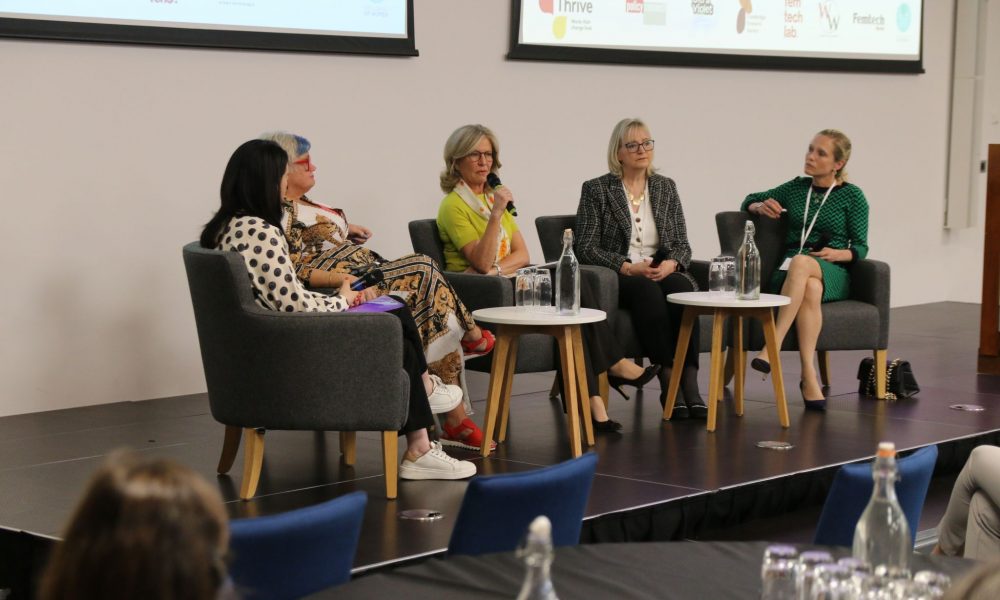
People are willing to embrace the conversations around menopause, the Labour MP Carolyn Harris has said at a conference in London.
Speaking at the Women’s Health Innovation Summit UK, the Swansea East MP said more and more employers recognised they had a responsibility to their staff, and a responsibility to society to talk about menopause.
“I think it’s a willingness to embrace, to talk, to open up spaces for people to have those conversations around the menopause,” Harris told the event.
“When I first started talking about the menopause in the House of Commons chamber, I was worried because I didn’t know what the reaction was going to be.

“Now menopause is cool. If you’re talking about menopause, then you’re up there with some of the great celebrities. It’s really heartwarming.”
Thousands of women deal with the mental health impact of the menopause, Kathy Abernethy, menopause specialist and chief nursing officer at the digital health platform Peppy, explained.
“They think that they’re mad, they blame their partner, they blame themselves, but they never blame their hormones,” she said.
“When that then hits into the workplace, what do women do? They close down, they don’t communicate, they don’t tell the manager. They may come to work, but they’re not really present. And that’s unproductive for them as an individual, and for their company.”
Asked how employers could fund menopause treatments and support women in the workplace, Harris said: “The money we currently waste by not dealing with the menopause is absolutely phenomenal.
“We know that many women on long-term sick with mental health or suspected mental health issues are actually menopausal. Finding a way to get them back into the workforce and give them the right support would make a huge difference.”
The Labour MP told the audience she would like to see a society where women are given back “their right to normality”.
“I would like every area of social policy to give the normality back to women to experience life without having to be afraid to say they are menopausal. I would like all women to have access to the right support and medication they need when they need it.”
News
Midi Health closes US$100m Series D
Menopause
IBSA UK launches non-hormonal injectable for menopause symptoms
IBSA UK has introduced Hyaluxelle, a non-hormonal menopause treatment for vulvo-vaginal atrophy, easing vaginal dryness and pain during intercourse.
Hyaluxelle is given as deep intradermal injections to the vulvar vestibule, the area at the vaginal opening, in two sessions one month apart, followed by clinical reassessment.
IBSA UK is the UK subsidiary of Swiss pharmaceutical company IBSA.
Vulvo-vaginal atrophy is a key feature of genitourinary syndrome of menopause, a long-term condition caused by low oestrogen that affects genital, urinary and sexual health.
At least half of post-menopausal women are affected, yet many do not seek help, often assuming symptoms are part of ageing.
The condition stems from thinning and drying of vaginal and vulval tissues linked to low oestrogen, leading to symptoms such as dryness, discomfort, altered pH and pain during intercourse.
Hyaluxelle combines high and low molecular weight hyaluronic acid, a moisture-retaining substance found naturally in the body.
The company says this creates a lower-viscosity injection at what it describes as the highest concentration available in the UK, supporting tissue hydration, firmness and elasticity.
The formulation is said to rehydrate the vulvar vestibule and create conditions for restoring tissue structure through collagen and elastin production.
Clinical studies indicate Hyaluxelle improves several vulvo-vaginal symptoms, including reductions in discomfort and pain during intercourse.
Studies also report gains in sexual function domains and a positive trend in some aspects of health-related quality of life.
Histological analyses suggest increased epithelial thickness, enhanced tissue regeneration and reduced inflammatory infiltration after the procedure. In studies, the treatment was well tolerated with no reported major complications.
Joanna, a 59-year-old woman living with severe symptoms, described the personal impact of delayed diagnosis.
She said: “I lived for years with pain, UTIs, cystitis and a loss of sensation, but every visit to my GP, even a female GP, was treated as a bladder issue.
“Nobody suggested it might be linked to the menopause or joined the dots, and none of the treatments I was given helped. Without the right information or support, I became desperate for answers.
“The symptoms affected everything, what I wore, how I exercised, how I slept, but the hardest part was the impact on intimacy with my husband.
“I withdrew from our relationship because I was scared sex would hurt, and the loss of closeness was devastating, and I no longer felt like myself.
“Women deserve clear explanations and real options when their symptoms are not getting better.”
IBSA says Hyaluxelle offers clinicians an option for women whose symptoms persist despite first-line therapies, or for those who cannot receive or choose not to receive hormonal treatments.
Menopause
Study reveals gap between perimenopause expectations and experience
A study of 17,494 people has revealed a gap between perimenopause symptoms people expect and those they report, with fatigue and exhaustion far outranking hot flushes.
While 71 per cent associated perimenopause with hot flushes, those reporting perimenopause cited exhaustion (95 per cent) and fatigue (93 per cent) far more often.
Among more than 12,000 participants over age 35, the most common symptoms were fatigue (83 per cent), exhaustion (83 per cent), irritability (80 per cent), low mood (77 per cent), sleep problems (76 per cent), digestive issues (76 per cent) and anxiety (75 per cent).
Researchers at Mayo Clinic conducted the study with Flo, a women’s health application, assessing symptoms among 17,494 people from 158 countries.
First author Mary Hedges is a community internal medicine physician at Mayo Clinic in Florida.
Hedges said: “This study shines a light on how little we still understand about perimenopause and how much it affects people’s daily lives.
“At Mayo Clinic, we’re working to expand that understanding so we can improve awareness and guide care that truly meets the needs of each patient.”
The findings show fatigue, mood changes and sleep-related issues sit at the centre of many people’s experiences during perimenopause, the years leading up to the final menstrual period and the first year after it ends. This transition can start in the 30s and last several years.
When asked what they associate with perimenopause, participants most often named hot flushes (71 per cent), sleep problems (68 per cent) and weight gain (65 per cent).
The study distinguishes between exhaustion and fatigue, with exhaustion defined as a general decrease in performance, impaired memory, decreased concentration and forgetfulness, whilst fatigue refers to physical exhaustion.
Researchers noted that hormone shifts may disrupt the body’s natural rhythms and restorative sleep, while mood changes can be influenced by hormones, inflammation and diet.
-
Insight3 weeks agoDesigner perfumes recalled over banned chemical posing fertility risk
-
Hormonal health3 weeks agoWomen’s health enters a new era – the trends shaping femtech in 2026
-
Features3 weeks agoBest menopause apps and products for 2026
-
Insight1 week agoParents sue IVF clinic after delivering someone else’s baby
-
Insight4 weeks ago‘Rejuvenated’ eggs raise hopes for improved IVF outcomes
-
Menopause2 weeks agoWomen’s health could unlock US$100bn by 2030
-
Insight3 weeks agoHigher maternal blood pressure increases risk of pregnancy complications, study finds
-
Entrepreneur4 weeks agoXella Health closes US$3.7 million in pre-seed financing