




Connect with us

News

Scottish scientists develop world-first ‘micro-placenta’

Scientists say the breakthrough technology could revolutionise research into conditions such as preeclampsia

Published

on

A new micro-placenta model grown from stem cells could “revolutionise” research into pregnancy complications, Scottish scientists have said.

iPlacenta, developed by experts at Dundee’s School of Medicine, allows researchers to examine the workings of the organ in 3D for the first time without risk to a mother or her foetus.

The culmination of four years of research and £3.9m of funding, the miniature models have been developed from stem cells, perfectly replicating the organ’s workings.

The placenta is one of the least studied organs in medical science. It allows nutrients to pass from the mother to the foetus while allowing waste to return to the mother’s bloodstream. It also offers protection to the unborn baby against bacteria, though viruses can still be transmitted.

However, a failure by the placenta to function correctly can jeopardise the health and life of both foetus and its mother, with the British Heart Foundation stating that conditions such as preeclampsia affect as many as one in 25 UK pregnancies.

Despite this prevalence, little is known about the workings of the placenta and aspirin and early deliveries are among the limited treatments offered to mothers.

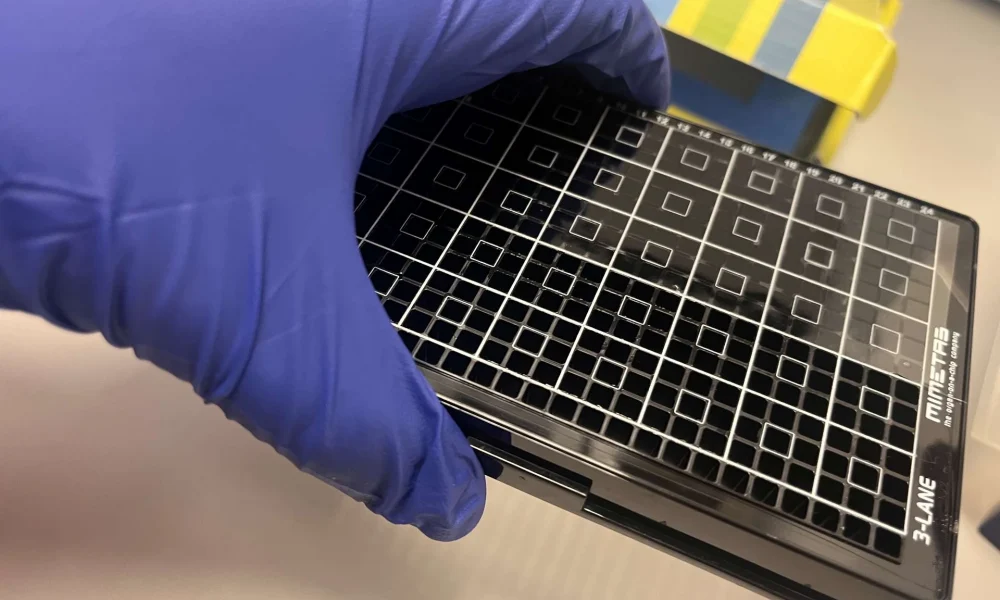
To address this urgent need, Dr Colin Murdoch and his team at Dundee started work on iPlacenta in 2019, working with Dutch 3D tissue model experts MIMETAS, utilising stem cells obtained from skin to grow human placentas in their organ-on-a-chip platform, OrganoPlate.

Each plate can hold around 40 micro placentas, which mimic the workings of the full-size organ and can be used for testing without jeopardising the health of the mother or foetus, or without resorting to animal testing.

Dr Murdoch, who has led the project, said that the breakthrough technology could revolutionise research into conditions such as preeclampsia.

“Just a tiny fraction of the most common drugs used by women in pregnancy have excellent safety data behind them,” he said.

“However, iPlacenta can be utilised by the pharmaceutical industry to research the interaction between drugs and the placenta. This allows drug companies to look at the organ in a more physiological format and could have a potentially transformative impact on medical care for pregnant women.”

Research in pregnancy is not as far forward as research into other areas of medical science, Murdoch explained.

“We still know relatively little about preeclampsia, despite its potential to affect every pregnancy.

“At present, cell lines from cancer are used to examine diseases of the placenta but this is not entirely appropriate. Obtaining placentas at the early stage that we need to study them is incredibly hard, and that is where iPlacenta can address that need.”

Gwenaëlle Rabussier, scientist at MIMETAS, said: “Organ-on-a-chip technology is a giant leap forward in understanding the diseases of the placenta.

“Organs are three-dimensional objects, but until now medical research has been conducted in just two dimensions.

“Working on this project has been exciting as it opens tremendous opportunities for unravelling placental mysteries associated with placental barrier drug transfer and pathologies such as preeclampsia. This contribution to enhancing women’s health is a tremendous source of pride for us.”

iPlacenta was funded by the European Union’s Horizon 2020 research and innovation programme under the Marie Skłodowska-Curie grant agreement.

The findings of the iPlacenta project were detailed in a paper published in the journal Cell Press.


Continue Reading
10 Comments

10 Comments

Leave a Reply

Your email address will not be published. Required fields are marked *

Mental health

Women over 40 seeking raves for mental health benefits

Published

on

Women over 40 are seeking raves for mental and physical wellbeing, with a study suggesting the benefits go beyond nightlife.

The findings challenge the idea that nightlife and electronic dance music events are mainly for younger people.

Published in Psychology of Music, the study focused on the common misconception that nightlife is only for younger audiences.

Researchers surveyed 136 female clubbers aged 40 to 65 about their experiences at electronic dance music events.

The study, carried out at the University of Leeds in England, found women reported mental and physical wellbeing benefits from attending these events.

Seeing favourite DJs was the most common motivation, but many women also described dancing as a way to relieve stress and find emotional support.

The research found that 65.9 per cent of participants described attending a rave as “spiritual”, while 62.9 per cent said it offered an escape from everyday life.

A further 58.3 per cent said they felt like a different version of themselves in a club environment.

Nine in ten participants said they felt at home at electronic dance music events, with many pointing to a shared passion for music and the sense of community around it.

The study also suggested physical fitness played a role, with some women saying they had made clubbing part of their regular exercise routine.

However, the findings also highlighted challenges for older women in nightlife spaces.

One fifth of participants said they felt visibly out of place because of their age.

Nearly half reported unwanted physical contact, leading some to seek out different venues or attend only with friends.

Continue Reading

News

Osteoporosis significantly increases risk of death in menopause, study suggests

Published

on

Osteoporosis may raise the risk of death in postmenopausal women by up to 47 per cent, a new study suggests.

The findings point to an inverse relationship between femoral bone mineral density and mortality risk, especially within certain ranges.

Femoral bone mineral density is the amount of mineral in the thigh bone, which is often measured to assess bone strength and osteoporosis risk.

Dr Monica Christmas is associate medical director for The Menopause Society.

She said: “Osteoporosis often remains a silent threat after menopause, despite its profound effect on women’s lives—from loss of height, poor balance, and reduced mobility to disfigurement, pain, and even premature death.

“Early screening and preventive measures, including a calcium-rich diet (preferably from food sources), regular weight-bearing exercise, and hormone therapy when appropriate, can significantly improve bone health and reduce risks not only of fractures but also cardiovascular disease, certain cancers, and dementia.

“It’s time we bring this conversation to the forefront.”

In the  study involving nearly 3,000 postmenopausal women, bone mineral density at four femoral sites was assessed using dual-energy x-ray absorptiometry, a scan commonly used to measure bone strength and fracture risk.

The analysis found that mortality risk was significantly higher when femoral bone mineral density reached the osteoporotic threshold or when osteoporotic fractures were present.

After full adjustment, osteoporosis was associated with a 47 per cent increased risk of mortality.

A stronger inverse association between increased bone mineral density and mortality risk was seen within specific ranges, suggesting bone mineral density could serve as a prognostic marker of wider health.

The relationship appeared especially notable within the range of 0.46 to 0.71 g/cm² for total femur bone mineral density.

Previous research has shown that postmenopausal women face a significantly higher risk of death within one year of hip or vertebral fractures.

Continue Reading

Insight

PCOS renamed after decade-long campaign to end ‘cyst’ misconception

Published

on

After more than a decade of campaigning, doctors around the world have agreed to rename polycystic ovary syndrome (PCOS).

It is hoped the new name, polyendocrine metabolic ovarian syndrome, or PMOS, will help end the misconception that the condition is all about cysts, which campaigners say has contributed to missed diagnoses and inadequate treatment.

The condition affects one in eight women, or 3.1m women and girls in the UK, and is linked to hormone fluctuations that can affect weight, mental health, skin and the reproductive system.

The renaming was spearheaded by UK patient charity Verity alongside Professor Helena Teede, director of Melbourne’s Monash Centre for Health Research and Implementation.

It followed 14 years of consultation with clinicians and patients around the world.

The new name was published in a consensus statement on May 12 and announced at the European Congress of Endocrinology in Prague.

The paper states that PCOS should now be referred to as PMOS.

“This is a landmark moment that will lead to desperately-needed worldwide advancements in clinical practice and research,” said Professor Teede.

“It was heart-breaking to see the delayed diagnosis, limited awareness and inadequate care afforded those affected by this neglected condition.”

When doctors first named PCOS in 1935, they thought it was mainly caused by physical changes to the ovaries.

Decades of research have since changed that understanding, with clinicians now agreeing the condition is far more complex.

“What we now know is that there is actually no increase in abnormal cysts on the ovary and the diverse features of the condition were often unappreciated,” Professor Teede added.

“A name change was the next critical step towards recognition and improvement in the long term impacts of this condition.”

The exact cause of the condition is still unknown, though it is thought to be linked to abnormal hormone levels and is associated with insulin resistance and raised levels of testosterone and luteinising hormone.

Insulin resistance means the body does not respond properly to insulin, the hormone that helps control blood sugar. Luteinising hormone helps regulate ovulation.

Common symptoms listed by the NHS include irregular periods or no periods at all, difficulty getting pregnant, excessive hair growth, weight gain, thinning hair, oily skin and acne.

Campaigners have acknowledged that the name change could cause temporary confusion.

“Despite decades of tireless advocacy to improve awareness, we recognised that the risk of change would be worth the reward,” said Rachel Morman, chairwoman of Verity.

“This shift will reframe the conversation and demand that it is taken as seriously as the long-term, complex health condition it is.”

It is also unclear if, or when, the NHS will change the language it uses.

An NHS England spokesperson said: “We routinely review and update content on the NHS website to ensure it reflects the latest clinical advice and will carefully consider these recommendations.

“The NHS will also continue our work to improve women’s healthcare, including for this important group, which involves giving women more choice over their care, bringing down waiting times, and delivering more care in communities.”

Continue Reading

Trending

Copyright © 2025 Aspect Health Media Ltd. All Rights Reserved.

