




Insight
Open science advances non-hormonal contraceptives


An open science initiative is accelerating work on non-hormonal contraceptives by targeting a sperm-specific enzyme linked to fertility.
The research focuses on developing a pill that works differently from hormonal contraception by temporarily disabling a protein found almost exclusively in sperm, rather than altering a woman’s hormonal cycle.
The target is an enzyme called phosphoglycerate kinase 2, or PGK2, which is critical for energy production and sperm movement.
Researchers believe that blocking PGK2 prevents sperm from generating the energy needed to swim and reach or fertilise an egg. Because the enzyme is largely confined to sperm cells, this approach could avoid many of the systemic side effects associated with hormonal contraceptives.

The work is led by the UNC Structural Genomics Consortium within the University of North Carolina’s Eshelman School of Pharmacy and is funded by the Gates Foundation as part of a broader effort to accelerate women’s health innovation.
Tim Willson, chief scientist for the consortium’s North Carolina programme, said: “Pregnancy is one of the major drivers of poverty in many of these countries.
“Giving women more control over when they conceive is a key area to make a real impact.
“What makes PGK2 so interesting is that it’s almost exclusively expressed in sperm cells. We suspect that if you can selectively inhibit this enzyme, the sperm can’t generate the energy they need to function.”
The consortium plays a central role in the Gates Foundation’s Contraceptive Drug Accelerator, a global network of academic laboratories working to identify and validate new drug targets for non-hormonal contraception.
Scientists from institutions in the US and India meet weekly to share data, compounds and findings.
In line with its open science approach, all aspects of the project are carried out openly, with no intellectual property restrictions.
“That’s where you really see open science at work,” Willson said.
“Every compound we make and every dataset we generate is shared immediately, which allows us to move incredibly fast.”
Since the project began in May 2025, the team has developed five highly selective probe compounds, an unusually rapid pace for early-stage drug discovery.
These compounds are now being distributed across the Gates Foundation’s Contraceptive Drug Accelerator network for testing in sperm function models.
“That specificity is the goal,” Willson said.
“We’re trying to shut down sperm function without interfering with the hormonal cycles that regulate women’s health.”
Researchers note that the work remains at an early stage and that any resulting contraceptive would still be several years away from clinical use.
“At the end of the day, the more we understand about human biology, the better drugs we can make,” Willson said.
“Open science removes barriers and lets the best ideas rise to the top.”















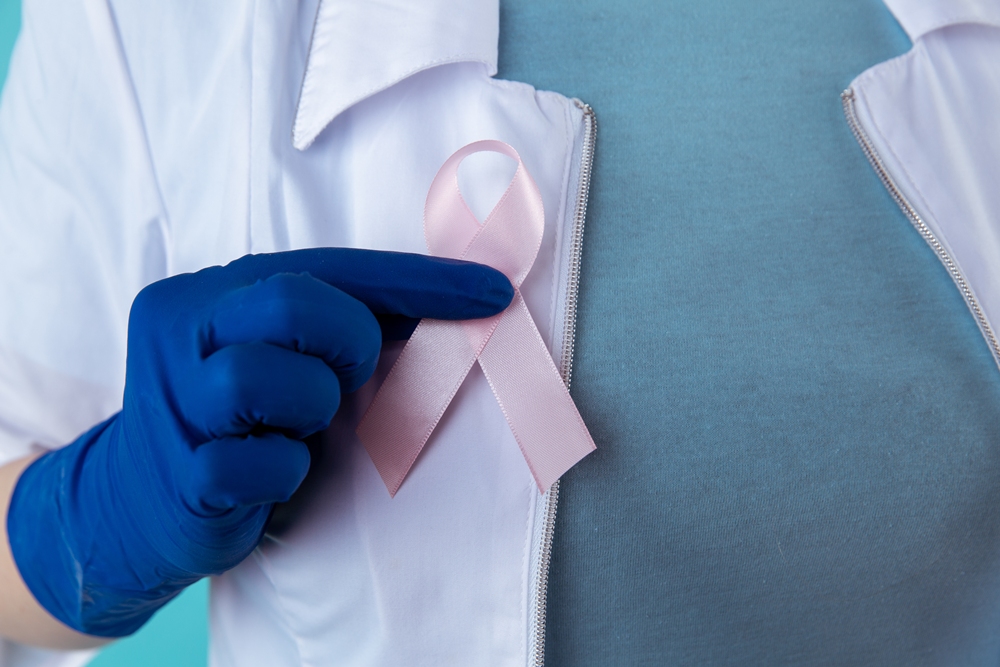
Ki-67, a protein used to measure tumour growth, may also help prevent chromosome errors that drive cancer, a study suggests.
The findings could change how scientists view Ki-67, a marker commonly used in breast cancer and other tumours to assess how quickly cancer cells are growing.
Researchers found the protein may help preserve genome stability by maintaining the structural integrity of centromeres, key parts of chromosomes that help ensure DNA is shared correctly during cell division.

The research was led by professor Paola Vagnarelli at Brunel University of London in collaboration with scientists at the University of Edinburgh and the Technical University of Berlin.
Professor Vagnarelli said: “Doctors already measure Ki-67 to see how aggressive a cancer might be. But our results suggest it is actually helping maintain genome stability.
“That means it may be more than a marker. It could potentially also be a therapeutic target.”
The study examined three proteins that attach to chromosomes during cell division and help rebuild the molecular system that tells each new cell what kind of cell it is.
Every human cell carries identical DNA. What makes a liver cell different from a brain cell is which genes are switched on and which are kept inactive.
When a cell divides, that entire system of switches must be rebuilt. The three proteins involved in this process were Ki-67, Repo-Man and PNUTS.
Vagnarelli’s team developed a method that individually removes each protein from a living cell at the precise point of division. Older techniques could not isolate that moment cleanly.
They found that cells rely on all three proteins to reset themselves after division, but each failed in a different way when removed.
Without PNUTS, gene activity spiralled out of control and thousands of genes switched on at once.
Without Repo-Man, cells escaped safety checkpoints that usually stop damaged or abnormal cells from continuing to divide.
“What we didn’t expect was how clean the separation was,” said Vagnarelli.
Each protein fails in its own specific way. There is no redundancy, no safety net. Which means there are three separate points at which this process can go wrong.
“When the system breaks down, cells can emerge with the wrong number of chromosomes. That condition, called aneuploidy, is seen in disorders such as Down syndrome and in many cancers.
“We also found that these chromosome errors can trigger inflammatory signals inside the cell.”
Aneuploidy means a cell has too many or too few chromosomes, which can disrupt normal growth and function.
Inflammatory signals are chemical messages that can make a cell behave as if it is responding to injury or infection.
“These cells behave almost as if they are under attack,” said Vagnarelli.
“The immune response switches on because the genome is unstable.
“That link between chromosome imbalance and inflammation could help explain patterns we see in several diseases.”
The researchers said the findings may help cancer scientists better understand how chromosome instability, loss of gene regulation and cells dividing before they are ready contribute to tumour growth.
They said understanding the normal machinery that prevents these errors may help researchers find ways to push cancer cells into making mistakes they cannot survive.
“We now have a clearer map of the machinery that resets the cell after division,” said Vagnarelli.
“That knowledge gives us a starting point for thinking about new therapeutic approaches.”













 News4 weeks ago
Women’s digital health market set to reach US$5.28 billion in 2026 – report

 Fertility4 weeks ago
Why the UK’s fertility rate keeps falling – and what it means if you’re trying now

 Wellness4 weeks ago
Women’s HealthX unveils Northwell Health, Corewell Health, Biogen & more to headline Chronic Disease stage

 Opinion3 weeks ago
What Maternal Mental Health Month reveals about where postpartum support actually breaks down
 Fertility4 weeks ago
Toxins and climate harms having ‘alarming’ effect on fertility, research warns

 Insight3 weeks ago
NIH Grant terminations disproportionately impact minority scientists, research finds

 Adolescent health2 weeks ago
WUKA brings Period-Positive Pool Party to London Aquatics Centre to keep girls swimming through puberty
 Fertility4 weeks ago
Researcher explores weight loss jab impact on PCOS
1 Comment