




Wellness
AI outperforms breast density for breast cancer risk


An artificial intelligence model predicts five-year breast cancer risk more accurately than traditional breast density assessment, new research shows.
The image-only AI model, called Clairity Breast, showed that women in its high-risk group had more than a fourfold higher cancer incidence than those in the average-risk group (5.9 per cent vs 1.3 per cent).
Breast density, which refers to the amount of fibrous and glandular tissue compared to fatty tissue in the breast, has traditionally been used as one indicator of cancer risk. Dense breast tissue can both mask tumours and slightly increase cancer risk.

Researchers from Harvard Medical School and University Hospital RWTH Aachen in Germany tested the FDA-authorised AI model on 245,232 screening mammograms from US and European sites taken between 2011 and 2017.
The AI was trained on 421,499 mammograms from 27 facilities across Europe, South America and the US, learning to identify subtle tissue patterns that predict cancer development within five years. It uses a deep convolutional neural network (a pattern-recognition algorithm) to generate risk probabilities.
Traditional density assessment showed minimal difference in outcomes: 3.2 per cent for dense versus 2.7 per cent for non-dense breasts.
“Over two million women are diagnosed with breast cancer annually, and for most, it comes as a complete shock,” said Dr Constance D. Lehman, professor of radiology at Harvard Medical School. “Only 5 to 10 per cent of breast cancer cases are considered hereditary, and breast density alone is a very weak predictor of risk.”
The AI categorised risk using National Comprehensive Cancer Network thresholds: average (less than 1.7 per cent), intermediate (1.7-3.0 per cent) and high (greater than 3.0 per cent) five-year risk.
“The model is able to detect changes in the breast tissue that the human eye can’t see,” Dr Lehman explained. “This is a job that radiologists just can’t perform. It’s a separate task from detection and diagnosis, and it will open a whole new field of medicine, leveraging the power of AI and untapped information in the image.”
The findings have particular significance for younger women. While the American Cancer Society recommends optional annual screening from age 40 for average-risk women, those under 40 represent the fastest-growing group diagnosed with breast cancer and advanced disease.
“An AI image-based risk score can help us identify high-risk women more accurately than traditional methods and determine who may need screening at an earlier age,” Dr Lehman said. “We already screen some women in their 30s when they are clearly at high risk based on family history or genetics. In the future, a baseline mammogram at 30 could allow women with a high image-based risk score to join that earlier, more effective screening pathway.”
Dr Christiane Kuhl, director of the Department of Diagnostic and Interventional Radiology at University Hospital RWTH Aachen, who presented the findings, emphasised the clinical implications.
“The results of this large-scale analysis demonstrate that AI risk models provide far stronger and more precise risk stratification for five-year cancer prediction than breast density alone,” she said. “Our findings support the use of image-only AI as a complement to traditional markers supporting a more personalised approach to screening.”
Currently, 32 US states have breast density legislation requiring healthcare providers to inform women of their density status after screening mammograms. The researchers suggest this information could be enhanced with AI risk scores.
“We’d like to see women given information on their breast density and their AI image-based risk score,” Dr Lehman said. “We can do better than just looking at a mammogram and saying, ‘It is dense or not dense’ to inform women of their risk.”
The technology represents what its developers describe as a shift in breast cancer screening from population-based to personalised risk assessment, potentially enabling earlier intervention for high-risk women while reducing unnecessary procedures for those at lower risk.














Chelsea FC Women is to launch a fertility fund giving players access to assessments, treatments, counselling and workshops.
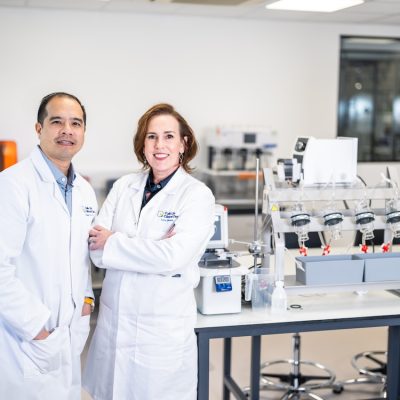
The initiative is part of a new partnership with London fertility clinic Fertility Plus, which has been named the club’s official fertility partner.
Chelsea said the fund will be available to every player in its women’s team, with support tailored to individual needs.

Giulia Mazzia, commercial director for Chelsea FC Women, said: “At Chelsea FC Women we are never done pushing for progress for our players and our community.
“This first-of-its-kind partnership with Fertility Plus will open up the conversation about fertility, help to raise awareness for our incredible fanbase and beyond, and give practical support to our players off the field as well as on it.”
Support through Fertility Plus will include fertility assessments and treatments, as well as counselling and workshops.
The partnership will also provide evidence-based information about reproductive health and address misconceptions around fertility.
Chelsea cited previous research on fertility knowledge which found that 41 per cent of respondents actively trying to conceive did not know when their fertile window was.
The club and Fertility Plus plan to provide educational content, resources comparing fertility myths with medical evidence and insights from Chelsea FC Women ambassadors.
Dr Amit Shah and Dr Anil Gudi, co-founders of Fertility Plus, said: “Elite sport asks a lot of women during the very years when fertility matters most, yet it’s a conversation the game has rarely had.
“Partnering with Chelsea FC Women allows us to help change that by giving players, staff and supporters access to trusted fertility expertise and compassionate, consultant-led care.
“We’re proud to work alongside a club that’s setting a new standard for supporting women’s health, both on and off the pitch.

Climbing during the third trimester was not linked to higher rates of self-reported pregnancy complications in a global study.
The findings provide direct evidence on an activity pregnant women have traditionally been advised to avoid because of concerns about falls.
Researchers surveyed 692 people about climbing during pregnancy, falls, maternal and baby health outcomes and their return to the activity after giving birth.
The study recorded almost 64,000 hours of climbing among participants.
During that time, participants reported 155 “hard falls”, defined as falls or catches forceful enough to be remembered or cause concern.
The rate of adverse clinical events, meaning negative medical outcomes affecting the pregnancy or baby, was 0.03 per 1,000 hours of climbing exposure. All babies in the study were born live.
Researchers found no significant difference in pregnancy or foetal health outcomes between participants who stopped climbing at or before 27 weeks and those who continued beyond that point.
The findings suggest continuing the activity into the third trimester was not associated with increased self-reported complications among those surveyed.
The survey also found 96 per cent of participants said that, despite concerns about climbing while pregnant, they felt “happy” or “very happy” that they had continued.
Margie Davenport, professor in the Faculty of Kinesiology, Sport, and Recreation and lead author of the study, said the preliminary findings challenge an assumption about maternal exercise that had been based on opinion rather than research.
She said: “For decades we have restricted pregnant women from activities like climbing due to concern for their health and the health of the baby, but our evidence suggests it’s beneficial for both mental and physical health.”

Higher coffee consumption has been linked to lower body fat, greater muscle mass and differing sex hormone patterns in men and women in a Finnish study.
Researchers found people who drank more coffee had lower levels of total and visceral fat, the fat stored around internal organs, as well as greater skeletal muscle mass.
These associations were seen even though participants had a similar body mass index (BMI), a measure of weight relative to height.
The University of Oulu study analysed data from 2,264 people aged 46 who were part of the Northern Finland Birth Cohort 1966, looking at habitual consumption alongside circulating metabolites, cardiometabolic risk markers and sex hormones.
In both men and women, higher consumption was correlated with lower circulating levels of branched-chain amino acids.
Persistently high levels of these molecules have previously been linked to insulin resistance, when the body responds less effectively to insulin, and a higher risk of type 2 diabetes.
The strongest differences between the sexes were seen in men. Higher consumption was linked to a more favourable glucose and insulin profile, higher total and bioavailable testosterone and increased levels of sex hormone-binding globulin (SHBG).
SHBG is a protein that carries sex hormones such as testosterone through the bloodstream and influences how much hormone is available for the body to use.
At the same time, free testosterone and the free androgen index were modestly lower in men.
Among women, hormone associations were more limited, mainly involving higher SHBG and lower measures of free androgens, a group of hormones that includes testosterone.
Luca Verroest, lead author of the study and doctoral researcher at the University of Oulu, said: “Coffee is consumed by millions of people every day, yet we still know surprisingly little about how it relates to our metabolism and hormones.
“What stood out in our findings was a distinct hormonal signature that didn’t disappear even after we took into account BMI and lifestyle factors, with several of these associations differing between men and women.”
The researchers said hormonal pathways could partly explain the relationship between consumption and metabolic health.
However, the research was observational, meaning it can identify associations but cannot establish that drinking coffee caused the biological differences seen among participants.
The study is particularly relevant in Finland, one of the world’s highest coffee-consuming countries, where annual consumption averages around 11.8 kilograms per person.
Researchers are now investigating whether coffee itself drives the biological changes and which compounds could be responsible, initially using animal models.
The longer-term aim is to move to human intervention studies, although the researchers said further research would be needed before the findings could be used to inform dietary recommendations.










 Entrepreneur2 weeks ago
Applications close August 18 for Women’s Health Innovation Summit 2026 Innovation Showcase

 Menopause2 weeks ago
Third of women unaware of perimenopause mental health impact

 Fertility6 days ago
Chelsea FC Women to launch first-of-its-kind player fertility fund

 Events2 weeks ago
Women’s Health Week Europe 2026 releases fully populated agenda ahead of October summit

 Menopause1 week ago
Menopausal hormone therapy may lower dementia risk, study suggests

 Hormonal health2 weeks ago
We are wrapping our children in plastic and calling it care

 Pregnancy2 weeks ago
Chemicals in plastics may be linked to high blood pressure during pregnancy

 News2 weeks ago
Women with endometriosis face 46% higher risk of type 2 diabetes – study