




Cancer
AI-driven platform to drive early cancer detection in dense breasts


GE HealthCare has launched the Invenia Automated Breast Ultrasound (ABUS) Premium, a 3D ultrasound offering advanced AI features to drive faster, reproducible screening and streamline exam readings on patients with dense breasts.
Approximately 71 per cent of cancers occur in dense breasts. According to studies across the U.S. and Europe, 40 per cent of women and 70 per cent of Asian women have dense breast tissue, making them four to six times more likely to receive a breast cancer diagnosis.
Early detection of breast cancer is critical, yet about one-third of cancers in dense breasts may go undetected by a mammogram, as the cancer can be masked within the dense tissue.
ABUS has been designed to detect cancer in dense breasts, providing clearer and more detailed images. So far, it has been shown to improve the sensitivity of detecting invasive cancer in dense breasts when added to mammography.

“Women with dense breasts often face poorer outcomes due to malignancies detected at later, more advanced stages. Invenia ABUS Premium equipped with AI has the potential to optimise clinicians’ screening capabilities, enabling them to detect even small, early-stage cancers with a high degree of confidence in women with dense breasts,” said Karley Yoder, CEO of Comprehensive Care Ultrasound, GE HealthCare.
“Invenia ABUS Premium is designed to help deliver the best possible outcomes for patients while also prioritising the patient experience with features to improve scan speed and enhance comfort during an exam.”
Invenia ABUS Premium is designed to manage high patient volumes and the new Verisound AI tools support clinicians, featuring Scan Quality Assessment for immediate qualitative evaluation during the exam for proper breast coverage and positioning, and Auto Nipple Detection for consistent nipple marker positions.
The new Fast Scan tool increases scan speed by up to 40 per cent, while cSound Imageformer capabilities automatically create focus at every pixel.
The ABUS technology also has the potential to reduce unnecessary biopsies by providing specific image features to distinguish and detect malignant tumours, enabling clinicians to escalate care sooner.
Further, it reduces patient exposure to radiation or contrast injection as it doesn’t use any iodinated contrast agent or ionizing radiation.
“As an early adopter of ABUS, I’ve experienced the entire evolution of this technology. The Invenia ABUS Premium is superior* with its special AI features, which ensure the breast volume is captured and offer automatic nipple annotation, reducing scanning time and streamlining clinical workflow,” said Athina Vourtsis, chief director and founder of Athena Medical, Athens, Greece.
“The new Reverse Curve transducer makes the examination more patient friendly, and it is much more comfortable. There has been great improvement in image quality with less shadowing, and the structures behind the area of the nipple are seen more clearly, providing radiologists with greater diagnostic confidence.”






Women newly diagnosed with breast cancer have a 59 per cent higher risk of ischaemic stroke in the first year after diagnosis, research suggests.
Researchers also said survivors who develop sudden stroke symptoms, including one-sided weakness, facial drooping, speech difficulties or vision loss, should seek immediate medical attention.
The multicentre study analysed National Health Insurance Service data from 107,606 women who underwent surgery for newly diagnosed breast cancer and compared them with 322,818 age-matched women with no history of cancer.

The research was conducted by professor Shin Dong-wook of Samsung Medical Center, professor Han Kyung-do of Soongsil University, professor Yong-Moon Mark Park of the University of Arkansas for Medical Sciences and professor Wonyoung Jung of the University of Pennsylvania.
Professor Yong-Moon Mark Park said: “The study demonstrates a time-dependent pattern in which the risk of ischaemic stroke rises sharply immediately after breast cancer diagnosis and treatment before gradually declining.
“The key finding is that we evaluated stroke risk according to different stages following diagnosis and treatment. This suggests that clinicians should consider not only how much the risk increases, but also when it is greatest.”
The study included women aged 18 or older who were newly diagnosed with breast cancer between 2010 and 2016, underwent surgery and had no previous stroke.
Each patient was matched with three women of the same birth year who did not have cancer. Participants were followed for an average of 7.2 years.
The main outcome was ischaemic stroke, also known as cerebral infarction. It occurs when a blocked blood vessel cuts off blood flow to the brain and is a leading cause of death and long-term disability.
During follow-up, ischaemic stroke occurred in 1,155 breast cancer patients, or 1.07 per cent, and 3,698 women in the control group, or 1.15 per cent.
Overall, breast cancer surgery was not linked to a significantly higher long-term risk of ischaemic stroke, and researchers recorded a slight fall in risk over time.
However, a different pattern emerged immediately after diagnosis.
Within one year of diagnosis, patients had a 59 per cent higher risk of ischaemic stroke than women without cancer.
The risk was highest during the first three months, at 2.90 times that of the control group.
It remained elevated within six months, at 2.27 times the control group’s risk, before gradually declining.
The risk was still 17 per cent higher three years after diagnosis.
Researchers said the temporary increase may be linked to cancer-related hypercoagulability, inflammatory responses to surgery and treatment, and cardiovascular stress caused by anticancer therapies.
Hypercoagulability means the blood is more likely than usual to form clots. Cardiovascular refers to the heart and blood vessels.
The increased risk was particularly pronounced among patients with hypertension, type 2 diabetes or a history of current smoking.
Hypertension means high blood pressure. Type 2 diabetes is a long-term condition affecting how the body controls blood sugar.
Breast cancer patients who smoked had a 2.26-fold higher risk of ischaemic stroke than comparable women without cancer.
Principal researcher professor Shin Dong-wook stressed the importance of vigilant care for patients with cardiovascular risk factors, especially during the early phase of breast cancer treatment.
Shin said: “Patients with hypertension, diabetes, or other cardiovascular risk factors, as well as those who smoke, require particularly careful management during the early phase of breast cancer treatment.
“If patients who have undergone breast cancer treatment suddenly develop weakness in one arm or leg, facial drooping, slurred or abnormal speech, or vision loss on one side, ischaemic stroke should be suspected, and they should seek immediate medical evaluation.”
Researchers said survivorship care should include strategies to monitor and manage cardiovascular and cerebrovascular disease risk throughout treatment as advances in breast cancer care continue to improve survival.
Cerebrovascular disease refers to conditions affecting blood flow and blood vessels in the brain.
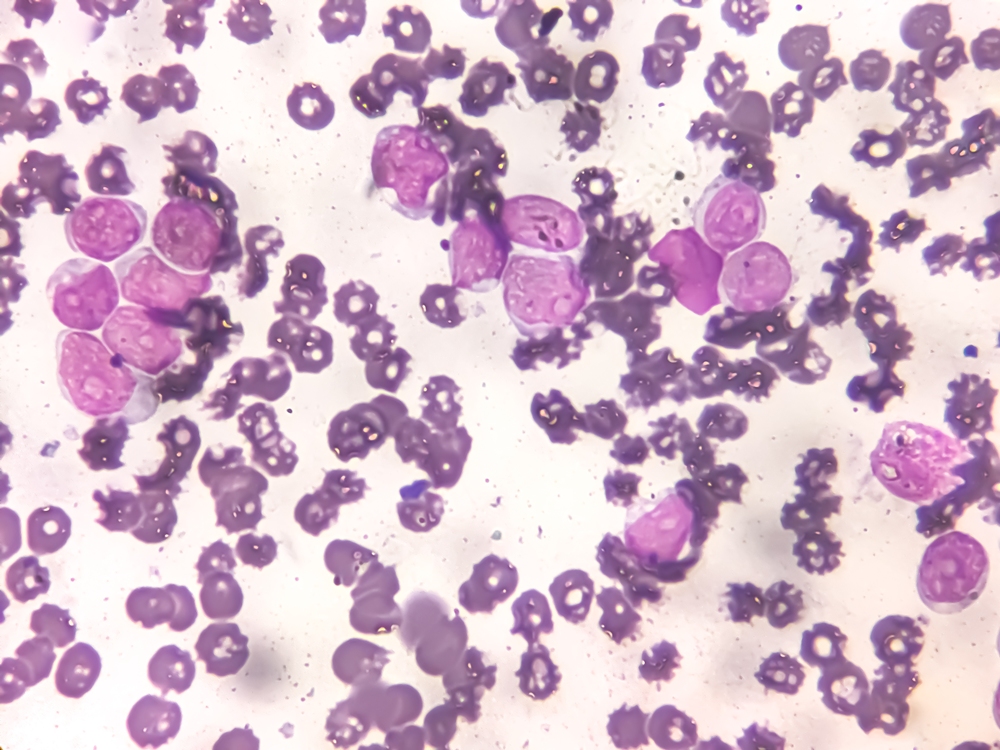
Cancer cells may hijack a fertility protein to repair damaged DNA and survive chemotherapy, research suggests.
The findings could point to a way of making existing cancer treatments more effective.

SYCP1 is a protein normally involved in producing sperm and eggs.
Researchers at the University of Liverpool found that the protein, previously thought to work only in reproduction, can be reactivated in cancer cells, where it helps tumours survive and grow.
SYCP1 usually helps chromosomes pair during meiosis, the form of cell division that produces reproductive cells.
In cancer cells, however, the protein appears to take on another role. It enters the nucleus, the cell’s control centre, binds directly to DNA and regulates genes involved in cell division and DNA repair.
DNA repair is how cells fix damage to their genetic code. In cancer, this process can help tumour cells survive treatment.
The researchers found that removing SYCP1 made cancer cells much more sensitive to chemotherapy drugs that damage DNA.
The findings suggest cancers may use SYCP1 to repair damage caused by treatment and continue growing.
Dr Urszula McClurg, lecturer in biochemistry, cell and systems biology at the University of Liverpool, said: “Our findings show that cancer cells can hijack proteins that normally exist only in reproductive tissues and give them completely new jobs.
“Understanding these unexpected functions opens up exciting opportunities to develop new treatments that make existing cancer therapies more effective.”
The work challenges the long-held belief that proteins active only in fertility have no biological relevance outside the reproductive system.
Researchers say these specialised proteins could provide new treatment targets across many types of cancer.
The study also offers a new view of how cancers evolve by repurposing developmental and reproductive processes.
The findings highlight SYCP1 as a candidate for future precision cancer therapies, which are treatments based on the specific biology of a patient’s cancer.

Black women in the UK want clearer, more accessible breast cancer screening information, research has found.
The study looked at why Black African and Black Caribbean women are less likely than white women to attend breast screening.
Researchers at the University of Surrey held focus groups and interviews with 47 Black African and Black Caribbean women aged 50 to 71.

Women in this age group are routinely invited for NHS breast screening.
The researchers said only 45 per cent of Black women attend screening, compared with 63 per cent of white women.
Anietie Aliu, lead author, postgraduate researcher at the University of Surrey and registered nurse, said: “Diagnosing breast cancer early can dramatically improve a person’s chance of survival.
“Breast cancer screening plays an important role in this by identifying the cancer and ensuring a person receives speedy treatment.
“Despite the importance of screening, Black women are less likely to attend appointments than white females.
“This puts them at risk of a potential cancer being diagnosed late and spreading to other areas of the body. We need to understand what is preventing Black women from attending these appointments and help identify ways to remove such barriers.”
The study found a need to increase awareness of breast cancer screening, especially among women less familiar with the service.
Some women, particularly those born outside the UK, knew little about breast screening before receiving their first invitation.
Others questioned why they needed screening when they had no symptoms.
The importance of trusted conversations was also identified.
Researchers found that some Black women expected their GPs to speak to them about breast screening, particularly before they reached screening age.
Although NHS breast screening is organised through national screening services, researchers said GPs often have established relationships with patients and may be well placed to offer brief advice on preventive care, including breast screening.
Participants called for stronger links between GP practices, breast screening services and Black community champions.
They said this could help women receive trusted information, ask questions and feel reassured.
Faith and religious beliefs also shaped decisions for some women.
Some Black African Christian women said illness, including cancer, was not permitted by God in their bodies, while others saw screening as a personal choice that did not conflict with Christian faith.
Muslim women highlighted the importance of being able to state their religion on medical appointment forms to help ensure they were seen by a female mammographer.
A mammographer is a healthcare professional trained to carry out breast screening scans.
Aliu added: “Breast screening can save lives, but our findings show that attendance is shaped by multiple factors, not just awareness, although awareness remains important.
“Women need relatable screening information, reassurance, flexible appointments and services that are accessible within their communities.
“Many felt that invitation letters were too formal, and that leaflets and media imagery did not reflect them, making it harder to relate to screening.”
Dr Afrodita Marcu, senior research fellow at the University of Surrey and member of the research team, said: “We need a more collaborative approach, where primary care, screening services and community voices work together to support women before, during and after the invitation.”
The researchers said future breast screening interventions should be designed with Black women, rather than for them.
They said user-friendly and culturally relevant resources, developed with communities, healthcare professionals and screening services, could improve understanding, reduce fear and make breast screening feel more accessible and reassuring.
Dr Robert Kerrison, associate professor of cancer care at the University of Surrey, said: “There is no question that breast screening can be lifesaving, but we need to make it easier for women to understand, access and feel reassured by the programme.
“This means improving communication, addressing practical barriers and making sure healthcare professionals and community partners are supported to provide clear and trusted information.”
The team has also explored healthcare professionals’ perspectives and worked with stakeholders to develop user-friendly materials with Black women.
Researchers said this co-designed approach could help ensure breast screening messages are culturally relevant, practical and shaped by the people they are intended to support.











 News1 week ago
New menopause drug approved for use by NHS in Scotland

 Cancer2 weeks ago
Thousands of women could avoid painful cancer exam with new AI blood test

 Entrepreneur2 weeks ago
Applications open for the third W Accelerate with Merck KGaA and M Ventures

 Fertility2 weeks ago
Older women face lower chance of fertility treatment working, even with donor eggs, study finds

 News2 weeks ago
We built Ema like a nurse: Here’s why that matters

 News7 days ago
Women’s health draws record $1.55bn in equity as capital spreads beyond the mega-rounds

 Mental health2 weeks ago
SSRIs may lower heat intolerance in women with depression – study

 Hormonal health5 days ago
Stardust period tracker shares health data, study reveals