




Fertility
Fairtility integrates with leading electronic medical record systems in the reproductive care market
Fairtility’s software platform supports reproductive care practitioners as a workflow enhancement and decision support toolset


Fairtility, the transparent AI innovator powering reproductive care for improved outcomes, has announced that its AI decision support system, CHLOE™, has been successfully integrated with leading electronic medical record (EMR) platforms used in fertility clinics, including vRepro, IDEAS from Mellowood Medical, nAble IVF and MedITEX.
“Integrating Fairtility’s CHLOE with the top EMR platforms enables clinics to seamlessly consolidate and standardize all data from both clinical and operational sources, moving us towards digital transformation of reproductive care,” said Eran Eshed, CEO and co-founder of Fairtility.
“These integrations enable information to flow seamlessly, maximizing clinic and lab efficiency and transforming both the patient and clinician experience.”
Fairtility’s AI-powered software platform, CHLOE, supports reproductive care practitioners as a workflow enhancement and decision support toolset.
Integrating CHLOE with EMRs facilitates digitalisation of the embryology lab, allowing for live, automatic data capture and processing within interconnected systems.
The result is a unified data and insights hub for fertility clinics that continuously captures and interprets data straight from the source.
This facilitates streamlined and automated clinical workflows to ensure efficient operations within embryology labs. With real time data flowing securely between systems, reproductive care practitioners see all key information to maximise patient care and outcomes.
“The seamless transfer of time-lapse sourced embryology images and annotations via Fairtility [CHLOE] to the IDEAS EMR, combined with broader data sets, facilitates clinical decisions by our clients,” explained Mark Marcon, president at Mellowood Medical IDEAS EMR.
Key benefits of CHLOE’s integration with the EMR platforms include:
- Digitalization of the clinic – Integration of EMRs with CHLOE technology standardises KPI data inputs and comparisons, enabling clinics to make informed decisions based on accurate and complete verified data, continuously updating directly from the source to improve operational performance.
- Enhancing clinical decision making – EMR integration with CHLOE ensures completeness and accuracy of live data collection across clinics’ networks, bringing consistency and transparency to embryo quality assessment and selection.
- Reducing administrative burden and optimising workflows – Integrating CHLOE into EMR systems reduces administrative burdens on embryologists by enabling seamless communication between systems. This streamlines workflows, resulting in up to 30 per cent reduction in administrative work. As a result, embryologists can manage an average of 50 per cent more cycles, leading to increased productivity and efficiency.
- Improving the patient experience – With access to all key information in a unified platform, clinicians are empowered to have transparent dialogue with patients on treatment decisions with the confidence that they have not missed any patient data that could impact care for an enhanced patient experience.
“I believe the IVF lab of the future needs to be a streamlined source of priceless data combining the latest technologies like Artificial Intelligence and Next Generation Sequencing (genetics), enabling our staff to consistently make the best clinical choices and personalise each treatment,” said Adriano Carbone, head of group biobank and industry relations and country manager Spain and Portugal for Next Fertility Clinics.
“This can only be achieved with full integration of the different systems used in the lab and combined with the clinical data and outcomes via the medical EMR.
“The present is that our clinical care teams are already reaping the benefits of this integration with streamlined workflows, reduced administrative time, and minimized note work in the IVF lab, enabling our team to be more effective, and serve more patients with greater accuracy and transparency.”


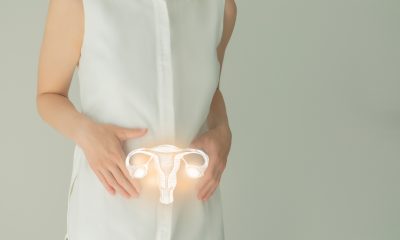


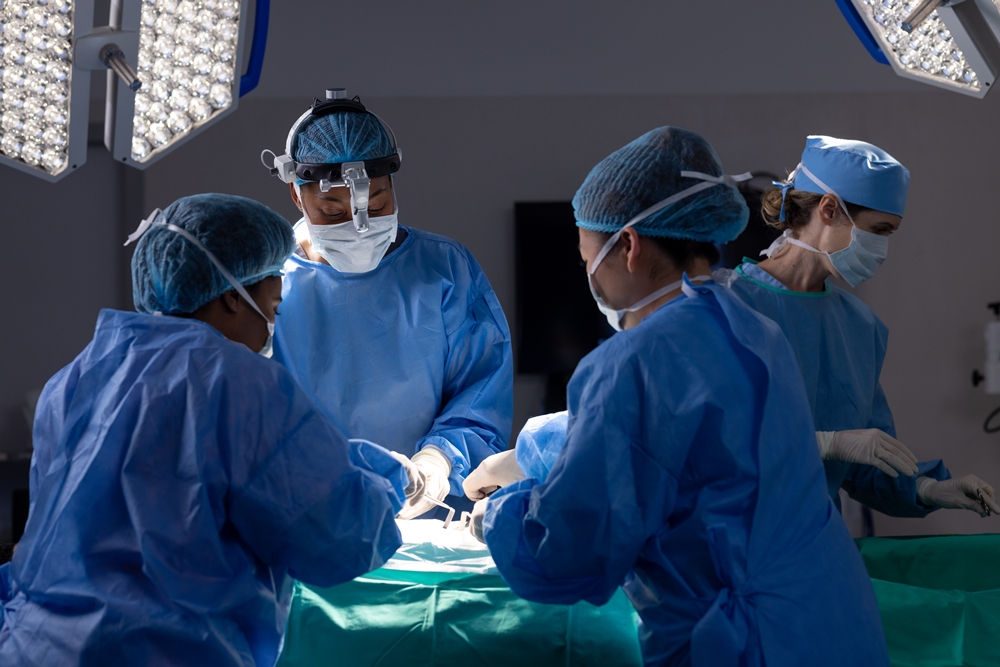
A baby boy is the first in the UK to be born after a womb transplant from a deceased donor, a development doctors say could offer hope to women born without a womb.
Grace Bell, in her 30s and from Kent, was born with MRKH syndrome, a condition in which a woman is born without a viable womb. She does not have periods but has normal ovaries.
At 16, she was told she would not be able to carry her own child.

As reported by the BBC, Bell’s womb transplant took 10 hours and was carried out at The Churchill Hospital in Oxford in June 2024.
Several months later, the couple underwent IVF treatment, followed by embryo transfer, at The Lister Fertility Clinic in London.
Her son, Hugo, was born just before Christmas 2025 at Queen Charlotte’s and Chelsea Hospital in west London, weighing nearly 7lbs. He is now 10 weeks old.
Bell said: “It was simply a miracle. I remember waking up in the morning and seeing his little face, with his little dummy in, and it felt like I needed to wake up from a dream.
“It was just incredible.”
Bell and her partner Steve Powell paid tribute to the donor and her family.
Bell said: “I think of my donor and her family every day and pray they find some peace in knowing their daughter gave me the biggest gift: the gift of life. A part of her will live on forever.”
The successful transplant is one of 10 deceased donor womb transplants taking place as part of a UK clinical research trial.
Three have already been carried out, but Hugo is the first baby born.
In early 2025, a baby called Amy was born through the first living womb donation in the UK, at the same London hospital.
Her mother received her older sister’s womb in a transplant operation in January 2023. Five further womb transplants from close living relatives are planned.
Consultant gynaecologist Prof Richard Smith, from Imperial College Healthcare NHS Trust, who began researching womb transplantation more than 25 years ago and was present at Hugo’s birth, said “a huge team of people” had been involved, from the transplant operation to embryo transfer and delivery.
Bell and Powell gave their son the middle name Richard in tribute to Smith, who also founded the charity Womb Transplant UK.
The couple may decide to have a second baby, after which surgeons plan to remove the transplanted womb.
This is to spare Bell from taking a lifetime of strong drugs to prevent the immune system attacking the transplanted organ.
Transplant surgeon and joint team leader Isabel Quiroga said she was “delighted” by Hugo’s birth and described it as a breakthrough for organ transplantation in the UK.
“Very few babies have been born in Europe as a result of their mothers receiving a womb from a deceased donor,” she said.
“Our trial is seeking to discover whether this procedure could become an approved and regular treatment for some of the increasing number of women of child-bearing age who do not have a viable womb.
Smith said the birth showed that girls and young women told they did not have a womb could now have hope of carrying their own child.
A baby born following a womb transplant from a deceased donor has no genetic link to the donor.
More than 100 womb transplant operations have been performed worldwide and more than 70 healthy babies have been born as a result.
Donating a womb for transplant differs from donating other organs, such as kidneys or a heart, as it requires a specific request to families who have already agreed to organ donation.
The donor’s parents, who wish to remain anonymous, said they felt “tremendous pride” in the legacy left by their daughter. She also donated five other organs, which were transplanted into four people.
“Through organ donation, she has given other families the precious gift of time, hope, healing and now life,” her family said.

A second pregnancy alters the female brain in ways distinct from a first, according to research examining how motherhood affects brain structure and function.
The study tracked 110 women using repeated brain scans. Some became mothers for the first time, others had a second child, while a third group remained childless, allowing researchers to identify pregnancy-related brain changes.
During a first pregnancy, the greatest changes occurred in the default mode network, a brain system involved in self-reflection and social processes. During a second pregnancy, this network changed again, but less strongly.
Instead, a second pregnancy was associated with more changes in brain networks linked to directing attention and responding to stimuli, functions that may be useful when caring for more than one child.
Each pregnancy produced both shared and distinct effects on the brain, with patterns differing between first and second pregnancies.
Elseline Hoekzema, head of the Pregnancy Brain Lab at Amsterdam UMC, said: “With this, we have shown for the first time that the brain not only changes during the first pregnancy, but also during a second. During a first and second pregnancy, the brain changes in both similar and unique ways. Each pregnancy leaves a unique mark on the female brain.”
Milou Straathof, a researcher who analysed the data, said: “It appears that during a second pregnancy, the brain is more strongly altered in networks involved in reacting to sensory cues and in controlling your attention. These processes may be beneficial when caring for multiple children.”
The researchers also found a link between brain changes and the bond between mother and child, which was more pronounced during a first pregnancy than a second. They also observed associations between structural brain changes and peripartum depression, a form of depression that can occur during pregnancy or after birth, in both first and second pregnancies.
This provides the first evidence that changes in the cortex, the brain’s outer layer, during pregnancy are linked to maternal depression.
For women who became mothers for the first time, this link was especially visible after childbirth. For women having their second child, it was particularly apparent during pregnancy.
The researchers said: “This knowledge can help to better understand and recognise mental health problems in mothers. It is important that we understand how the brain adapts to motherhood.
They added that the findings could support better care for mothers, including the prevention and treatment of postnatal depression. Although most women experience pregnancy once or multiple times, scientists are only beginning to understand how it affects the brain.

More than a dozen fertility patients have won a High Court battle to save their embryos, eggs and sperm from destruction after paperwork mistakes.
The ruling followed errors that meant patients did not renew consent to store their biological material within the 10-year window required by law.
In some cases, fertility clinics failed to notify those affected.
Lawyers for 15 groups affected by the errors, including some former cancer patients, asked the court in London to declare it would be lawful for the embryos or cells to remain in storage, despite consent expiring in June 2025.
In an unusual move, the application was unopposed, with no objections from the clinics, the Human Fertilisation and Embryology Authority or the health secretary.
Mrs Justice Morgan ruled that it would be lawful in 14 of the 15 cases for the material to continue to be stored and used. She said laws around human fertilisation and embryology were “unbending” but added that “the rigidity of the scheme is not rigidity for its own sake”.
She continued: “It is surely consent that is important, not consent by an immutable date.
“I find it hard to conclude that parliament intended the possibility of parenthood should be removed by the ticking of a clock, not in the cliched phrase, the ticking of the biological clock, but by the ticking of the clock beyond midnight of the day when existing consent expires, whatever might be the circumstances.”
Under the law, fertility clinics need written consent from clients every 10 years to continue storing biological material.
The rules are intended to prevent cells being kept or used without people’s knowledge or permission.
Because of delays and difficulty accessing fertility treatment during the pandemic, the law allowed a two-year extension, meaning people using the service on 1 July 2020 were granted extra time. Confusion caused by the extension meant some clinic users were not notified when they needed to renew consent, so it lapsed.
In the one case where the judge ruled against the request, the circumstances were legally different.
Morgan said the pair involved had not originally consented to an embryo being stored, but one had been retained accidentally and they now wished to use it.
She said: “There was never, on their case, a consent to renew.
“To be permitted to take advantage of the storage of the embryo which they say ‘contradicted’ their express wishes because the clinic acted on the wrong consent form to change their mind is not in my judgment renewing consent. It is a change of consent.”










 Insight4 weeks ago
Parents sue IVF clinic after delivering someone else’s baby

 Entrepreneur2 weeks ago
US startup builds wearable hormone tracker

 Wellness4 weeks ago
HRT linked to greater weight loss on tirzepatide

 Menopause4 weeks ago
Flo Health and Mayo Clinic publish global perimenopause awareness study

 Fertility2 weeks ago
France urges 29-year-olds to start families now

 Wellness3 weeks ago
Study reveals gap between perimenopause expectations and experience

 Menopause2 weeks ago
Menopause specialist Haver joins Midi Health

 Menopause2 weeks ago
Women with ADHD almost twice as likely to experience perimenopause symptoms, study finds
Pingback: Fairtility integrates with leading electronic medical record systems in the reproductive care market - Fairtility