




Insight
Study finds gender gap in knee injuries


One of the largest MRI studies comparing knee injuries by sex has found age-related differences in patterns.
The findings could be used to improve risk assessment and develop early intervention strategies.
Researchers analysed 13,549 consecutive routine knee MRI exams performed between 2019 and 2024 at four outpatient radiology facilities affiliated with Johns Hopkins Hospital in the US. All patients reported knee pain as their primary complaint.

The team extracted data on tears and injuries to key structures including the menisci, C-shaped cartilage that cushions the joint, and the anterior cruciate ligament (ACL), a major ligament that stabilises the knee during twisting, jumping and sudden direction changes.
Analysis revealed that ACL tears, both alone and combined with meniscal tears, were observed more frequently in men than women.
Ali Ghasemi, postdoctoral research fellow at Johns Hopkins, said: “We saw more ACL tears in men especially in the 20- to 40-year-old age group, which is contrary to what’s been reported in the literature.
“Prior studies focused on sports-related injuries have shown that young women athletes have increased rates of and a greater risk for ACL tears.
“However, our results show a significantly higher prevalence of ACL injuries in male patients across all age groups.”
Men had a greater number of injuries overall.
However, the researchers found that meniscal tears and injuries to the medial collateral ligament (MCL), which stabilises the inner knee, occurred more frequently in men under 40 but were more common in older women.
Ghasemi said: “In younger patients, meniscal and MCL tears were more commonly seen in men, while in older patients, women had more of these types of tears than men, which was unexpected.”
The findings suggest older women are more prone to injuries that lead to joint degeneration over time.
Study co-author Jenifer Pitman, assistant professor of radiology at Johns Hopkins Medical Institute, theorised the discrepancy between their findings and previous research may be due to broadening the focus beyond sports-related injuries.
She said: “The pre-established notion that ACL tears are more common in younger women may not be the case 100 per cent of the time.
“Radiologists can also expect to see more frequent meniscal pathology and arthritis in older women.”
Pitman advised that women over 40 should pay attention to joint health and consider strength training to protect their knees.














Targeting CD1d altered immune cells slowed tumour growth and improved immunotherapy responses in mouse models of breast cancer, researchers found.
The findings suggest blocking the molecule could make the environment around breast tumours more favourable to anti-cancer immune responses.
Further work is needed to understand how these immune changes occur and how the approach could be safely used in patients.

Researchers from King’s College London, the Francis Crick Institute and University College London investigated how immune cells inside breast tumours influence cancer growth.
They focused on myeloid cells, a group of immune cells found in large numbers within tumours that can either support an immune attack against cancer or contribute to tumour growth and immune evasion.
The team examined CD1d, a molecule found on the surface of myeloid and other immune and tissue cells that helps regulate immune responses.
When CD1d was genetically removed from cells in a mouse model of breast cancer, the mice were more resistant to tumour growth. Researchers also saw changes in myeloid cell populations, including increased activity among cells that can help attack cancer.
The team then blocked CD1d using an antibody and again observed changes in myeloid cells and slower tumour growth. Blocking CD1d also improved responses to immunotherapy in the mouse model.
Researchers used single-cell RNA sequencing, a technique that examines gene activity in individual cells, to investigate the immune changes in more detail.
They identified a population of myeloid cells called monocytes that expressed genes associated with inflammation, an important part of the immune response. These cells were particularly important in restricting tumour growth in the mouse models.
A similar pattern of gene activity was identified in data from human breast cancer tumours. Its presence in myeloid cells was associated with positive responses to immunotherapy in breast cancer patients.
However, the findings in people were based on gene expression data and did not test CD1d-targeting treatment in patients.
Professor Patricia Barral, professor of immunobiology at King’s College London and senior author of the study, said: “Many breast cancers do not respond well to current immunotherapies.
“Our findings reveal a previously unrecognised mechanism by which immune cells within tumours are regulated.
“While CD1d is best known for helping immune cells recognise lipid molecules, we found that it also plays a role in shaping the behaviour of myeloid cells within tumours.
“These findings suggest that targeting the immune cells that surround and support tumours could boost anti-cancer immunity and potentially improve treatment responses in the future.”
Researchers now plan to investigate how the immune changes occur and how they can be safely harnessed in patients.
They also want to examine whether targeting CD1d could enhance existing treatments and influence treatment responses in different cancer types.
The work was supported by UKRI BBSRC, Breast Cancer Now and the Cancer Research UK City of London Centre.


The fertility rate in England and Wales fell to a record low of 1.39 children per woman in 2025, down from 1.41 a year earlier.
New figures show that parts of London and cities with major universities accounted for many of the areas with the lowest local fertility rates.
The City of London recorded the lowest rate in 2025 at 0.37 children per woman, followed by Cambridge at 0.87 and the London boroughs of Islington and Westminster at 0.90.
The Office for National Statistics (ONS) defines the fertility rate as the average number of live children women would expect to have over their childbearing lives.
Brighton & Hove recorded a rate of 0.95, followed by Southwark at 0.97 and Norwich at 0.98.
Exeter, Oxford and York, along with the London boroughs of Camden and Hammersmith & Fulham, each recorded 1.01 children per woman.
At the other end of the table, Pendle in Lancashire and Luton in Bedfordshire had the highest rate at 1.93.
They were followed by Oldham in Greater Manchester at 1.87, Bradford in West Yorkshire at 1.84 and Barking & Dagenham in London at 1.83.
The overall fertility rate for England and Wales declined from 1.41 in 2024 to 1.39 in 2025.
A rate of around 2.1 is needed for a population to remain stable over time when the impact of migration is excluded.
Twelve of the 25 local authorities with the lowest fertility rates in 2025 were in London.
In Wales, Swansea recorded the lowest fertility rate at 1.18, while Carmarthenshire, the Isle of Anglesey and Newport each had the highest rate at 1.48.
There were 585,396 live births in England and Wales in 2025, down from 594,677 in 2024 and the lowest number since 1977.
Live births fell across every region in England. The West Midlands recorded the largest percentage decline at 3.1 per cent, while the North East had the smallest at 0.3 per cent.
The average age of parents also increased slightly.
Mothers had a provisional standardised mean age of 31.1 in 2025, compared with 31.0 in 2024. Fathers had an average age of 34.0, up from 33.9.
In 1975, the average age was 26.4 for mothers and 29.5 for fathers.
The proportion of births where the mother was born outside the UK also increased, from 20.8 per cent in 2005 to 27.5 per cent in 2015 and 34.6 per cent in 2025.
India was the most common country of birth for non-UK-born mothers in 2025 for the fourth consecutive year.
It was followed by Pakistan, Nigeria and Romania.
In 2025, 56.4 per cent of births were to parents who were both born in the UK, down from 62.7 per cent in 2015.

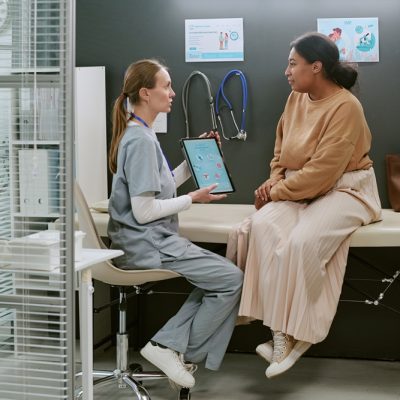
Women face a hidden burden navigating healthcare, with many repeatedly retelling their medical history, a national study suggests.
The findings indicate that Canadian women are taking on cognitive, emotional and administrative work alongside managing their health, including coordinating providers and advocating for care.
More than half of women surveyed, 53 per cent, reported a past or current chronic condition, while 64 per cent said there were health topics they struggled to raise with their doctor.
Sarah Hoffman, president and CEO of Pacific Blue Cross, said: “These findings challenge us to think differently about women’s healthcare and highlight the hidden work required to navigate the system.
“For many women, managing their health has also come to mean managing the healthcare system itself.
“They are acting as project managers of their own care, shouldering the invisible labour of coordinating between providers, retelling their medical history and advocating to be heard.
“The gap between men and women is meaningful and raises important questions about why younger women report lower levels of confidence and support.
“It also challenges us to consider whether we are actually making progress in women’s care, and whether the next generation is being equipped with the confidence and voice to advocate for their health.”
Overall, 71 per cent of Canadians described their doctors as supportive and 88 per cent expected their appointments to go well.
Among women living with chronic conditions, 71 per cent reported having to repeat their complete health history multiple times a year.
Younger women were particularly likely to report difficulties discussing their health. The study found 81 per cent of Gen Z women aged 18 to 30 and 73 per cent of Millennial women aged 31 to 45 had health topics they struggled to raise with their doctor.
Among Gen Z women with chronic illness, 92 per cent reported having to repeat their complete health history.
The study also found differences between young women and men. While 95 per cent of Gen Z men expected a doctor’s appointment to go well, the figure was 82 per cent among Gen Z women.
Similarly, 82 per cent of Gen Z men said they felt supported by their family doctor, compared with 66 per cent of Gen Z women.
Reasons for holding back health concerns varied between generations.
Among Gen Z women, 30 per cent cited fear of dismissal and 29 per cent fear of judgement.
Embarrassment was the most common barrier among Millennial, Gen X and Boomer women, reported by 29 per cent, 27 per cent and 35 per cent respectively.
Women who felt they needed to prove themselves to be taken seriously said they adapted how they approached appointments.
Strategies included researching medical information, repeatedly describing or justifying symptoms, bringing written notes or documentation, tracking symptom timelines, making repeat visits and emphasising how symptoms affected their daily lives.
The study also found an association between feeling supported by a doctor and expecting appointments to go well.
Canadians who described their physician as supportive were nearly four times more likely to expect appointments to go well than those who felt unsupported, at 98 per cent compared with 25 per cent.
Overall, 66 per cent of Canadians said they described their symptoms accurately. This fell to 48 per cent among those who said they felt unsupported by their doctor.
The 2026 Blue Cross Women’s Health Study surveyed 2,045 adult Canadians online in March 2026 through independent research company Research + Knowledge = Insights.
The survey had a reported margin of error of plus or minus 2 per cent, 19 times out of 20.










 Entrepreneur1 week ago
KOVE Medical raises €1.7 million to improve safety of foetal surgery

 Pregnancy1 week ago
UK study aims to transform maternity care for high-risk pregnancies

 Mental health2 weeks ago
PMDD after SSRIs or hormones: Why the brain may be the missing treatment target

 Cancer2 weeks ago
Ark Surgical secures further institutional backing to accelerate US expansion

 Entrepreneur4 days ago
Last chance to save on Women’s Health Week and Women’s Sport Summit: Early Bird pricing ends 11 September

 Menopause7 days ago
Menopause hormone treatment may ease brain fog, study suggests

 Motherhood2 weeks ago
Thousands of UK women develop undiagnosed PTSD after childbirth each year – study

 Menopause3 days ago
Cancer drug could tackle osteoporosis menopause weight gain