
Cancer
Study links frailty to five-year mortality rate among older women with breast cancer
A new study links changes in frailty, a measure of decreased physiological capacity that leads to fatigue, slow walking, muscle weakness, physical inactivity, and weight loss, to five-year survival rates in older women with breast cancer.
These findings suggest that managing frailty during chemotherapy could improve outcomes.
The study found that 4.5 per cent of women out of a cohort of 20,292 women aged 65 and older with stage I to stage III breast cancer experienced non-resilient frailty trajectories – a decline in physiologic reserve – following chemotherapy initiation. These women had significantly worse survival outcomes compared to those with more stable or improving frailty trajectories.
Despite representing a small percentage of the cohort, the group of non-resilient women had notably higher mortality rates.
The study also found that those who maintained their strength or recovered from a temporary decline had better survival rates. However, while tracking frailty changes over time helped researchers understand overall survival trends in groups of patients, it was less useful for predicting an individual’s risk of death.
The study also highlighted the need for further research on whether frailty changes can predict other important health outcomes, like falls or hospitalisations. It suggested that patients at higher risk – such as those with preexisting health conditions – might benefit from targeted interventions like nutrition support, physical activity, and better management of treatment side effects.
Researchers emphasised the importance of tracking frailty throughout cancer treatment to improve care and outcomes for older patients.
“Our research demonstrates that frailty is not a static condition but can change over time, especially during cancer treatment. By closely monitoring frailty trajectories, health care providers can better identify patients at increased risk and implement timely interventions to improve survival outcomes,” said Dae Hyun Kim, associate scientist and founder of the Frailty Research Program at the Hinda and Arthur Marcus Institute for Aging Research at Hebrew SeniorLife.
Insight
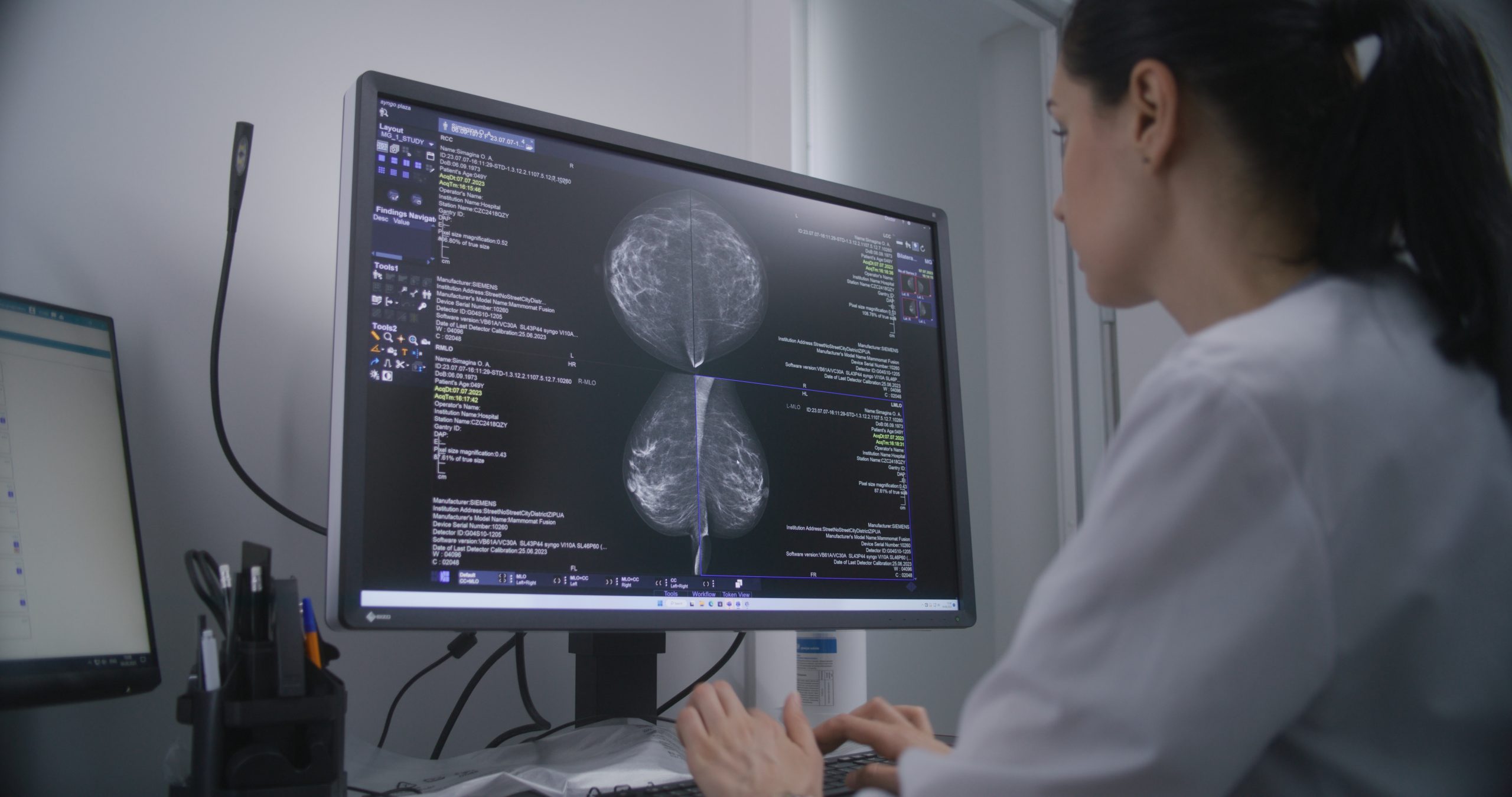
Study links changing population to low London screening rates
London’s shifting population is holding down breast screening uptake, experts have said, with the capital at 62.8 per cent in 2024, below the NHS’s acceptable 70 per cent threshold.
The London Assembly Health Committee recently heard that the capital faces distinct challenges compared with the rest of the country and that these issues must be addressed.
Josephine Ruwende, a cancer screening lead at NHS England, said frequent moves within the rented sector and the cost-of-living crisis pushing people out of London had made it difficult to reach eligible patients, which she described as “population churn”.
She said: “This is people changing addresses and then not updating their GP, this then affects the invitation process because GP details are used to identify individuals who are eligible.
“In boroughs where we have the highest population churn, we see it strongly associated with lower uptake.”
She noted that even in the wealthiest boroughs there can be high levels of movement, with around 40 per cent of residents changing address within a year.
Such areas also tend to have more people who own second homes or spend long periods abroad, making it harder for the NHS to keep contact details up to date.
As a result, screening invitations may be sent to out-of-date addresses or to people who are overseas.
Leeane Graham, advocacy lead at Black Women Rising, which supports women of colour with a cancer diagnosis, said there were cultural barriers, fear and a mistrust of the health service due to previous experience within communities.
She said: “If you’ve never been for a breast screening before, the thought of having a mammogram can be really, really terrifying.”
Helen Dickens, from Breast Cancer Now, said other reasons included a lack of understanding of breast screening, along with concerns about discomfort, trust and practical issues such as travel.
She said: “We have amazing public transport and we feel that we’ve got great accessibility, but we also know that we don’t have screening centres in every borough.
“We know that for some women that barrier of transport and access will still be a really big reason why they’re not attending screenings.”
NHS London launched its first screening campaign last year in response to the figures, aiming to increase detection at an earlier stage.
Insight
Period blood screening could boost cervical cancer checks
Testing period blood for signs of cervical cancer could offer an accurate, convenient screening option for women who avoid clinic appointments, researchers say.
The current NHS test involves a nurse or doctor taking cells from the cervix, yet a third of those invited do not attend.
A study of the new test, which can be done at home, used blood collected on a cotton strip attached to a standard sanitary pad.
In research involving more than 3,000 women aged 20 to 54 years, Chinese investigators compared testing period blood collected on mini-pads with samples taken by clinicians.
Results were shared via a dedicated app.
When analysed in the lab, blood testing was nearly as good at identifying people with disease as other methods, and very good at ruling out those without it.
Cervical screening appointments are offered to all women, and anyone with a cervix, every five years between ages 25 and 64 in the UK.
Screening looks for high-risk human papillomavirus, a virus that can cause cancer.
A nurse or doctor carries out the test using a speculum to access the cervix.
However, five million women are not up to date, for reasons including fear, pain and discomfort.
“Cervical screening can be difficult for some women for many reasons, like if they have had a bad previous experience, they are menopausal, they have a physical or learning disability, cultural barriers, or are a survivor of sexual violence,” said Athena Lamnisos from charity The Eve Appeal.
Younger women, those with disabilities, and people from ethnic minority communities and LGBT+ groups are more likely to miss appointments.
Researchers say using menstrual blood for HPV testing is convenient, respects privacy and reduces discomfort.
Anyone who tests positive for HPV would be sent for a colposcopy, a close examination of the cervix with a magnifying instrument to look for pre-cancerous cells.
Experts caution that period blood tests are not an immediate alternative to current screening because only women who menstruate could use them.
Some also note the study may have overestimated performance because not all participants had a biopsy to double check results.
Sophie Brooks, health information manager at Cancer Research UK, said it was encouraging to see research exploring new ways to make screening more accessible.
She said testing menstrual blood for HPV was an interesting, non-invasive approach but more research in diverse groups is needed to see how it could fit into existing programmes.
Athena Lamnisos added that it was exciting to see more acceptable ways of offering a potentially life-saving test.
“People have different barriers and concerns about screening, so being able to offer a choice of different methods could be very positive for some who are eligible for screening but don’t currently attend,” she said.
The NHS is already sending at-home test kits to women in some areas of England who have missed several screening appointments.
These DIY kits, containing a vaginal swab, will be sent out more widely at some point this year.
Features
Innovation cuts ovarian cancer risk by nearly 80%
A surgical procedure developed in Canada reduces the risk of the most common and deadly form of ovarian cancer by nearly 80 per cent.
The strategy, known as opportunistic salpingectomy (OS), removes the fallopian tubes during routine gynaecological surgery such as hysterectomy (womb removal) or tubal ligation (having one’s tubes tied).
The study analysed population health data for more than 85,000 people who had gynaecological surgeries in British Columbia between 2008 and 2020, comparing rates of serous ovarian cancer with those who had similar operations without the procedure.
Researchers at the University of British Columbia found that people who had opportunistic salpingectomy were 78 per cent less likely to develop serous ovarian cancer, the most common and deadly subtype.
In the rare cases where ovarian cancer occurred after the procedure, those cancers were found to be less biologically aggressive.
Co-senior author Gillian Hanley is an associate professor of obstetrics and gynaecology at the University of British Columbia.
She said: “This study clearly demonstrates that removing the fallopian tubes as an add-on during routine surgery can help prevent the most lethal type of ovarian cancer,.
“It shows how this relatively simple change in surgical practice can have a profound and life-saving impact.”
British Columbia became the first jurisdiction in the world to offer opportunistic salpingectomy in 2010, after researchers discovered that most ovarian cancers originate in the fallopian tubes rather than the ovaries.
The procedure leaves the ovaries in place, preserving hormone production so side effects are minimal.
The approach was initially developed by Dianne Miller, an associate professor emerita at the University of British Columbia and gynaecological oncologist with Vancouver Coastal Health and BC Cancer.
“If there is one thing better than curing cancer it’s never getting the cancer in the first place,” said Miller.
Since its introduction in British Columbia in 2010, opportunistic salpingectomy has been widely adopted, with approximately 80 per cent of hysterectomies and tubal ligation procedures in the province now including fallopian tube removal.
Professional medical organisations in 24 countries now recommend the procedure as an ovarian cancer prevention strategy, including the Society of Obstetrics and Gynaecology of Canada, which issued guidance in 2015.
“This is the culmination of more than a decade of work that started here in B.C.,” said co-senior author David Huntsman, professor of pathology and laboratory medicine and obstetrics and gynaecology at the University of British Columbia.
“The impact of OS that we report is even greater than we expected.”
British Columbia recently became the first province to expand opportunistic salpingectomy to routine surgeries performed by general and urological surgeons through a project supported by the Government of British Columbia and Doctors of BC.
-
Hormonal health4 weeks agoWomen’s health enters a new era – the trends shaping femtech in 2026
-
Insight4 weeks agoDesigner perfumes recalled over banned chemical posing fertility risk
-
Features4 weeks agoBest menopause apps and products for 2026
-
Insight2 weeks agoParents sue IVF clinic after delivering someone else’s baby
-
Wellness2 weeks agoWomen’s health could unlock US$100bn by 2030
-
Insight4 weeks agoHigher maternal blood pressure increases risk of pregnancy complications, study finds
-
Entrepreneur4 weeks agoXella Health closes US$3.7 million in pre-seed financing
-
Insight4 weeks agoInside the first wave of speakers confirmed for Women’s Health Week USA 2026