Connect with us

Features

Why we need to start prioritising postpartum care

Published

on

With some studies suggesting as many as six out of seven women miss vital postnatal visits, FemTech World investigates why we need to change the narrative around postpartum recovery.

Sandra Wirström was working in the digital health sector in Sweden when she had her two daughters. She experienced birth injuries both times and she was surprised by the lack of data and support around post-natal care.

“I had to fight for every single piece of information and every single doctor appointment. I was extremely frustrated that nothing has been digitalised when it comes to the postpartum care,” says Sandra.

Sandra’s experience applies to hundreds of women across the UK. Recent figures show that six out of seven new mothers in England are not getting a check-up of their health six weeks after giving birth, despite such appointments becoming a new duty on the NHS. Of those who attend one, only 15 per cent have a dedicated consultation with a GP to discuss their physical and mental health, according to the National Childbirth Trust (NCT).

Another US study from the American College of  Obstreticians and Gynecologists revealed that as many as 40 per cent of women do not attend a postpartum medical visit after giving birth.

“Nothing has been done when it comes to postpartum digitalisation,” says Sandra. “So, about a year ago when I was on one of my walks with my second daughter, I thought ‘okay, we need to do something about this and change the narrative around postpartum care’.”

Soon after that Sandra met Astrid Gyllenkrok Kristensen, who was as passionate about women’s health as Sandra and like so many other mothers out there, struggled with the physical and emotional recovery process after giving birth.

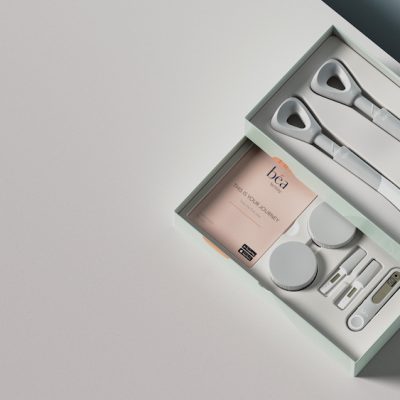
They decided to set up LEIA, an app co-developed with midwives and medical experts that offers women personalised physical and mental health support during the postpartum months, also known as the fourth trimester.

“There are hundreds of apps to help you during pregnancy and everyone asks you how you feel,” says Astrid. “Post-delivery, you are left on your own in what seems to be the most overwhelming and sometimes traumatising time of your life. Out of 140 million women giving birth each year 90 per cent will experience emotional or physical difficulties, from breastfeeding complications to postnatal depression and pelvic dysfunction.

“When we started looking into this, we found that there were a couple of key issues leading to women struggling in silence,” Astrid continues. “The lack of digitalisation that Sandra mentioned is one of them, along with the lack of medical experts. Women do not get the information they need. They end up self-diagnosing and they have no idea who to turn to. There’s no structure and globally, the healthcare chain is very fragmented.

“There’s also a massive stigmatisation in society surrounding postpartum. The narrative, especially in Sweden, is that you’re supposed to give birth, and then within a week, go for power walk and have friends over.”

A study from the polling company Survation, revealed that 85 per cent of the 893 mothers in England interviewed over a month said their appointments were mainly or equally about the baby’s health and they did not get the chance to talk to the GP about their mental wellbeing.

Astrid says: “One of the problems of women are not getting the health care they need is because the healthcare system is not focused on the women’s perspective and is not based on their needs.

“Studies show us that suicide is now one of the leading causes of death in new mothers, up to one year after giving birth and this is something that shows the acceleration of the problem. The system is broken.”

The pandemic has only amplified this. Research by the Maternal Mental Health Alliance shows that more mothers than usual have been struggling during the pandemic because restrictions on social contact means they have been denied support from family and friends, which has led to more anxiety and loneliness.

LEIA is an app based on science and self-lived experiences of motherhood. Astrid explains that: “Together with both private and public health care, we created a medical advisory board to make sure that we achieve our primary focuses to create a solution and meet the needs of new mothers.”

“Before going into the product, what we wanted to do was to create an app that would help by giving women AI or data driven insights about their emotional and physical health, to help understand what’s going on in their head, what’s going on in their body and what the recovery process in the fourth trimester is.

“But we also wanted to include the partner within that experience, because men are also getting diagnosed with depression. Seeing it as a unit and not just pinpointing the woman, is something that we feel is integral for a healthy recovery.”

Astrid highlights how crucial postpartum check-ups really are when it comes to mental health.

“One of the key things during these visits is to screen women for postnatal depression, which is normally done face-to-face with a questionnaire called EPDS – Edinburgh Postnatal Depression Scale. With LEIA, we’ve digitalised screening models for both postnatal depression, but also pelvic dysfunction, identifying women in risk at a much earlier stage. This means even before giving birth, we’ll be able to identify women at risk of postnatal depression.”

However, changing the narrative around postpartum care is as important as offering women the support they need.

Astrid says that: “Most people understand the first three trimesters and the changes in the women’s bodies because that narrative has been established.

“So, we want to establish a narrative around postpartum as well. People need to know that there’s a physical recovery and it takes a year for the body to recover after childbirth. We think that by educating people about the recovery process we can normalise it and start breaking down the stigma.”

Sandra adds: “There’s been a boom in the femtech market focusing on fertility and pregnancy.

“In the past years, there has been a digital transformation in areas such as fertility,  period tracking and menopause. However, there are still a lot of things to do, especially when it comes to postpartum care. We’re still not getting educated enough about what is happening in our body after giving birth.”

LEIA’s data-driven approach aims to influence improvements in public health.

Globally, research data on postpartum care is limited. Amid a lack of awareness of postpartum conditions, however, investment in further studies and in developing options which address postpartum symptoms is also limited, says Astrid.

“We all know that politics is driven by economics,” she says.

“By collecting this data, we will be able to show how the lack of investment and support is actually affecting women. We have to put a number on the problem before they actually start looking into it.”

Sandra agrees: “It’s not only our perspective and our motivation, we are in fact putting the mothers in focus in everything we do by building an app for the mothers out there.”

Clearly, fundamental changes will be required to adequately address postpartum challenges in future. The success of LEIA in starting a conversation around postpartum care is, however, an important first step in driving this change.

Find out more about LEIA here.


Features

Empowering women’s health with music

Published

on

By Con Raso, managing director, Tuned Global

Music and movement are neurologically intertwined. Tempo influences pace, rhythm supports endurance, and familiar tracks can reduce perceived exertion.

Beyond physiology, music creates shared moments. It sets the atmosphere, builds anticipation and turns individual activity into collective experience.

For sports, wellness and fitness brands, this means music selection needs to align with brand values, customer experiences and emotional outcomes.

Well-chosen music increases workout intensity and duration, improves customer retention, strengthens brand recognition, creates community and cultural relevance, and opens new partnership models.

When delivered through properly licensed, data-informed systems, these outcomes become measurable and scalable.

Music also gives brands a way to stay culturally connected to their audience. The question for operators is how to use music strategically and legally.

This is especially important because the way brands approach music has changed significantly.

Early adoption in wellness, fitness and leisure centres often meant plugging in a Spotify playlist and hoping for the best.

Today’s leading sports and fitness innovators are far more sophisticated, curating music experiences that are brand-led, data-informed, tailored to specific audiences and workouts and fully licensed for commercial use.

This shift is being powered by specialist music technology platforms like Tuned Global, which works behind the scenes with brands to manage licensing, catalogue access, analytics and distribution at scale.

Rather than forcing sports brands to become music experts, these platforms allow them to offer legally compliant music in commercial environments, control curation across locations or content formats, and adapt music to different activities and intensities.

Through advanced APIs and centralised cloud infrastructure, operators can manage licensing, catalogue access and music governance at scale, while maintaining full creative control.

They also provide the reporting required by rights holders and integrate music into apps, devices, wearables and connected platforms. The result is music that feels intentional, on-brand and deeply embedded in the experience.

Music in action

Lululemon Studio and Mirror: At-home Fitness and Health

When Lululemon acquired Mirror, it marked a shift towards fully connected, at-home fitness where content, coaching and atmosphere converge.

Music plays a key role in making those workouts feel immersive and motivating, especially without a physical studio or shared space.

Instructors needed access to curated, commercially licensed music delivered consistently across live and on-demand workouts, while remaining compliant with music rights regulations.

Tuned Global provided Lululemon Studio with a branded playlisting app solution that enabled instructors to curate fully licensed music tailored to each workout.

Drawing from a licensed commercial catalogue and supported by usage reporting to rights holders, the system ensured compliance while giving instructors the flexibility to design high-energy, brand-aligned sessions.

The result was a seamless blend of movement, coaching and sound that makes digital workouts feel immersive and premium.

Psycle London: Performance Led Experiences

                     Con Raso

Boutique fitness studio Psycle London has built a loyal following by transforming workouts into performance-led experiences where music is central to the brand.

Each class is choreographed to sound, with instructors designing sessions that build emotional peaks and sustained intensity.

As Psycle expanded its digital and on-demand offering, it needed a way to give more than 70 instructors access to fully licensed commercial music while protecting the business from legal and reputational risk.

Tuned Global delivered a branded playlisting app that enabled Psycle’s instructors to search a cleared commercial catalogue by artist, genre or BPM, preview full tracks and build tailored playlists for classes ranging from high-intensity rides to strength and conditioning.

Behind the scenes, the music is delivered through secure API infrastructure integrated into Psycle’s own platform, with automated reporting to rights holders and support across label and publishing negotiations.

By combining creative flexibility with licensing governance, Psycle were able to scale its music-led experience across studio and digital environments without compromising on brand integrity, compliance or operational control.

Steezy: Movement and Music

Steezy, one of the world’s leading online dance platforms, sits at the intersection of sport, movement and music.

For dancers, music is not background sound. It defines timing, style and expression.

As Steezy scaled internationally, music became both its greatest asset and its biggest operational challenge. Delivering classes built around commercial tracks created both operational complexity and significant licensing risk.

Tuned Global provided the licensed music catalogue delivery infrastructure that enabled Steezy instructors to search a cleared catalogue, curate playlists tailored to specific classes, and prepare sessions using full commercial tracks.

The system ensured that music used across Steezy’s app and desktop platform was properly licensed and reported to rights holders, supporting global expansion without exposing the business or its creators to legal liability.

By combining instructor-friendly tooling with robust licensing governance, Steezy was able to continue growing its international dance community while keeping music at the centre of the experience.

A wider wellness ecosystem

For wellness, sports, fitness and leisure operators considering deeper music integration, a few principles stand out.

First, treat music as a product feature. It should support the outcome you want, whether that is higher intensity, calm recovery, emotional connection or brand recognition.

Second, get licensing right from day one. Using consumer streaming services in commercial environments exposes brands to legal and reputational risk.

For example, In 2019, more than 20 music publishing groups filed a $150 million copyright lawsuit against Peloton, alleging the company used more than 1000 unlicensed songs in its workout videos.

In another example, just last year the Federal Circuit and Family Court of Australia ordered a Sydney gym chain owner and five of his companies to pay more than $235,000 in damages and interest after operating multiple locations without a valid OneMusic licence.

Third, give creators freedom while maintaining brand control. Instructors, coaches and athletes bring personality, so give them tools to curate music safely within brand guidelines.

Last but not least, use data to refine the experience.

Track how music impacts engagement, completion rates and retention, because music is measurable. Finally, think cross-platform.

Your music strategy should work across physical venues, mobile apps, connected devices and on-demand content. Consistency builds trust.

What’s ahead for music as a performance tool

Music in wellness will become even more adaptive. As AI, biofeedback and real-time analytics become more embedded in fitness technology, music will increasingly respond dynamically to heart rate, pace or emotional state.

Early implementations in health and performance environments are already demonstrating how adaptive music can optimise outcomes.

As wearable technology and connected fitness continue to evolve, music will play an increasingly central role in shaping personalised experiences.

The infrastructure choices operators make now will determine how easily they can adopt these capabilities later. Those who invest early in licensed, data-informed music systems will be best placed to innovate without risk.

Music is a performance tool, a brand asset and a powerful lever for engagement. The examples above show that this applies at every scale, from a single boutique studio to a global combat sports brand.

The most successful innovators understand that when music and movement align, something special happens. With the right technology and licensing in place, that can scale.

About Con Raso, Managing Director of Tuned Global

Con Raso is an entrepreneur passionate about innovation, new technologies, and start-ups.

Over the last few decades he has focused on creating innovative mobile and online distribution models within the B2C entertainment market, enabling brands to utilise music as a marketing tool, via unique customer engagement strategies.

Being inherently well-versed in both technology and music, Con ensures our solutions are aesthetically pleasing, engaging and disruptive.

About Tuned Global

Tuned Global is the leading data-driven Cloud Music Platform that empowers businesses to integrate commercial music into their apps or launch complete streaming experiences using advanced APIs, real-time analytics, licensing solutions, music intelligence and customisable white-label apps.

Our turnkey solutions for music, audio, and video, coupled with a broad ecosystem of third-party music tech integrations, make us the most comprehensive platform for powering digital music projects.

We streamline complexities in licensing, rights management, content delivery and music discovery, enabling rapid innovation and bringing new ideas to life.

Since 2011, we’ve supported 40+ companies in 70+ countries — across telecom, fitness, media, aviation, and more — to deliver innovative music experiences faster and more cost-effectively.

For more information, visit www.tunedglobal.com.

Continue Reading

News

Tackling systemic gaps in women’s healthcare

Published

on

To mark International Women’s Day, Women’s HealthX released a new eBook exploring one of the biggest challenges in healthcare today: the sex difference data gap.

Women’s HealthX spoke with leading voices from Mass General Brigham, NYC Health + Hospitals, GSD Health Research and WomanCentered to explore how the healthcare industry can close the sex difference data gap and build a more equitable healthcare system for women.

In this special interview series, they share recommendations for the industry to ensure women are properly represented in research, data, and care.

What you’ll gain from reading this eBook:

• Ways we can work towards closing the sex difference data gap in healthcare research

• The biggest barriers preventing women from accessing equitable care

• The innovations that could transform women’s health in the next decade

• How digital health can expand access to care

• What meaningful allyship looks like in healthcare leadership

• How women can advocate for their health in clinical settings

• The changes experts believe the healthcare industry must make now

Register for the event to download the eBook for free here.

Registration is free for all our end users in pharma and biotech, hospitals, insurers, enterprises and policy makers.

Continue Reading

Features

Study reveals how oestrogen protects women from high blood pressure

Published

on

Oestrogen helps protect premenopausal women from hypertension by relaxing and widening blood vessels, according to new research examining why women develop high blood pressure less often before menopause.

High blood pressure, also known as hypertension, affects more than a billion people worldwide and is a leading cause of heart disease and stroke.

Premenopausal women are less likely to develop the condition than men or postmenopausal women, but the biological reason has been unclear.

Researchers used a mathematical model of the cardiovascular and kidney systems to analyse how oestrogen influences blood pressure.

The analysis found that oestrogen’s strongest protective effect comes from vasodilation, the process by which blood vessels relax and widen, helping blood flow more easily and lowering pressure in the arteries.

Anita Layton, Canada 150 Research Chair Laureate in Mathematical Biology and Medicine and professor of applied mathematics, said: “Oestrogen is often thought of only in terms of reproductive health, but it plays a much broader role in how the body functions.

“It affects how blood vessels respond, how the kidneys regulate fluids and how different systems communicate with one another.

“What we found is that its impact on blood vessels is especially important for regulating blood pressure.”

The findings may also have implications for treating women after menopause, when oestrogen levels naturally decline.

The model predicted that angiotensin receptor blockers, a common class of blood pressure drugs, could be more effective than another widely used treatment group known as angiotensin converting enzyme inhibitors in treating women with hypertension, even after oestrogen levels decline after menopause.

Layton said her team has spent years developing a mathematical model of women’s kidneys and the cardiovascular system, designed to explore how different biological mechanisms affect blood pressure.

The model allows researchers to test individual effects separately and examine how each influences the body.

“We can turn on one effect, then another, and see exactly how each one affects the body,” Layton said.

She added: “For too long, women’s health, especially older women’s health, has been overlooked by medicine.

“Understanding how age and sex affect the body and, therefore, treatment, is an equity issue.”

Continue Reading

Trending

Copyright © 2025 Aspect Health Media Ltd. All Rights Reserved.