




Entrepreneur
‘Years of being dismissed, ignored and belittled’: the founders reshaping gynaecological care


“Gynaecology is a neglected area of global health,” Dr Ranee Thakar, president of the UK’s Royal College of Obstetricians and Gynaecologists, stated in an article discussing the stigma in gynaecological care globally.
The piece, although published four years ago, is relevant to this day when millions of women around the globe are still struggling to access treatment.
Despite progress in getting people talking about fertility and menopause, gynaecological health remains deeply stigmatised. It’s impossible to discuss the anatomy involved – vagina, vulva, clitoris, cervix – without disapproval and censorship.
Because of the silence, it’s likely that the true burden of gynaecological conditions is grossly underrepresented, so prioritisation of these conditions for research development and health system improvement has been low.
Gaia Salizzoni and Vittoria Brolis, who have endured years of being dismissed, ignored and belittled, know this too well.
“We were the typical examples of women who were being mistreated and misdiagnosed for years before getting a diagnosis,” says Salizzoni. “We realised we got a diagnosis not because a new product was out, but because we just met the right gynaecologist.”
The duo, now founders of the virtual clinic Hale, believe the lack of standardised care and the stigma surrounding reproductive health are responsible for the mounting waiting lists and the long diagnosis times women are facing.
“Some of the most basic things, such as STIs, UTIs, are not tackled properly simply because there are no standardised approaches,” says Salizzoni.
“Many doctors and are not trained in specific conditions, which puts women at risk. At Hale, our job is to simplify and standardise the process in order to make it shorter, cheaper and more effective.”
Hale, the winner of this year’s Femtech World OB/GYN Innovation award, aims to revolutionise patient care through a digital platform designed to guide women through their health journey.
With a focus on scientific evidence, data integration and collaboration with existing healthcare systems, the app, currently available in Italy, aims to bridge the gap in pain research and offer much-needed support to women experiencing pelvic pain.
“There are many women at the beginning of their journey, who are seeking answers,” says Salizzoni.
“For some, answers might be getting a prescription, for others, it might be getting a diagnosis. Our focus is on this this first triage, where we use technology to gather as much information as possible about someone’s medical history, symptoms and health outcomes to offer them the care they need.
“We centralise this data on our platform and we are using algorithms and tools that are helping us understand the needs of the patients and the protocols they might require. Through these protocols – online consultations, gynaecological check-ups, nutrition support – we are trying to reduce as much as possible the human factor to make it more efficient.”
Many of the gynaecological problems women are experiencing, according to Salizzoni, can be tackled without them becoming chronic, which opens the possibility of preventing them from happening in the the first place.
“We are still working on the algorithms we are developing, but we know that if we understand how to tackle these conditions, we can help prevent them.”
Hale’s biggest challenge so far has been people’s attitudes towards digital health. While the adoption of digital technologies has significantly increased over the past few years, some women are still finding it difficult to use digital tools.
“Some people are not used to doing everything online, but I think over time they will start trusting digital health and see the benefits,” says Salizzoni.
“We’ve seen this happening already with mental health. Yes, it can be hard at first, but we have to change our mindset. Things are not going to change in the traditional way.”
To receive the Femtech World newsletter, sign up here.









Events
Women’s Health Week Europe 2026 opens pitch applications for mainstage showcase at The Emirates Stadium

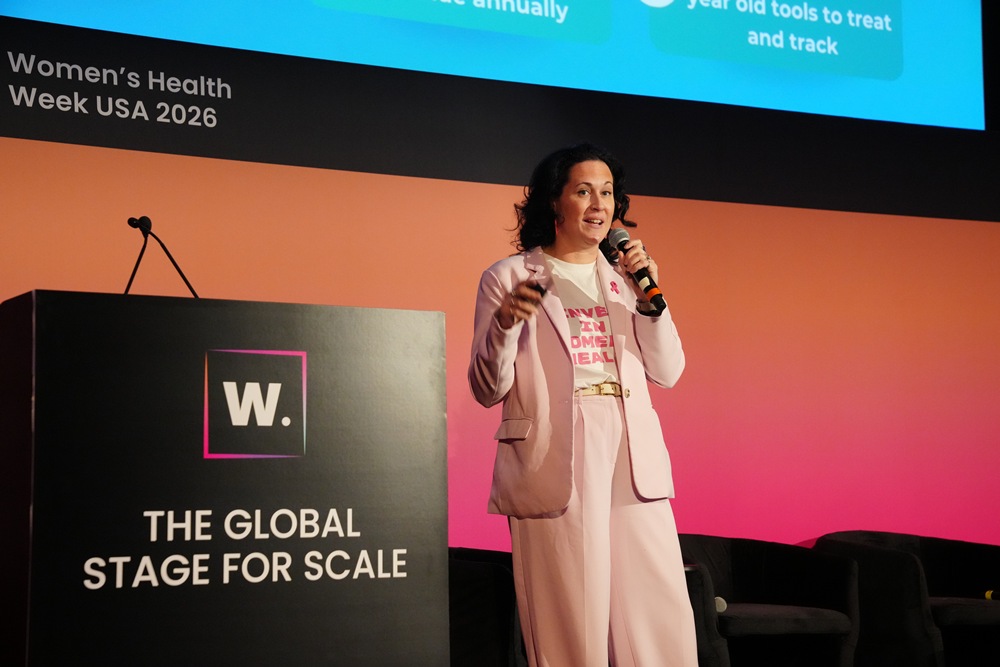
Women’s Health Week Europe 2026 has opened applications for its flagship start-up Pitches, giving women’s health innovators the chance to present on the mainstage at The Emirates Stadium in London on 7-8 October.
16 finalists will be selected across two categories: Medical Devices & Therapeutics and Consumer & Tech, with the shortlisted companies receiving the opportunity to pitch in front of 700+ investors, corporates, other innovators and strategic partners actively seeking solutions that can scale.
Two categories, one stage
The Medical Devices & Therapeutics category is open to companies working across medical devices, therapeutics and pharma innovation, regulated digital health, and deep-tech or science-led platforms.
The Consumer & Tech category covers consumer health and wellness brands, digital health platforms, wearables and connected data, employer and payor-led solutions, and commerce and marketplace businesses.
Any company treating a condition that affects women exclusively, differently, or disproportionately is eligible to apply.
Applications are completely free, so what do you have to lose?
Apply to pitch at WHW Europe 2026 now.
What’s in it for you?
Unmatched exposure
Present in front of 700+ investors, corporates, clinicians, and strategic partners actively seeking solutions that can scale.
With WHW Europe 2026 relocating to The Emirates Stadium and expanding to 700+ attendees across two stages, the 2026 edition represents the largest platform the series has offered to date.
A proven platform
The WHW Pitch Sessions have become one of the most commercially significant showcases in women’s health, with previous cohorts including companies that have gone on to raise investment and secure major strategic partnerships. 2024 alumni BoobyBiome, closed a £2.5M seed round in the year following their pitch at WHW Europe.
The Watchlist
All registered applicants will have the opportunity to be featured in The Watchlist, WHW Europe’s official directory of women’s health innovators to know, giving companies visibility beyond the pitch stage itself.
Applications close 28 August 2026.
Find out more about WHW Europe.


The University of Liverpool has secured £1.8m to test a device for postpartum bleeding and launch a new women’s health studio.
The PPH Butterfly is designed to help control postpartum haemorrhage, which is severe bleeding after childbirth and a leading cause of maternal death worldwide.
The funding will support research into how the device can be used in clinical practice and generate evidence to inform its wider adoption.

The university has launched the Women’s Health Innovation Studio, known as the WIN Studio, alongside the project.
The £1.8m initiative is predominantly funded by the National Institute for Health and Care Research, which is providing £1.5m, with additional support from the university.
The PPH Butterfly project will involve a multi-centre clinical trial across the UK and a global feasibility study looking at how practical it would be to use the device in different healthcare settings.
The WIN Studio is led by Andrew Weeks, professor of international maternal health care at the University of Liverpool and a senior investigator at the National Institute for Health and Care Research, and Dr Teesta Dey, a tenure track fellow in the department of women’s and children’s health.
Dr Dey will also lead the PPH Butterfly project.
Its work will cover conditions linked to female biology, including endometriosis, menopause and pregnancy-related complications.
It will also support technologies for diseases that affect women differently or disproportionately, even when they are not usually classed as gender-specific conditions.
Dr Dey said: “Women’s health has often been marginalised within healthcare systems and innovation markets, resulting in treatments, devices and care models that fail to adequately account for women’s specific needs. WIN Studio seeks to change this status quo and reconfigure how health technologies are conceived and delivered.
“The funding from NIHR for this £1.8m project is precisely the kind of innovation the WIN Studio exists to foster: clinically urgent, women-centred, and with the potential to save lives at scale.”
The studio recently hosted an event at Liverpool Women’s University Hospital as part of the Liverpool City Region Combined Authority’s Innovation Investment Fortnight.
Seven innovations are currently undergoing clinical testing through the studio, with three developed internally.
The studio will work closely with NHS University Hospitals Liverpool Group and provide clinical, regulatory and commercial support to people developing women’s health technologies.
It will also involve patients and members of the public in shaping research priorities and product development.
Its wider programme includes collaborations involving clinicians, engineers, economists, academics and policymakers.
The project team says the PPH Butterfly is a simple, low-cost device designed to control severe bleeding quickly and with minimal training.
According to the team, postpartum haemorrhage causes around 70,000 deaths globally each year, equal to about one death every seven minutes.
The device previously received £1.1m in funding from the National Institute for Health and Care Research.
The latest £1.5m grant will support a randomised UK trial, in which participants are allocated to different treatment groups by chance, and a global feasibility assessment.
Weeks said: “In an area where women face deep health inequalities, WIN Studio has a vital role to play. By working in partnership with the NHS, local government and communities, we can ensure that research leads to real-world impact.
“Liverpool has a highly integrated ecosystem of academic, clinical and commercial expertise. By bringing these together under a single platform, the WIN Studio aims to act as a national exemplar for equitable health innovation. Transforming the way medical technologies are developed is essential to addressing gender disparities in healthcare outcomes.”
Another product supported by the university, the LifeStart Trolley, has already reached commercialisation.
The small mobile resuscitation trolley allows newborn care to be carried out at the bedside while the baby’s umbilical cord remains intact, enabling delayed cord clamping.
Delayed cord clamping means waiting before cutting the cord so blood can continue flowing from the placenta to the baby after birth.
Clinical trials conducted around 10 years ago found that life-saving care could be provided successfully at the bedside using the trolley.
It was later commercialised by Inspiration Healthcare and is now used in more than 70 UK maternity units and in 36 countries, including Norway, Italy and the US.


By the Health Innovation Exchange
For more than a decade, femtech’s scale gap has been treated as a funding problem. What if that diagnosis is incomplete?
Despite growing attention, women founders still receive just 2 per cent of global venture funding, and years of advocacy have failed to shift the needle.

This persistence is no longer just a concern; it signals a deeper structural failure.
This is not just a funding gap. It is a system failure.
As Pradeep Kakkitill, founder and CEO of the Health Innovation Exchange (HIEx), argues, the sector continues to operate on a flawed assumption.
The belief that better support to founders alone will unlock scale overlooks the deeper structural constraints that determine whether the innovation is adopted at all.
Barriers That Go Beyond Capital
These insights are not theoretical. Global research reinforces that these challenges are not isolated, highlighting structural, financial and systemic barriers that shape how women-led and under-represented ventures access funding, markets and pathways to scale.
Importantly, these findings are not draw from research alone, but from the lived experiences of women and under-represented founders themselves.
Across HIEx-led interviews and focus group discussions conducted as part of the Reckitt Catalyst Programme, founders repeatedly described the same challenges: fragmented financing, unclear adoption pathways, repeated cycles of proof, and systems that lacked clear routes from validation to procurement and scale.
These experiences suggest that the barriers facing women-led innovation are not simply financial. They are structural.
Many high-potential ventures are not failing because funding is absent.
They are failing because the systems that determine scale, including public procurement, regulation and financing, are not built to move proven solutions beyond pilots into widespread adoption.
This is not a founder problem. It is a system design failure.
Beneath these structural constraints sits a more persistent challenge. Entrenched attitudes shaped by unconscious bias continue to influence decision making.
Across investment and public-sector systems, innovation led by women and underrepresented founders is still frequently perceived as higher risk.
These perceptions shape how opportunities are evaluated, increase the burden of proof placed on founders, and slow decision making. In practice, this results in systematically higher barriers to both funding and adoption.
Systems Unable to Absorb Innovation
Dr. Abas Hassen, lead executive officer for health innovation and quality at Ethiopia’s Ministry of Health, underscores this point.
The primary constraints are not about innovation quality, but about the systems that determine adoption and scale, including procurement, regulation, financing and delivery.
He identifies three persistent challenges: institutional resistance to change, “pilot purgatory” where solutions are repeatedly tested but not integrated into public systems, and a disconnect between what external funders support and what governments can sustain.
Ethiopia’s response reflects a broader shift. Innovation is no longer treated as isolated pilots, but as a structured component of system design.
The country’s system-led innovation model combines regulatory pathways, prioritisation frameworks and structured testing environments to embed innovation directly within the health system.
The implication is clear.
Scaling innovation is not only about accelerating individual ventures alone. It is about strengthening the systems that determine whether innovation is adopted at scale.
The Missing Middle: From Pilot to Procurement
In many low- and middle-income countries, public systems remain the largest market for health and WASH solutions, accounting for the majority of service delivery and procurement.
Yet capital is deployed through models that do not reflect this reality, as scaling depends on public-sector adoption, long procurement cycles and regulatory integration rather than rapid returns.
This creates a misalignment within the financial ecosystem, where capital is structured for faster high returns, while impact depends on long-term system integration.
At its core, the challenge is the absence of clear adoption pathways.
Without structured routes from validation to procurement and system-wide use, even effective solutions struggle to move beyond pilots.
This is the “missing middle”, the gap between early validation and large-scale adoption.
The consequences of this “missing middle” are perhaps best illustrated by the founders trying to navigate it.
Temie Giwa-Tubosun, founder and CEO of LifeBank, describes her decade-old company as an “orphan” within existing financial structures, too commercial for impact investors and too impact driven for venture capital.
Businesses operating within health systems often fall between funding models that were not designed for them.
Thato Schermer, co-founder of Zoie Health, describes a similar challenge.
Even companies with strong revenue and clear demand struggle to secure funding at the right stage, as they are assessed through frameworks that do not reflect the healthcare markets.
Across interviews and focus group discussions, these patterns were consistent.
Founders described fragmented financing, unclear adoption pathways, and repeated cycles of proof, where they are asked to keep proving their solutions without a clear route to scale.
These are not isolated challenges. They reflect how innovation is funded, evaluated and integrated across the system.
The barrier to scale is not a lack of viable solutions. It is about the systems and models that are not designed to support them.
Reducing Risk Through System Design
From an HIEx perspective, a different approach is emerging, one that focuses not on fixing founders, but on designing how systems manage risk and adopt innovation.
Rather than avoiding risk, Ethiopia is working to manage it through structured processes.
The system is “risk-aware, not risk-averse.” It uses innovation sandboxes, structured testing environments within public systems that allow new solutions to be evaluated under controlled conditions.
These mechanisms, generate decision-grade evidence while limiting system-wide exposure, creating clearer pathways from validation to adoption.
When innovations are tested within public systems, they gain institutional legitimacy. This reduces perceived risk for both governments and investors and enables more confident decision making.
From Fragmentation to Coordination
Within this context, initiatives such as Reckitt Catalyst, a multi-partner platform supporting women-led health and WASH innovation to scale, play a critical bridging role.
By connecting entrepreneurs with governments, investors and technical partners, and aligning solutions with national priorities, the programme helps to create clearer pathways from pilot to procurement and scale.
But alignment alone is not enough.
As Pradeep Kakkattil notes, the climate movement offers a useful parallel. Climate progress was not driven by evidence alone. It accelerated when investors, governments, and institutions began treating inaction as the greater risk.
Sustained pressure exposed the cost of doing nothing, redefined how risk was assessed and ultimately reshaped capital allocation and policy decisions.
Women’s health and WASH innovation is now at a similar inflection point.
Despite years of evidence and advocacy, outcomes such as women receiving a fraction of global funding persist.
This is not due to a lack of solutions. It is because the systems governing investment, adoption and scale have not been sufficiently challenged.
What is required is not incremental progress.
It is a shift in what the system tolerates – how risk is defined, how capital is allocated, and how accountability is enforced.
A System at an Inflection Point
The implications are clear.
Investors must move beyond rigid funding models and deploy capital aligned to how health systems scale. Governments must build clearer pathways for testing, procurement and adoption.
Ecosystem actors must shift from supporting individual ventures, to enabling system-level integration.
The persistent funding gap is not a result of slow progress; it reflects a system operating exactly as designed. Incremental change will not shift outcomes.
What is required is a fundamental reset of how femtech is financed and scaled: from passive investment to active market-shaping, where capital, policy, and procurement work together to create real pathways to adoption.
Until that shift happens, the sector will continue to produce innovation that the market is not structured to absorb.











 Menopause3 weeks ago
Perimenopause misinformation ‘putting women at risk’

 Hormonal health4 weeks ago
NHS urged to update website following renaming of PCOS

 News3 weeks ago
Women still being failed when they reach menopause, experts say

 Entrepreneur3 weeks ago
Women’s Health Innovation Summit opens submissions for 2026 Innovation Showcase

 Insight2 weeks ago
British women among angriest in Europe, health survey reveals

 News3 weeks ago
Three menopause innovators shortlisted for Femtech World Award

 Menopause3 weeks ago
Sweden eyes domestic production of oestrogen patches amid menopause treatment shortage

 News4 weeks ago
Low insulin diet and avoiding four food groups may prevent menopause weight gain
1 Comment