




News
Five female founded mental health start-ups to watch
We list some of the best female-founded mental health apps


As the femtech world and wellness industry start to combine. We explore the mental health apps, startups and female-founded businesses you need to know.
Mental health conditions, especially after two years of pandemic restrictions and lockdowns, are on the rise. It is estimated that 1 in 4 people in England will experience some form of mental health issue such as depression or anxiety each year.
Spiritune
Spiritune combines principles of neuroscience and music therapy to inspire positive mental health outcomes. It aims to help reduce stress while increasing emotional regulation, productivity and performance through the music-based app.
The app was created by Jamie Pabst after she struggled with her own stress levels while working in the finance industry in New York. She realised the lack of accessible resources and wanted to create something impactful. The company highlights that headphones can become health tools allowing people to support their emotional health and perform better.
Jamie wrote: “Music is one of the most powerful stimuli that addresses the brain networks that underlie stress, emotions, motivation and reward. My vision to combine the effectiveness of music therapy and the accessibility of audio to help people better manage stress drove the creation of Spiritune.
Appreciating the role our auditory system plays in our health through my mom’s hearing loss, and understanding the significance of music in neurological function through my sister’s pursuits in music therapy, I am dedicated to bringing the vast benefits of music to people and organizations globally to create better health outcomes.”
It also offers a workplace setting that can help employers to boost productivity and employee well-being.

Thymia
Thymia is a health tech company with a difference founded by CEO Emilia Molimpakis.
Thymia researchers developed a game based on neuropsychology combined with facial micro-expression analysis and speech pattern analysis to make faster mental health assessments. Its’s system allows clinicians a fun and engaging way to monitor their patient’s health. The game records subtle differences that doctors may miss and it also offers a way to monitor patients from home.
The app may have increased benefits for women in that it is also being developed to search for early signs of Alzheimer’s and Parkinsons’ Disease. Although both diseases affect both sexes, studies show Alzheimer’s is more prevalent in women. This is reversed when it comes to Parkinson’s Disease as men are 1.5 times more likely to develop the condition. However, women have a higher mortality rate and faster progression of the disease.
Speaking with Health Tech World, Emilia said: “In the patient’s view, they are just interacting with beautifully animated screens. However, what we are doing on the backside is where we are looking for specific patterns of behaviour because depression is associated with differences in cognitive function, psychological and behavioural patterns. Put all of those together and you get a signature for depression, Alzheimer’s or Parkinson’s.”
Thymia secured €920k at the end of June 2021 from investors to help grow the company.
Moody Month
While practising good mental can be essential for every day of the month, there are times when it may be a little more difficult than others.
Pre-menstrual stress (PMS) can cause mood swings, tension, anxiety or depression. It can also cause social withdrawal and irritability. Although people with periods will recognise the start of their period, it can be tricky to know what is PMS or what may be depression or anxiety.
Moody Month, founded by Amy Thomson, helps users to receive a forecast of information on what is happening in their bodies each day. Amy was inspired to create the app after her periods stopped due to stress, travel and burn-out while working in event management in London. She began searching for answers but was shocked to find a severe lack of information available for women. She also felt that period tracking apps stopped short at providing long term care for the entire cycle.
The app can help users to optimise their well-being by changing their mood, food and following fitness advice. It also tracks your hormonal cycle to better understand your moods and symptoms making it easier to recognise when it may be PMS. The more information input to Moody Month, the better the app is able to track and deliver information.
The best part?
The app is free unless you purchase something when using it.

Heart it out
Femtech products or solutions are often designed after founders become frustrated by a gap not addressed in women’s healthcare. When it comes to mental health start-up, Heart It Out, that’s exactly what happened.
Nithya J Rao became concerned by the lack of psychologists practising in India which led to the creation of the platform. The result was a data-driven platform that can help to train psychologists for 16 weeks before they meet a patient. It also offers therapy to address issues such as depression and anxiety.
The startup also launched a free helpline called Briefly during lockdown which aimed to provide access to a network of 27 volunteers psychologists. They went on to help more than 600 patients with trauma and anxiety.
Patients can self-refer themselves through the platform for a number of different therapies including couple, family and child services. It also offers a ‘supervision’ service where professionals can join two or more psychology professionals in a continuous, collaborative, and supportive process. It aims to facilitate the exploration, monitoring and enhancement of professional functioning.
The website states: “Heart It Out began humbly as a ‘Room on the Roof’ in a quaint neighbourhood, providing a safe space for people to talk their hearts out. Today, it is a tech platform poised to provide confidential and non-judgemental access to mental healthcare, to 1.5 billion people by 2030.”
Altopax
Altopax combines care with community by offering a virtual group therapy platform aimed at connecting mental healthcare providers with patients who need care.
Pharmaceutical and health investor Narmeen Azad created the platform to help others connect with a group of peers who are also experiencing the same mental health condition or chronic illness. Healthcare providers can also connect with other professionals to discuss personalised, integrated care.





Fertility
Older women face lower chance of fertility treatment working, even with donor eggs, study finds
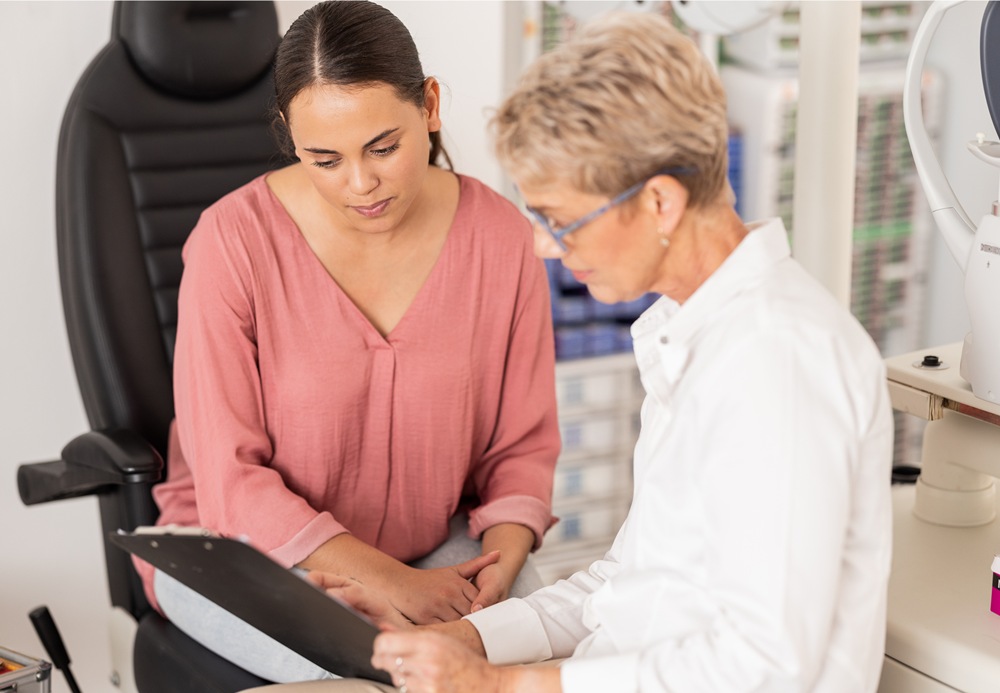
IVF success declines with age even when women use young donor eggs, with a marked fall from around 49, research suggests.
The findings challenge the idea that donor eggs can fully “reset” the reproductive clock, although researchers said they should not discourage older couples from trying.

Dr Beatrice Crestani, from an assisted reproduction medical institute in Italy, said reproductive ageing had traditionally been seen mainly as an issue involving the ovaries.
She said replacing older eggs with younger donor eggs was often believed to “reset” the reproductive clock.
Dr Crestani added: “Our findings suggest the picture is more complex.”
The study followed 1,774 women undergoing in vitro fertilisation, or IVF, using donated eggs. IVF involves fertilising an egg in a laboratory before transferring an embryo to the womb.
Women in their mid to late 30s had a 54 per cent chance of becoming pregnant after treatment, compared with around 43 per cent among those aged 49 or older.
Live birth rates fell from 46 per cent to 32 per cent, while miscarriage rates rose from 24 per cent to 38 per cent.
Women aged 49 and older had twice the risk of miscarriage compared with those aged 35 to 40.
Researchers believe changes to the endometrium with age may help explain the difference. The endometrium is the lining of the womb where a fertilised egg or embryo implants and grows.
Although the thickness of the womb lining was similar across the age groups, its condition declined with age.
Researchers said future work might find ways to predict, prevent or improve uterine ageing.
Dr Crestani said: “These findings should not discourage women from pursuing donor-egg treatment, because success rates remain meaningful even at advanced ages.
“However, patients should be counselled that donor eggs cannot completely eliminate the effects of reproductive ageing, particularly beyond 49 years.”
Among women who transferred all their available embryos, the live birth rate was around 80 per cent for those aged 35 to 40 and 62.5 per cent for those aged 49 or older.
Experts stressed that the health of the womb and ovaries differs between women.
There is no legal upper age limit for IVF in the UK, unlike some European countries. Greece has an upper limit of 54.
Women in the UK can donate or share their eggs up to the age of 36.
Regulators ask private UK clinics to assess the welfare of any resulting child and whether the recipient can safely carry a pregnancy.
NHS guidelines recommend offering three IVF cycles to women up to the age of 40 and one cycle to women up to the age of 42.
Patients using donor eggs usually have to fund that part of the treatment themselves.
People conceived using sperm, eggs or embryos from donors registered after 1 April 2005 can request identifying information about their biological donor parent once they turn 18.
The findings are being presented at the European Society of Human Reproduction and Embryology.
Professor Borut Kovacic, chair-elect of the society, said researchers were trying to better understand the “cross-talk” between an implanting embryo and the womb lining. This refers to the biological signals exchanged during implantation.
He said the age threshold associated with the beginning of a loss of uterine function was unlikely to be absolute.
Professor Kovacic added: “It provides important information for patients and offers a valuable foundation for future research aimed at identifying novel biomarkers of uterine ageing.”
Dr Ippokratis Sarris, chair-elect of the British Fertility Society, called for more research.
He said pregnancies could carry greater risks for older women and recommended thorough health checks and counselling for couples beginning fertility treatment.

Two endometriosis tests could cut years from diagnosis after NICE backed their temporary NHS use in England and Wales.
EndoSure and Endotest have been recommended in draft guidance, with one able to provide results in 45 minutes.
Endometriosis affects around one in 10 women of reproductive age. It occurs when tissue similar to the womb lining grows elsewhere, including around the ovaries and fallopian tubes.

Symptoms can include painful periods, painful bowel movements, pain when urinating and pain during or after sex.
Diagnosis can involve ultrasound scans, magnetic resonance imaging (MRI) or laparoscopy. A laparoscopy is keyhole surgery in which a camera is inserted through a small cut in the abdomen.
Despite the effect the condition can have on physical and mental health, women can wait years for a diagnosis.
The average wait in the UK is nine years and four months, rising to 11 years for women from ethnically diverse communities, according to the National Institute for Health and Care Excellence (NICE).
Long waits can increase suffering, prolong poor health and allow the condition to progress, making it more difficult to treat.
Dr Anastasia Chalkidou, NICE’s healthtech programme director, said: “A diagnosis of endometriosis can for some women take the best part of a decade, with the UK average standing at nine years and four months, and rising to 11 years for those from ethnically diverse communities.”
She said delays could lead to chronic pain affecting daily life, relationships and work.
She added: “These technologies have the potential to change that by giving primary care professionals better non-invasive tools to identify endometriosis earlier, allowing earlier and better treatment.
“Our draft guidance reflects our commitment to getting promising innovations to patients quickly, while making sure the evidence to support their wider use is built in a rigorous way.”
Endotest examines a saliva sample for microRNAs, tiny biological markers that can indicate the presence of endometriosis.
The sample is sent to a laboratory and the result returned to a GP or another healthcare professional to inform the next steps in diagnosis and care.
EndoSure uses sensor pads placed on the abdomen to measure electrical signals in the gut.
Women must fast for between six and eight hours before the 45-minute test. During the procedure, they drink water until they feel full, helping the device record gut activity accurately.
Results are available as soon as the test is complete.
The draft recommendation, published on Tuesday, approves both technologies for three years while further evidence is collected on how well they work.
NICE will then decide whether to approve them permanently for NHS use.
NICE said a third test, DotEndo, needs more research before it can be recommended.
EndoSure and Endotest are not designed to diagnose the condition on their own.
They are intended for women whose symptoms still suggest endometriosis after a normal clinical examination and negative or inconclusive imaging results, or when imaging has not been carried out.
Dr Gail Busby, a consultant gynaecologist at Manchester University NHS Foundation Trust, said: “These tests are a gamechanger because they give us answers much earlier, without the need for invasive surgery, and that means we can start the right treatment sooner.
“An earlier diagnosis doesn’t just change one person’s life, it frees up appointments and surgical slots for everyone waiting for care.”
Emma Cox, of Endometriosis UK, welcomed the tests.
She said their introduction should be supported by education for GPs and nurses to ensure prompt access and prevent symptoms from going unrecognised.


By Jane Lewis, chief operating officer, chief financial officer and women’s health lead, ABHI
For years, the conversation around women’s health has rightly focused on recognition.
Recognition that women wait longer for diagnosis. Recognition that symptoms are too often dismissed or normalised. Recognition that healthcare systems have historically been designed around male biology, leaving gaps in research, evidence and care.
That recognition matters. But awareness alone will not improve outcomes.
The challenge facing women’s health today is no longer simply identifying the problem. It is acting on the solutions already available.
At ABHI’s Women’s Health Summit earlier this year, leaders from across healthcare, government, academia and industry came together to discuss the future of women’s health.
One message emerged repeatedly throughout the day: we do not have an innovation problem.
Across medical devices, diagnostics, digital health and genomics, there are already technologies capable of transforming outcomes for women.
From self-sampling approaches for cervical screening and non-invasive diagnostics to AI-enabled tools and advanced imaging, innovation is happening. The question is whether healthcare systems can adopt it quickly enough.
Too often, promising technologies become trapped in pilot programmes, fragmented procurement processes or lengthy implementation pathways. Evidence generation, commissioning and adoption are frequently treated as separate challenges rather than part of a single journey.
The consequence is that innovations capable of improving quality of life and reducing pressure on health services take years to reach the women who could benefit from them.
This matters because women’s health extends far beyond reproductive health.
Historically, many discussions have centred on fertility, pregnancy and gynaecological conditions. These remain critically important, but they represent only part of the picture.
Women experience cardiovascular disease differently to men. They are disproportionately affected by autoimmune conditions. They face distinct health challenges throughout their lives, from adolescence to healthy ageing.

Jane Lewis
Yet healthcare systems often continue to approach these issues in isolation.
A woman does not experience her health in separate compartments. Pregnancy, cardiovascular risk, menopause, mental health and musculoskeletal conditions are interconnected.
Healthcare systems need to reflect that reality through more integrated, life-course approaches to care.
There has never been a better opportunity to do so.
Across the NHS, the shift towards prevention, community-based care and digital transformation aligns closely with the needs of women’s health.
Women’s Health Hubs are already demonstrating the benefits of bringing services together around the needs of women rather than organisational boundaries. Digital technologies are helping to identify risk earlier and support more personalised care.
Innovation can help deliver all three of the NHS’s major transformation ambitions: moving from treatment to prevention, from hospital to community, and from analogue to digital care.
But innovation alone is not enough.
Closing the women’s health gap also requires us to address longstanding gaps in research and evidence.
Women remain underrepresented in many areas of clinical research, and sex-disaggregated analysis is not always applied consistently. The result is that clinical pathways and treatment decisions are often based on evidence that does not fully reflect female physiology.
Better data, stronger research participation and greater focus on female-specific and female-predominant conditions will be essential.
There is also a compelling economic case for action.
Women’s health is often framed as an equality issue, and equality remains central. But poor health affects workforce participation, productivity and economic growth.
Improving outcomes for women benefits not only patients, but employers, healthcare systems and wider society.
Yet despite this, women’s health innovation continues to attract only a fraction of the investment directed towards other areas of healthcare.
That is beginning to change.
Across the UK and internationally, momentum is building. Governments, investors, researchers and innovators increasingly recognise that women’s health is both a societal necessity and an economic opportunity.
The conversation has moved on significantly in recent years. Topics that were once overlooked are now firmly on the policy agenda.
The next challenge is ensuring that awareness translates into action.
The technologies exist. The evidence is growing. The policy direction is increasingly clear.
ABHI is increasingly taking this agenda beyond national boundaries. Through our engagement with international industry associations, policymakers and healthcare leaders, we are working to ensure that women’s health is recognised as both a health and economic priority.
We are helping to shape discussions on innovation, regulation, investment and adoption, while sharing lessons from the UK with partners around the world.
Whether addressing the gender health gap, improving access to diagnostics or accelerating the uptake of new technologies, international collaboration will be essential.
The challenge now is not recognising the need for change, but delivering it.
Women have waited long enough for acknowledgement of the problem. They should not have to wait any longer for the benefits of the solutions that already exist.
ABHI is the UK’s leading industry association for HealthTech. Its members, ranging from multinationals to small and medium-sized enterprises (SMEs), develop and supply technologies spanning everything from syringes and wound dressings to surgical robots, diagnostics, and digitally enabled healthcare solutions. ABHI’s 400 member companies represent approximately 80% of the UK HealthTech sector by value.










 News2 weeks ago
Ovum secures US$4m in seed funding

 Entrepreneur2 weeks ago
Xella launches AI-powered precision health platform
 Fertility2 weeks ago
Immunotherapy may temporarily restore fertility in premature menopause
 Insight2 weeks ago
Most IVF add-ons not backed by reliable evidence, research finds

 Menopause2 weeks ago
EU committee warns of women’s health ‘blind spot’

 News2 weeks ago
Don’t miss HTW’s upcoming deep dive into health AI

 News4 days ago
Breast cancer biosensor and low-cost ultrasound startups win women’s health AI competition

 Insight2 weeks ago
Changes in AI mammogram risk scores help predict future breast cancer
1 Comment