




Mental health
Could the first instant at-home test transform how women track their hormones?


Eli Health is on a mission to transform female hormone testing with the first FDA-registered instant hormone monitoring system. Co-founder and CEO, Marina Pavlovic Rivas, speaks to Femtech World about making hormone testing more accessible.
The Hormometer, developed by femtech company, Eli Health, enables real-time, saliva testing for instant results, enabling women to monitor their hormonal fluctuations from the comfort of their own home.
Developed over five years, Eli Health raised US$12m in its Series A funding to scale the product, bringing its total funding to US$20m.

The FDA-registered Hormometer is an at-home needle-free test kit that utilises AI for data-driven insights. Currently, the Hormometer enables women to test their progesterone and cortisol levels, with estradiol testing currently in development.
While women have traditionally paid hundreds of pounds for tests, potentially waiting weeks for test results, Eli’s Hormometer uses computer vision algorithms to analyse the saliva samples, delivering results in 20 minutes at around UD$8 per test.
Marina Pavlovic Rivas, co-founder and CEO of Eli Health, which has 12 patented inventions for hormone monitoring, says that the tests and accompanying app offer insights into women’s health across fertility, menopause, and mental health, enabling improved access and affordability to hormone testing.
“We started the company because we wanted women to have access to the important data when it comes to their health,” Rivas tells Femtech World.
“We realised that when it comes to hormones, this data doesn’t exist at the frequency it’s needed, because you can test your hormones through a lab, but that process takes at best a few days, and on average, a few weeks. It is quite expensive as well.”
Traditional hormone lab tests only provide insight into a certain window of time, Rivas explains, but for women, whose hormones are in constant fluctuation, more consistent monitoring is needed. Hormones like cortisol can also fluctuate up to 100 per cent in one hour, making it difficult to get a full picture.
“This frequency and cost don’t enable high frequency, long-term testing, which reflects, ultimately, the fluctuations of hormones that happen on a daily basis,” Rivas says.
“Our mission became to create that real-time interface for the human body, so that we can have access to this data at the frequency that matters.”
Using lateral flow assays, the test works by collecting saliva from the tongue. The individual then uploads a picture of the test into the app.
The app utilises AI-driven insights to provide lab-grade results on hormone levels, along with scores, benchmarks and recommendations to enable women to take action.
“What we enable is not just cheaper, faster testing,” says Rivas. “It’s a very different approach to this type of data. Let’s say you’re measuring your heart rate at the doctor’s office once per year, it’s very different to having it on your wrist at all times with a smart watch. That becomes information that you can use on a daily basis to take actions around your lifestyle, for example, sleep, exercise, and all areas of your health and wellness.”
Explaining the range of markers measured by the Hormometre, she continues: “It touches the typical areas of women’s health – fertility and menopause, but also endocrine conditions and beyond that, some of our hormones, like cortisol, are not reproductive hormones. For us, it was important to include them, because when we speak of hormonal health, it goes beyond reproductive health.
“Some biomarkers like cortisol have a major impact on mental health, how people feel on a daily basis, how they perform at work, but also when they exercise and ultimately, all aspects of their health. It is our mission to enable people to improve their health and performance across all of those different areas.”
Rivas adds: “Around 80 per cent of women will experience symptoms related to hormonal imbalances in their lives, so that’s a very high number of people. When it comes to some hormones like cortisol, there’s one in three people who experience dysregulation.
“How that translates on a day-to-day basis is that people live with different symptoms that impact their work, that impact personal lives, and having that information enables them to manage those symptoms and even eliminate them.”
It is not only about monitoring hormones, as Rivas highlights, but also about taking preventative action to ward off potential chronic conditions in the future.
“It has been shown in research again and again that dysregulation of some hormones, like cortisol, is also linked to higher probability of developing different conditions, including chronic conditions, heart conditions, cognitive disease and more,” says Rivas.
“Tracking hormones has the double benefit of feeling better today, but also preventing different conditions tomorrow.”
Having recently won the Femtech World Brain and Mental Health Innovation award for its work to help women better understand the impact of hormones on their mental health, EliHealth is now focusing on expanding to other markers.
“We are always focused on making a product that can address the needs of our users, and we’re always very focused on that work. So, to be able to take a step back and have recognition from the industry is meaningful for us in our mission,” Rivas adds.
“The future will be about continuing to focus on that mission of making a real-time interface to the human body by expanding to other hormones and their markers, and ultimately providing that information in real time to our users.”
Eli Health won the Brain and Mental Health Innovation category at the Femtech World Awards 2025. See full winners list here.




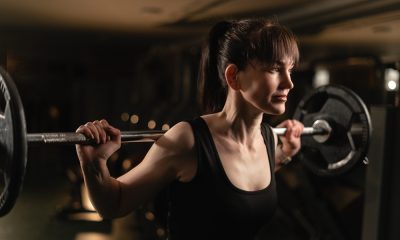









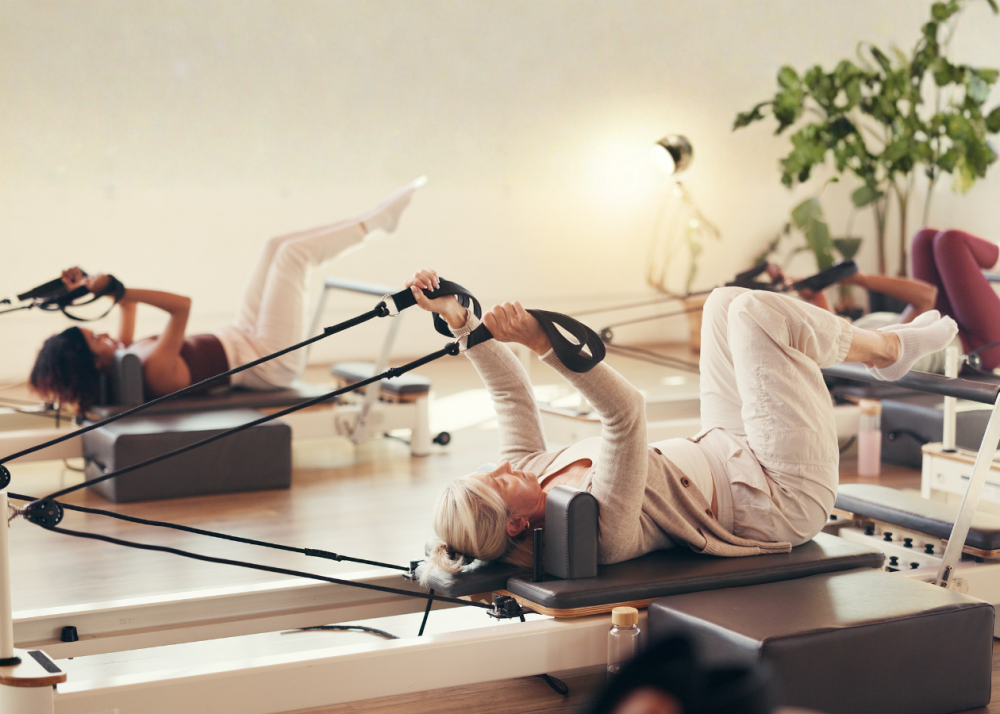
A four-week Pilates programme may improve heart, metabolic and stress measures in previously sedentary women, a small study suggests.
Pilates is a mind-body form of exercise that has been linked to better fitness, balance, posture, muscular endurance, mental wellbeing and quality of life in different groups.
Built around breathing, concentration, control, precision, centring and flow, Pilates is already used in physiotherapy, rehabilitation and preventive health. The new study looked at whether a structured four-week programme could affect cardiovascular, metabolic, body and stress-related measures in sedentary adult women.

The longitudinal study included 30 sedentary women split into two age groups, 30 to 40 and 50 to 60.
All participants completed a standardised, supervised Pilates programme lasting four weeks, with three sessions a week lasting 50 to 60 minutes.
Researchers measured resting heart rate, systolic and diastolic blood pressure, body mass index, abdominal circumference, fasting blood glucose and serum cortisol at the start and end of the programme.
Systolic and diastolic blood pressure are the top and bottom readings in a blood pressure test. Cortisol is a hormone linked to the body’s stress response.
The four-week Pilates programme was linked to improvements in cardiovascular, metabolic, body and neuroendocrine measures, although not every change reached statistical significance within each age group.
In the younger group, significant reductions were seen in heart rate, blood pressure, body mass index and fasting blood glucose after the intervention.
The reduction in blood pressure after the programme was significantly greater in the older group than in the younger group.
Older participants also showed a greater reduction in glucose and cortisol levels after the intervention than younger participants.
Analysis also found significant links between cardiovascular, metabolic and neuroendocrine changes.
In the younger group, this was particularly seen between heart rate and blood pressure responses.
In the older group, it was particularly seen between changes in body mass index and fasting glucose.
The findings suggest Pilates could be a useful multidimensional exercise approach for cardiometabolic health and stress regulation in previously sedentary women.
The researchers said the larger reduction in blood pressure seen in the older group may reflect a higher cardiometabolic burden at the start, leaving more room for improvement after the programme.
The greater reduction in fasting glucose and cortisol in older participants may similarly suggest that people with higher baseline metabolic and neuroendocrine dysfunction could benefit more from structured exercise such as Pilates.
Although Pilates is known to improve body composition through energy use, neuromuscular activation and support for healthier habits, the researchers said the fall in body mass index over four weeks is unlikely to be explained by Pilates alone.
They noted that participants were also told to avoid alcohol, sugar-containing products and sugar-sweetened drinks during the intervention, which may have contributed to the change.
In the younger group, the link between heart rate and blood pressure suggested coordinated cardiovascular responses after Pilates.
The researchers also found that cortisol appeared to be linked to blood pressure and body mass index, suggesting stress-related changes may be tied to cardiovascular and body regulation after the intervention.
In the older group, the link between body mass index and fasting glucose highlighted the relationship between body fat and metabolic regulation.
A positive link between blood pressure and body mass index in this group also suggested that improvements in vascular regulation may be associated with reductions in body mass.
Overall, the findings suggest Pilates-related physiological changes may involve interconnected cardiovascular, body, metabolic and neuroendocrine mechanisms, with different response patterns by age.
The study has important limits. It did not include a non-exercise control group, so it cannot prove Pilates directly caused the changes.
The sample size was also small, which limits how far the findings can be applied more widely.
The authors also noted that cortisol was measured using a single fasting morning sample, which limits conclusions about broader hypothalamic-pituitary-adrenal axis regulation, the system involved in the body’s stress response.
They said larger studies with longer follow-up will be needed to confirm whether Pilates causes these physiological changes over time.
British women are among the angriest in Europe, a global health survey has revealed.
More than 20 per cent of women in Britain said they had experienced feelings of rage for much of the previous day.
British women were also 47 per cent more likely to say they felt angry than a year earlier.

The findings were published in the Hologic Global Women’s Health Index, a yearly league table based on polling of more than 76,000 women and girls aged over 15 worldwide.
Anna O’Sullivan, co-founder of women’s health awareness group CensHERship and founder of the FutureFemHealth news platform, told the Daily Mail: “These figures reflect years of long waiting lists, delayed diagnoses and women’s health being treated as an afterthought.
“We’ve seen a significant increase in awareness and discussion about women’s health over the last few years, but access to care has not kept up with that.
“These findings should be a wake-up call that it’s time for long-term, sustainable investment to ensure women can access timely healthcare, trusted information and earlier diagnosis before conditions become more complex and costly to treat.”
The data suggested anger levels among British women have risen sharply.
Rates across the rest of Europe, however, remained broadly the same.
The survey, which involved more than 140 countries, found three in 10 UK women said they felt sadness, compared with the EU average of 25 per cent.
The data, collected in February 2024 and released this week, also showed that around four in 10 women in both the UK and EU felt worry.
A third of women in the UK reported being in pain, up 10 per cent on the previous year.
Three in 10 women also said they lived with chronic health problems, up seven per cent on the year before.
Chronic health problems are long-term conditions that may need ongoing care or management.
Health experts said women in the UK were increasingly frustrated by the gap between the NHS care they expected and the care they received.
The report took a snapshot of the national mood, with participants asked about the emotions they had experienced “during a lot of the day yesterday”.
The UK placed sixth among 37 European countries for anger.
The highest levels were recorded in Malta, where 26 per cent of women reported feelings of rage, followed by Greece at 25 per cent, the Czech Republic and Albania at 23 per cent, and Spain at 22 per cent.
Ireland ranked at 18 per cent, while Germany, France and Switzerland each reported 17 per cent.
Britain has also slipped in Hologic’s overall global rankings for women’s health.
The UK is now 48th, close to dropping out of the top third of countries worldwide, after ranking 40th out of 142 countries last year.
Taiwan ranked first, followed by Latvia, Japan, Vietnam and Poland. Singapore, Germany and Austria were also among the leading countries.
Tim Simpson, a senior manager at Hologic, said: “Women are telling us they want earlier diagnosis and faster access to care.
“Improving women’s health will take continued commitment from policymakers, the NHS, clinicians and industry working together to deliver the changes women are asking for.”
A separate Hologic survey carried out last month found that almost 70 per cent of women had faced delays seeking NHS care in the past five years.
Two in five said difficulties accessing healthcare had left them feeling frustrated or anxious.
The survey’s findings reinforced official figures showing that Britain has become more anxious since before the pandemic.
The Office for National Statistics said 22.5 per cent of UK adults reported “high anxiety yesterday” between July and September 2024, up from 20.4 per cent in the same period in 2019.
Among women, the figure was 26.3 per cent, compared with 18.5 per cent among men.
A Department of Health and Social Care spokesperson said: “It is unacceptable that the UK continues to lag behind other countries when it comes to women’s health.”











 Hormonal health4 weeks ago
Perimenopause misinformation ‘putting women at risk’
 Entrepreneur4 weeks ago
Women’s Health Innovation Summit opens submissions for 2026 Innovation Showcase

 Menopause3 weeks ago
Women still being failed when they reach menopause, experts say

 Mental health2 weeks ago
British women among angriest in Europe, health survey reveals
 Menopause4 weeks ago
Sweden eyes domestic production of oestrogen patches amid menopause treatment shortage

 News1 week ago
Femtech World Awards 2026: Winners revealed

 News3 weeks ago
Three menopause innovators shortlisted for Femtech World Award

 Menopause2 weeks ago
Apple Health adds menopause and perimenopause tracking
1 Comment