



Pregnancy
Physicians neglecting preventive care for women with diabetes, study finds

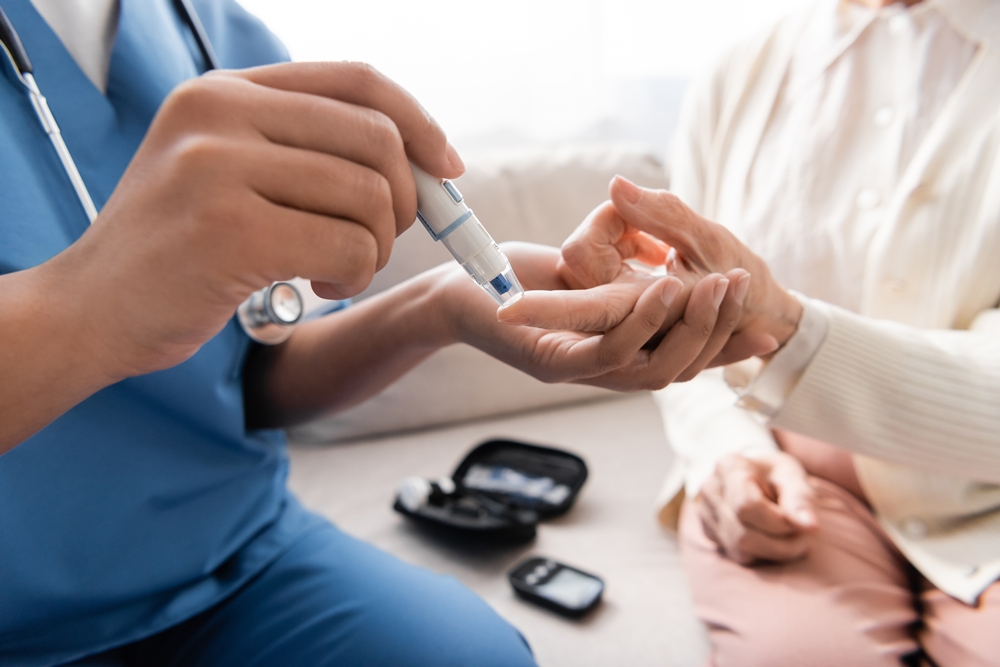
Women with diabetes are less likely to get preventive care than those without the condition, a UCLA-led study suggests.
The findings are based on an analysis of more than 40 studies from several countries.
They highlight how physicians largely overlook the importance of these routine services for women who have diabetes mellitus, or DM, putting them at risk of preventable medical conditions such as pregnancy complications.

Lauren Wisk is associate professor of medicine in the division of general internal medicine and health services research at the David Geffen School of Medicine at UCLA and senior author on the study.
She said: “These findings are important because they identify that women with diabetes are not receiving recommended well-woman care, which is essential to support both managing their diabetes and their overall health.
“Providers need to be aware that they should not forget to provide these essential services for women with diabetes.”
The researchers sifted through thousands of studies, focusing on the concepts of women, diabetes and women’s health services, and settled on 44 that addressed treatment services for women aged 15 to 49 with type 1 or type 2 diabetes, excluding those with diabetes insipidus or gestational diabetes.
They looked at four preventive health service categories: contraceptive counselling and use, breast and cervical cancer screening, pre-conception counselling, and screening for sexually transmitted infections.
One study found that 48 per cent of women with diabetes received contraceptive services compared with 62 per cent of women without the disease.
Nine papers showed cervical cancer screening rates ranging from 38 to 79 per cent for women with diabetes compared with 46 to 86 per cent for those without diabetes.
Four studies found that breast cancer screening rates for women with diabetes ranged between 38 and 69 per cent compared with 54 and 82 per cent for those without diabetes.
Fourteen studies found pre-conception counselling rates of just over 1 per cent compared with 46 per cent for women with diabetes who are planning to get pregnant.
The researchers did not identify any studies on screening for sexually transmitted infections, which they said represents “a substantial gap in the literature.”
The researchers wrote: “One of the more striking findings of this review is the importance of robust coordinated care teams in ensuring access to appropriate services for women with DM.
“Several of the identified studies provide support that a co-management model, or the concept of involving endocrinology, primary care, and other specialty care providers in the care of individuals with DM, as recommended by the American Diabetes Association, is associated with greater receipt of services.”
Within the time constraints of an office visit, primary care physicians are expected to address preventative health needs as well as chronic disease management, said Dr Lisa Kransdorf, an associate clinical professor of medicine at the Geffen School and a study co-author.
She said chronic disease management will often take priority.
“In cases where the patient has other providers such as specialists and clinical pharmacists actively involved in their chronic disease management, there is opportunity for primary care physicians to attend to preventative care gaps,” the researcher added:
There are some limitations to the findings.
The search yielded only 44 studies, many of which relied on patient recall, which can be unreliable, highlighting the need for further research.
In addition, most of the studies analysed had small sample sizes or were conducted at a single site, limiting how applicable the findings might be in other settings.








Article produced in association with London Pregnancy Clinic and Spital Clinic
Non-invasive prenatal testing has been part of antenatal care in the UK since the early 2010s.
In the years since its introduction, the test has undergone significant expansion in terms of what it can detect, how early it can be performed, and how its results are interpreted.
In 2026, NIPT is also beginning to incorporate artificial intelligence at the analysis stage.
This article explains what the test currently involves, what has changed, and what the phrase ‘AI NIPT’ actually refers to in clinical practice.
How Non-Invasive Prenatal Testing Works
From around nine weeks of pregnancy, small fragments of fetal DNA circulate in the maternal bloodstream. These are known as cell-free fetal DNA (cffDNA).
NIPT works by extracting this DNA from a maternal blood sample and analysing it to detect chromosomal differences in the fetus.
Because the test uses a maternal blood draw rather than sampling the placenta or amniotic fluid, it carries no risk of miscarriage.
It is a screening test rather than a diagnostic one, meaning a positive result requires confirmation through a diagnostic procedure such as CVS or amniocentesis.
NICE guidance on non-invasive prenatal testing, published as Diagnostics Guidance DG46, sets out the evidence for its use in detecting the three most common trisomies.
Currently, the NHS does not offer Non-Invasive Prenatal Testing (NIPT) to all pregnant individuals, but rather as a contingent or second-line test for a select group deemed at higher chance of carrying a baby with certain chromosomal conditions
What NIPT Can Now Detect
When NIPT was introduced, tests typically screened for trisomies 21, 18 and 13. Detection capabilities have expanded considerably since then.
Tests available in 2026 can screen for:
- All chromosomal trisomies and some monosomies across the 23 pairs of chromosomes
- Sex chromosome conditions including Turner syndrome (45,X) and Klinefelter syndrome (47,XXY)
- Microdeletions: small missing sections of chromosomes associated with conditions such as DiGeorge syndrome, Angelman syndrome and Prader-Willi syndrome
- Single-gene disorders, where parental carrier status has been established
Tests such as the KNOVA NIPT, for which London Pregnancy Clinic was the first UK provider, are now capable of screening for up to 100 conditions from a single blood draw.
This represents a substantial expansion from the three-trisomy scope of a decade ago.
What Has Changed in 2026
Three developments characterise the current state of NIPT in clinical practice.
First, testing is available earlier, with reliable results from nine weeks and some protocols beginning comprehensive genomic assessment from 10 weeks.
Second, expanded condition panels mean that families can choose the level of detection most appropriate for their situation, from basic trisomy screening to comprehensive genomic analysis.
Third, integrated prenatal pathways are becoming more common, combining NIPT with detailed anatomical scanning and genetics counselling rather than treating the test as a standalone investigation.
What AI NIPT Means in Practice
Artificial intelligence has entered NIPT analysis at the stage where raw cfDNA data is processed and interpreted.
Traditional NIPT analysis uses statistical models to compare the proportions of chromosomal DNA fragments in the maternal sample. AI-enhanced platforms apply machine learning to this process.
A study published in Frontiers in Genetics describes the development of an algorithm using cfDNA fragment distance analysis that improves accuracy by modelling the data in a more nuanced way than conventional statistical approaches.
In clinical practice, the most established AI NIPT platform is Panorama AI NIPT, which applies machine learning to cell-free DNA analysis to improve sensitivity and specificity for common aneuploidies and to extend detection to rarer variants.
The term ‘AI NIPT’ describes this category of platform, not a single product, and it is expected to become standard across major NIPT providers as the underlying technology matures.
The key clinical difference between AI-powered and conventional NIPT is not the type of conditions screened for but the quality of the analysis applied to the same data.
This translates to fewer false positives, fewer uninformative results and greater confidence in a negative finding.
Choosing Between Available Tests
The choice of NIPT should be guided by individual clinical circumstances and pre-test genetic counselling. For families with no known genetic risk factors, standard trisomy screening provides high accuracy at lower cost.
For those with a family history of genetic conditions or who have received an abnormal ultrasound finding, an extended panel or AI-powered test may be appropriate.
The Importance of Genetic Counselling
NIPT is a screening test and, like all screening tests, it produces a probability rather than a certainty. A positive result requires follow-up diagnostic testing before any clinical decisions are made.
A negative result substantially reduces risk but does not eliminate it. Understanding what results mean in both directions requires expert clinical input.
Pre-test counselling ensures that patients understand what they are consenting to; post-test counselling ensures that results are interpreted accurately and next steps are clear.
This is particularly important for expanded panels, where the clinical significance of some findings may be uncertain or variable in presentation.
Disclaimer: This article is produced for informational purposes only and does not constitute medical advice, diagnosis or treatment.
Clinical guidance referenced reflects published NHS, NICE and RCOG standards as at March 2026. Individual circumstances vary; readers are advised to consult a qualified healthcare professional before acting on any information in this article.
This piece was produced in association with London Pregnancy Clinic and Spital Clinic, which provided background clinical information for editorial purposes.
Hyperlinks to external sources are included for reference only and do not represent an endorsement of any product, service or organisation.



Scotland is set to publish the UK’s first dedicated miscarriage patient charter, giving women and families clear information on NHS care and support.
Commissioned by the Scottish Government and developed with baby-loss charities Tommy’s, Held In Our Hearts and the Miscarriage Association, the charter sets out minimum standards for compassionate, clinically appropriate and culturally competent miscarriage care across Scotland.
It builds on the Scottish Government’s Delivery Framework for Miscarriage Care, which has already changed practice across NHS boards.

Jenni Minto, Scottish public health and women’s health minister, said: “Miscarriage is devastating, and for too long women have not had the care and support they deserve.
“That is changing. Scotland will become the first country in the UK to publish a miscarriage patient charter, meaning women know exactly how they will be supported by health services following their loss.”
Unlike previous UK-wide norms, where women were typically offered enhanced support only after three miscarriages, Scotland’s approach means women can receive appropriate support after their first miscarriage.
The charter also sets out clear rights and expectations so every woman, regardless of location or circumstance, understands the care she should receive.
It includes access to private rooms in hospitals rather than busy clinical areas or maternity settings, progesterone treatment where clinically appropriate, compassionate and culturally competent bereavement support, and clear information in 18 languages, including British Sign Language and audio formats.
Progesterone is a hormone that growing evidence suggests may help reduce the risk of miscarriage in certain cases when given to women who meet specific clinical criteria.
The Scottish Government said the charter is designed to ensure personalised, respectful care and to address long-standing inequalities experienced by women during miscarriage.
It is intended to provide clarity on the support women can expect, consistent standards across all NHS boards, stronger awareness and confidence among healthcare professionals, and better access to emotional and practical support services.
Charities involved in its development said many women still report feeling dismissed, uninformed or unsupported during miscarriage.
They said the new charter marks an important step towards making sure every woman feels heard, respected and cared for.
The charter aligns with Scotland’s wider Women’s Health Plan, which is improving care across reproductive, menstrual, maternal and perinatal health.
Recent national developments include greater investment in women’s health services, improved training for healthcare staff, new digital and in-person support tools, and targeted action to reduce inequalities in access and outcomes.
Together, these measures aim to create a more compassionate and equitable women’s health system.
Minto said: “This charter is a landmark moment.
“It tells women clearly what they should expect from their NHS, and it holds services to account for delivering it.
“Scotland is leading the way, and I am proud of the progress NHS boards and our charity partners have made together.”
The model is expected to inform wider UK discussions on miscarriage support, bereavement care and early pregnancy services.
The charter will be made publicly available, offering women, partners and families clear guidance on their rights and the standards they can expect when seeking care.










 pain conditions4 weeks ago
Blood test shows promise in endometriosis

 Insight4 weeks ago
Women’s health leaders warn of censorship

 Insight4 weeks ago
Blood test predicts dementia 25 years before symptoms begin

 Menopause4 weeks ago
Study reveals hidden menopause tech privacy concerns

 News3 weeks ago
Femtech World Awards announces deadline extension

 News3 weeks ago
Luna and Kindbody partner to bring data-driven insight to women’s health and fertility care

 News4 weeks ago
Pregnancy may shed brain’s grey matter to prepare women for motherhood – study

 Menopause4 weeks ago
Non-hormonal menopause pill approved for NHS use
1 Comment