




Entrepreneur
Three sessions that show exactly where women’s health is heading in 2026


The women’s health sector is no longer just building a case for itself.
Capital is moving, consolidation is accelerating, and the companies that understood the opportunity early are now focused on one thing: scale.
The conversations happening at Women’s Health Week USA on May 13-14 at the New York Academy of Medicine reflect exactly that shift.
Three sessions in particular cut to the heart of where the industry is right now, and where it’s going next. Here’s a closer look at what’s on the full programme.
Key Panel Discussions
Who’s Backing the Boom: Inside the Capital Surge in Women’s Health
Capital is flowing into women’s health at record levels.
The question is no longer whether the sector will attract institutional investment, but where that capital is coming from, who it’s going to, and what it takes to unlock the next wave of commercial growth.
This session puts those questions to a panel with direct experience of deploying and raising capital in the sector.
Nicole Mooljee Damani (EY-Parthenon) moderates a conversation between Tara Bishop (Black Opal Ventures), Trish Costello (Portfolia), and Ramiz Khan (Wellcome Leap), three investors with distinct mandates and a shared focus on what actually moves the needle.
For founders and operators in the room, this session is a direct window into how the people writing the cheques are thinking.
What they’re backing, what they’re passing on, and what the current capital environment means for the companies building in women’s health right now.
Mergers & Acquisitions: Who’s Buying, Who’s Building, and Why
The M&A landscape in women’s health is heating up. Strategic acquisitions, consolidation plays, and corporate partnerships are reshaping the competitive map, and the decisions being made now will define the structure of the industry for years to come.
This panel examines the logic behind who’s acquiring and who’s holding, from the perspective of people operating at the sharp end of those decisions.
Oriana Papin-Zoghbi (AOA Dx), Monica Cepak (Wisp), Gabrielle de Briey (Hologic), and Johanna Grossman (New York Stock Exchange) bring a combined view that spans diagnostics, digital health, medtech and the capital markets infrastructure that underpins it all.
For anyone building a company with an eye on strategic exits, partnerships or acquisitions, this is the session that maps the terrain.
The Economics of Equity: How Inclusion Equals Growth Strategy
Inclusion isn’t a tickbox. It’s a growth lever. And the data increasingly backs that up.
This session makes the commercial case for equity in women’s health, examining how addressing underserved populations and closing health disparities doesn’t just serve social goals, it creates the biggest commercial opportunities in the sector.
The shift from impact metric to market strategy is already underway. This panel is where that argument gets made in full.
Annie Theriault (Cross Border Impact Ventures) moderates a conversation between Sharon Meers (Midi Health), Lauren Makler (Cofertility), Tanvi Patel (Amazon Pharmacy), and Julia Berenson (World Health Organisation). The breadth of that panel, spanning venture, fertility, pharma and global health policy, is itself a signal of how far the conversation has moved.
These three sessions are part of a broader two-day programme bringing together 700+ senior decision makers across investment, innovation, policy and medtech.
The event is built around curated 1:1 matchmaking, with introductions structured around each attendee’s commercial priorities.
Early Bird Pricing for Women’s Health Week USA is ending Friday April 17, to save up to $600 on your ticket to the Global Stage for Scale, book now!
Secure your place at Women’s Health Week USA
The women’s health sector is no longer just building a case for itself.
Capital is moving, consolidation is accelerating, and the companies that understood the opportunity early are now focused on one thing: scale.
The conversations happening at Women’s Health Week USA on May 13-14 at the New York Academy of Medicine reflect exactly that shift.
Three sessions in particular cut to the heart of where the industry is right now, and where it’s going next. Here’s a closer look at what’s on the full programme.
Key Panel Discussions
Who’s Backing the Boom: Inside the Capital Surge in Women’s Health
Capital is flowing into women’s health at record levels.
The question is no longer whether the sector will attract institutional investment, but where that capital is coming from, who it’s going to, and what it takes to unlock the next wave of commercial growth.
This session puts those questions to a panel with direct experience of deploying and raising capital in the sector.
Nicole Mooljee Damani (EY-Parthenon) moderates a conversation between Tara Bishop (Black Opal Ventures), Trish Costello (Portfolia), and Ramiz Khan (Wellcome Leap), three investors with distinct mandates and a shared focus on what actually moves the needle.
For founders and operators in the room, this session is a direct window into how the people writing the cheques are thinking.
What they’re backing, what they’re passing on, and what the current capital environment means for the companies building in women’s health right now.
Mergers & Acquisitions: Who’s Buying, Who’s Building, and Why
The M&A landscape in women’s health is heating up. Strategic acquisitions, consolidation plays, and corporate partnerships are reshaping the competitive map, and the decisions being made now will define the structure of the industry for years to come.
This panel examines the logic behind who’s acquiring and who’s holding, from the perspective of people operating at the sharp end of those decisions.
Oriana Papin-Zoghbi (AOA Dx), Monica Cepak (Wisp), Gabrielle de Briey (Hologic), and Johanna Grossman (New York Stock Exchange) bring a combined view that spans diagnostics, digital health, medtech and the capital markets infrastructure that underpins it all.
For anyone building a company with an eye on strategic exits, partnerships or acquisitions, this is the session that maps the terrain.
The Economics of Equity: How Inclusion Equals Growth Strategy
Inclusion isn’t a tickbox. It’s a growth lever. And the data increasingly backs that up.
This session makes the commercial case for equity in women’s health, examining how addressing underserved populations and closing health disparities doesn’t just serve social goals, it creates the biggest commercial opportunities in the sector.
The shift from impact metric to market strategy is already underway. This panel is where that argument gets made in full.
Annie Theriault (Cross Border Impact Ventures) moderates a conversation between Sharon Meers (Midi Health), Lauren Makler (Cofertility), Tanvi Patel (Amazon Pharmacy), and Julia Berenson (World Health Organisation). The breadth of that panel, spanning venture, fertility, pharma and global health policy, is itself a signal of how far the conversation has moved.
These three sessions are part of a broader two-day programme bringing together 700+ senior decision makers across investment, innovation, policy and medtech.
The event is built around curated 1:1 matchmaking, with introductions structured around each attendee’s commercial priorities.
Early Bird Pricing for Women’s Health Week USA is ending Friday April 17, to save up to $600 on your ticket to the Global Stage for Scale, book now!
Secure your place at Women’s Health Week USA













A screen time app that lets friends cut their phone use together has won the £15,000 top prize in a women-led startup competition.
Snitch, led by design engineering MEng graduate Asha Bakhai, took first place at WE Innovate, Imperial College London’s flagship competition for women-led startups.
The team aims to tackle excessive screen use among young people, which some research suggests may have a negative effect on mental and physical health.
The app lets users join accountability groups and set shared limits across their most-used apps.
When one person scrolls, the group’s combined timer counts down. Its founders say this helps build awareness, encourages reflection and supports small changes in behaviour by making screen use a shared responsibility.
Speaking at the WE Innovate Grand Final, Bakhai, co-founder and chief executive of Snitch, said: “Thank you to all the people who have been involved with thinking about what it could look like for young people to not be addicted to their phones.
“Whether that’s our friends who we started this with – exchanging screen time passwords and things like that – or the users along the way who beta tested with us, or our families and our friends who we’ve forced to use our app, even though it failed and bugged out and blocked all their apps. Thank you to all of them – and especially, thank you to WE Innovate for making all of this happen.”
Snitch’s team also includes co-founders Serena Sebastian and Yoshiki Berrecloth.
WE Innovate is a six-month pre-accelerator run by Imperial Enterprise Lab for teams led by female students, recent alumni and early career researchers.
The programme supports 25 women-led teams through masterclasses, business coaching, one-to-one expert support and peer mentoring.
The top five teams competed for a share of a £30,000 prize fund.
Professor Hugh Brady, president of Imperial College London, said: “WE Innovate was born out of the realisation that women founders were grossly underrepresented among our wider founder group across the university – so it was an imperative for Imperial to start such a programme.
“It was just last year that we heard Dame Alison Rose, author of the Rose Review, speak about the untapped economic opportunity and potential of women entrepreneurs in the UK.
“After 12 years, this programme has supported hundreds of women entrepreneurs, leading to exciting ventures across health tech, clean tech and all aspects of deep tech.”
The winning teams were selected by a panel including Kristen McLeod CBE, chief strategy officer at the British Business Bank, and Elizabeth Gooch MBE, founder and former chief executive of EGS plc.
The panel also included Pierre N. Rolin, founder and chief executive of Ankh Impact Ventures, and Professor Mary Ryan, vice-provost for research and enterprise at Imperial.
The final marked the second year of WE Innovate National, a UK-wide programme with separate Grand Final showcases held this month at Queen’s University Belfast, Swansea University and Loughborough University.
Joanna Jensen, founder of skincare brand Childs Farm, gave a keynote address about her experiences as an entrepreneur and co-writing The Rise Report of Female Entrepreneurship.
The report found that the UK economy would be £310bn larger if women started and scaled businesses at the same rate as men.
Jensen said 78 per cent of the founders surveyed reported that human connection had been central to their journey, while one in seven identified loneliness as their biggest challenge as an entrepreneur.
She said: “That is why what Imperial is doing matters so profoundly. Not just here in South Kensington but as WE Innovate goes national.
“Because a founder in Loughborough, Durham or Swansea deserves the same access to networks, mentors, capital and belief as a founder sitting in this room tonight.
“Talent is everywhere. Opportunity, until now, has not been.
“A nationwide network for female founders, being backed by women and men, having doors opened for them by women and men, and then paying that forward: that is how you close a £310 billion gap.
“Not with one programme. With a system of programmes, joined up across the country, and held to account on outcomes.”
Waypoint, led by innovation design engineering MSc student Bana Quronfuleh, received the £7,000 second prize.
The team is developing a video game controller that allows visually impaired players to hear and feel popular games.
AlphaVectors Biotech, led by Imperial alumnus Dr Apanpreet Kaur, received the £5,000 third prize for its lipid nanoparticle platform, which aims to improve the stability of RNA vaccines at room temperature.
Lipid nanoparticles are tiny fat-based particles used to protect and deliver genetic material, including the RNA found in some vaccines.
The other finalists, FluoroCycle and Epile-X, each received £1,500.
PHlora LABS received the Lauren Dennis Award, which was established in memory of a pioneering WE Innovate alumnus, for developing a synbiotic suppository intended to prevent recurrent vaginal infections.
Synbiotics combine beneficial microorganisms called probiotics with substances known as prebiotics, which help them grow.
The award recognises a team demonstrating exceptional entrepreneurial spirit in science, technology, engineering and mathematics and includes a six-month business coaching package.
DisoLens received the Engineers in Business Award, sponsored by the Engineers in Business Fellowship.
The award provides each winner with £1,500 in grant funding, mentorship and a professional CV package for entrepreneurs working across engineering sciences.
The team is developing a self-dissolving biodegradable contact lens intended to remove the need for lenses to be taken out each day.
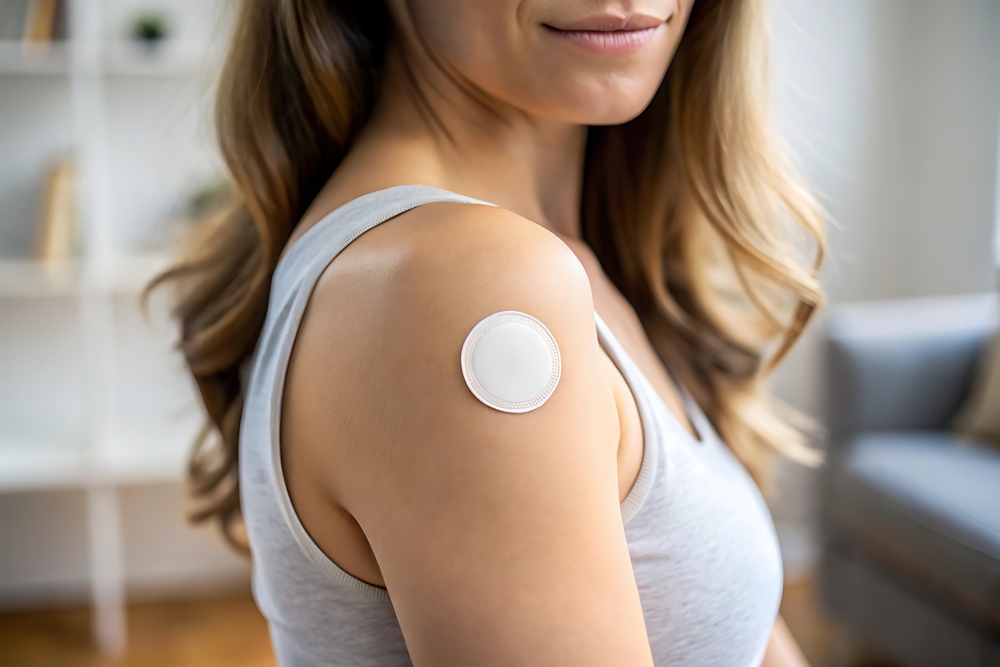
Impli has secured a £1.4m grant to begin clinical use of a real-time hormone patch for infertility treatment.
The startup, which is working with innovations from Imperial College London, is developing a continuous hormone monitoring system for use in in vitro fertilisation, known as IVF.
IVF is a fertility treatment in which eggs are fertilised outside the body before an embryo is transferred to the womb.
Timing is critical in IVF, the most common form of infertility treatment, but most patients are still monitored through blood tests taken every other day at best.
Hormone levels can change within hours, meaning important shifts may be missed.
These can include hormone surges linked to egg release, dips that may contribute to implantation failure and early signs of ovarian hyperstimulation syndrome.
Ovarian hyperstimulation syndrome is a potentially serious reaction to fertility medicines, where the ovaries over-respond and become swollen.
In a treatment with low success rates, these uncertainties can affect patient outcomes and wellbeing.
Impli’s system is based on research by Dr Salzitsa Anastasova in the department of mechanical engineering at Imperial.
The technology uses electrochemical biosensors to sample hormones in the fluid between cells.
These can be used in a subcutaneous implant, meaning one placed under the skin, or in Impli’s Bio-Endocrine Analysis Monitor, known as BEAM, which uses microneedles that pierce the skin.
Microneedles are tiny needles designed to enter the upper layers of the skin with minimal discomfort.
The biosensors continuously measure oestradiol, luteinising hormone and progesterone, which are hormones involved in the menstrual cycle and fertility treatment.
Data is transmitted wirelessly to a smartphone, where AI software converts raw signals into real-time hormone trends.
Sotirios Saravelos, consultant gynaecologist and reproductive medicine subspecialist at the Wolfson Fertility Centre, part of Imperial College Healthcare NHS Trust, said:
“Continuous hormone monitoring has the potential to change the landscape of fertility treatment, both in terms of clinical care and patient experience. Rather than snapshots taken at fixed points in time, with Impli we will have access to a live feed of each patient’s hormonal response, allowing us to personalise care in a way that has not been possible before.”
Saravelos is part of the research consortium that has won a £1.4m grant to take Impli’s BEAM device from prototype to its first human clinical validation for IVF.
The project was designed with support from Dr Simon Hanassab as part of a PhD on how AI can support decision making for IVF.
The work was carried out at the UKRI Centre for Doctoral Training in AI for Healthcare at Imperial, a collaboration between the department of computing and the department of metabolism, digestion and reproduction.
Hanassab is now working part-time as Impli’s head of AI.
The grant comes from the National Institute for Health and Care Research Invention for Innovation programme.
It will support a 30-month project bringing together Impli, Imperial College Healthcare NHS Trust, the London Institute for Healthcare Engineering at King’s College London and the patient advocacy network Fertility Europe.
Specialist medical device manufacturer TTP is also involved.
BEAM is the first step in Impli’s plan to develop a broader platform of fully implantable, long-duration monitoring systems.
Anna Luisa Schaffgotsch, founder and chief executive of Impli, said:
“We are not just building a device, we are building the evidence base to show that continuous hormone monitoring is possible, clinically meaningful and ready for the real world. With an exceptional consortium behind us, we now have the funding, the expertise and the clinical pathway to do that properly.”
According to the company, the same core technology could later have applications in hormonally driven cancers, polycystic ovary syndrome, endometriosis and menopause.
Polycystic ovary syndrome is a common hormonal condition that can affect periods, fertility and metabolism.
Endometriosis is a condition where tissue similar to the lining of the womb grows outside the uterus, often causing pain.
BEAM’s development builds on more than 15 years of biosensor research at Imperial, with intellectual property covering the sensing approach, device architecture and data interfaces.
Impli has so far delivered three functional prototypes, completed pre-clinical laboratory trials and begun animal trials, which the company said have shown positive results.
It also has a strategic partnership with Bayer on real-time hormone biosensing and relationships with IVF clinics internationally.
Entrepreneur
Women’s Health Week Europe 2026 opens pitch applications for mainstage showcase at The Emirates Stadium
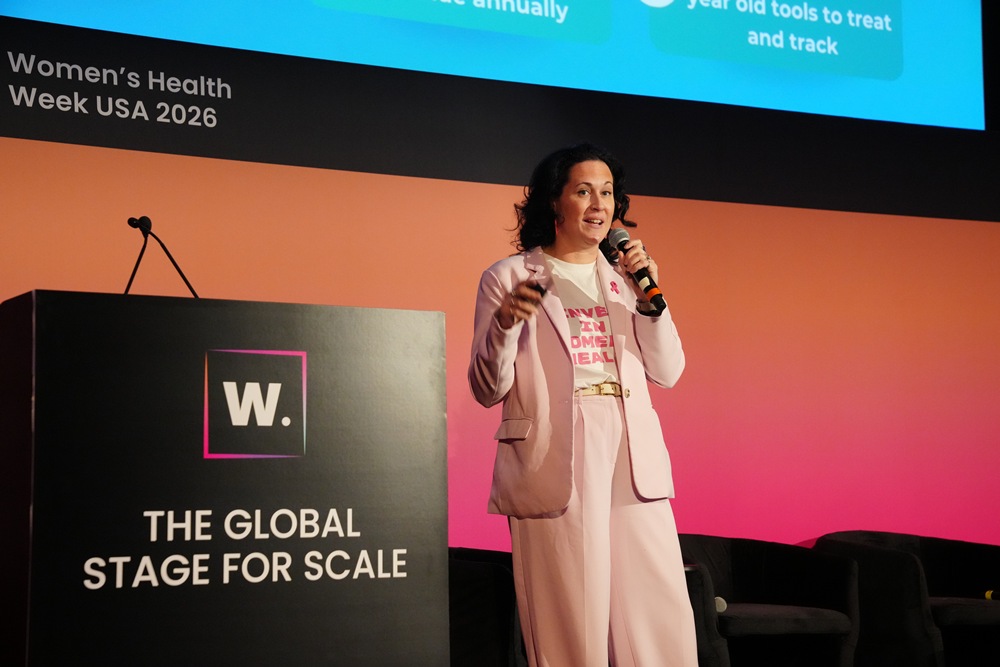
Women’s Health Week Europe 2026 has opened applications for its flagship start-up Pitches, giving women’s health innovators the chance to present on the mainstage at The Emirates Stadium in London on 7-8 October.
16 finalists will be selected across two categories: Medical Devices & Therapeutics and Consumer & Tech, with the shortlisted companies receiving the opportunity to pitch in front of 700+ investors, corporates, other innovators and strategic partners actively seeking solutions that can scale.
Two categories, one stage
The Medical Devices & Therapeutics category is open to companies working across medical devices, therapeutics and pharma innovation, regulated digital health, and deep-tech or science-led platforms.
The Consumer & Tech category covers consumer health and wellness brands, digital health platforms, wearables and connected data, employer and payor-led solutions, and commerce and marketplace businesses.
Any company treating a condition that affects women exclusively, differently, or disproportionately is eligible to apply.
Applications are completely free, so what do you have to lose?
Apply to pitch at WHW Europe 2026 now.
What’s in it for you?
Unmatched exposure
Present in front of 700+ investors, corporates, clinicians, and strategic partners actively seeking solutions that can scale.
With WHW Europe 2026 relocating to The Emirates Stadium and expanding to 700+ attendees across two stages, the 2026 edition represents the largest platform the series has offered to date.
A proven platform
The WHW Pitch Sessions have become one of the most commercially significant showcases in women’s health, with previous cohorts including companies that have gone on to raise investment and secure major strategic partnerships. 2024 alumni BoobyBiome, closed a £2.5M seed round in the year following their pitch at WHW Europe.
The Watchlist
All registered applicants will have the opportunity to be featured in The Watchlist, WHW Europe’s official directory of women’s health innovators to know, giving companies visibility beyond the pitch stage itself.
Applications close 28 August 2026.
Find out more about WHW Europe.











 Menopause4 weeks ago
Perimenopause misinformation ‘putting women at risk’

 Entrepreneur4 weeks ago
Women’s Health Innovation Summit opens submissions for 2026 Innovation Showcase

 Insight3 weeks ago
British women among angriest in Europe, health survey reveals

 News4 weeks ago
Women still being failed when they reach menopause, experts say

 Hormonal health2 weeks ago
Apple Health adds menopause and perimenopause tracking

 Menopause4 weeks ago
Sweden eyes domestic production of oestrogen patches amid menopause treatment shortage

 News2 weeks ago
Femtech World Awards 2026: Winners revealed
 News4 weeks ago
Three menopause innovators shortlisted for Femtech World Award