




Fertility
UPFs linked to fertility issues in men, study suggests


Men who eat more ultra-processed food may be more likely to face fertility issues, a study suggests.
Ultra-processed foods, or UPFs, include bread, cakes, pastries, fried foods and salty snacks.
They contain artificial ingredients and high levels of fat, sugar and salt. Previous studies have linked UPFs to at least 32 serious health conditions, including heart disease, cancer and dementia.

Romy Gaillard, an epidemiologist at Erasmus University Rotterdam and lead researcher of the study, said: “Our findings suggest that a diet low in UPFs would be best for both partners, not only for their own health, but also for their chances of pregnancy and the health of their unborn child.
“We should move away from the idea that only the health and lifestyle of mothers-to-be is important for pregnancy and offspring outcomes, and recognise that the health and lifestyle of both the mother- and father-to-be play an important role.
“Our results highlight the need to pay more attention to male health in the preconception period, which has traditionally been overlooked.”
The Dutch study tracked health data from 831 women and 651 men who were trying for a baby.
On average, women said about a fifth of their diet consisted of UPFs, while men said roughly a quarter did. More than one in ten couples said more than a third of their diet was made up of UPFs.
Researchers at Erasmus University Rotterdam found that men with the highest UPF intake were at a 75 per cent greater risk of subfertility, where it takes longer for a partner to become pregnant, than those with an average diet.
Just under 40 per cent of the men surveyed experienced subfertility overall, but among those consuming the most UPFs this rose to nearly 70 per cent.
The study also found that the unborn children of women with UPF-heavy diets were slightly more likely to experience developmental issues.
These unborn children had slightly smaller yolk sacs, one of the earliest structures to form in pregnancy during the first six weeks.
They also took marginally longer to develop from a fertilised egg into an embryo, a process known as embryonic growth that generally happens in the first two months of pregnancy.
Previous studies have suggested slower embryonic growth can sometimes be linked to premature birth, miscarriage and an increased risk of heart and blood problems in childhood.
The authors said further research was needed, particularly because the study was observational, meaning it cannot prove that UPF consumption directly led to these fertility issues.
However, the researchers said the findings suggest couples, but particularly men, trying for a baby should avoid UPFs where possible.
Experts welcomed the findings but urged caution over the study’s limitations on such a sensitive subject.
Channa Jayasena, a professor of reproductive endocrinology at Imperial College London, said the results were ‘interesting, but there are several reasons to be cautious interpreting them’.
He said: “First, we have no way of knowing whether it is UPF itself, or some other behaviour that is linked with the things they observed.
“Secondly, the differences observed are tiny, and hardly significant compared with measures such as weight loss.
“This means that even if UPF are causing reproductive problems, their impact on individuals appears very small indeed.
“We know from previous research that in general all couples should prioritise a healthy diet, exercise, and smoking cessation when trying to get pregnant.
“Whether avoiding UPF will offer additional benefits remains unresolved.”
Gunter Kuhnle, a professor of nutrition and food science at the University of Reading, said ‘fertility is an important but very sensitive topic and should therefore be handled accordingly’.
He raised concerns about the questionnaire used in the study, which he said ‘does not appear to have been developed or validated for ultra-processed food’.
Kuhnle added: ‘Given that the assessment of ultra-processed food intake has severe limitations, the conclusions of the study, and the recommendations, need to be interpreted carefully.”















Article produced in association with Spital Clinic
The UK’s fertility rate has fallen for a third consecutive year to the lowest level ever recorded. That headline gets written every year, and it is easy to read it as a purely demographic story.
For anyone currently trying for a baby, the figure is something more practical: the conditions that produced the statistic are the same conditions shaping your own chances.
The decline has a clear pattern, and it is mostly not about couples being unable to conceive.
The change sits in when people start trying, and in what happens to fertility during the years by which most are now ready to have children.
What the numbers actually show
Figures from the ONS put the total fertility rate in England and Wales at 1.41 children per woman in 2024, down from 1.42 in 2023. The rate has been in overall decline since 2010 and has now recorded its lowest value three years running.
The figure sounds abstract until you compare it with the replacement level of 2.1 – the rate required for a population to sustain itself without net migration.
The UK has been below that line since the early 1970s, but the gap is now wider than at any point on record.
The data also shows where the decline is happening. Age-specific fertility rates for women in their twenties are the lowest of any generation since 1920. Rates for women in their thirties are holding up, and in some parts of the country rising.
Mothers are having babies later, not necessarily in smaller numbers. The average age of a first-time mother in England and Wales is now 31.0, up from 30.9 the year before. Regional variation matters too: London sits at 1.35, the West Midlands at 1.59.
Why the rate is falling
None of this is new. Every decade since the 1970s has seen the same trend, and it has accelerated in recent years. What has changed is the pace.
The shift is primarily social: delayed partnership formation, high housing costs, expensive childcare, and careers structured around full-time work through the exact years fertility is easiest.
The same pattern shows up across the EU, where the total fertility rate sat at 1.5 in 2022.
These forces compound. People meet later, partner later, feel financially ready later, and start trying later.
For many couples, first attempts happen in the early thirties, by which point fertility has begun its slow and uneven decline. A low national TFR is the population-level consequence of millions of individual timing decisions made under real-world constraints.
What this means for individuals trying now
Around one in seven couples in the UK will struggle to conceive naturally.
That figure has been stable for decades; the population of people seeking help, however, has grown – not because fertility itself has worsened, but because more people are trying during the window where it becomes harder.
UK fertility treatment data from the HFEA shows around 52,400 patients had over 77,500 IVF cycles in 2023, making 1 in every 32 UK births IVF-conceived.
The average age of a first-time IVF patient in the UK is now just over 35 – nearly six years older than the average first-time mother in the population overall.
NHS-funded IVF cycles have fallen from 40 per cent of the total in 2012 to 27 per cent in 2022, and to 24 per cent in England in 2023. The private sector has absorbed the rest.
When to get checked – and what it involves
Current NHS advice is to see a GP after a year of regular unprotected sex without a pregnancy, or sooner if you are 36 or older.
That threshold reflects the fact that every additional six months of trying is more clinically informative in the years when fertility is starting to shift.
The first set of investigations is usually straightforward.
For women, this typically covers hormone testing (AMH, FSH, LH, TSH and prolactin), rubella immunity, chlamydia screening, a mid-luteal progesterone and a transvaginal ultrasound.
For men, a semen analysis is the first step.
A private trying-to-conceive screening covers the same ground without the NHS waiting list, with the advantage that results can be reviewed in a single consultation.
The purpose of early screening is not to diagnose infertility – most couples conceive naturally within a year or two – but to identify specific, treatable issues before more time passes.
The fertility window is narrower than most people think
The uncomfortable truth behind the falling TFR is that the biological fertility window has not changed. The subtle decline begins around age 32, and accelerates from the late thirties.
The chance of natural conception in any given month is substantially lower at 40 than at 30, and falls sharply through the early forties.
IVF success rates track the same curve.
For patients aged 18 to 34, the average birth rate per embryo transferred was around 35 per cent in 2022; for those aged 40 to 42, around 10 per cent using their own eggs.
This is why the growth areas in UK fertility care are now pre-conception screening and elective egg freezing – HFEA data shows egg storage cycles rose from 4,700 in 2022 to 6,900 in 2023, one of the fastest-growing treatments in the sector.
A focused fertility consultation earlier in the timeline – in the late twenties or very early thirties, before there is a known problem – tends to produce better decisions than a consultation triggered by a year of trying without success.
The wider picture
The UK’s falling fertility rate is the product of a society that has reorganised when people have children, not one in which couples have become less capable of conceiving.
There is no need for alarm in that finding. The practical takeaway is that the old default of ‘wait and see’ assumes a timeline no longer matching the one most people now live.
For anyone currently trying, or planning to try soon, the single most useful move is to understand your own numbers earlier than previous generations did.
The national trend is not going to reverse quickly.
A clear picture of your own fertility window – and the information to use it well – is within reach in a way the headline statistics are not.
If you are trying to conceive or thinking about starting, a structured pre-conception review is a reasonable first step.
Disclaimer: This article is produced for informational purposes only and does not constitute medical advice, diagnosis or treatment. Clinical guidance referenced reflects published NHS, ONS and HFEA data as at April 2026. Individual circumstances vary; readers are advised to consult a qualified healthcare professional before acting on any information in this article. This piece was produced in association with Spital Clinic, which provided background clinical information for editorial purposes. Hyperlinks to external sources are included for reference only and do not represent an endorsement of any product, service or organisation.

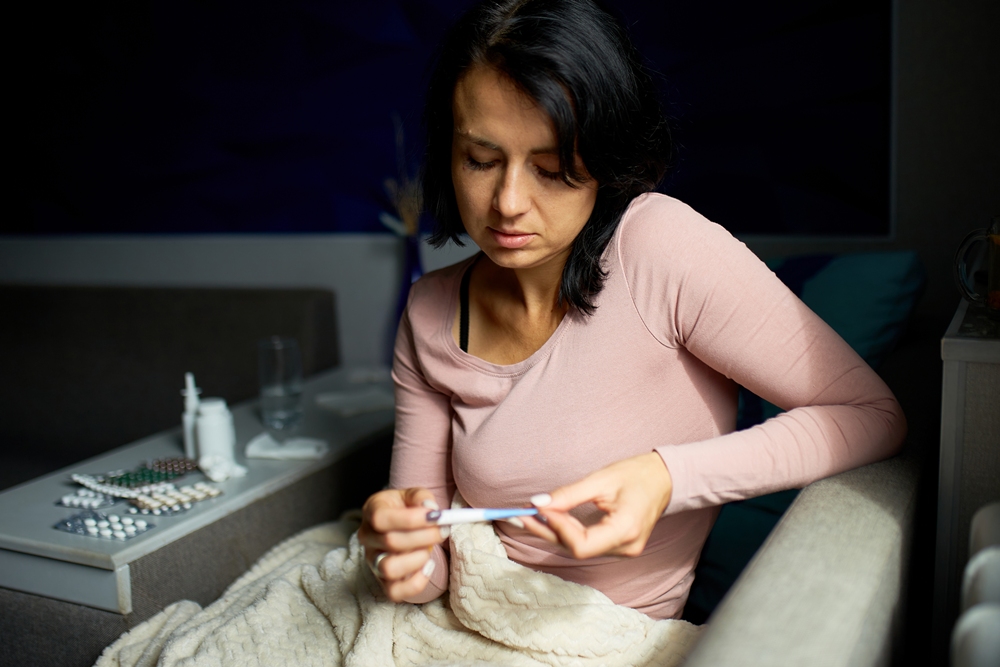
Simultaneous exposure to toxic chemicals and climate-related heat may be worsening fertility harms across humans and wildlife, research suggests.
The review of scientific literature looks at how endocrine-disrupting chemicals, often found in plastic, together with climate-related effects such as heat stress, are each linked to lower fertility and fecundity, meaning the ability to reproduce, across species including humans, wildlife and invertebrates.

Though the reproductive harms of each issue in isolation are well studied, there is little research on what happens when living organisms are exposed to both.
“Together, the two issues are likely to pose a greater threat to fertility, and the additive effect is “alarming”, said Susanne Brander, a study lead author and courtesy faculty at Oregon State University.
“You’re not just getting exposed to one, but two, stressors at the same time that both may affect your fertility, and in turn the overall impact is going to be a bit worse,” Brander said.
The paper looked at 177 studies.
Shanna Swan, a co-author on the new paper, co-produced a 2017 study that found sperm levels among men in western countries had fallen by more than 50 per cent over four decades. Other research has suggested human fertility has been declining at a similar rate.
The University of Washington’s Institute for Health Metrics and Evaluation has previously said the world was approaching a “low-fertility future”, with more than three quarters of countries below replacement rate by 2050.
The new paper’s authors focused on the effects of endocrine-disrupting chemicals and substances, including microplastics, bisphenol, phthalates and PFAS.
These are thought to cause a range of serious reproductive problems, disrupt hormones and be a potential driver of falling fertility.
Brander said the harms linked to these chemicals are often similar across organisms, from invertebrates to humans.
Phthalates, for example, have been linked to altered sperm shape in invertebrates, spermatogenesis in rodents, meaning sperm production, and reduced sperm counts in humans.
PFAS are also thought to affect sperm quality, and both have been linked to hormone disruption.
The chemicals are widespread in consumer goods, so people are often regularly exposed.
Meanwhile, previous research has shown how rising temperatures, lower oxygen levels and heat stress, among other effects linked to climate change, may also worsen infertility.
Heat stress has been found to affect human hormones, and is linked to spermatogenesis in rodents and bulls.
Research shows temperature also plays a role in sex determination in fish, reptiles and amphibians.
The species has evolved to choose which sex it produces in part based on temperature, and the heating planet can “push it too far in one direction or the other, which overrides that evolutionary benefit”, Brander said.
Similarly, many endocrine disruptors may alter environmental sex determination.
The study set out some of the overlapping effects of chemical exposure and climate change across taxonomic groups, from invertebrates to humans.
In birds, for example, exposure to increased temperature, PFAS, organochlorines and pyrethroids may each individually cause abnormal sperm, increased fledgling mortality, abnormal testes and population decline.
“What happens if they’re exposed to more than one of those stressors at the same time? There has been little exploration of that question.
“Even if there have not been a lot of studies looking at these simultaneously, if you have two different factors that both cause the same adverse effect, then there’s a likelihood that they are going to be additive,” Brander said.
Katie Pelch, a senior scientist with the Natural Resources Defense Council nonprofit, who was not part of the study, said the authors had reviewed high-quality science.
She said she wanted to see more examples of the overlap in impacts, but agreed with the overall premise.
“It is likely [multiple stressors] would have an additive effect, at very least, even if they have different mechanisms of harm,” Pelch added.
The solution to the systemic problems would involve tackling climate change and reducing the use of toxic chemicals.
The study cites the global reduction in the use of DDT and PCBs achieved under the Stockholm Convention as an example of an effective measure, but Brander said much more is needed.
“There is enough evidence in both areas to act to reduce our impact on the planet,” she said.











 Fertility7 days ago
Future Fertility raises Series A financing to scale AI tools redefining fertility care worldwide

 Entrepreneur4 weeks ago
Three sessions that show exactly where women’s health is heading in 2026

 Pregnancy4 weeks ago
How NIPT has evolved and what AI NIPT means in 2026

 News4 weeks ago
Two weeks left to make your mark in women’s cardiovascular health
 Fertility2 weeks ago
Future Fertility partners with Japan’s leading IVF provider, Kato Ladies Clinic

 Mental health1 week ago
Lifting weights shows mental health and cognitive benefits in older women, study finds

 Menopause2 weeks ago
More research needed to understand link between brain fog and menopause, expert says

 News4 weeks ago
Copper coil vs Mirena: Which is right for you?