




News
Danish startup’s tech-enabled jewellery to tackle sexual harassment

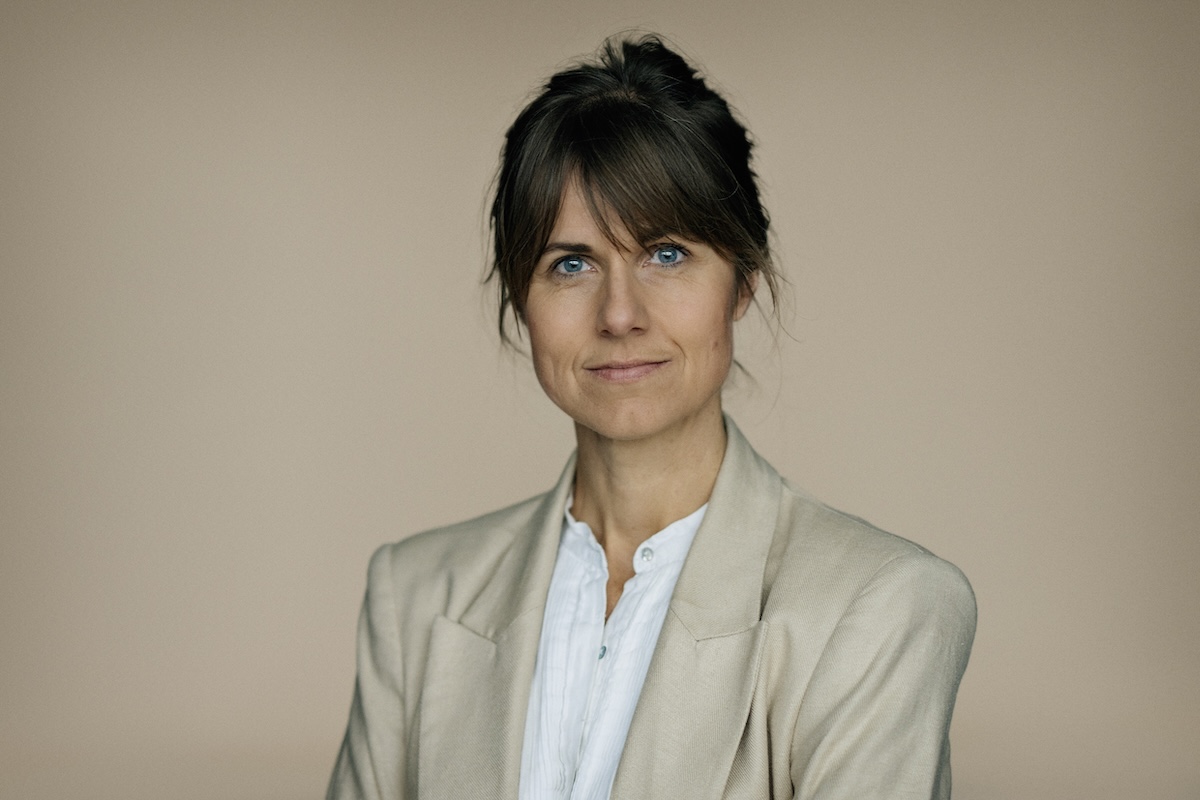
With jewellery that doubles as a discreet safety device, Danish startup All U Me is combining social impact with innovation to address the significant impact of sexual harassment on women’s health and wellbeing.
One in three women has experienced physical or sexual violence, and around half have experienced sexual harassment since the age of 15. The misconception that these incidents always occur late at night and in dark alleyways overlooks the reality of these experiences, which for many women are a part of everyday life.
The Government Equalities Office reports that almost 72 per cent of the UK population has experienced sexual harassment at work in their lifetime. Research shows that 56 per cent of women have experienced harassment in gyms, while 60 per cent of women had been harassed while running, and 11 per cent stopped running altogether as a result.
“It’s the everyday experiences that are the problem,” Dorte Caroline Knudsen (pictured above), founder of Danish startup All U Me tells Femtech World.
“It’s not just walking down a dark street in the middle of the night, it’s the everyday, in the supermarket, on the bus, where you experience feeling unsafe or your boundaries not being respected. It’s the mental load that women are expected to carry, almost without talking about it, to get home safely. I can get home safe; I’m not the problem.”
After 14 years as head of products at a Danish software company, at the age of 47, Knudsen felt called to channel her skills into more purposeful entrepreneurship. Inspired by the UN’s Sustainable Development Goals and anger at the global prevalence of gender-based violence, she began looking into what solutions were currently being developed to address it.
“It was sad to see that none of the solutions said anything about prevention,” she says. “All the focus was on normalising what is going on and putting the responsibility on women.”
In response, Knudsen has created a solution that aims to empower women, while also shifting “safety” from an individual to a collective responsibility.
“The beauty of feeling free”
All U Me has designed a range of jewellery featuring delicate gold and silver chains and ocean-inspired charms, which double up as an alarm system to enable them to call for help when they feel unsafe.
“Tech is wonderful, but it can do more when it’s put into something beautiful, which is very rarely seen in the tech space,” says Knusden.
“Most of the existing solutions were one-size-fits-all, but women don’t work like that. We want to wear something that makes us feel beautiful.”
As well as being beautiful to look at, the jewellery is practical. Fully waterproof and with a battery life lasting up to four years, it is designed to be worn all the time, making it “probably the first real wearable”, according to Knusden.
Each item has a discreet button, linked via Bluetooth and GPS to an app connecting the wearer to nearby bystanders. This may be friends or family who have downloaded the app to their phone specifically for this purpose, or other All U Me users in the local area.
If a woman finds herself in an uncomfortable or unsafe situation, three firm pushes of the button notify up to 20 nearby bystanders or ‘backups’ with her location, alerting them to the incident so that they can intervene.
The app trains all users in the 5D bystander intervention method – distract, delegate, delay, direct, document – in as little as three minutes, so they can choose the approach that feels right at the time.
This is designed to break down some of the barriers that may prevent people from stepping in, such as not noticing, not being sure whether help is wanted, or not knowing what to do, Knudsen explains.
“The feedback we get from the workshops we do is that people like to have a framework. Empowering bystanders, by telling them ‘this is what you need to do’, and ‘this is when you need to do it’, makes people a little bit more inclined to help,” she says.

“It’s no more genius than the technology that already exists, and there are times when it might not work, but that’s why the feeling of security is so important, because that’s the everyday benefit of this.”
According to All.u.me’s focus groups, 98.8 per cent of people being trained in these methods feel there’s at least one thing they can do the next time they witness harassment, while 76 per cent who saw harassment after attending the training reported that they intervened.
“The jewellery is just one element,” Knudsen continues.
“It’s actually much more about the feeling of safety and belonging to a community that I hear our users appreciate every day, and the dialogue around it. Maybe it’s telling your loved ones why you want this jewellery, or maybe it’s somebody on the bus, or the bus driver, the bartender, or the guy at the fitness center who has the app. It’s not a guarantee, but that’s where the social responsibility kicks in, and of course, our most important job is to make sure that people have the app.”
Reframing femtech
Safety and sexual harassment can be overlooked in the femtech sector. Both the World Health Organization and the US Centers for Disease Control classify sexual violence as a major public-health issue, and evidence shows that these experiences can not only have a significant impact on mental health but can also lead to physical symptoms and an increased risk of developing chronic conditions, contributing to long-term health disparities.
One recent study found that women who had experienced being stalked and/or obtained a restraining order had a 41 per cent and 70 per cent higher risk of developing cardiovascular disease, respectively. Other research has shown that women with a history of violence are around twice as likely to develop chronic pain conditons and are over-represented among women with conditions such as chronic pelvic pain, IBS, and migraine.
In many ways, All U Me expands the understanding of femtech, centering safety as a foundation for health and equality. But Knusden is wary of being labelled as a ‘femtech’ company.
“The fact that safety is not seen as femtech is quite weird, actually, when statistically so many of us will experience harassment,” she says.
“But I also want to acknowledge that there are so many people who can benefit from this. It’s not just about gender equality, it’s for anybody who may feel unsafe in society.”
Not a jewellery brand, but a tech enabler
The more people who have the app, the more effective the tool is. While women can create their own networks from anywhere by asking friends and family to download the app, it works most effectively in more populated urban areas where more users are likely to be within a 1 km range.
Since launching in June, All U Me now has 2,000 active subscribers in Copenhagen. There are plans to expand into Sweden, Germany, and the UK, but partnerships with existing jewellery brands – to integrate its safety devices into their existing designs – will be crucial for helping this technology reach more women.
“There are so many jewelry brands in the world, I don’t want to be another one,” says Knusden.
“We want to be a technology enabler. Our vision is to empower and inspire everyone – people, brands, organisations – to stand against harassment, whether they do it by downloading the app, or partnering with us to make the jewellery. This is how we will scale through these partnerships.”
She has big ambitions, believing All U Me could be the “first social impact unicorn”, combining scalable tech, commercial sustainability, and philanthropy.
“I have global ambitions with this, but I also have philanthropical ambitions, in the sense that I believe that every young girl and woman should be able to feel safe and be who they are, Knusden adds.
Sharing her experience of using All U Me, one woman described her sense of safety as going from a “two to a four out of five”.
“Her feeling of safety doubled,” Knusden emphasises. “It’s not a 100 per cent guarantee, but it meant that she stopped carrying her keys between her fingers. If we can make people feel safer, and if we can make it easier for bystanders to act, then we can change the world.”









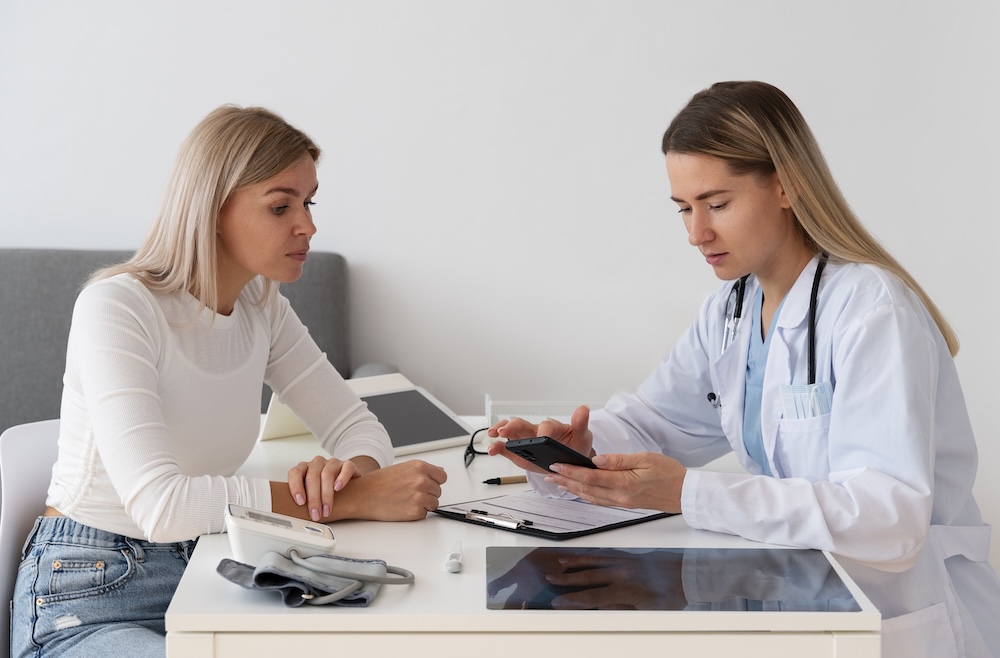

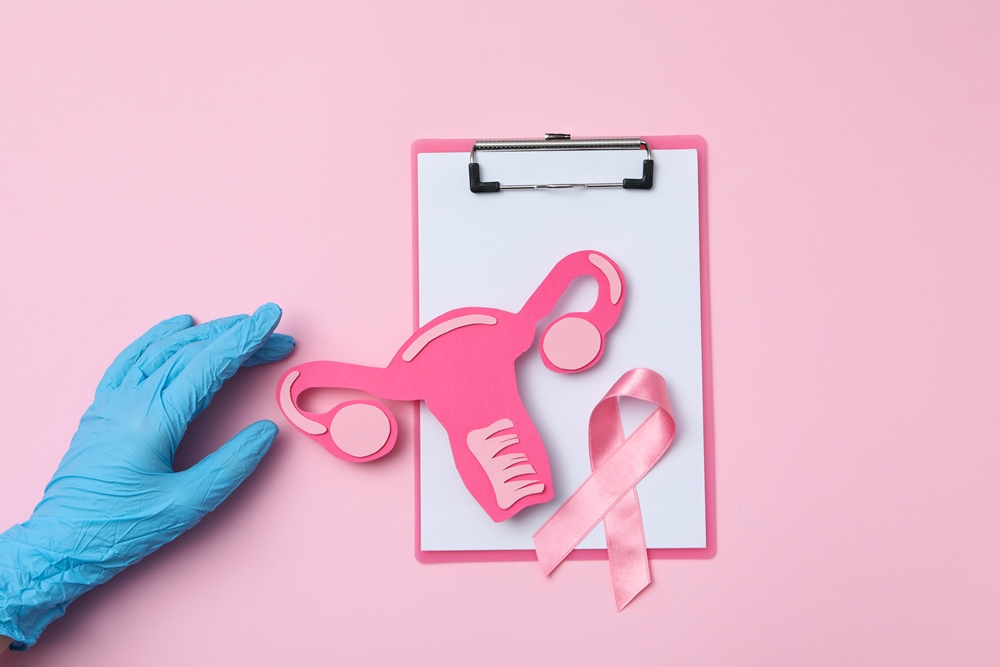
A non-profit has launched an endometriosis documentary featuring Amy Schumer and Marilyn Monroe as it pushes for changes in how the condition is treated and understood.
The Endometriosis Collective has launched to change how endometriosis is researched, treated and understood, starting with a documentary featuring stories from people including Amy Schumer and Marilyn Monroe.
The feature-length documentary, “End of the Cycle”, will premiere in New York on Tuesday, and The Endometriosis Collective is making the film free to stream online.

Schumer, a comedian, writer and actor, has previously spoken of how endometriosis left her “on the floor in pain, vomiting from the pain, the pain that nobody can see.”
Schumer is one of several celebrities featured in the documentary. Other contributors include dancer Julianne Hough, Olympic medallist Brittany Brown and actors Janel Parrish and Folake Olowofoyeku.
The Endometriosis Collective timed the documentary premiere to coincide with the 100th anniversary of Marilyn Monroe’s birth.
Monroe, who died in 1962, starred in films such as “Some Like It Hot” and “Gentlemen Prefer Blondes.”
According to a biography published in 1985, Monroe’s endometriosis was so severe that it destroyed her marriages, her wish for children, her career and ultimately her life.
The Endometriosis Collective said the documentary shares newly uncovered information about Monroe’s experience with endometriosis.
The non-profit said the information connects Monroe’s story to the experiences of women across generations, highlighting how far awareness, research and care still have to go.
A representative of the Marilyn Monroe Estate said: “By sharing this part of her story through ‘End of the Cycle,’ we hope to honour her legacy in a way that brings visibility to endometriosis, encourages more open dialogue and helps inspire the research needed to create change.”
As part of the premiere, The Endometriosis Collective is holding a panel discussion.
Schumer, Brown and Olowofoyeku, the documentary’s co-directors Sammy Jaye and Soraya Simi, and medical experts are due to be part of the premiere.
AbbVie’s Orilissa and Sumitomo Pharma’s Myfembree are among the approved drugs for endometriosis pain.
Hough, one of the participants in the documentary, starred in an Orilissa campaign in 2017.











 Menopause1 week ago
Perimenopause misinformation ‘putting women at risk’
 News4 weeks ago
NIH Grant terminations disproportionately impact minority scientists, research finds
 Wellness4 weeks ago
WUKA brings Period-Positive Pool Party to London Aquatics Centre to keep girls swimming through puberty
 Insight3 weeks ago
PCOS renamed after decade-long campaign to end ‘cyst’ misconception
 Events4 weeks ago
WHIS 2026 unveils agenda and first speakers for the leading women’s health summit
 Menopause4 weeks ago
CBT shows promise for menopause insomnia and hot flashes
 Hormonal health2 weeks ago
NHS urged to update website following renaming of PCOS

 News6 days ago
Three menopause innovators shortlisted for Femtech World Award
1 Comment