




Entrepreneur
10 Careers Focused on Women’s Well-Being: From Motherhood Support to Hormonal Health


Life throws unique challenges at women, from the first signs of puberty to the ups and downs of menopause. They deserve specialised care that understands their distinct needs. The right support does more than just make women feel better. Instead, their well-being also helps families, communities, and societies thrive.
Behind every woman is a network of health professionals prioritising their welfare. And if you want to be one of those experts, plenty of opportunities are available. Let’s talk about impactful career paths that can help you make a difference in someone’s life.
Doula: A Guide through Childbirth
It’s hard to understand the difficulty of pregnancy unless you’ve been in one. Labour pain is just the tip of the iceberg. The months leading to childbirth bring countless changes in almost all aspects of life. Even after, one may have a rough time. Unsurprisingly, many experience postpartum depression.
A doula is a professional with extensive training. You guide a woman before, during, and after childbirth. According to studies, mothers who work with a doula can expect better birth outcomes. Birth complications are less likely, as well as low birth weight. Epidurals are less likely. There’s also less chance of caesarean birth.
Midwife: Provider of Holistic Pregnancy Care
Childbearing women and newborn infants benefit from midwives’ skills, knowledge, and compassion. They educate women about the process of giving birth. First-time mom? Then you’ll find the educational support useful.
Even during and after childbirth, midwives are crucial. They conduct routine exams to ensure the baby’s health is on track. They also provide growth monitoring and nutrition advice. Plus, they have empathetic ears that can calm anxious moms.
Social Workers: Support for Women in Crisis
Social work focuses on helping vulnerable people, including women. It includes those who don’t have access to work opportunities and financial resources. Victims of domestic violence and those suffering from addiction may also be assisted by social workers. Their job includes counselling and advocating human rights.
Being a Licensed Clinical Social Worker and Licensed Master Social Worker can pave the way for a job in this field. Aside from a relevant degree, you also need to pass a board exam. Explore the resources here to help you practise for the test and increase the chances of helping women in need.
Sexual Health Counselor: A Non-Judgmental Expert
It’s 2024. Sex is no longer a taboo, as it should be. Online resources are abundant. But they often don’t go to the bottom of the problem. Women deserve to have someone they can talk to. They must have a safe space. That can be you if you decide to pursue a career related to sexual health and wellness.
Your job description goes beyond dealing with female sexual arousal. For example, you can advocate positive body image. This is especially important among women who are in a transition in their lives, such as those going through menopause.
Endocrinologist: A Hormone Specialist
Hormonal balance is a key player in women’s overall health. Its impacts go beyond the physical. Hormones are also responsible for emotional and reproductive well-being. An endocrinologist can diagnose and treat different conditions, including:
- Polycystic Ovary Syndrome (PCOS)
- Thyroid Disorders
- Menopause
- Premature Ovarian Insufficiency (POI)
- Prolactinoma
But being an endocrinologist isn’t easy. Like other medical fields, it takes years of study and hands-on training. On average, it can take 13 to 16 years.
Lactation Consultant: Support for Breastfeeding Mothers
Nipple pain. Plugged ducts. Low supply. These are some of the problems that confront breastfeeding moms. They can be frustrating. Worse, they can contribute to postpartum depression. As a lactation consultant, you can help women overcome breastfeeding challenges. Consequently, you’re promoting their overall well-being.
You’ll find breastfeeding counsellors in different settings. Local hospitals and pregnancy centres are potential work environments. Private practice is also common. Your work includes educating women on the basics and techniques. Both women and their babies will benefit from your expertise.
Fertility Specialist: Promote Women’s Reproductive Health
One in six people are infertile. And for women who have always dreamt of motherhood, such can be devastating news. There’s a higher chance of anxiety and depression. Her self-esteem also suffers. Mental disorders are not uncommon. It can also strain relationships.
Fertility experts provide diagnostic tests and preventative screenings. They develop treatment plans and present alternative courses of action. They assist in family planning, offering personalised plans.
Dietitian: Focused Nutrition for Women
Boys and girls have the same dietary requirements during their younger years. As they get older, however, their needs change. Physical and hormonal changes are among the driving forces. Being pregnant, for instance, makes healthy eating more important.
A dietitian creates tailored nutritional plans. This means assessing a woman’s history, health condition, and goals, among others. The solution isn’t universal. Rather, it must be customized to address the health of a specific individual. It may even require running a series of tests to determine the necessary nutrients a woman needs.
Fitness Coach: Help Achieve Fitness Goals
Diet alone doesn’t suffice for a healthy body. You need to move! It can be as simple as walking or running. Others have more unique requirements depending on their goals. You can help women achieve those. Some may want to get back to their pre-pregnancy body. Others may be concerned that certain health conditions are affecting their weight.
As a fitness coach, you’ll create personal training programs. It often starts with understanding the goal. Then you’ll assess the client’s current condition, including weight, lifestyle, and health problems. Based on such evaluations, you can design an effective program.
Women’s Health Educator: Empower through Awareness
Passionate about teaching and sharing your knowledge? Do you like to make a change in women’s lives? Then you might want to consider being a women’s health educator. As the name implies, your focus of practice is on health issues affecting women from childhood to adulthood.
Your work goes beyond being a teacher. You’ll be assessing individual and community needs. The job also includes planning programs that centre on different health topics. You’ll be using your creativity to develop informative materials, such as flyers and videos.
Wrapping Up
Help women confront unique challenges and achieve their full potential. Pursue a career that helps promote women’s well-being. Be the driving force! This way, you’re not just making a difference in your future. You’re also making a difference in the future of others.


Medtech startup Peripear has won an Innovate UK award for developing a wearable designed to prevent perineal trauma during childbirth.
The Oxford-based company is developing a hands-free warm compress device for use on the perineum during the second stage of labour.
Peripear describes its product as the world’s first automated perineal thermotherapy wearable, designed to prevent perineal trauma during childbirth.

The device is intended to reduce severe tearing and episiotomies while improving maternal comfort.
Peripear has secured an Innovate UK Women in Innovation Award and a £74,974 grant.
The funding will support further product development ahead of the company’s planned first-in-human study.
Nina van Schaick, co-founder and chief operating officer of Peripear and midwife, said: “I’m sure I wasn’t the only one to see this gap.
“I was incredibly lucky to meet my co-founder, Eviatar Natan, right as my frustration about the lack of translation of evidence into practice had peaked.
“There was a proven mechanism that could reduce injuries occurring in up to 90 per cent of vaginal births, and it was being left out of clinical pathways simply because no standardised tool existed to deliver it.
“I’m a farmer’s granddaughter, and when I started practising over 14 years ago, I asked: where is the tool I need to implement this evidence? I looked around and realised we were still asking clinicians to improvise.
“Peripear is what happens when the person who has lived the problem, both personally and professionally, meets the person who can help her build the solution.”
Entrepreneur
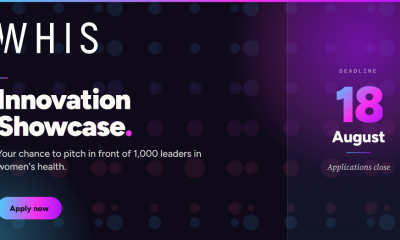
Applications close August 18 for Women’s Health Innovation Summit 2026 Innovation Showcase
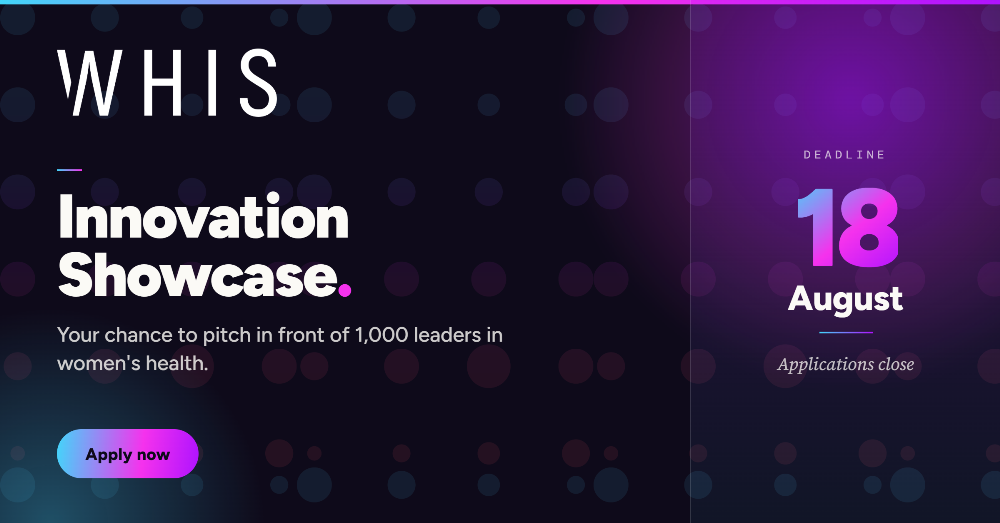
The Women’s Health Innovation Summit (WHIS) has reminded startups that applications for its 2026 Innovation Showcase close on Tuesday, August 18.
The Showcase gives early and growth-stage companies the opportunity to pitch live on stage to the most influential audience in women’s health, at a summit that convenes more than 1,000 senior decision-makers from across the ecosystem, including payers, providers, pharma, and investors.
Now in its eighth year, WHIS takes place October 13–15, 2026 at Encore Boston Harbor.
The event has built a reputation as the leading platform uniting the full women’s health ecosystem, from health systems and health plans to pharmaceutical leaders and the investors funding the next wave of innovation in the space.
A Direct Line to Funding, Partnerships and Adoption
Companies selected for the Innovation Showcase will present directly to an audience with the capital, clinical expertise and commercial relationships to move deals forward.
Past participants have gone on to secure investor introductions, commercial partnerships and clinical collaborations that started as presentations on the WHIS stage and turned into signed agreements.
Applications Reviewed by an Expert Selection Committee
Submissions are being reviewed by a selection committee of leading investors and industry operators, including:
- Parambir Bhangu, Executive Director, External Innovation & Emerging Science, Organon
- Elizabeth Bailey, Co-Founder & Managing Partner, Foreground Capital
- Karla Loken, Founder, Loken and Associates
- Mané Mikayelyan, Associate Partner, DeciBio
- Anna Valcheva, Founder, Managing Director & CEO, Astra Ventures
- Azin Radsan van Alebeek, Co-founder & General Partner, Emmeline Ventures
WHIS is where the women’s health ecosystem comes together to get deals done,” said Poppy Howard-Wall, Event Director of WHIS.
How to Apply
Early and growth-stage companies across digital health, therapeutics, diagnostics, med device and consumer health are encouraged to apply before the August 18 deadline.
Full details and the application form are available at whisusa.com/attend/start-ups.

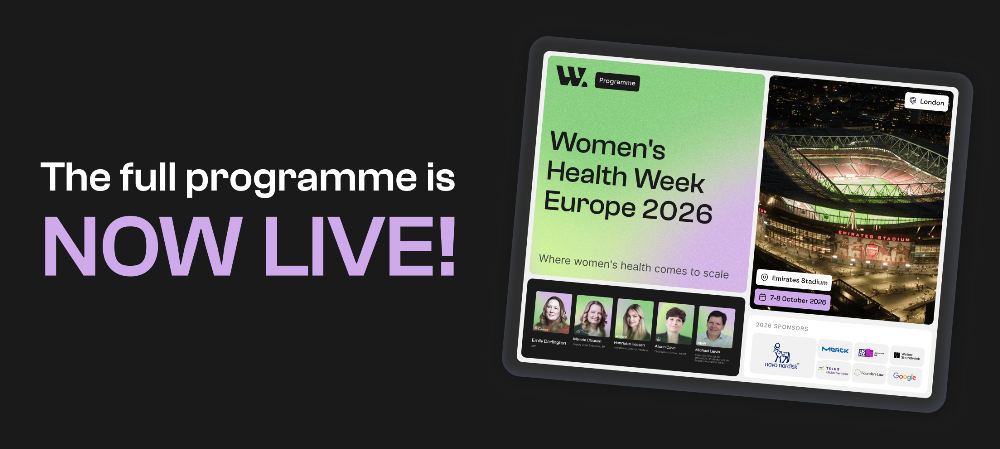
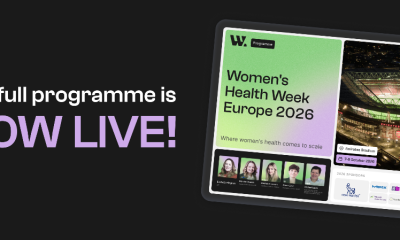
Women’s Health Week Europe 2026 has released its fully populated speaker and session lineup ahead of the event’s return to The Emirates Stadium in London on 7–8 October, with 80+ speakers now confirmed across two dedicated stages.
The programme
The agenda runs across two dedicated stages in parallel, plus two pitch competitions across both days.
The Global Stage opens with a keynote from Merete Clausen (EIF) before moving into sessions on funding trends, AI, the gender data gap, the wearable revolution, and European policy.
Standout sessions include The Age of Digital TransformAItion featuring Nichole Young-Lin (Google), Frida Polli (MIT), and Sapna Shah (Sie Ventures); Lone Wolf or Pack Leader on collaboration versus fragmentation, with Eirini Rapti (Inne), Tatum Getty (Thena Capital), Novo Nordisk, and Jen Roberts-Woods (Borski Fund); and a live debate on whether the women’s health label helps or hinders founders. Day one closes with a keynote from Alison Cave, Chief Safety Officer at the MHRA.
The Scale Stage runs a practical playbook track in parallel, with sessions covering regulatory approval pathways, international expansion, the founder’s legal playbook, PR strategy, and implementing AI into a women’s health business.
The Reverse Pitch flips the usual format: investors and corporates pitch the room on what they are actively looking to fund, acquire, or partner on right now.
Register here and receive a 15% discount on tickets. Redeem with code FEMTECHWORLD
Pitch competitions
The WHW Europe pitch competitions are back, taking place in front of the audience across both days on the mainstage. 16 finalists will compete across two categories: Consumer & Tech on day 1 and Medical Devices & Therapeutics on day 2.
Any company treating a condition that affects women exclusively, differently, or disproportionately is eligible to apply.
Applications and close 28 August 2026.
Previous alumni include Circe, who secured £100k from Innovate UK, BoobyBiome, who closed a £2.5M seed round post-WHW Europe, and Amilis, who secured £1M at London Tech Week after winning at WHW USA 2026.



 Entrepreneur2 weeks ago
Applications close August 18 for Women’s Health Innovation Summit 2026 Innovation Showcase

 Menopause2 weeks ago
Third of women unaware of perimenopause mental health impact

 Fertility7 days ago
Chelsea FC Women to launch first-of-its-kind player fertility fund
 Entrepreneur2 weeks ago
Women’s Health Week Europe 2026 releases fully populated agenda ahead of October summit
 Menopause2 weeks ago
Menopausal hormone therapy may lower dementia risk, study suggests
 Hormonal health2 weeks ago
We are wrapping our children in plastic and calling it care

 Opinion7 days ago
anna perimenopause app launches across 39 markets
 Pregnancy2 weeks ago
Chemicals in plastics may be linked to high blood pressure during pregnancy
4 Comments