




Pregnancy
Pregnancy success rates are similar with day three or five embryo transfer


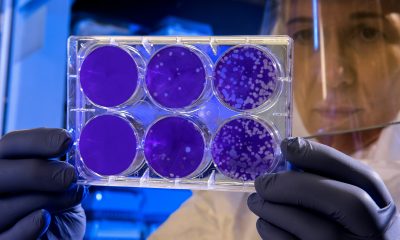
In IVF treatment, embryos are traditionally transferred in the uterus three days after fertilisation. Due to improvements in laboratory techniques, this is now also possible after five days. It was assumed that this increases the chance of a successful pregnancy. Now, a new study by Radboud university medical center and Amsterdam UMC shows that the day of transfer does not influence the success rate of the IVF trajectory.
One out of thirty children in the Netherlands is conceived via in vitro fertilisation, or IVF for short. In this procedure, egg cells are fertilised outside the body and grown in the laboratory for several days. One or more embryos are then transferred back in the uterus and the rest is frozen.
Traditionally, the laboratory phase lasts three days. Due to technical improvements, embryo transfer is now also possible after five days. The idea is that only viable embryos remain after five days, which increases the chance of a successful pregnancy. However, this leaves fewer embryos in the freezer.
Previous research has shown that the chance of success after the first transfer is indeed higher when this takes place on day five than on day three. But these studies did not evaluate the results of the entire IVF trajectory, including any subsequent transfer of frozen embryos.
The same number of pregnancies
The study was conducted in 21 Dutch IVF centres among more than 1,200 women. At least four embryos had to be available for transfer two days after fertilisation. In half of the women, embryos were transferred on day three, in the other half on day five. The outcome was the chance of a successful pregnancy during the entire IVF trajectory. This turned out to be the same in both groups, around sixty per cent.
Researcher Simone Cornelisse said: “Ultimately, IVF is about a successful pregnancy, and not only about the chances of success after the first transfer. Abroad, where IVF care is not insured, clinics often advertise their success rates from the first transfer on day five.
“In doing so, they provide an incomplete representation of the situation. Our study shows that women should have a choice about the moment of transfer.”
Personal decision
Other results from the study may influence that choice. As in previous research, there was a higher chance of a successful pregnancy after the first transfer on day five. There were also fewer miscarriages in that group.
On the other hand, if the embryos were transferred on day three, more could be frozen for later use and the risk of premature birth was somewhat lower. Both choices have advantages and disadvantages, but do not make any difference to the overall success rate.
“It is a very personal decision,” says clinical embryologist Liliana Ramos, one of the study leaders.
“For some people, getting pregnant as quickly as possible is very important, for example if the woman is older. Someone else attaches more value to a larger number of frozen embryos or wants to keep the chance of premature birth as small as possible. There is no guideline regarding the day of transfer. Therefore, a couple who want to become pregnant must discuss it with the doctor and make a choice together.”






Women should not feel pressured into an “ideal birth”, health secretary Yvette Cooper has said as she promised major maternity reform.
Cooper has returned to the Department of Health and Social Care 27 years after serving as public health minister under Tony Blair.
She said maternity and child health would be a major focus of her new role, alongside significant reforms to social care.
In an interview with the Guardian, Cooper said the changes should address any pressure on women to pursue a particular birth experience.

Families affected by maternity failures have repeatedly raised concerns that some units were reluctant to escalate medical interventions because of a preference for more natural births.
Cooper said: “I would worry about any mum feeling pressurised that there is somehow a kind of an ideal birth experience to live up to when it’s always different in every case, and you have to follow the evidence, you have to have informed choice.”
As one of her first actions as health secretary, Cooper said she intended to reintroduce binding national maternity standards.
The standards were dismantled during early Conservative NHS reforms and replaced with fragmented arrangements managed separately by individual hospital trusts.
A new maternity taskforce will draft the standards, which will have five central aims.
These include ending regional differences in levels of care and tackling racial inequalities linked to poorer outcomes in deprived areas, particularly for Black and Asian women.
Patient experiences will also form part of how standards are measured, while new targets will aim to identify underperformance before a major scandal develops.
Cooper, who became the first minister to take maternity leave while serving as a junior health minister in the early 2000s, said reports into maternity scandals had been “traumatic” to read and showed that systemic change was needed.
She said: “We’ve always said the NHS is about the cradle to the grave. I want to make it a personal crusade to put the cradle back at the heart of the NHS, and to have much more focus around maternity and child health, the very beginning of a family’s life, making that much more central to the priorities of the NHS, giving it the priority that it really deserves.”
Cooper said discussions about how maternity services could better listen to mothers’ needs had been taking place for the past two decades.
However, she said the emphasis on placing women and families at the centre of care appeared to have been lost.
She said: “It feels incomprehensible that we could be in this situation in the 2020s. I went back to look at some of the things that we’d done 25 years ago.
“And what did strike me was how much we were talking then about women and families being at the centre of care and about listening to women’s views.
“It is really shocking and distressing feeling that has somehow been lost in some of the maternity units where actually it should be the central issue.
“I had a direct interest. I was pregnant at the time. But I am really struck by it now, just feeling like there is this big gap in the priorities that the NHS has been focused on.”
Cooper said she was determined to provide a robust response to Donna Ockenden’s investigations into maternity failures at Shrewsbury and Telford and Nottingham, alongside Baroness Valerie Amos’s national investigation into England’s maternity system.
The investigations highlighted systemic clinical errors, understaffing and toxic institutional cultures. They found that hundreds of infant and maternal deaths were directly linked to failures to listen to mothers and defensive attempts to protect institutions.
Amos’s review faced criticism, including the resignation of an expert adviser over the lack of explicit warnings about “normal birth ideology”.
Families also questioned whether the review’s proposed statutory maternity commissioner would have sufficient independence.
Cooper said she remained committed to introducing the role.
She said: “In the end, the most important people in the maternity services are the mothers, babies, the families. But the point of having a maternity commissioner is to make sure that those issues are championed as part of an NHS.”
She also said reforms needed to address an oppositional culture between doctors and midwives in some trusts over when medical intervention during birth may be necessary.
Cooper said: “The thing that struck me most was the sense of women feeling they weren’t being listened to … And I think that probably does go back to issues around culture.”
Cooper, who served as foreign secretary until recently, said she was prepared for a difficult period in the health role as she sought to implement Andy Burnham’s social care reforms.
She said she remained committed to establishing the national care service announced by the prime minister the previous week.
A longstanding ally of former prime minister Keir Starmer and a former rival of Burnham in the 2015 Labour leadership contest, Cooper said she believed the change of prime minister had been necessary.
She said: “Of course it’s not easy. I really did not think it was possible to win the election when I came back into the shadow cabinet in 2022. It’s only because of what Keir did that we managed to win.
“But we had very difficult local election results … we have to respond to that. But I think we’ve got a sense of energy now.
“All of the things that Andy wants to focus on and drive are also just very much the things that that people are concerned about across the country.”


Daily beetroot juice may help support kidney health during pregnancy in women with chronic kidney disease, early research suggests.
Pregnancy puts additional strain on the kidneys. Around half of women with moderate to severe chronic kidney disease experience a decline in kidney function while pregnant.
Despite these risks, outcomes for pregnant women with the condition have changed little over the past 30 years.
Many medicines used to manage kidney disease are also unsuitable during pregnancy, meaning women often need to stop taking them for at least nine months.
Researchers at King’s College London examined whether dietary nitrate from beetroot juice could offer a simple and safe way to support kidney function during pregnancy.
Beetroot juice is naturally rich in nitrate, which the body converts into nitric oxide. Nitric oxide widens blood vessels and improves blood flow, which could reduce the strain placed on the kidneys during pregnancy.
The study involved 108 pregnant women with stage 2 to 5 chronic kidney disease across eight UK hospitals.
Before reaching 25 weeks of pregnancy, participants were randomly assigned to receive either standard care or a daily beetroot juice supplement containing dietary nitrate.
The study was mainly designed to assess whether a larger clinical trial would be practical. However, the findings also suggested possible benefits for mothers and babies.
Kate Bramham, consultant nephrologist at King’s College Hospital, professor at King’s College London and senior author of the study, said: “For women living with chronic kidney disease, pregnancy has always meant navigating a difficult trade-off between preserving their own health and keeping their baby safe, often with few tools to do both.
“These results are an encouraging first step towards a low-cost, low-risk intervention that could genuinely make a difference for this group of women, who have been underserved by research for far too long.”
Women receiving beetroot juice experienced around 70 per cent fewer serious adverse events overall than those receiving standard care. Of the serious adverse events that occurred, around half affected newborn babies.
Among women with more advanced kidney disease, researchers also observed trends towards better kidney function after pregnancy, fewer newborn admissions to neonatal care and a reduced need for blood pressure medication during pregnancy.
The researchers found no safety concerns linked to beetroot juice supplementation during pregnancy, including no increase in hyperkalaemia, which means unusually high potassium levels in the blood.
There have been concerns that beetroot juice could increase the risk of hyperkalaemia in pregnant women with chronic kidney disease, with some online advice recommending that they avoid it. However, no increase was recorded among women receiving the supplement.
Dr Priscilla Smith, a nephrologist, King’s College London PhD student and first author of the study, said: “Pregnancy can put additional stress on the kidneys, and for women with chronic kidney disease there are currently limited options to protect kidney function during this time.
“Our findings suggest beetroot juice could offer a simple and accessible approach that is safe and worth exploring further.”
The researchers said larger clinical trials are now needed to determine whether beetroot juice can significantly reduce kidney function decline and improve long-term outcomes for mothers and babies.
If confirmed, the intervention could offer an inexpensive and widely available way to support women with chronic kidney disease during pregnancy, when safe treatment options remain limited.
The research was supported by funding from Kidney Research UK.
Dr Andrew Webb, clinical senior lecturer at King’s College London and a co-author of the study, said: “By increasing nitric oxide production, dietary nitrate from beetroot juice may help improve blood vessel function and support kidney health.
“These early findings provide an important foundation for future research into protecting women with chronic kidney disease during pregnancy and their babies.”
Ectopic pregnancy admissions have risen in England since 2021, according to a 20-year analysis of NHS data.
Women in the most deprived areas had more than twice the admission rate of those living in the least deprived communities.
The study was the first 20-year national analysis of NHS England data on the issue.
Dr Nicola Tempest, academic clinical lecturer in the University of Liverpool’s Department of Women’s and Children’s Health, said: “Pregnancy loss affects millions of women worldwide, yet we know surprisingly little about how its prevalence and impact has changed over time.
“Our research shows that admissions for ectopic pregnancy have continued to rise despite declining birth rates, highlighting an ongoing demand for NHS services.
“Women from the most deprived areas consistently experienced much higher admission rates for both miscarriage and ectopic pregnancy, underlining persistent health inequalities.
“Pregnancy loss should be recognised as a major women’s health research priority so we can better understand its causes and develop services that meet women’s needs and address the risk factors that are contributing to these rates.
“Importantly, research must address one of the most common and deeply personal questions women ask after pregnancy loss: ‘Why did this happen to me?’”
Ectopic pregnancy is one of the most common early pregnancy complications, with an estimated 11,000 hospital admissions each year, or around one in every 90 pregnancies.
It occurs when a fertilised egg implants outside the womb. Ectopic pregnancies result in pregnancy loss and can put the mother’s health at risk if the pregnancy continues.
Researchers at the University of Liverpool analysed hospital and maternity services data collected between 2004 and 2024.
Admissions rose significantly from 2004 to 2012, increasing by an average of around three per cent each year.
Rates remained broadly stable from 2012 to 2021 before rising significantly again.
Since 2021, admissions have increased by an average of more than four per cent a year.
The researchers said the recent rise may reflect demographic changes, including women having children later and higher rates of risk factors such as obesity.
Disruption to hospital and maternity services during the Covid-19 pandemic may also have contributed.
The study also found that miscarriage admissions fell significantly between 2018 and 2021. They rose modestly in subsequent years, although the increase was not statistically significant.
A result is statistically significant when researchers consider it unlikely to have occurred through chance alone.
For more than a decade, women in the most deprived communities had more than twice the hospital admission rate for miscarriage and ectopic pregnancy compared with those in the least deprived areas.
The researchers pointed to preventable inequalities in health, risk factors and access to care as likely contributors.
Tempest said: “These findings show that where a woman lives continues to have a profound influence on her reproductive health outcomes.
“Ultimately, reducing these inequalities will require an equity-focused approach that combines high-quality clinical care with prevention, education and services designed around the needs of the communities most at risk.
“Behind every admission for pregnancy loss, there is a woman, a family and an unanswered question, our aim and mission is not only to improve the care but also to understand and prevent it.”










 News3 days ago
UK femtech investment surges 194% in a decade, research finds

 Entrepreneur2 weeks ago
Fertility startup American Baby Company secures US$4m

 Insight2 weeks ago
Natural Cycles receives sixth FDA clearance for fertility algorithm
 Wellness7 days ago
Cancer patient receives ‘landmark’ treatment in world-first

 Insight2 weeks ago
Experimental treatment significantly slows progression of fatal brain disease in women, study finds

 Sponsored Content2 weeks ago
The room is filling up at WHW Europe 2026 with super early bird pricing ending this Friday

 Cancer1 week ago
Johnson & Johnson offers to pay US$5.5bn to settle talc cancer lawsuits

 Wellness2 weeks ago
Planetary Health Diet lowers heart risk in older women, study finds