




Hormonal health
Unleashing the power of AI to create a new era of hormone testing


How often do you talk about hormones? For a lot of women, it’s probably not enough. We might joke about pre-period chocolate cravings or hot flashes, but there’s a lot more to the conversation.
However, our hormones are responsible for a lot more than we give them credit for. They regulate our appetite, libido, sleep, heart rate, mood and stress levels and they keep us healthy and help us perform.
These chemicals are the body’s messenger system for various processes. A minor imbalance, no matter how small, can cause significant effects.
Getting better at understanding our hormones could go a long way towards helping us work with our body’s natural rhythms, yet conventional methods fail to give women the whole picture.
“Currently, hormonal testing is done through blood tests which means that you test all hormones on the day you take the blood test,” explains Jasmine Tagesson, co-founder and COO of the women’s health company Hormona.
“However, because our hormones fluctuate throughout the cycle that doesn’t tell you much.”
The other issue with current methods of hormonal testing, Tagesson says, is that the “normal” ranges are so wide that it’s unlikely to get “abnormal” results.
“The same ‘normal’ values might suggest different things for different people. Because we are so different, we need to find a way to look at our hormones in a more personalised way.”
Hormona, a data-driven start-up Tagesson has founded with her childhood best friend Karolina Lofqvist, aims to bridge this gap.
The company uses AI and a soon-to-be-released at-home test to help women track their hormone levels and better understand their bodies.

“So many women and girls suffer with period pain and menstrual problems” says Tagesson. “We want to help them understand what it is that they are struggling with and what they can do about it.”
The lateral flow urine-based tests assess three key hormones for measuring menstrual, reproductive, and menopausal health — FSH (follicle-stimulating hormone), progesterone, and oestrogen. The results are quantified through Hormona’s machine learning prediction model, enabling the platform to detect hormone levels in the sample provided.
The tests are designed to not only help women stay in tune with their bodies, but to also help them spot early signs of hormonal imbalances or gynaecological health conditions, such as PCOS.
“Depending on your cycle, the app will tell you exactly what day to take what tests. You can simply scan the test with your mobile camera and get the results within 15 minutes.”
Educating women
Hormona, however, is not solely focused on hormone testing. The London-based company and winner of this year’s Femtech World Research Project of the Year Award aims to educate women through its app, which allows users to track their symptoms and get personalised hormonal health advice.
“We don’t talk about our periods and hormones nowhere near enough,” Tagesson says.
“We have very little research on women’s health and a lot of the research that’s used today is based on studies that were done 20-30 years ago. Our lives look very different now, the environmental stressors are very different, and the way they impact our cycles is very different.
“With our app, our aim is to provide the education that has been lacking for so many women. We already track our sleep and physical activity, so why not track our hormones too?”
The app, designed alongside a team of endocrinology, gynaecology and nutrition experts, is also there to guide women after they’ve taken the tests.
“When it comes to hormone health, a lot of the changes that are required are related to lifestyle and diet. So, we offer our users holistic plans that aim to address the hormonal issues they are facing.
“For us, it’s important to provide women with a range of options and tools; it’s up to each individual to pick the one that works best for them. We’re all different and what works for me may not work for you.”
Tagesson’s dream would be for Hormona to be the global leader when it comes to hormone health.
“Educating girls and women from a young age so that they can know what is going on with their bodies is very powerful. I would love for Hormona to be the platform doing that,” she says.
On a more personal level, the London-based entrepreneur would like for the company to collaborate with scientists to bring more research into the world.
“Our aim is to use the information we’re collecting to change the way we approach women’s health. Currently, we are looking at how women feel during the ovulation phase.
“It is wildly accepted that during ovulation, you should feel your best, but many women have told us that they don’t actually feel that great.
“We’re hoping that with our internal study we can better understand why only some women feel good during ovulation and subsequently change some of the ways in which we look at this phase.”
To receive the Femtech World newsletter, sign up here.










Women using PIEDs reported difficulty accessing reliable information, testing and clinical expertise, according to a qualitative study.
Researchers interviewed nine women who used performance- and image-enhancing drugs, primarily to enhance body composition, physical appearance or sporting performance.
Participants reported problems accessing comprehensive blood and hormone testing and finding clinicians familiar with health concerns linked to women’s use of these drugs.

This has been a male-dominated area of research for a long time, so there are significant gaps in understanding women’s health care needs.
The research, led by University of Queensland School of Psychology PhD candidate Hannah Schuurs, explored how the women managed their health while using PIEDs, which include substances such as steroids and peptides.
Schuurs said: “We interviewed nine women who use PIEDs about how they managed their health throughout their PIED use.
“They reported difficulty accessing reliable information and a lack of clinical expertise and formal health care support.
“The study participants were all active in self-monitoring, tracking changes in their bodies, and actively sought formal health care support.
“But they found it hard to access comprehensive blood and hormone testing, or clinicians who were familiar with the unique health concerns associated with women’s PIED use.”
The study found participants spent considerable time educating themselves about the drugs and their potential risks.
“They often found themselves educating healthcare professionals rather than receiving guidance tailored to their circumstances.
Schuurs said: “The participants had spent considerable time educating themselves about PIEDs and their risks and found they were often educating their health care providers, rather than receiving guidance tailored to their circumstances.”
“Structural and systemic barriers shifted a disproportionate level of responsibility for harm reduction and care coordination onto the women themselves.”
Participants were also aware of sex-specific risks, including hormonal disruption and virilisation. Virilisation is when masculine physical traits develop due to high levels of androgens.
However, the women did not necessarily expect healthcare professionals to have all the answers.
Schuurs said: “Participants were often understanding of gaps in clinical knowledge, provided they were met with openness and a willingness to work collaboratively.
“They emphasised that respectful, nonjudgmental health care relationships were just as important as technical expertise.”
The findings also challenged stereotypes that people using PIEDs are uneducated or indifferent to their health.
Participants reported actively managing their health while navigating stigma, uncertainty and gaps in healthcare.
Schuurs said: “The participants actively managed their health and navigated stigma, uncertainty and gaps within health care.”
“We need health care responses that are collaborative rather than judgmental, as those narratives can oversimplify people’s experiences and make it harder for them to seek support.”
She said the research showed PIED use could form part of wider goals relating to health, wellbeing, performance and self-management.
Schuurs said: “Better understanding women’s experiences is critical if we want health care systems to respond effectively and ensure women can access the support they need.”
“There is a real opportunity to improve education, clinical guidance and support for health care professionals in this space that values and draws from the lived experience of women themselves.”

Women later diagnosed with endometriosis used more antidepressant and anxiety medication than other women, with the pattern emerging years before diagnosis, recent study found.
The difference was evident up to 10 years before diagnosis and continued for a decade afterwards, according to a large Danish registry-based study involving 136,842 women.
Women with the condition also had substantially more contact with psychiatric hospital departments than those without it.
Researchers at Aarhus University found that women with endometriosis redeemed 29 per cent more prescriptions for antidepressants and 16 per cent more for anxiety medication in the years before diagnosis.
After diagnosis, the differences rose to 40 per cent for antidepressants and 46 per cent for anxiety medication.
Marie Josiasen, PhD student at the department of public health and one of the researchers behind the study, said: “What surprised us was how clear and persistent the pattern was, and that the difference did not diminish over time.
“On the contrary.
“Women with endometriosis consistently redeemed more prescriptions for antidepressant medication than women without the disease throughout the entire period, from ten years before to ten years after diagnosis.”
The study does not provide an answer as to what causes the mental strain.
Josiasen said prolonged pain, uncertainty about the cause of symptoms and fertility problems could be among the factors contributing to psychological strain.
She said: “It’s possible that prolonged pain, uncertainty about the cause of the symptoms, and frustration over not being able to live the life one wants may be among the reasons. For some women, fertility problems can also be a major psychological burden.”
Researchers also found that the gap compared with women without endometriosis did not narrow after diagnosis. Instead, it became more pronounced in the years that followed.
Josiasen said: “A diagnosis can be a relief, but it also involves coming to terms with having a chronic illness.”
The study does not indicate whether diagnosing endometriosis earlier could reduce psychological strain.
As part of her PhD project, Josiasen will investigate the role hormonal contraception may play in the mental health of women with endometriosis.
She said: “We can see that many receive medication and are in contact with psychiatric services. But we still lack an understanding of what actually helps these women.
“That’s what I want to help find out.”
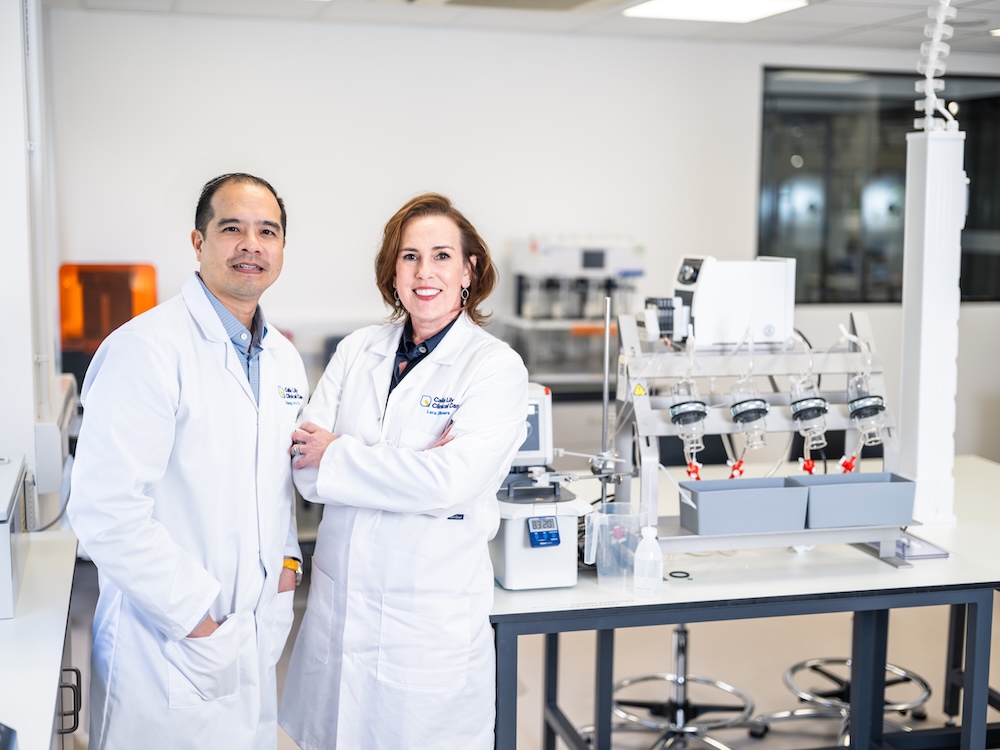
Calla Lily Clinical Care has joined a US$50m antibiotics programme to assess vaginal delivery of UTI treatments through its Callavid platform.
The women’s health medical technology company will evaluate whether antibiotics can be delivered directly through the vaginal wall to treat urinary tract infections (UTIs).
The project will use Callavid, the company’s intravaginal drug delivery platform, aiming to deliver treatment to the site of infection while limiting systemic exposure.
Calla Lily has been selected for Wellcome Leap’s Focused Antibiotics programme, which is exploring ways to reformulate existing antibiotics so they reach infections while sparing the gut microbiome without loss of efficacy.

Dr Serena de Gelidi, Principal Investigator and R&D Manager, Calla Lily Clinical Care
The programme is backed by US$50m and aims to investigate technologies that could reduce the unintended effects of antibiotic treatment.
UTIs are among the most common bacterial infections in women. According to the source material, women are prescribed almost 40 per cent more antibiotics than men between the ages of 16 and 54.
Calla Lily will assess whether Callavid can deliver antibiotics through the vaginal wall while bypassing gastrointestinal transit and first-pass metabolism.
The company expects the approach could keep systemic exposure below 5 per cent.
There is currently no first-line UTI antibiotic available in a mass-manufactured vaginal formulation, according to Calla Lily.
The company said a successful project could contribute to the wider programme’s goal of reducing antibiotic-driven resistant infections by up to 40 per cent a year.
Callavid has a patented, leak-free, tampon-like design intended to deliver medicines and hormones through the vagina.
The platform is already being assessed in the NIHR-funded FREEDOM trial, which is studying vaginal progesterone delivery using Callavid.
That study began in April 2026 and is examining safety, user acceptability and drug absorption. According to the company, it has passed its safety stopping rule and 90 per cent of patients have completed their first round of dosing.
Dr Lara Zibners, co-founder and chair of Calla Lily Clinical Care, said: “Women are disproportionately impacted by urinary tract infections, yet the consequences of that repeated systemic exposure have been largely overlooked. Organisations such as Wellcome Leap play a vital role in tackling major healthcare challenges through bold innovation. We are honoured to be part of the Focused Antibiotics programme and to explore the potential of Callavid in a foundational antibiotic application, demonstrating how women’s health innovations can deliver benefits far beyond fertility and reproductive care.
Thang Vo-Ta, co-founder and chief executive of Calla Lily Clinical Care, said: “Being selected by Wellcome Leap, one of the world’s most ambitious health innovation funders, is a significant validation of what we are building at Calla Lily Clinical Care. Our ambition has always been for Callavid to become the defining platform for intravaginal drug delivery across a wide range of indications. The Focused Antibiotics programme gives us the ideal partner to pursue one of the most consequential of those indications: treating the world’s most common bacterial infection in women while helping to address a global resistance crisis that, left unchecked, could claim eight million lives annually by 2050. This marks a pivotal moment in demonstrating that when you solve for women, you solve for everyone.”
The project will be led by Dr Serena de Gelidi, principal investigator and R&D manager at Calla Lily Clinical Care.
She will be supported by Professor Andrew Lewis, principal scientist at the company and an international authority on drug-eluting systems, with 58 patents and more than 260 peer-reviewed publications.









 Entrepreneur2 weeks ago
Applications close August 18 for Women’s Health Innovation Summit 2026 Innovation Showcase

 Mental health2 weeks ago
Third of women unaware of perimenopause mental health impact

 Fertility6 days ago
Chelsea FC Women to launch first-of-its-kind player fertility fund

 Entrepreneur2 weeks ago
Women’s Health Week Europe 2026 releases fully populated agenda ahead of October summit
 Menopause1 week ago
Menopausal hormone therapy may lower dementia risk, study suggests
 Hormonal health2 weeks ago
We are wrapping our children in plastic and calling it care
 Pregnancy2 weeks ago
Chemicals in plastics may be linked to high blood pressure during pregnancy

 News2 weeks ago
Women with endometriosis face 46% higher risk of type 2 diabetes – study
1 Comment