



News
The Top 3 Crypto Projects Driven by Women in the Blockchain Industry


The leadership space of cryptocurrency is changing slowly. The historically male-dominated industry has seen a shift towards female participation in recent years, but that has not always been the case.
In the past, women have been seen as less likely to take investment risks. Statistics still show that there is less interest in funding female founders, and the workforce is still slow to adopt women in crypto workplaces.
Despite more women vying for positions in the digital currency space, in 2021, less than 20% of the space was female-led, and it was estimated that of the top 120 currencies, only 5 had female owners. In the same year, while men set out to buy crypto with credit card, only 9% of women knew how the crypto landscape actually worked. While the growth has been slow over the years, by 2022, 29% of cryptocurrency investors were female. In 2023, the number jumped to 34%.
1. Lightning Labs
Elizabeth Stark has shown that women are capable of great things. Not only is she a Yale University lecturer and entrepreneur, but she is also the CEO and co-founder of Lightning Labs, which was established in 2016. Under Stark’s leadership, Lightning Labs set out to transform blockchain technology from its headquarters in San Francisco.
As a technology start-up, Lightning Labs made blockchain transactions faster and more cost-effective by developing an L2 (Level Two) open protocol layer. The layer leverages smart contracts and the blockchain to process transactions in a scalable manner. The development also allowed new markets to access Bitcoin transactions at a lower cost, which had a positive effect on a BTC price prediction.
Another feather in Lightning Labs’ cap is the creation of the Lightning Network Daemon. Alongside this, the Stark-led enterprise launched the Lightning Network protocol, designed to be developer-friendly. Both aim to connect the next generation of FinTech with the global market through open-source software.
Stark is a Coin Centre fellow and advisor for companies dealing in cryptocurrency and related initiatives. During her time at Stanford and Yale, she taught about the Internet’s impact on law, society, and the economy. She holds a Juris Doctor from Harvard Law School and has also worked closely with start-ups in the fields of AI and decentralized technology.
2. Colendi
Colendi was founded in 2016 out of Switzerland to enhance the FinTech ecosystem through the use of blockchain technology. Colendi was co-founded by Mihriban Ersin Tekmen, who also serves as Colendi’s COO. At its heart, Colendi is a secure blockchain-based credit scoring platform used by global FinTech firms. The Colendi platform allows for the development of credibility valuations and financial applications.
The tools developed by Colendi have made it easier to enhance programs that deal with installment procurement, P2P financing, and microcredit. And, there is no slowing down for Colendi; more systems are planned for the protocol, which will help millions of people globally access funds they would never have been able to use traditional finance routes.
The ultimate goal for Colendi is to offer inclusive support to every unbanked global citizen in the microfinance field. Tekmen, as the Colendi COO, is a relative newcomer to the blockchain field, and as such, she has become an advocate for women leading the charge in the sector. She graduated from Istanbul University, and her first job was a PM for the EU and European Commission.
Her position with the EU and EC catapulted her on a path as an entrepreneur in FinTech. She co-founded Ininal in Turkey, which reached 1 million active users in less than six years. Tekmen also founded and edited FintechTime, the leading FinTech magazine in Turkey.
3. BitPesa
BitPesa is an exchange and payment platform launched by Elizabeth Rossiello in 2013. The platform is aimed at emerging markets and runs on the blockchain. Under the leadership of Rossiello, its CEO, BitPesa was the first cryptocurrency platform to connect Africa’s mobile money platforms to Bitcoin.
It is well-known that cryptocurrencies can have a lasting impact in emerging markets where traditional banking services are limited. As such, BitPesa set out to develop a digital payment platform that accepts Bitcoin. BitPesa helps users trade their local currency for Bitcoin and send money to mobile wallets and bank accounts.
Thanks to Rossiello, BitPesa now covers not only African countries but European as well. Rossiello began her career as a rating analyst for microfinance institutions in Africa, working with the organizations like the Gates Foundation. She holds an M.A. in International Business and Finance from Columbia University and co-chairs the World Economic Forum’s Council on Blockchain.
Conclusion
Cryptocurrencies have traditionally been male-dominated, but today, women are carving out their own paths. Women are taking the lead on global crypto-projects that are changing the world. Far from the world of making money, the projects headed up by women are making sustainable changes that will ensure the future of communities and the technology behind blockchains.
From creating systems of inclusivity to redefining blockchain technology, women are paving the way for the future. The number of women in crypto-driven projects will hopefully increase as more women advocate for better changes in the FinTech sector.


Women with osteoporosis may be more likely to carry a gene linked to Alzheimer’s, according to new research.
Scientists found that APOE4, the most common genetic risk factor for Alzheimer’s, can weaken bone quality in women, even when standard scans appear normal.
The study, carried out by researchers at the Buck Institute for Research on Ageing in California, US, and UC San Francisco, suggests the gene may damage bone at a microscopic level long before any visible signs.
These changes can emerge as early as midlife and remain invisible to routine imaging tests used to assess bone strength.
The findings suggest a link between Alzheimer’s risk and skeletal health and could help pave the way for earlier detection of both conditions.
Professor Birgit Schilling, a senior author of the study, said: “What makes this finding so striking is that bone quality is being compromised at a molecular level that a standard bone scan simply will not catch.
“APOE4 is quietly disrupting the very cells responsible for keeping bone strong – and it is doing this specifically in females, which mirrors what we see with Alzheimer’s disease risk.”
Doctors have long observed that people with Alzheimer’s suffer higher rates of bone fractures, while osteoporosis in women is known to be one of the earliest predictors of the disease.
Now scientists believe they may have uncovered why.
Researchers led by Dr Charles Schurman carried out a detailed analysis of proteins in aged mouse bone and found that tissue was unusually rich in molecules linked to neurological disease, including those associated with Alzheimer’s.
In particular, long-lived bone cells known as osteocytes showed elevated levels of APOE, with levels twice as high in older female mice compared with younger or male animals.
Further experiments using genetically modified mice revealed that APOE4 had a strong and sex-specific impact on both bone and brain tissue.
The disruption at the protein level was even greater in bone than in the brain.
However, the bone structure itself appeared completely normal under scans.
Instead, the gene interfered with a key maintenance process inside bone cells, preventing them from repairing microscopic channels that keep bones strong and resilient.
When this process breaks down, bones become more fragile even if they look healthy on standard imaging.
These results suggest bone cells could potentially act as early biological warning signs of cognitive decline in women carrying APOE4.
Professor Lisa Ellerby, another senior author, said: “We think targeting these cells may open a new front in preserving bone quality in this population.”
Experts say the findings highlight the need to view the body as an interconnected system rather than treating diseases in isolation.
Dementia, of which Alzheimer’s is the most common form, remains one of the UK’s biggest health challenges.
Around 900,000 people are currently living with the condition, a figure expected to rise to 1.6 million by 2040.
It is already the leading cause of death, responsible for more than 74,000 deaths each year.



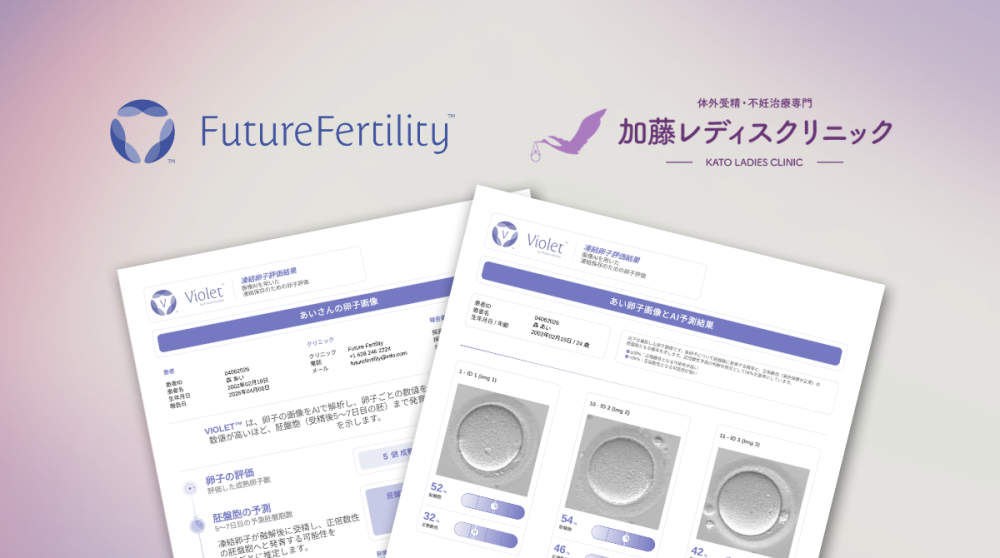
Future Fertility, a Toronto-based health technology company specialising in AI-powered fertility insights, has entered the Japanese market through a new commercial partnership with Kato Ladies Clinic — a globally recognised leader in IVF research and advancing clinical fertility care.
The collaboration marks Future Fertility’s first partnership in Japan and reflects growing global demand for technologies that bring greater objectivity and personalisation to fertility care.
Kato Ladies Clinic will integrate the company’s AI-powered oocyte (egg) quality assessment tools into its clinical workflows, with the aim of supporting more informed treatment planning and patient counselling across IVF and egg freezing cycles.
“At Kato Ladies Clinic, we are committed to advancing fertility care through innovation while maintaining a strong focus on individualised, patient-centred treatment,” said Keiichi Kato, chief executive officer.
“Partnering with Future Fertility enables us to integrate objective, data-driven insights into our clinical approach and better support our patients in making informed decisions.”
Future Fertility’s platform analyses images of oocytes using artificial intelligence trained and validated on a dataset of more than 650,000 unique oocyte images.
The technology is already in use at more than 300 clinics across more than 35 countries, helping clinicians better understand the developmental potential of individual eggs and provide patients with more personalised insight earlier in their treatment journey.
From Research Collaboration to Clinical Adoption
The partnership between Future Fertility and Kato Ladies Clinic began as a scientific research collaboration in 2024, marking the first use of AI-powered oocyte quality assessment in Japan.
The collaboration not only validated the technology in a new patient population and across diverse clinical protocols — including minimal stimulation cycles —but also resulted in a peer-reviewed publication in Reproductive BioMedicine Online (RBMO) and a poster abstract presentation at ESHRE 2025.
The joint research explored how AI-derived oocyte quality scores relate to early embryonic development and overall treatment outcomes. In a retrospective study conducted at Kato Ladies Clinic, researchers analysed nearly 2,800 mature oocytes across more than 1,300 ICSI cycles, linking image-based assessments of egg quality to key developmental milestones.
The study demonstrated that lower AI scores were associated with reduced fertilization rates, delays, and abnormalities in early embryo development, increased developmental errors, and lower-quality blastocyst formation.
Notably, the researchers also found that cumulative oocyte scores were a stronger predictor of live birth outcomes than the number of eggs retrieved — underscoring the importance of assessing egg quality alongside quantity.
“Our collaboration with Future Fertility has demonstrated how artificial intelligence can uncover meaningful biological differences between oocytes that were previously difficult to quantify,” said Kenji Ezoe, senior scientist.
“Bringing this technology into routine clinical use is an important step toward translating research into improved patient outcomes.”
Future Fertility’s VP of clinical embryology & scientific operations, Jullin Fjeldstad, noted that the findings provide important clinical validation.
“Our joint research with Kato Ladies Clinic has shown how AI-based oocyte assessment can be directly linked to numerous embryo development outcomes, from fertilization through early developmental milestones and blastocyst formation,” she said.
“We are excited to see this work translated into clinical practice.”
Growing Demand for Fertility Care in Japan
The partnership comes at a time when demand for fertility treatment in Japan continues to rise.
The country performs over 450,000 fertility treatment cycles annually, making it one of the largest markets globally. Delayed childbearing and evolving societal trends have also contributed to increasing interest in egg freezing.
As patients seek more clarity and personalization in their care, tools that provide earlier insight into reproductive potential are gaining traction.
“Entering the Japanese market with a partner like Kato Ladies Clinic is a significant step forward for our global commercial strategy,” said Rafael Gonzalez, Future Fertility’s VP of global sales & strategy.
“It reflects the growing demand for technologies that support more transparent, data-driven fertility care across diverse healthcare systems.”
Expanding a Global Footprint
Founded in 1993, Kato Ladies Clinic is known for its pioneering work in natural and minimal stimulation IVF and has long been a leader in clinical innovation in Japan.
For Future Fertility, the partnership represents both a geographic expansion and a continuation of its broader mission to bring AI-driven insights into routine fertility care.
“We are proud to partner with Kato Ladies Clinic, a globally respected leader in IVF and a pioneer in reproductive medicine in Japan,” said Future Fertility’s CEO, Christy Prada.
“This partnership represents an important milestone as we expand into Asia and continue our mission to bring objective, personalised insights into fertility care worldwide.”
Future Fertility develops AI-powered tools designed to generate personalised insights across the fertility journey.
Its flagship oocyte assessment technologies analyse egg images to provide objective, individualised measures of egg quality, supporting treatment planning, patient counselling, and clinical decision-making in egg freezing and IVF, while also enabling more data-driven approaches to donor egg distribution and quality assurance.
As fertility care continues to evolve, collaborations like this one are helping shape a new standard — one that emphasises earlier insight, greater transparency, and more personalised decision-making for patients navigating increasingly complex reproductive journeys.












 Entrepreneur2 weeks ago
Three sessions that show exactly where women’s health is heading in 2026

 News4 weeks ago
Luna and Kindbody partner to bring data-driven insight to women’s health and fertility care

 News4 weeks ago
Femtech World Awards announces deadline extension

 Fertility4 weeks ago
Menstruation costs £20,359 a lifetime, sparking calls for Government action

 Menopause3 weeks ago
California plans US$3.4m menopause care overhaul

 Entrepreneur4 weeks ago
Halogen Ventures surpasses 100 investments in female-founded startups

 Menopause3 weeks ago
Watchdog bans five ads for women’s heath claims

 Pregnancy2 weeks ago
How NIPT has evolved and what AI NIPT means in 2026
66 Comments