



Opinion
How Generative AI In Drug Discovery Is Advancing Women’s Health


For years, drug discovery has been a lengthy and expensive process. This creates challenges for developing treatments, including those for women’s health conditions.
Thankfully, the widespread adoption of artificial intelligence (AI) and machine learning in drug development can help address these challenges. Generative artificial intelligence, for example, can help make clinical trials more efficient in many ways. It’s more than just a data analysis tool. It’s an engine that drives new treatments for women’s unique healthcare needs.
Accelerating Drug Discovery for Female-Specific Conditions
Pharmaceutical R&D (research and development) finds new drugs by screening millions of existing compounds to see if any of them have a desired effect on a certain disease. It’s a time-consuming and costly task. Worse, it’s possible to miss other potential solutions because the drug target discovery is limited to what already exists.
Generative models for drug discovery improve the early stages of the process. Rather than relying on the slow and labor-intensive trial-and-error method, pharmaceutical companies can perform virtual screening and create entirely new molecules from scratch.
Key Artificial Intelligence Models
The approach, called de novo drug design, taps generative AI to make this possible. Its core components, deep learning (DL) and machine learning (ML), can tap artificial neural networks to study large and. unstructured and structured datasets. Deep learning can predict protein structures and analyze complex therapeutic targets, while ML studies biological data to identify possible drug targets.
Deep generative models learn from the existing training data, for instance, from the Simplified Molecular Input Line Entry System (SMILES), to create new and synthetic data points. Most researchers use generative adversarial networks (GANs) and variational autoencoders (VAEs) to generate optimized molecules and predict their interactions with the disease in question.
Graph neural networks, an ML model, can also be trained on molecular graphs to forecast molecular properties and biological activities. Large language models (LLMs) automate literature review and hypothesis formulation for easier target identification.
It takes way less time for this powerful platform to generate thousands of new and effective molecules compared to humans. This capability allows researchers to explore a wide range of treatments for complex conditions like uterine fibroids, which are treated with limited options.
Targeting Complex Women’s Conditions
Most female conditions are often undiagnosed or misdiagnosed because their symptoms could vary widely. Endometriosis and polycystic ovary syndrome (PCOS), for example, don’t have a single cause and involve intricate biological pathways. They’re also two of the most common yet under-researched conditions.
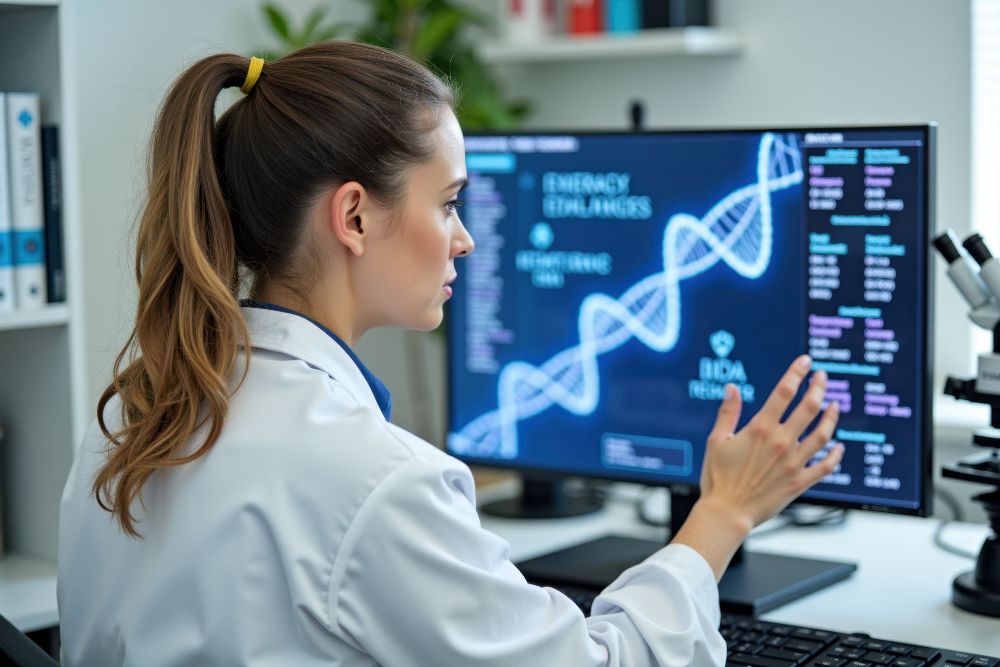
Generative AI can study vast amounts of clinical and genomic data to pinpoint the most effective disease targets and molecular designs that interact with them accurately. Molecular property prediction and drug-target interaction are essential from the get-go. Researchers rely on these important aspects to narrow their list of potential treatments and lower the time and cost needed to pursue clinical studies. This efficiency leads to more targeted and effective therapies for female patients.
Personalized Treatments for Hormonal Disorders and Menopause
A one-size-fits-all approach to medicine often fails. That’s why research teams use generative AI to take a patient’s unique data and access the drug-gene interaction database to design a drug or treatment plan tailored just for them. With these available datasets, clinical research organizations can determine the best drug options, dosage, and potential side effects.
Personalized medicine is also critical for women who experience wide variations in how conditions and treatments affect them. Many generative AI platforms for women experiencing menopause utilize natural language processing and LLM to analyze symptoms, hormone levels, and lifestyle factors, and create personalized treatment plans.
Improved Diagnostics for Breast, Ovarian, and Cervical Cancers
Oncology R&D uses generative AI to automate and enhance key aspects of medical image analysis and data interpretation. It can create new, synthetic data to train AI models and improve the quality of existing images, making early detection possible.
GANs, for instance, can create realistic mammograms, ultrasounds, and MRI scans to test other models and improve their ability to detect even subtle abnormalities. Doing so reduces false positives and negatives and leads to more time and precise diagnoses.
Apart from enhancing cancer screenings, the platform can integrate clinical data and use the information to calculate a patient’s risk score. As such, it can help clinicians prioritize high-risk patients for further follow-up and treatment.
Considerations
AI in general is only as good as its training data. However, historical gaps in clinical trial participation can skew AI predictions and lead to biased results. That said, it’s a good approach to validate these models across diverse female populations to avoid generalizations. Moreover, data protection is a must in compliance with ethical and regulatory regulations. Researchers must ensure privacy and fairness in AI-driven decisions.
Final Words
Generative AI is opening new doors for women’s health research. This technology can speed up the development of treatments for conditions that affect women, from reproductive health issues to autoimmune diseases.
Research teams are now combining computational power with biological insight to design better studies focused on women’s health. Of course, human oversight remains essential to ensure these AI tools are used responsibly and deliver real benefits for women’s healthcare.


By Wolfgang Hackl, MD, CEO OncoGenomX, Allschwil, Switzerland
FemTech is moving from a promising niche to a foundational part of modern healthcare.
Over the next decade and beyond, its real promise will not only be better products, but a more equitable system: one where women’s health is treated as an equal area for innovation, investment, clinical care, and public policy.
That shift matters because women’s health has long been under-researched, underfunded, and too often managed through systems that were not designed with female biology and life stages in mind.
The opportunity now is to change that trajectory.
If stakeholders act deliberately, FemTech can become a category that improves outcomes, expands access, and creates measurable value across the HealthTech ecosystem.
From niche to infrastructure
The most important change ahead is a mindset shift. FemTech should no longer be seen as a narrow consumer segment focused only on logging symptoms.
It should be understood as health infrastructure spanning puberty, fertility, pregnancy, postpartum recovery, menopause, pelvic health, chronic disease, mental health, and long-term preventive care.
This broader framing creates a more durable market and a stronger social case. It also encourages innovation that serves people across the full life course, rather than only at highly visible moments.
In practical terms, this means building tools that are clinically relevant, integrated into care pathways, and designed to work for different populations and health systems.
What needs to change
For FemTech to become a truly equal healthcare category and a genuine societal priority, several layers need to move together.
First, the evidence base must deepen. More sex-disaggregated data, more women-inclusive clinical studies, and more research on conditions that disproportionately affect women are essential.
Without stronger evidence, product development, diagnosis, reimbursement, and clinical adoption all remain constrained.
Second, policy and regulation must mature. Privacy protections need to be strong enough to build trust in highly sensitive health data.
Regulatory pathways should be clear enough to help innovators bring safe, effective products to market without unnecessary delay.
Reimbursement frameworks also need to evolve so that useful digital tools are not limited to those who can pay out of pocket.
Third, healthcare systems must become more open to integration. The best FemTech products should not sit outside the care journey as standalone apps.
They should connect with clinicians, diagnostics, telehealth, and care coordination so that patients experience continuity rather than fragmentation.
Finally, society needs a broader cultural shift. Women’s health should be discussed as a mainstream public health and economic issue, not as a side topic or a private concern.
That means normalizing conversations around menopause, miscarriage, postpartum health, chronic pain, infertility, and long-term preventive care.
The role of each stakeholder
A healthier FemTech future depends on the full value chain.
Founders and product teams need to design for clinical relevance, usability, and trust. The strongest solutions will be those that solve real problems, use data responsibly, and fit into everyday life and care.
Investors can help by backing long-term value creation rather than only consumer growth. FemTech deserves capital that supports rigorous validation, regulatory readiness, and scalable business models.
Healthcare providers and systems play a critical role in adoption. By integrating FemTech into clinical workflows, they can reduce delays in care, improve monitoring, and make support more continuous and personalised.
Payers and insurers can accelerate access by recognising the downstream value of early intervention, prevention, and better self-management. Coverage decisions will strongly shape which innovations become standard practice.
Policymakers and regulators should create environments where safety, innovation, and privacy coexist. Clear standards and supportive reimbursement policy can make the difference between isolated success and category-wide growth.
Employers and public institutions also have a role. Women’s health affects productivity, retention, and long-term wellbeing, which means workplace benefits and public programs can help expand access and reduce inequity.
FemTech is not only “women for women.” It is “everyone to solve a health and social issue that has been ignored for far too long.”
When stakeholders across the value chain recognise women’s health as a shared responsibility, FemTech moves from a segmented category to a mainstream force for better outcomes, fairer access, and stronger social impact.
Why the upside is larger than the market
The benefit of getting this right is not only commercial.
Better women’s health tools can improve early detection, support self-management, reduce avoidable complications, and lower the burden on social and healthcare systems.
They can also help close persistent gaps in access and outcomes that affect families, workplaces, and economies.
For HealthTech innovators, this is an opportunity to build products that are both mission-driven and scalable. For health systems, it is a chance to improve care quality and efficiency. For society, it is a way to move women’s health from an afterthought to an equal priority.
Actions that will move the field forward
The right direction will not happen automatically. It requires deliberate action across the ecosystem.
- Build products around real clinical needs, not only consumer engagement.
- Invest in women-inclusive research and validation from the start.
- Design privacy and governance into the product architecture.
- Create reimbursement models that reward prevention and continuity.
- Integrate FemTech into mainstream care pathways.
- Expand education for clinicians, employers, and the public.
- Expand the category to the invisible concerns to cover the full range of women’s health needs.
When these actions align, FemTech can mature into something larger than a market category. It can become a model for how health innovation should work: evidence-based, inclusive, trusted, and built to improve lives at scale.
A strong FemTech future is not just possible. It is a practical next step if the ecosystem chooses to treat women’s health as what it truly is: a core healthcare priority and a major driver of innovation.
Table: FemTech Focus Areas
| Field | Approximate number of active solutions/companies |
| Reproductive health & fertility | 120+ |
| Pregnancy & maternal care | 80+ |
| Menstrual health | 60+ |
| General women’s health & wellness | 50+ |
| Diagnostics & monitoring | 45+ |
| Menopause & perimenopause | 40+ |
| Pelvic & uterine health | 30+ |
| Chronic women’s health / integrated care | 30+ |
| Sexual health & wellness | 25+ |
Legend: FemTech is becoming a multi-category healthcare layer. Reports also show that software/apps remain the largest product type overall, while reproductive health continues to dominate as an application area. Best-effort estimates based on category listings, company directories, and market reports, not audited totals.



By Melissa Wallace, CEO Fierce Foundry
The first quarter of 2026 tells a familiar but evolving story for female founders in the U.S.: measurable progress, paired with persistent structural gaps.
On the surface, the numbers suggest momentum.
A recent Pitchbook report showed female-founded companies captured 27.7 per cent of U.S. venture capital in 2025, up significantly from 19.9 per cent the year prior.
This is not a marginal shift, it reflects a broader recognition that women are building scalable, investable companies across sectors.
But the deeper cut tells a different story.
When you isolate companies founded solely by women, funding drops to just 1.1 per cent of total venture dollars.
As many of us continue to preach, this gap has remained largely unchanged for decades, hovering around 2 per cent on average.
This is the paradox: performance is not the issue—access is.
Research consistently shows that women-led companies generate stronger capital efficiency, yet they continue to receive a fraction of funding.
As Leslie Feinzaig has pointed out, the challenge is not a lack of ambition or quality, it’s that the system still evaluates women through a narrower lens, often expecting more proof, more traction, and more certainty before capital is deployed.
A Shift in How Women Are Getting Funded
What’s changed in Q1—and what’s most important—is not just how much funding is flowing, but how it’s being accessed.
Based on the data shared by Forbes in their 6 Trends Reshaping Women’s Health Investments this is what is clear:
- A rise of angel and operator capital: More women are entering the cap table as investors, not just founders, reshaping early-stage decision-making
- Alternative vehicles gaining traction: Donor-advised funds (DAFs), syndicates, and community-driven capital pools are stepping in where traditional VC has been slow
- Lower barriers to entry for investors: Smaller check sizes and structured angel education are expanding who participates in funding innovation
This diversification matters. Traditional venture capital has historically been concentrated both in who writes checks and what gets funded.
Broadening capital sources doesn’t just increase access; it changes what is considered “investable.”
At Fierce Foundry, this is a core assumption.
The venture studio model is not just about building companies, it’s about engineering capital access from day one.
By combining capital with shared services, investor networks, and early validation, the goal is to reduce the friction female founders face long before a Series A.
Why This Matters for Women’s Health
Nowhere is this shift more critical than in women’s health.
Despite being one of the fastest-growing sectors in healthcare, projected to exceed $200B globally in the next decade, FemTech and women’s health startups remain significantly underfunded. In 2024, only ~6 per cent of healthcare venture funding went to this category.
This disconnect is not due to lack of opportunity. In fact, the opposite is true.
Thanks to another incredible article from Geri Stenger in Forbes, we know women’s health has already generated over $100 billion in exits, with 27 billion-dollar transactions and increasing M&A activity.
This is not an emerging category, it is a proven one that has simply been misclassified, undercounted, and undervalued.
The implication is clear: capital is not flowing in proportion to outcomes.
The Role of New Models in Closing the Gap
This is where new models, particularly venture studios, are becoming essential.
The traditional startup pathway assumes equal access to networks, capital, and operational expertise.
Female founders, particularly in women’s health, are often navigating all three deficits simultaneously:
Limited access to early-stage capital
- Higher burden of proof in clinical and regulatory environments
- Fewer embedded operators with domain expertise
- The studio model addresses this by collapsing time and risk:
Co-building companies alongside founders
- Providing shared services across product, regulatory, and go-to-market
- Embedding investor alignment and exit pathways from the beginning
What Q1 Signals for the Future
If Q1 tells us anything, it’s that the narrative is shifting but the infrastructure is still catching up.
We are seeing:
- Increased participation of women across both sides of the cap table
- New funding mechanisms that challenge traditional VC gatekeeping
- Growing recognition that women’s health is not niche, but foundational
But we are also seeing that progress is uneven, and in many cases, still fragile.
The next phase of growth will not come from incremental increases in funding percentages.
It will come from rebuilding the systems that determine how capital flows in the first place. Because the real opportunity is not just funding more female founders.
It’s building an ecosystem where they don’t have to fight so hard to access what they’ve already proven they can return.
Learn more about Fierce Foundry at thefiercefoundry.com

India’s top court rejected a menstrual leave petition for women and female students, saying such a law could mean “no-one will hire women”.
The two-judge bench, headed by chief justice Surya Kant, said mandatory leave would make young women think they were “not at par” with their male colleagues and would be “harmful for their growth”.
The subject of menstrual leave has long divided opinion in India. While many agree with the judges’ view, others argue that a day or two off can help women manage painful periods.

Some states and a number of large private companies have already introduced menstrual leave for employees.
The court’s comments came while hearing a petition filed by lawyer Shailendra Mani Tripathi, who was seeking a national menstrual leave policy, legal website LiveLaw reported.
Tripathi later told news agency IANS that he had hoped working women would receive “two-to-three days of leave” to account for menstrual difficulties.
The judges, however, said introducing such a policy would not benefit women. Instead, they said it would reinforce gender stereotypes and affect employability.
They said this could make private-sector employers hesitant to hire women and might ultimately discourage their recruitment.
They added that “the government could come up with a menstrual leave policy in consultation with all stakeholders”, LiveLaw reported.
The comments from the top court have again put the issue in the spotlight in India, reviving debate over whether menstrual leave is a progressive step or whether it encourages stereotypes that women are weaker and unfit for the workplace.
Public health expert and lawyer Sukriti Chauhan told the BBC that by saying menstrual leave would make women “unattractive” as employees, the judges “reiterate the taboo around menstruation and rights that we have failed to address”.
She said there were laws in India covering “workplace dignity, gender equality, and safe working conditions” for women and that “denying menstrual leave violates these principles by forcing women into uncomfortable, undignified or hazardous work environments”.
“Providing menstrual leave not only supports women’s health and well-being, but also promotes productivity and efficiency in the workplace,” she added.
Some argue that giving women extra leave would be discriminatory to men and that, in a country where periods are often a taboo subject, with women barred from temples or isolated at home as “unclean”, menstruating women may be too shy to claim it.
But campaigners point out that countries such as Spain, Japan, South Korea and Indonesia already offer menstrual leave, and that studies have shown this time off can be beneficial to women.
Some Indian states also offer limited menstrual leave. Bihar and Odisha give two days per month to government employees, while Kerala provides it to university and industrial training institute staff.
Last year, the southern state of Karnataka introduced a law approving one day off a month for all menstruating women.
In the past few years, several companies have also introduced similar policies for female staff.
In 2025, industrial and services conglomerate RPG Group announced a two-days-a-month period leave policy for employees in its subsidiary CEAT.
Engineering giant L&T also introduced a similar policy, offering a one-day leave in a month, while food delivery company Zomato offers up to 10 days of period leave a year.










 Entrepreneur2 weeks ago
Three sessions that show exactly where women’s health is heading in 2026

 News4 weeks ago
Luna and Kindbody partner to bring data-driven insight to women’s health and fertility care

 Fertility4 weeks ago
Menstruation costs £20,359 a lifetime, sparking calls for Government action

 Menopause3 weeks ago
California plans US$3.4m menopause care overhaul

 Entrepreneur4 weeks ago
Halogen Ventures surpasses 100 investments in female-founded startups

 Menopause3 weeks ago
Watchdog bans five ads for women’s heath claims

 Pregnancy2 weeks ago
How NIPT has evolved and what AI NIPT means in 2026

 Fertility4 weeks ago
Peers push to pardon women criminalised under abortion laws