




Insight
Women’s health innovations recognised in TIME’s Best Inventions 2025

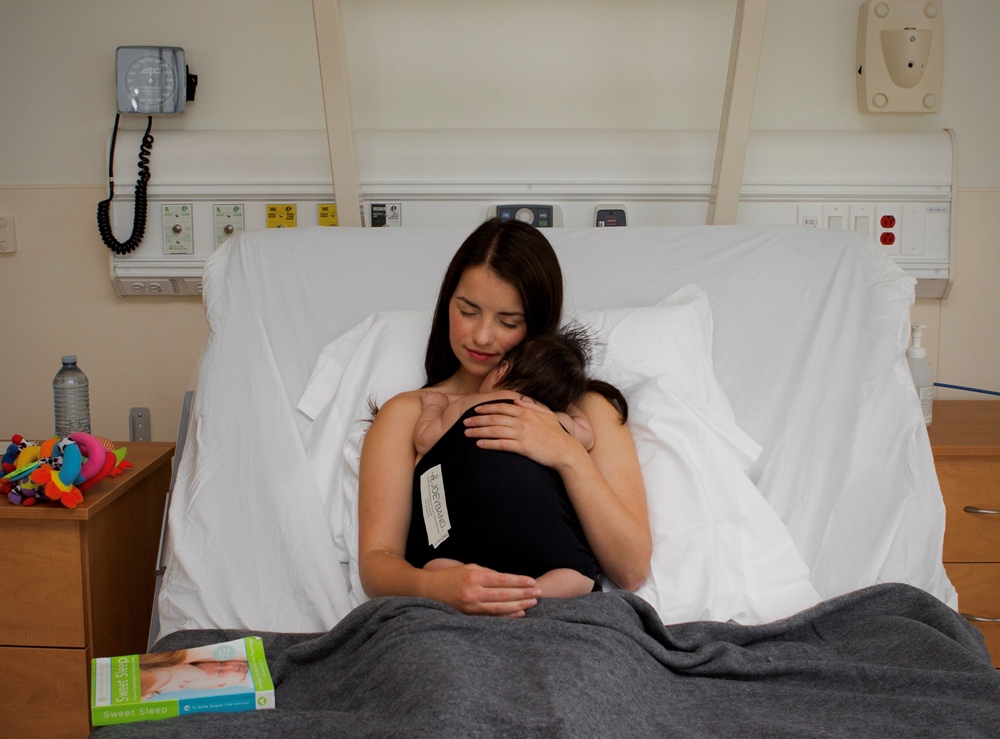
TIME Magazine has published its Best Inventions of 2025, spotlighting 300 innovations making the world a better place. Femtech World spoke to some of those addressing unmet needs in women’s health.
For 25 years, TIME’s Best Inventions issue has been highlighting the most impactful new products and ideas.
This year, several femtech innovations made the list – from predictive pregnancy tools and safer postpartum care to hormone-free contraception and more accessible menstrual products.
Speaking to Femtech World, founders say this reflects a growing global recognition of the importance of technology and innovation for improving women’s experience of health and care worldwide.
“This recognition isn’t just about our company, it’s about what it represents for women’s health and women inventors,” says Sarah-Almaza Cox, co-founder of Joeyband, which made the Honourable Mentions list.
“Femtech has often been overlooked in the broader innovation landscape, yet it holds the power to change how care is delivered, experienced, and valued. For TIME to celebrate devices like Joeyband alongside global innovations signals a shift, one that honours the science, empathy, and leadership women bring to healthcare innovation.”
We take a closer look at the inventions that made the list and how they are helping to close the gender health gap.
HerBrain: “A breakthrough in pregnancy information”
HerBrain, developed by the Geometric Intelligence Lab at the University of California, Santa Barbara and recognised in TIME’s Health and Wellness category, is the first digital twin of the maternal brain.
Led by Professor Nina Miolane, who gave birth herself last year, the tool uses machine learning and brain imaging data from pregnant individuals to model how brain structures change throughout pregnancy and postpartum, allowing expectant mothers to track and anticipate weekly shifts in their brains.
The app is currently in development and is expected to launch in 2027, with the aim of integrating the tool into popular pregnancy apps to give women a clearer picture of how their bodies and brains change during pregnancy.
“Our goal is not only to educate but also to advance understanding of maternal brain health, paving the way for innovations that could benefit all women,” the researchers said in a statement announcing the news.
Mirvie Encompass: “Predicting preeclampsia”
Femtech World award-winner Mirvie’s first-of-its-kind Encompass technology was named in the top Medical and Healthcare inventions category.
Encompass provides personalised predictions of the risk of preeclampsia early in pregnancy through a simple blood test. This allows women and their healthcare providers to take action earlier to support a healthy pregnancy and aims to address increasing preeclampsia rates. TIME highlighted a 10,000-patient study published earlier this year, in which Encompass correctly identified 91 per cent of women who would develop preterm preeclampsia.
Maneesh Jain, CEO and co-founder of Mirvie, commented: “We are proud and honoured that Encompass is recognised as a TIME Best Invention of 2025. For 100 years, the reactive approach to identifying preeclampsia in pregnancy hasn’t changed – until now. “At Mirvie, we’ve invented tools that predict pregnancy complications – like preeclampsia – early enough for moms and their care teams to take preventive action. Innovations like Encompass are essential to delivering the next-generation pregnancy care that is needed to improve maternal health outcomes.”

Miudella, Sebala Women’s Health: “A groundbreaking hormone-free IUD”
The first hormone-free copper IUD to obtain FDA approval in 40 years, Midudell by Sebala Women’s Health, also made TIME’s list.
The device, which aims to improve women’s experience of contraception, was granted approval by the FDA in February 2025. Kelly Culwell, head of research and development at Sebala Women’s Health, explained that Miudella was designed to improve the insertion experience through a preloaded inserter with a rounded tapered tip and narrow insertion tube diameter.
The flexible nitinol frame and lower dose of copper were designed to decrease the side effects of using a copper IUD, including lower rates of expulsion and side effects of bleeding and pain.
“We are delighted that MIUDELLA was named to TIME’s Best Inventions of 2025 list,” Culwell told Femtech World.
“This recognition further supports our belief that the novel design of MIUDELLA will offer an innovative option for birth control for women nationwide.
“The response from healthcare providers, our current study investigators and women has been very positive since FDA approval. There is clearly an unmet need for additional non-hormonal contraceptive options in the US.”
Joeyband: “Uninterrupted skin-to-skin contact”
Making the Honourable Mentions list, Joeyband enables uninterrupted skin-to-skin contact between newborns and their caregivers in hospital settings such as operating rooms and NICUs. Created out of one mother’s experience, the device is now used in hospitals around the world to improve postpartum recovery and health outcomes.
“As a Canadian company, being honoured by TIME’s Best Inventions is deeply meaningful,” says Cox.
“Joeyband was born from a moment of fear, but has transformed into a movement for safer, more connected beginnings for families everywhere. It started with a gap that Hayley Mullins (Inventor of Joeyband) recognised in how mothers and caregivers could safely practice skin-to-skin, and has grown into a device now used in hospitals and homes around the world.
“For us, this recognition reinforces that meaningful innovation doesn’t always come from a lab; sometimes it starts in your living room, holding your newborn, dreaming of a better way.”
Egal Pads on a Roll: “Ultra accessible menstrual pads”
Designed to address poor access to menstrual products and make period care more convenient, Egal Pads’ ‘Pads on a Roll’ were also named in TIME’s Health and Wellness category.
The concept was created by Tom Devlin, whose wife reported on women’s issues for the Boston Globe. By designing pads to resemble a toilet paper roll, which fit into standard dispensers, the aim was to normalise their presence while eliminating the costs associated with vending machines. According to TIME, the company now supplies more than 1,700 schools, libraries, and healthcare facilities.
“We at Egal Pads are thrilled that ‘pads on a roll’ won as one of the best inventions in 2025,” said Penelope Finnie, CEO of Egal Pads.
“This recognition celebrates a product that’s transforming lives with its innovative, accessible design – delivered right where it’s needed, like toilet paper. And we love the fact that it was designed by a man, Tom Devlin, demonstrating how important it is that we all support and understand one another.”

Osteoboost: “Reduce bone loss with a belt”
Another Femtech World award-winner, Osteoboost, also made the list for it’s device which aims to slow bone loss and reduce the risk of fractures in osteoporosis, a condition which disproportionately affects women. The FDA-cleared vibrating belt, which is worn around the hips consistently has been shown in studies to reduce spinal bone loss in by 85 per cent.
In a statement, Osteoboost CEO, Laura Yecies, said: “This award is more than a milestone for Osteoboost; it’s a moment of acknowledgment that bone health matters, that it deserves focus, and that change is finally coming.
“We’re proud to be taking a leadership role in a growing movement that’s driving women’s health into a new era. Women’s health is experiencing a golden age of innovation! From menopause and fertility to cardiovascular and skeletal health, scientific researchers and startup founders are tackling long-ignored needs with energy and empathy. Bone health is emerging into that same zeitgeist. And it’s about time.”
Teal Wand: “At-home cervical cancer test”
The Teal Wand, which aims to make cervical screening more comfortable and accessible for women, was also recognised by TIME. Earlier this year the device became the first at-home screening test for cervical cancer to be FDA-approved.
In a LinkedIn post celebrating the news, the company said: “The Teal Wand was designed to meet women where they are, bringing privacy, comfort, and control to an essential part of preventive care. We’re proud to see women’s health innovation recognised on a global stage and to be part of a movement redefining what it means to design healthcare for women.”
Butterfly iQ3: “A portable solution for rural maternal care”
Approved by the FDA in 2024, Butterfly’s portable ultrasound with 3D imaging was listed in TIME’s Special Mention category. The iQ3 builds on Butterfly’s Ultrasound-on-Chip™ technology to “close critical gaps in healthcare delivery, supporting earlier detection, faster diagnosis and improved patient outcomes.”
With features such as AI-enhanced processing, 3D imaging modes, and versatile anatomical presets, the technology enables clinicians to bring diagnostic capability to settings with limited infrastructure. TIME notes that Butterfly has received investments from the Gates Foundation to support its use for improving maternal outcomes in sub-Saharan Africa.
Momcozy Air 1 Ultra-Slim Breast Pump: “A discreet and portable smart pump”
Also given a Special Mention in the parenting category is the Momcozy Air 1 Ultra-Slim Breast Pump, which allows users to track milk volume in real time and control suction strength via a smartphone app. The slim, discreet design also aims to reduce bulk without sacrificing performance or convenience.
The company’s design philosophy leans on what it describes as “Cosy Tech”, with innovations built around the needs and lived experience of mothers, and feedback from women is crucial for refining usability, comfort, and portability in its products.
Celebrating innovation in women’s health
To compile the list, TIME solicited nominations from its editors and correspondents around the world, as well as an online application process, paying special attention to growing fields, such as health care and AI. Each contender was evaluated on a number of key factors, including originality, efficacy, ambition, and impact.
For all those on the list representing the femtech sector, it’s welcome recognition, acknowledging the wider importance of innovation in women’s health.
As Joeyband’s Sarah-Almaza Cox put it: “This moment belongs to every woman whose idea has made the world a safer, healthier place.”













A study is examining where delays occur in diagnosing endometriosis – a condition that can take seven to twelve years to diagnose.
Endometriosis affects an estimated 1.5 million women and people in the UK, but there is currently no consistent way of measuring where and why diagnostic delays happen.
The research aims to develop the first standardised framework for understanding the diagnostic journey and identifying points where interventions could improve care.

The international project involves researchers from the University of Sheffield, University of Liverpool, University of Oxford, Aarhus University in Denmark and the University of Edinburgh, alongside Endometriosis UK.
Dr Rebecca Mawson, NIHR clinical lecturer in primary care at the University of Sheffield, is part of the research team.
She said: “Our project asks: where exactly are people getting lost or let down on their journey to diagnosis, and how can we map those points in a systematic way to identify where interventions could make a real difference.”
The project is led by Dr Babu Karavadra, NIHR academic clinical fellow in general practice at the University of Liverpool, who has been awarded a World Endometriosis Society Early Career Investigator Award as lead principal investigator at the University of Liverpool.
Researchers will review existing evidence, gather experiences from people living with endometriosis and bring together an international panel to map the diagnostic pathway and agree common definitions for key points along the journey.
The work will focus particularly on people whose experiences are often missing from research, including Black women, people living in rural or deprived areas, LGBTQ+ communities and disabled people.
Primary care will also be central to the research because it is often where people first seek help with symptoms.
Mawson said: “Primary care needs to be at the heart of this work. Primary care is often where people first seek help with their symptoms, so it has a crucial role in understanding diagnostic delay.
“If we only look at what happens once someone reaches specialist gynaecology, we risk missing some of the barriers that shape the journey long before that point.”
Unlike cancer research, where internationally recognised standards exist for studying diagnostic delays, endometriosis research has been more fragmented, with studies measuring different parts of the diagnostic journey in different ways.
The researchers hope to create an ‘Endometriosis Diagnostic Pathway Framework’ to help identify where people are falling through the gaps and where healthcare could be improved.
They will also develop a ‘Snakes and Ladders’ style visual representation showing how systemic barriers, chance and individual experiences can influence whether someone reaches a diagnosis.
The project forms part of the PEARL network, Primary care Endometriosis and Adenomyosis Research and Learning, an international collaboration of primary care and community researchers and clinicians.
Mawson said: “Endometriosis diagnostic delay isn’t inevitable. If we can understand where and why people are experiencing barriers, we have a much better chance of designing interventions that actually make a difference.
“The scale of the problem demands that we look at the whole journey, listen to the people experiencing it and build an evidence base that can lead to real change.”
The framework could provide the foundations for future research, clinical guideline development, healthcare professional training and NHS service improvements, with potential applications to related conditions such as adenomyosis and chronic pelvic pain.
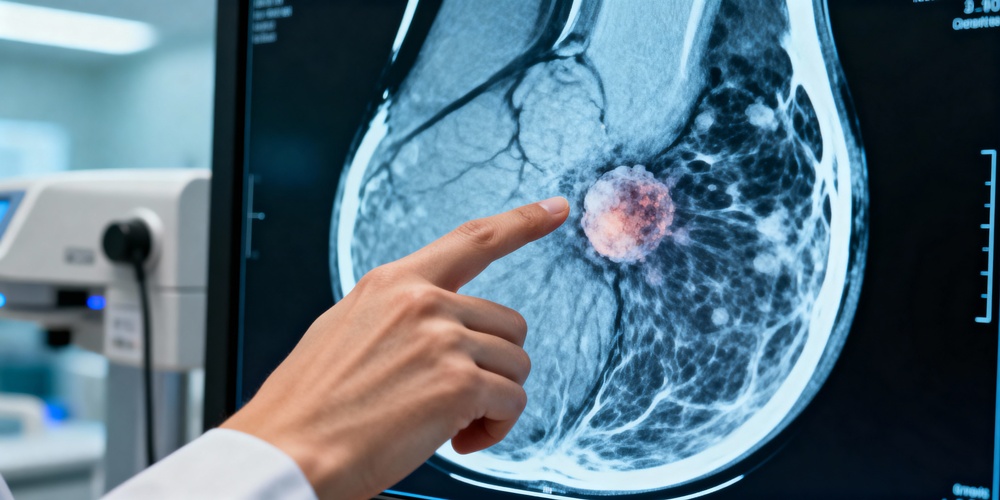
A drug targeting a key regulator in triple-negative breast cancer reduced tumour growth and cancer stem cell viability in laboratory models.
Triple-negative breast cancer is an aggressive subtype that disproportionately affects women under 40 and accounts for about 15 to 20 per cent of breast cancers.
The disease lacks receptors for oestrogen, progesterone and the HER2 protein, which are targeted by several cancer drugs, making it particularly difficult to treat.
Researchers from the National University of Singapore’s Yong Loo Lin School of Medicine investigated mechanisms that allow triple-negative breast cancer cells to spread and resist treatment.
They examined regulators of Wnt signalling, a pathway involved in processes including cell growth and movement, and identified a master regulator called DP103.
DP103 is a gene that controls a major biological process. The researchers found it creates a cycle in which cancer cells continue to grow and spread while resisting treatment and maintaining cancer stem cells linked to disease recurrence.
The team then investigated whether a targeted drug known as Supinoxin, or RX-5902, could block DP103 and its effects in triple-negative breast cancer.
Analysis of 21 samples, including patient tumour tissue, laboratory-grown breast cancer cells and organoids derived from local cancer patients, found that the drug reduced cancer stem cell viability by 40 to 60 per cent.
Tumour growth in laboratory-grown tumour models fell by about 50 per cent.
In laboratory models, treatment also reduced tumour size by around 90 per cent while largely sparing healthy cells.
It also extended survival, with half of the treated laboratory models reaching 70 days and beyond, compared with none in the untreated group.
DP103 had previously been identified as a biomarker for triple-negative breast cancer by a team led by Alan Prem Kumar, an assistant professor with the NUS Centre for Cancer Research and principal investigator for the new study.
RX-5902 is already being studied as a treatment for breast cancer, and Kumar said the findings could help identify patients who may be more likely to benefit.
“Our findings suggest that DP103 could potentially serve as a diagnostic biomarker to identify the patients most likely to benefit from RX-5902 treatment, paving the way for a more precise, personalised approach to treating triple-negative breast cancer,” he said.
“Instead of treating all patients the same, future clinical trials could focus on those whose tumours have high levels of DP103, where the therapy is expected to have the greatest impact,” said Kumar.
First author Cai Wanpei said RX-5902 could prevent beta-catenin, a protein whose mutation is associated with various cancers, from entering the nucleus of human cells and switching off genes that drive cancer growth and spread.
“This slows tumour progression and triggers apoptosis – the natural death of cancer cells,” said Cai, who was a PhD student at the NUS Centre for Cancer Research and NUS Medicine’s pharmacology department during the research.
Study co-author Celestial T. Yap said triple-negative breast cancer remains particularly difficult to treat because conventional treatments such as surgery, chemotherapy and immunotherapy may not work for all patients.
She said DP103 could represent a “biological vulnerability” in the disease.
“This discovery offers new insights that could support more precise patient selection and open the door to better targeted strategies for durable disease control and improved clinical outcomes,” said Yap, an associate professor with the NUS Centre for Cancer Research and NUS Medicine’s physiology department.
The researchers said abnormal Wnt signalling also drives several other cancers, meaning the findings could offer avenues for treating other aggressive cancers.
Their next steps include validating DP103 as a predictive biomarker in larger patient groups and further developing therapies targeting the regulator for clinical testing.
The team will also investigate combining RX-5902 with existing therapies to further improve treatment outcomes.

By Women’s HealthX
As healthcare organisations navigate tightening compliance mandates, evolving reimbursement frameworks, and shifting health economics, the single most critical asset for leadership is operational visibility into what their industry counterparts are executing right now.
Ahead of the Women’s HealthX marketplace in Boston this December, a cross-functional steering committee of health plans, hospital networks, biopharma innovators, and enterprise employers has launched the definitive 2026 U.S. Health Infrastructure Survey.
The objective of this brief, multi-state index is to bypass abstract market fluff and map out exactly how the country’s elite healthcare stakeholders are practically structuring their 2027 budgets, clinical protocols, and technology procurement guidelines.
Some of the questions we are asking:
- Health Plans & Payers “What is the biggest operational barrier to expanding women’s health coverage?”
- Health Systems & Providers “What is the biggest women’s health priority for health systems over the next 24 months?”
- Pharma & Life Sciences “What is the biggest commercial hurdle facing women’s health innovation?”
- Employers & Benefits Leaders “Which women’s health challenge creates the greatest workforce impact?”
By contributing just 60 seconds of your operational insight to the index, you will ensure your specific sector’s parameters are accurately represented.
In return for your participation, you will secure a priority, pre-ordered copy of the completed 30-page intelligence report when the final data drops this September!
See where your direct peer groups are drawing their line in the sand for the upcoming fiscal year.
Contribute 60 seconds and pre-order your national benchmark report
Women’s HealthX 2026 | From Rhetoric to Results
Encore Boston Harbor | December 3-4 2026
Bypass abstract market rhetoric to evaluate real-world health economics, regulatory compliance mandates, and care delivery systems.
Join the region’s foremost health plan medical directors, hospital COOs, biopharma innovators, and enterprise benefits buyers anchoring our 2026 tracks.









 Entrepreneur2 weeks ago
Applications close August 18 for Women’s Health Innovation Summit 2026 Innovation Showcase

 Menopause2 weeks ago
Third of women unaware of perimenopause mental health impact

 Fertility1 week ago
Chelsea FC Women to launch first-of-its-kind player fertility fund

 Menopause2 weeks ago
Menopausal hormone therapy may lower dementia risk, study suggests

 Opinion1 week ago
anna perimenopause app launches across 39 markets

 Diagnosis2 weeks ago
We are wrapping our children in plastic and calling it care

 Pregnancy2 weeks ago
Chemicals in plastics may be linked to high blood pressure during pregnancy

 News2 weeks ago
Women with endometriosis face 46% higher risk of type 2 diabetes – study
2 Comments