



Connect with us

News

US reproductive health group introduces telemedicine abortions in Kansas

Planned Parenthood has begun offering telemedicine consultations to patients visiting its clinic in Wichita

Published

on

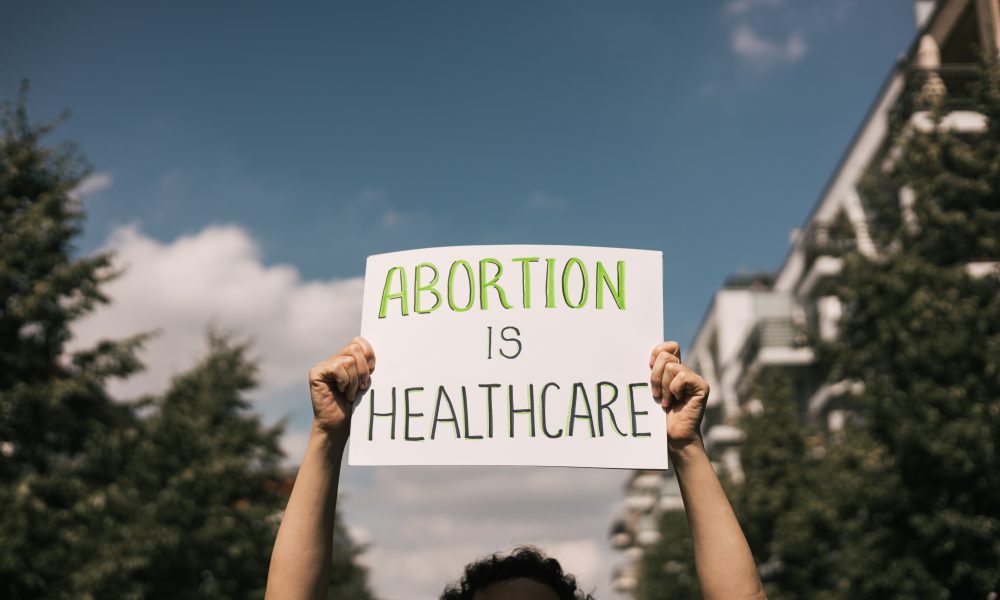
The reproductive health nonprofit group Planned Parenthood has started conducting telehealth consultations for medication abortions in Kansas.

A Planned Parenthood affiliate has announced that the group has started teleconferences with off-site doctors for patients seeking medication abortions at one of its Kansas clinics, a small step toward potentially much broader access in a state that has become a destination for the procedure after an August vote affirming abortion rights.

Planned Parenthood Great Plains said it began offering telemedicine consultations to patients visiting its Wichita clinic.

President and CEO, Emily Wales, said the immediate goal is to have more days that patients can go there to get medication abortions.

She said her affiliate hopes to offer the service to patients visiting its other two clinics on the Kansas side of the Kansas City area “in short order” and eventually, to allow patients in doctors’ offices and clinics across the state to teleconference with its physicians.

The move comes as Kansas abortion providers say they are seeing a flood of requests for appointments from women in states with tougher abortion rules, after in August Kansas voters voted to retain state constitutional protections for abortion rights.

The announcement also came less than a month after a state-court judge blocked enforcement of Kansas’ ban on telemedicine abortions.

The abortionfinder.org website lists 26 other states in which residents seeking abortion medications can teleconference with doctors, including Colorado, Illinois, Iowa, Michigan and Wyoming. However, for some states, the website lists only online pill providers, such as Aid Access or carafem.

Ahead of this week’s announcement, Wales said: “My vision for telehealth medication abortion is the same as my vision for abortion generally, which is that it would be widely accessible by many providers.”

The blocked Kansas law required a doctor to be in the same room with a patient taking what is typically the first of two doses of medication to end a pregnancy.

Another provider, a Wichita clinic operated by the abortion rights group Trust Women, offered telemedicine abortions for a few months late in 2018 but stopped because the legal climate was uncertain at the time.

Trust Women also expects to offer telemedicine abortions but has said it is considering what additional staff and infrastructure it will need.

Eighteen states have bans on telemedicine abortions in place, according to national groups on both sides of the debate, including Arizona, Indiana, Nebraska and North Carolina.

Kansans for Life, the state’s most anti-abortion group, responded to what it called Planned Parenthood’s “dark announcement” by promising to consider “every possible course of action,” including legislation.

Abortion opponents have long argued that telemedicine bans protect women’s health by ensuring a physician is present to deal with major problems, though research has shown that abortion pills are safe.

The long-term goal, Wales said, is to work with a network of doctors or clinics across the state so that women don’t have to travel to Wichita or the Kansas City area to obtain abortion medications.

Patients in states with more restrictive abortion laws still would have to travel to Kansas, as they do now. Doctors doing the teleconsulting also would have to be licensed to practice medicine in Kansas, as they must be now.

For now, Planned Parenthood Great Plains is using existing staff and physicians to offer telemedicine abortion consultations to patients in Wichita.

The Planned Parenthood affiliate already offers some telehealth services, such as refilling birth control prescriptions or gender-affirming care visits for transgender patients.

The group said it is still deciding how quickly to expand telemedicine abortion appointments.

Abortion providers had to wait until this year for a clearer picture of the legality of telemedicine abortions.

The statewide vote in August preserved a Kansas Supreme Court ruling in April 2019 that access to abortion is a “fundamental” right under the state constitution.

The vote came as Trust Women was pursuing a lawsuit to against the state’s ban on telemedicine abortions. That lawsuit led to the state-court judge’s order blocking enforcement of the Kansas telemedicine abortion ban.

Erin Thompson, Planned Parenthood Great Plains’ general counsel, said: “We’re pretty confident that the courts are on our side and that we have a very strong legal leg to stand on.”

News

Why cardiovascular health deserves a spotlight in femtech

Published

on

When we think about women’s health innovation, certain categories immediately come to mind: fertility tracking, pregnancy care, menopause management.

These are vital areas that have long been neglected, and the femtech revolution has brought much-needed attention and resources to them.

But there’s another area of women’s health that remains dangerously overlooked, despite being the leading cause of death for women worldwide: cardiovascular disease.

Heart disease kills more women than all forms of cancer combined, yet most women don’t know this.

For decades, cardiovascular research has been designed around male bodies, male symptoms, and male experiences.

The result is a healthcare system that often fails to recognise when women are having heart attacks, misdiagnoses their symptoms and prescribes treatments that were never tested on female patients.

Women are more likely to die from their first heart attack or stroke than men, and they’re less likely to receive life-saving interventions in time.

This is precisely why the Femtech World Awards have teamed up with Women As One to create a dedicated category for cardiovascular health innovation.

With this award, we want to shine a light on the entrepreneurs, researchers, clinicians and advocates who are working to close not just a gap in care but a gap in innovation, research and recognition.

The cardiovascular health innovation award is an opportunity to celebrate this work and to call for more of it.

If you know of a company, researcher, or organisation doing groundbreaking work in cardiovascular health for women, now is the time to nominate them.

Perhaps it’s a startup developing wearable technology that predicts cardiac events in pregnant women. Maybe it’s a research team uncovering the links between hormonal health and heart disease.

It could be a community health initiative bringing cardiovascular screening to underserved populations of women.

Whoever they, or you are, submit your nomination here.

Continue Reading

Insight

WHO hosts parliamentary dialogue on women’s health

Published

on

The World Health Organization (WHO) welcomed a delegation of parliamentarians to its Geneva headquarters for a high-level dialogue on women’s health and sexual and reproductive health and rights.

The meeting on 20 January 2026 focused on women’s health, sexual and reproductive health and rights, noncommunicable diseases (long-term conditions such as cancer and diabetes) and global health cooperation.

The exchange was convened by the Konrad-Adenauer-Stiftung and the UNITE Parliamentarians Network for Global Health, bringing together parliamentarians from Albania, Germany, Georgia, Mexico, Slovakia, South Africa, Sri Lanka, Sweden and Zimbabwe.

A central theme was the need to move beyond fragmented approaches to women’s health.

Dr Alia El-Yassir, WHO director for gender, equity and diversity, highlighted that outcomes are shaped by gender inequalities, social norms and structural barriers across the life course, requiring coordinated action across health systems.

Thirty years after the Beijing Declaration and Platform for Action, a landmark framework adopted in 1995 to advance gender equality and women’s rights, Dr Anna Coates, WHO gender equality technical lead, noted that progress on women’s health remains uneven.

She called for health systems that are more gender-responsive and able to address women’s health holistically across the life course.

Parliamentarians stressed that health is inseparable from wider social and economic policies, and called for stronger links between evidence, legislation and measurable impact at country level.

The meeting also focused on sexual and reproductive health and rights, where parliamentarians expressed interest in engaging on issues that directly affect their constituents.

Dr Pascale Allotey, director of WHO’s Department of Sexual, Reproductive, Maternal, Child, Adolescent Health and Ageing, outlined WHO’s life-course approach to sexual and reproductive health and rights.

She highlighted how needs evolve from birth to older age and how these are shaped by social determinants, humanitarian crises and demographic trends.

Dr Allotey underscored the role of parliamentarians in advancing sexual and reproductive health and rights and the importance of continued engagement with WHO to support evidence-based policy-making.

The agenda highlighted cancer as a growing priority for women’s health and for health system sustainability. Dr Prebo Barango, lead for the Cervical Cancer Elimination Initiative, Dr Meghan Doherty, consultant for palliative care, and Santiago Milan, lead for the WHO Global Platform for Access to Childhood Cancer Medicine, presented WHO’s integrated approach to cancer control.

Palliative care is treatment and support that aims to improve quality of life for people with serious illness by managing pain and other symptoms.

The discussion underlined the need for sustained political commitment and domestic investment to address noncommunicable diseases.

Parliamentarians shared national experiences showing the social and economic impacts of cancer on families and caregivers, reinforcing the importance of improving health literacy, reducing stigma and delivering people-centred care.

The meeting also addressed the state of global multilateralism.

Dr Jeremy Farrar, assistant director-general for health promotion, disease prevention and care, outlined how WHO has restructured to enhance efficiency, impact and capacity to support countries.

He reaffirmed WHO’s commitment to more systematic engagement with parliaments, recognising their role in shaping health policy, legislation and budgets.

The exchange concluded with a call for continued collaboration, including through partnerships with the Konrad-Adenauer-Stiftung and the UNITE Parliamentarians Network for Global Health, ahead of the UNITE Global Summit 2026 on 6–7 March in Manila, the Philippines.

Continue Reading

News

Women’s health firms face banking barriers after being tagged as ‘adult services’

Published

on

Financial services providers across Europe and the UK are incorrectly classifying female-focused healthcare ventures as high risk enterprises, placing them in the same category as weapons dealers and tobacco companies.

As reported by The Banker, research by advocacy organisation CensHERship found that many women’s wellness technology companies are being denied standard banking services and payment processing facilities because of flawed classification protocols.

The investigation found significant inconsistencies in how financial institutions assess these businesses. 

SheSpot, a British company specialising in female intimate wellness, received conflicting decisions from different divisions within the same bank.

Co-founder Kalila Bolton, who took part in the study, explained that one department initially classified their venture as “higher risk” alongside firearms and tobacco, while another branch of the same bank later said they were “fine with it”.

Similarly, HANX, a manufacturer of condoms designed to support vaginal microbiome health, faced payment processing rejection after being incorrectly labelled as an “adult services business”.

Published this week, the CensHERship analysis links these barriers to “outdated classification systems, over-compliance and cultural discomfort” that together prevent legitimate healthcare enterprises from accessing essential financial infrastructure.

The findings suggest that women’s wellness ventures are “routinely flagged, delayed, rejected or deplatformed”, outcomes that stem not from actual regulations but from financial and ecommerce systems that “default to caution” when dealing with women’s health topics that remain poorly understood or culturally sensitive.

CensHERship co founder Anna O’Sullivan said these results usually arise from unfamiliarity rather than deliberate discrimination.

“In most cases, this isn’t malicious or intentional — it’s what happens when people and systems meet something unfamiliar,” O’Sullivan said in a statement. 

“But this unconscious bias can materially affect a founder’s ability to start, grow and scale a business.”

Investment platform The Case for Her, which partnered with CensHERship on the report, described the issue through co founders Wendy Anderson and Cristina Ljungberg as a clear “market failure” when founders cannot secure basic banking relationships.

“Fixing this issue is essential if we want to unlock one of the most promising growth markets in global health,” they said.

Risk consultant Aoife Mansfield, managing director at Athrú Group and a contributor to the report, said that terms such as “vagina” or “menstrual” trigger automated alerts within financial systems because they appear on the same watchlists as adult entertainment or pornography, raising a “red flag” in the systems used by banks and payment service providers.

O’Sullivan urged financial service providers to update their internal procedures, review their risk tolerance settings and explicitly include women’s healthcare within their approved client categories.

“They could remove this friction almost overnight,” she said.

The CensHERship analysis includes findings from across the UK and Europe, based on survey responses from more than 30 women’s health enterprises and interviews with founders, insurance underwriters, and compliance and risk professionals.

Continue Reading

Trending

Copyright © 2025 Aspect Health Media Ltd. All Rights Reserved.
