




News
Scientists urge action on plastic additives linked to sperm decline


Scientists have warned that chemicals in plastics are driving falling sperm counts, after talks on a global pollution treaty collapsed over disputes about chemical regulation.
Last week, after nearly two weeks of negotiations, delegates left Geneva on Friday without agreement, after oil- and gas-producing nations objected to production limits and chemical curbs.
Almost 100 nations signed a declaration calling for a “legally binding obligation to phase out those most harmful plastic products and chemicals of concern”.

But both texts drafted by Luis Vayas Valdivieso, chair of the negotiating committee, omitted any reference to chemical controls.
Global sperm counts have dropped by about one per cent each year for 50 years, with fertility declining at similar rates, studies show.
Obesity, sedentary lifestyles and ageing populations have been cited as possible causes, but reproductive health experts say environmental factors are most significant.
Dr Shanna Swan, professor of environmental medicine and public health at the Icahn School of Medicine at Mount Sinai in New York City, said the decline was “largely, but not entirely due to toxins in the environment that have the ability to interfere with steroid hormones”.
In 2017, Swan and colleagues published a meta-analysis showing sperm counts had fallen by nearly 60 per cent among men in North America, Europe and Australia between 1973 and 2011.
When they repeated the research in 2023, extending the period to 2018 and adding data from Africa, Asia and South America, the findings were even more shocking.
Swan said: “We separated the countries into western and non-western for analytic purposes, and in both we found a significant decline.
“And the other thing that we found, which was at least as alarming, was that if you looked at all of the studies going back to 1973 you see a one per cent per year decline.
“But if you look at studies published after 2000, you see an over two per cent decline.
“So the rate of decline had increased, and had increased significantly in recent years.”
The warning comes after a report published two weeks ago by Deep Science Ventures, reviewed by Swan, described chemical pollution as “a threat of a similar order as climate change”, though it receives far less attention.
Falling sperm rates since around 1950 correlate with rising plastics use. Swan highlighted strong evidence linking common plastic additives to reduced sperm counts.
Swan explained: “Phthalates are chemicals that are put into plastic to give it flexibility and make it soft and flexible.
“So any time you pick up a soft water bottle or tubing, like medical tubing, or a food container that’s soft, you’re going to be touching phthalates.
“Then, on the other side, the evil twin of phthalates are the bisphenols.
“While phthalates make plastic soft and flexible, bisphenols make it hard and inflexible. And phthalates lower testosterone and the bisphenols increase oestrogen.”
These endocrine-disrupting chemicals – substances that disturb hormone systems – particularly affect foetuses and embryos developing in the womb.
Swan had previously studied the effects of phthalates on unborn male babies, finding that exposure at critical points in pregnancy could cause subtle deformities in sexual development.
The adverse effects, known as “phthalate syndrome”, included smaller penises, a shorter distance between the genitals and anus, and, later in life, lower sperm counts at sexual maturity.
“We showed the link between the exposure and fertility,” Swan said.
“And when you see that total sperm count going down worldwide, what I believe is you’re seeing an important effect of early exposure to these chemicals.”
Swan would not be drawn into commenting on the treaty talks under way in Geneva, but said urgent action was needed on plastic additives and safer replacements.
She said: “In the meantime, yes people can be careful,.
“They can reuse materials. They should try to look at what they use in their takeout containers and carry little glass bottles around to get their drinks.
“It’s very important. But it’s not solving a bigger problem, which is how do we make these things that we have become dependent on in a safer way?”












A market analysis made by Moore Financial Consulting estimates the global market for Zero Candida Technologies, Inc. (TSXV: ZCT) (OTCQB: ZCTFF) (FSE: 9L2) (the “Company” or “ZCT”), a FemTech medical device company advancing next-generation solutions for women’s health, will reach over USD 2 billion by 2030, with a compound annual growth rate of 5.25 per cent globally and 3.9 per cent in North America and 4.2 per cent in Europe.
The analysis emphasis that up to 75 per cent of women will have at least one vaginal yeast infection in their life.
Moreover, recurrent VVC (Vulvovaginal Candidiasis) affects nearly 8 per cent of women globally (for women above the ages of 15-60).
According to the data, 100 per cent of women with Recurrent VVC will purchase a combination of over-the-counter and prescription antifungal treatments, usually with the common use of oral agents.
Compared to women with non-recurrent VCC, 55.2 per cent will purchase prescription antifungal treatment, 37 per cent over-the-counter antifungal, 5.6 per cent will purchase a combination of both treatments, and the rest will not purchase any treatment.
Eli Ben Haroosh, founder & CEO, Zero Candida Technologies, said: “Moore’s market analysis matches our estimations, Zero Candida is a groundbreaking and game-changing company in the world of women’s medicine, and we look forward to be one of the leading companies offering AI-driven, tampon-like device, helping women suffering from VVC .
Zero Candida announced recently that its shares are now successfully listed on the Frankfurt Stock Exchange (FSE).
This listing marks a significant milestone for the Company as it expands its global presence, now cross-listed on both the TSX Venture Exchange and the FSE, providing increased visibility and access to a broader pool of international investors.

Women newly diagnosed with breast cancer have a 59 per cent higher risk of ischaemic stroke in the first year after diagnosis, research suggests.
Researchers also said survivors who develop sudden stroke symptoms, including one-sided weakness, facial drooping, speech difficulties or vision loss, should seek immediate medical attention.
The multicentre study analysed National Health Insurance Service data from 107,606 women who underwent surgery for newly diagnosed breast cancer and compared them with 322,818 age-matched women with no history of cancer.

The research was conducted by professor Shin Dong-wook of Samsung Medical Center, professor Han Kyung-do of Soongsil University, professor Yong-Moon Mark Park of the University of Arkansas for Medical Sciences and professor Wonyoung Jung of the University of Pennsylvania.
Professor Yong-Moon Mark Park said: “The study demonstrates a time-dependent pattern in which the risk of ischaemic stroke rises sharply immediately after breast cancer diagnosis and treatment before gradually declining.
“The key finding is that we evaluated stroke risk according to different stages following diagnosis and treatment. This suggests that clinicians should consider not only how much the risk increases, but also when it is greatest.”
The study included women aged 18 or older who were newly diagnosed with breast cancer between 2010 and 2016, underwent surgery and had no previous stroke.
Each patient was matched with three women of the same birth year who did not have cancer. Participants were followed for an average of 7.2 years.
The main outcome was ischaemic stroke, also known as cerebral infarction. It occurs when a blocked blood vessel cuts off blood flow to the brain and is a leading cause of death and long-term disability.
During follow-up, ischaemic stroke occurred in 1,155 breast cancer patients, or 1.07 per cent, and 3,698 women in the control group, or 1.15 per cent.
Overall, breast cancer surgery was not linked to a significantly higher long-term risk of ischaemic stroke, and researchers recorded a slight fall in risk over time.
However, a different pattern emerged immediately after diagnosis.
Within one year of diagnosis, patients had a 59 per cent higher risk of ischaemic stroke than women without cancer.
The risk was highest during the first three months, at 2.90 times that of the control group.
It remained elevated within six months, at 2.27 times the control group’s risk, before gradually declining.
The risk was still 17 per cent higher three years after diagnosis.
Researchers said the temporary increase may be linked to cancer-related hypercoagulability, inflammatory responses to surgery and treatment, and cardiovascular stress caused by anticancer therapies.
Hypercoagulability means the blood is more likely than usual to form clots. Cardiovascular refers to the heart and blood vessels.
The increased risk was particularly pronounced among patients with hypertension, type 2 diabetes or a history of current smoking.
Hypertension means high blood pressure. Type 2 diabetes is a long-term condition affecting how the body controls blood sugar.
Breast cancer patients who smoked had a 2.26-fold higher risk of ischaemic stroke than comparable women without cancer.
Principal researcher professor Shin Dong-wook stressed the importance of vigilant care for patients with cardiovascular risk factors, especially during the early phase of breast cancer treatment.
Shin said: “Patients with hypertension, diabetes, or other cardiovascular risk factors, as well as those who smoke, require particularly careful management during the early phase of breast cancer treatment.
“If patients who have undergone breast cancer treatment suddenly develop weakness in one arm or leg, facial drooping, slurred or abnormal speech, or vision loss on one side, ischaemic stroke should be suspected, and they should seek immediate medical evaluation.”
Researchers said survivorship care should include strategies to monitor and manage cardiovascular and cerebrovascular disease risk throughout treatment as advances in breast cancer care continue to improve survival.
Cerebrovascular disease refers to conditions affecting blood flow and blood vessels in the brain.
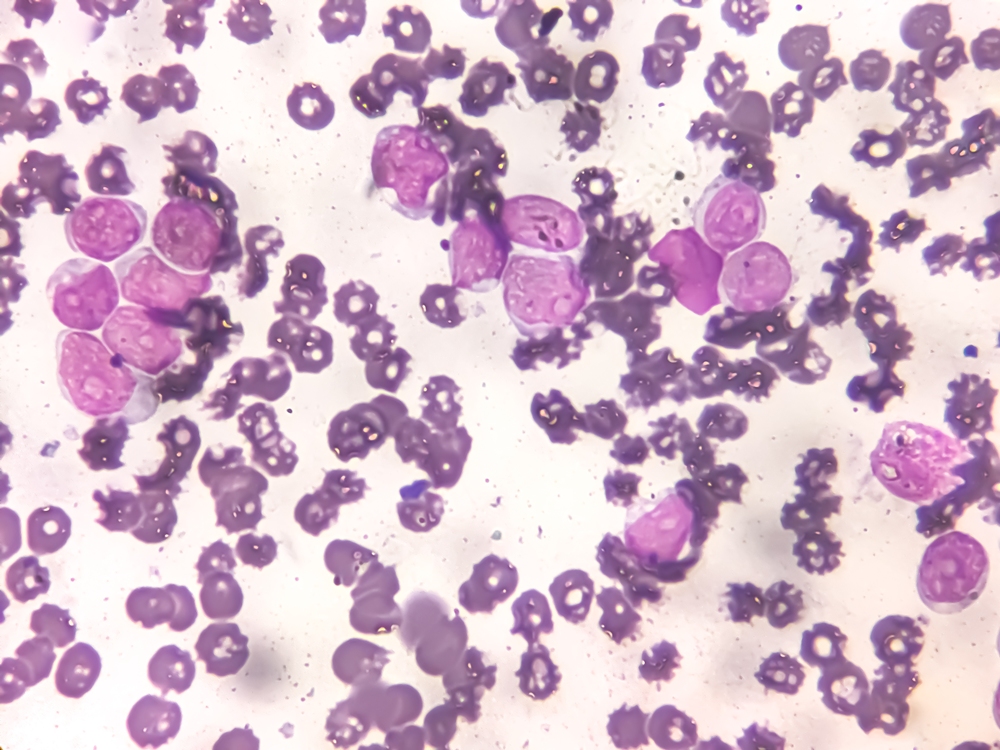
Cancer cells may hijack a fertility protein to repair damaged DNA and survive chemotherapy, research suggests.
The findings could point to a way of making existing cancer treatments more effective.

SYCP1 is a protein normally involved in producing sperm and eggs.
Researchers at the University of Liverpool found that the protein, previously thought to work only in reproduction, can be reactivated in cancer cells, where it helps tumours survive and grow.
SYCP1 usually helps chromosomes pair during meiosis, the form of cell division that produces reproductive cells.
In cancer cells, however, the protein appears to take on another role. It enters the nucleus, the cell’s control centre, binds directly to DNA and regulates genes involved in cell division and DNA repair.
DNA repair is how cells fix damage to their genetic code. In cancer, this process can help tumour cells survive treatment.
The researchers found that removing SYCP1 made cancer cells much more sensitive to chemotherapy drugs that damage DNA.
The findings suggest cancers may use SYCP1 to repair damage caused by treatment and continue growing.
Dr Urszula McClurg, lecturer in biochemistry, cell and systems biology at the University of Liverpool, said: “Our findings show that cancer cells can hijack proteins that normally exist only in reproductive tissues and give them completely new jobs.
“Understanding these unexpected functions opens up exciting opportunities to develop new treatments that make existing cancer therapies more effective.”
The work challenges the long-held belief that proteins active only in fertility have no biological relevance outside the reproductive system.
Researchers say these specialised proteins could provide new treatment targets across many types of cancer.
The study also offers a new view of how cancers evolve by repurposing developmental and reproductive processes.
The findings highlight SYCP1 as a candidate for future precision cancer therapies, which are treatments based on the specific biology of a patient’s cancer.











 Diagnosis2 weeks ago
Two “gamechanger” tests set to speed up endometriosis diagnosis on the NHS

 News6 days ago
New menopause drug approved for use by NHS in Scotland

 Cancer2 weeks ago
Thousands of women could avoid painful cancer exam with new AI blood test

 Entrepreneur2 weeks ago
Applications open for the third W Accelerate with Merck KGaA and M Ventures

 Fertility2 weeks ago
Older women face lower chance of fertility treatment working, even with donor eggs, study finds

 News2 weeks ago
We built Ema like a nurse: Here’s why that matters

 Mental health2 weeks ago
SSRIs may lower heat intolerance in women with depression – study

 Wellness2 weeks ago
Alcohol and smoking linked to breast cancer and irregular heartbeat in women, study finds
6 Comments